
Finding a comfortable back rest seat chair that supports your spine during long working or studying hours does not have to drain your savings. In the Philippines, a budget of ₱5,000 is the sweet spot for entry-level office furniture. While you won’t get premium Italian leather or highly complex synchronized mechanisms, you can absolutely secure a chair that prevents slouching, reduces lower back fatigue, and survives the local climate.
The key is knowing which structural features to prioritize and which marketing gimmicks to ignore. By focusing on essential physical dimensions and material durability, you can find a highly functional seat that keeps your posture aligned without exceeding your financial limits. This guide will help you navigate the budget market to find a seat that truly supports your back.
Setting Realistic Expectations for a Sub-₱5,000 Budget
When shopping with a hard cap of ₱5,000 in the local market, managing your expectations is the first step toward a successful purchase. At this price point, manufacturers must make strategic compromises. Typically, a sub-₱5,000 budget covers entry-level ergonomic designs featuring a basic mesh backrest, fixed or simple height-adjustable armrests, a standard pneumatic gas lift, and a nylon or lightweight metal alloy base. Understanding these limitations prevents disappointment and helps you focus on what truly matters for your physical health.
Products mentioned in this guide
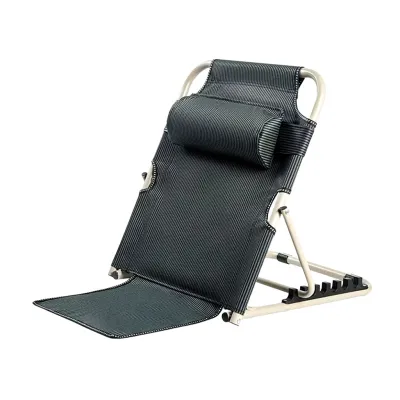
Prices are valid at publication and may change. Please refer to the product page for the latest price.
To make an informed decision, you must distinguish between “must-have” features and “nice-to-have” upgrades. The must-haves are non-negotiable for spinal health: a built-in lumbar curve that matches the natural shape of your lower back, a stable five-star caster base to prevent tipping, and a breathable backrest that allows heat dissipation. On the other hand, nice-to-haves include multi-dimensional adjustable armrests (such as 3D or 4D arms), advanced synchro-tilt mechanisms that tilt the seat and backrest at different ratios, and adjustable headrests. In this budget tier, expecting these premium features usually means the manufacturer compromised on structural build quality or cushion density to fit the price tag.
At this price point, reliable back support relies almost entirely on the natural, fixed contour of the frame rather than elaborate, multi-axis adjustable lumbar pads. A well-designed, static S-curve frame is far more effective than a cheap, highly adjustable mechanism that feels flimsy or fails after a few weeks of use. By prioritizing structural simplicity and solid materials over complex but poorly executed moving parts, you ensure that your investment provides consistent support over its operational lifespan.
Core Features That Actually Provide Back Support
When searching for a reliable back rest seat chair, your primary focus should be on structural geometry and basic adjustability rather than superficial aesthetics or gaming-chair styling. Many budget chairs mimic the look of high-end racing seats but lack the necessary lumbar support, often forcing your shoulders forward and flattening your lower spine. To protect your back, look for a chair that respects the natural lordotic curve of your lumbar spine, keeping your head, shoulders, and pelvis in a balanced vertical alignment.

A critical feature to look for is a functional recline mechanism with at least one or two locking positions. Static upright chairs force your back muscles to work continuously to keep you upright, leading to fatigue over an eight-hour workday. A chair that allows you to tilt back—ideally locking at an angled position of around 100 to 110 degrees—relieves pressure on your spinal discs and transfers some of your upper body weight to the backrest. This simple adjustment allows for dynamic sitting, letting you shift postures between active typing and passive reading or phone calls.
Fixed Contours vs. Adjustable Pads
In the sub-₱5,000 price range, a fixed, S-curve molded mesh or plastic backrest is generally much more reliable and durable than a cheap adjustable lumbar pad. A fixed contour is built directly into the structural frame of the chair, meaning it cannot slip out of place, lose its tension, or break under pressure. It provides a constant, predictable level of support that remains uniform throughout the day.
Conversely, you should be cautious of budget chairs boasting highly adjustable plastic lumbar pads. At this price point, the tracks, dials, or straps used to adjust these pads are often made of thin, brittle plastics. These mechanisms are notorious for slipping down under the weight of your back, squeaking constantly, or breaking entirely within a few months. If the pad cannot be locked securely, it often ends up digging into your sacrum or lower spine, causing more discomfort than support.
Sizing for Thigh and Shoulder Alignment
A chair cannot provide proper back support if it does not fit your physical proportions, making seat depth and backrest height crucial considerations. To ensure proper thigh alignment, check the seat depth: when sitting all the way back against the lumbar support, there should be a gap of about two to three fingers (roughly 2 to 5 centimeters) between the front edge of the seat cushion and the back of your knees. If the seat is too deep, it will press against the blood vessels behind your knees, restricting circulation; if it is too shallow, your thighs will lack support, placing excessive pressure on your sit bones.
The choice between a mid-back and a high-back design also impacts your comfort and the chair’s overall stability. Mid-back chairs are excellent for supporting the lumbar and thoracic spine, making them highly suitable for standard typing tasks. High-back chairs offer additional upper-back and head support, which is beneficial if you spend long hours in a reclined position. However, be aware that high-back chairs under ₱5,000 often use cheaper, lighter base materials to offset the added weight of the taller backrest, which can compromise the chair’s center of gravity and overall stability when fully reclined.
Evaluating Materials for Comfort and Tropical Durability
The materials used in your chair directly dictate its long-term durability, hygiene, and comfort, especially when subjected to the humid, tropical climate of the Philippines. Selecting the wrong material can turn an otherwise comfortable chair into a hot, peeling, or sagging mess within a single rainy season or hot summer.
When comparing mesh, fabric, and PU leather, high-density mesh is almost always the superior choice for the backrest in a tropical environment. Mesh allows air to circulate freely around your back, preventing sweat buildup during humid afternoons when the air conditioning is turned off or running on low. In contrast, cheap PU (polyurethane) leather should be avoided at this price point. Low-grade PU leather traps body heat, causes sweating, and is highly prone to cracking and peeling within a year due to the combination of sweat, humidity, and friction. Plain fabric cushions are a decent middle ground, but they require regular vacuuming to prevent dust mite accumulation.
The quality of the seat cushioning is another critical factor that determines how long the chair remains comfortable. Look for chairs that specify the use of molded foam (sometimes called high-density resilient foam) rather than standard cut foam. Molded foam is poured into a specific mold under pressure, creating a dense, supportive cushion that retains its shape and elasticity for years. Standard cut foam is simply sliced from a large block; it is much cheaper to produce but tends to flatten out and “bottom out” within three to six months of daily use, leaving you sitting directly on the hard wooden or plastic seat pan.
Finally, pay close attention to the construction of the base and casters. A reinforced nylon base is highly recommended over cheap, thin metal alloy bases. While metal might sound stronger, low-end steel or chrome bases under ₱5,000 are often hollow and poorly welded, making them prone to bending or rusting in humid coastal areas. High-strength nylon bases offer excellent structural flexibility and corrosion resistance. Additionally, ensure the casters are made of polyurethane (PU) or nylon and roll smoothly. This is particularly important for local homes with ceramic tile flooring, where cheap, rigid plastic wheels can scratch the glaze or get stuck in grout lines, or hardwood floors like narra, which require gentle, non-marring wheels.
A Practical Checklist for Shopping on Online Marketplaces
Because physical furniture showrooms often carry higher markups, online marketplaces are the most practical places to find ergonomic chairs under ₱5,000. However, shopping online requires a discerning eye to avoid misleading listings, exaggerated specifications, and low-quality clones.
When filtering and searching, use precise terms like “ergonomic office chair mesh” or your primary search term, back rest seat chair. Filter your results by selecting local sellers to avoid exorbitant international shipping fees and long customs delays. Look for official brand stores or sellers with high ratings (ideally 4.8 stars and above) and a high response rate. Pay close attention to listings that carry platform-verified badges, which often indicate reliable return handling and authentic product sourcing.
Do not rely solely on stylized lifestyle photos, which are often heavily edited or stolen from high-end European design brands. Instead, swipe through the product images to find the technical dimension diagram. This diagram should clearly show the seat width, seat depth, backrest height, and the range of the gas lift adjustment. Compare these measurements with a chair you currently use to visualize the scale.
To verify the weight capacity, look for the gas lift classification. A reliable chair should feature a Class 3 or Class 4 pneumatic gas lift, which is certified to handle loads of up to 120 to 150 kilograms safely. If a listing claims a 150-kilogram capacity but uses a Class 2 lift or fails to specify the class, treat the claim with skepticism.
User reviews are your most valuable tool for uncovering the truth about a chair’s real-world performance. Filter the reviews to show those with photos and videos, and specifically look for feedback written after several weeks or months of use. Search for recurring complaints regarding squeaking joints, rapid cushion flattening, or missing screws during assembly. Be highly skeptical of generic five-star reviews that contain only one-word praises (“Nice”, “Good”) or unrelated photos of shipping packaging, as these are often generated to inflate seller ratings.
Avoiding Hidden Costs and Checkout Surprises
To keep your total expenditure strictly under ₱5,000, you must account for several hidden costs that do not appear on the initial product listing page. Failing to calculate these variables can result in checkout surprises that push you over budget.
Shipping fees are the most common budget buster when purchasing bulky furniture online. Because office chairs are heavy and packed in large, volumetric boxes, delivery charges can be substantial. While shipping within Metro Manila might be relatively affordable, delivering to provincial areas in Luzon, Visayas, or Mindanao can easily add ₱500 to ₱1,500 to your total bill. Always input your exact delivery address on the checkout screen to see the final shipping cost before making your final decision.
Almost all ergonomic chairs in this price bracket are shipped flat-packed and require self-assembly. Before ordering, verify if the package includes the necessary assembly tools, such as an Allen wrench (L-key) and a clear, illustrated instruction manual. While most manufacturers include basic tools, having a sturdy screwdriver or a socket wrench set at home can make the assembly process much faster and prevent you from stripping the screw heads.
Lastly, read the fine print regarding warranty coverage and return policies. Budget chairs typically come with a limited warranty of six months to one year, which usually only covers major structural components like the gas lift mechanism or the metal base plate. Wear-and-tear items, such as sagging mesh, torn fabric, or flattened cushions, are almost always excluded. Ensure the online store has a clear return policy for items damaged during transit or those arriving with factory defects, as shipping a bulky box back to the seller at your own expense can be incredibly costly.
Frequently Asked Questions (FAQ)
This section addresses common buyer hesitations and practical workarounds when choosing an entry-level ergonomic chair for your home office.
Is a sub-₱5,000 ergonomic chair durable enough for 8-hour daily use?
Yes, an entry-level ergonomic chair under ₱5,000 can support eight hours of daily use, but its long-term lifespan will be shorter than that of a premium model. Over time, you may notice gradual cushion compression or slight sagging in the mesh backrest. To maximize the chair’s lifespan and protect your health, avoid dropping heavily into the seat, keep the moving joints lightly lubricated, and take regular standing breaks every hour to relieve pressure on both your body and the chair’s foam cushion.
Can I add a separate lumbar pillow to improve back support?
Adding a separate memory foam lumbar pillow is an excellent, cost-effective way to upgrade a budget chair that lacks sufficient built-in support. However, before buying a pillow, measure your chair’s seat depth. A thick lumbar pillow will push your torso forward, reducing the available seat depth. If the seat is already shallow, this extra padding might push you too close to the front edge, causing your thighs to press uncomfortably against the hard plastic frame of the seat pan.
Community discussion
Share your experience or ask a question. Comments are reviewed before publication.