
Quick Answer: Is a Double Deck Bed Safe for Children?
Double deck beds are a highly practical solution for maximizing bedroom space, especially in shared children’s rooms where floor space is at a premium. When manufactured to recognized safety standards, correctly assembled, and used by children of the appropriate age, a double deck bed is entirely safe. Safety is not a guarantee inherent to the furniture itself, but rather a result of careful selection, proper room setup, and consistent household rules.
The primary risk boundary when using a double deck bed is age: the top bunk is not recommended for children under six years old. Younger children lack the physical coordination, balance, and spatial awareness required to safely climb the ladder and avoid rolling off the edge during sleep. Beyond this age limit, ensuring a safe sleeping environment relies heavily on specific physical features like guardrail dimensions, ladder stability, and proper room placement, all of which require thorough inspection before purchase.
Age and Weight Limits: Who Should Sleep on the Top Bunk?
To maintain a safe sleeping environment, you must strictly enforce age and weight limits. Children under six years old should never sleep on or play on the top bunk. Pediatric safety databases consistently show that younger children face a significantly higher risk of falls and entrapment because their motor skills and depth perception are still developing. Even during waking hours, the top bunk should remain off-limits to toddlers to prevent accidental falls during play.
Products mentioned in this guide

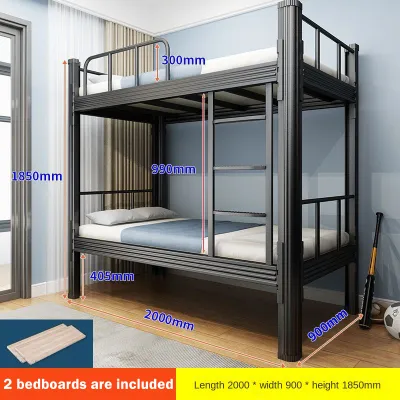
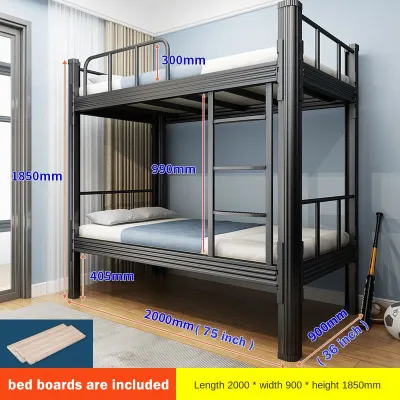

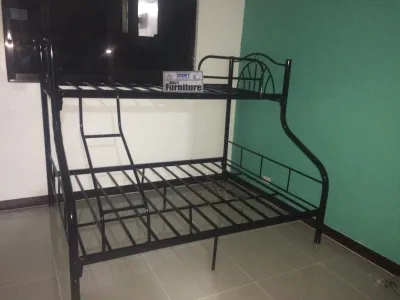
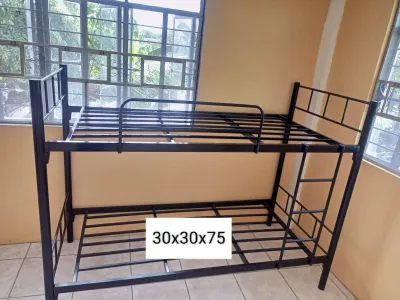
Prices are valid at publication and may change. Please refer to the product page for the latest price.

Weight capacity is another crucial factor that varies widely depending on the bed’s design and materials. Always verify the manufacturer’s specified weight limit for both the top and bottom bunks. Keep in mind that this limit must accommodate the combined weight of the mattress, pillows, heavy blankets, and the child. Exceeding these limits compromises the structural integrity of the bed frame, increasing the risk of joint failure over time. In the Philippines, where families often share rooms or host relatives, it is vital to remember that the top bunk is designed for a single sleeper and should never be overloaded with multiple children.
The thickness of the mattress you select directly impacts the safety of the top bunk. If a mattress is too thick, it reduces the effective height of the guardrails, making it easier for a child to roll over the barrier. Check the manufacturer’s specifications for the maximum recommended mattress thickness, which typically leaves several inches of the guardrail exposed above the mattress surface to act as a secure barrier.
Critical Safety Features to Inspect Before Buying
When shopping for a double deck bed, you must look beyond aesthetic appeal and focus on specific engineering and safety features. Inspecting these elements firsthand or verifying them through detailed product specifications is essential to prevent accidents.
Guardrails and Gap Measurements
Guardrails are the primary defense against falls, and they must be installed on all four sides of the top bunk. Even if you plan to place the bed directly against a concrete wall, a guardrail is necessary on that side to prevent a child from slipping into the gap between the bed and the wall.
Inspect the gaps between the individual slats of the guardrails, as well as the space between the lower rail and the bed frame. These openings must be narrow enough to prevent a child’s head, neck, or torso from sliding through, which poses a severe entrapment hazard. Ensure the guardrail rises significantly above the top of the mattress to prevent a sleeping child from rolling over the edge. A useful check is to verify that the guardrail stands at least 127 millimeters (5 inches) above the sleeping surface when the mattress is in place.
Ladder Stability and Design
The ladder is the only safe path to and from the top bunk, making its design and attachment mechanism critical. Avoid ladders that merely hook loosely over the bed frame; instead, look for ladders that are securely bolted or anchored with heavy-duty metal brackets to prevent slipping or tipping during use.
Examine the steps of the ladder to ensure they are wide and flat, rather than narrow or round, which can cause slipping. Slip-resistant textures or treads on each step provide essential traction, especially when children are wearing socks or navigating the ladder in the dark. Test the ladder yourself by applying downward and outward pressure to verify that it does not wobble, flex, or shift against the bed frame.
Structural Integrity and Connections
A safe double deck bed must have a rigid, stable frame that does not sway when shaken. Inspect the quality of the joints, screws, and bolts, as these connection points bear the brunt of daily movement and stress. High-quality hardware, such as locking bolts and threaded metal inserts, offers superior long-term stability compared to simple wood screws.
Run your hands along the frame to check for smooth finishes, rounded corners, and the absence of sharp edges. In humid tropical climates like the Philippines, wood can warp and metal can rust if not properly sealed, treated, or powder-coated, which can weaken connections and create sharp hazards. Ensure there are no decorative cutouts in the headboard or footboard that could trap a child’s head or limbs. For peace of mind, budget-friendly metal frames in the local market start around ₱5,000, while premium solid wood structures can exceed ₱20,000; regardless of price, prioritize robust structural joints over cosmetic designs.
Room Setup and Installation Safety
Proper room placement and meticulous assembly are just as important as the physical features of the bed itself. Even the sturdiest bed can become hazardous if installed incorrectly or placed in a dangerous location.
Before purchasing, measure the height of your ceiling and compare it to the height of the top bunk. There must be sufficient clearance between the top of the mattress and the ceiling to allow a child to sit up comfortably without hitting their head. Crucially, position the bed far away from ceiling fans, light fixtures, and air conditioning units, which are common in Filipino households, to eliminate the risk of impact or electrical hazards.
Strategic placement within the room is essential for preventing other common accidents. Keep the double deck bed away from windows, curtain rods, and blinds with looped cords, which pose a severe strangulation risk. Avoid placing the bed near tall, unanchored furniture like bookshelves or wardrobes that a child might attempt to climb from the top bunk.
In active households, or in earthquake-prone regions such as the Philippines, anchoring the bed frame directly to wall studs is highly recommended to prevent tipping. During assembly, follow the manufacturer’s instruction manual precisely, using every screw, bolt, and dowel provided. Never substitute missing parts with random hardware from a toolbox; instead, contact the manufacturer for official replacement components to ensure structural safety.
Daily Maintenance and Hazard Prevention
Safety does not end once the bed is assembled; it requires ongoing vigilance and clear household rules to prevent wear and tear from turning into hazards.
Establish a regular maintenance schedule to inspect the bed’s hardware. Over time, the natural movement of children climbing up and down, combined with seasonal humidity changes that cause wood to expand and contract, can loosen bolts and screws. Tighten all connections every few months to maintain structural rigidity and prevent the frame from swaying.
Teach your children clear behavioral rules regarding the double deck bed. Emphasize that the bed is for sleeping, not play; roughhousing, jumping, and leaping from the top bunk must be strictly prohibited. Make sure children understand that they should never hang items like belts, jump ropes, bags, or clothes hangers from the bed frame, as these can easily create accidental strangulation hazards.
To make nighttime navigation safer, install a dedicated nightlight near the base of the ladder. This ensures that a child waking up in the dark to use the bathroom can clearly see the steps and descend safely. Finally, regularly check that the mattress fits snugly within the bed frame on all sides, leaving no wide gaps where a limb or toy could become wedged.
Frequently Asked Questions (FAQ)
Can a double deck bed collapse?
Structural collapse is extremely rare and almost always preventable. It typically occurs due to incorrect assembly, exceeding the manufacturer’s weight limits, or using damaged or missing hardware. To prevent collapse, ensure the bed is assembled exactly as instructed, avoid overloading the bunks, and perform routine checks to tighten loose bolts and inspect the frame for cracks or wear.
What is the safest material for a kids' bunk bed?
The safest material is not determined by a simple choice between wood and metal, but rather by the quality of the construction and joints. High-quality solid hardwoods (such as rubberwood, beech, or oak) and heavy-gauge metals with welded joints both offer excellent stability. When choosing, prioritize sturdy connection hardware, robust joint designs, and non-toxic, lead-free finishes over the material category alone.
Community discussion
Share your experience or ask a question. Comments are reviewed before publication.