
When building or upgrading heavy-duty cabinets for heavy kitchenware, tools, or pantry storage, selecting a drawer guide that can support significant weight without sagging or binding is a common challenge. The choice between ball-bearing and roller drawer slides depends on your specific load requirements, budget, and desired extension capability; while ball-bearing slides offer multi-directional support and full extension for heavy loads, roller slides provide a cost-effective, self-closing option best suited for moderate weight capacities and specific mounting configurations. Making the wrong choice can lead to misaligned drawers, damaged cabinet carcasses, or hardware failure that compromises the safety of your storage system. Understanding how these two mechanisms distribute weight, operate under pressure, and fit within your cabinet dimensions is essential for a long-lasting installation. By evaluating the physical design, load limits, and installation requirements of each type, you can select the hardware that ensures your heavy drawers remain functional and easy to operate for years to come.
How do ball-bearing and roller drawer mechanisms differ in design?
Ball-bearing drawer slides utilize small steel balls housed within a precision metal track to facilitate smooth, multi-directional movement, whereas roller slides rely on larger nylon or steel wheels that roll along a dedicated horizontal channel. These fundamental structural differences dictate how each mechanism handles friction, guides the drawer box, and fits within the cabinet carcass.
The ball-bearing mechanism is engineered with an inner, middle, and outer profile that telescope outward as the drawer is opened. Within these metal profiles, rows of small steel ball bearings are held in place by a linear retainer, allowing the metal components to glide past each other with minimal direct contact. This design allows for full-extension or even over-travel configurations, meaning the entire drawer box can emerge completely past the face of the cabinet for easy access to items stored at the very back.
Products mentioned in this guide
244 Lazada user ratings
ayos ang item mura na at matibay pa. thanks seller 5 Star Ka ⭐⭐⭐⭐⭐. ikaw naman Lazada courier ⭐⭐⭐ 3 star ka lang kasi gabi ka na lagi at unable to…Read full reviewShow less
ayos ang item mura na at matibay pa. thanks seller 5 Star Ka ⭐⭐⭐⭐⭐. ikaw naman Lazada courier ⭐⭐⭐ 3 star ka lang kasi gabi ka na lagi at unable to receive kasi di na inaasahan na darating ka .
Perfect fit for my drawers, Smooth sliding mechanism, Enhances the functionality of my drawers, High-quality ball bearings,
Provides full extension for easy access, Smooth sliding mechanism, Effortless opening and closing,
Quality ok Appearance ok Performance ok
Good and satisfied
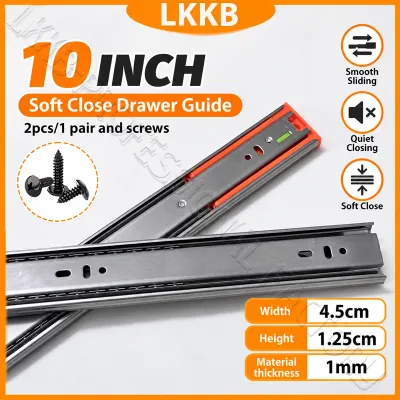

637 Lazada user ratings
Sturdy construction, no wobbling, Perfect fit for my drawers, Durable and long-lasting material, High-quality ball bearings for smooth opera…Read full reviewShow less
Sturdy construction, no wobbling, Perfect fit for my drawers, Durable and long-lasting material, High-quality ball bearings for smooth operation, Easy installation and hassle-free assembly, Excellent customer service from the seller, Great value for money, Effortless opening and closing,
thanks seller sa napakabilis na padeliver d ko lang muna tiningnan isa isa dahil alam ko na ito matibay st heavy duty salamat din sa courier…Read full reviewShow less
thanks seller sa napakabilis na padeliver d ko lang muna tiningnan isa isa dahil alam ko na ito matibay st heavy duty salamat din sa courier napakasipag maghatid
Durable and long-lasting material, Easy installation and hassle-free assembly, Excellent customer service from the seller, Sturdy constructi…Read full reviewShow less
Durable and long-lasting material, Easy installation and hassle-free assembly, Excellent customer service from the seller, Sturdy construction, no wobbling,
heavy and substantial. have no doubt that will do the job well, far better than the flimsy units fixed by the manufacturer.
Smooth and quiet sliding action, Easy installation and hassle-free assembly, Easy installation and hassle-free assembly,
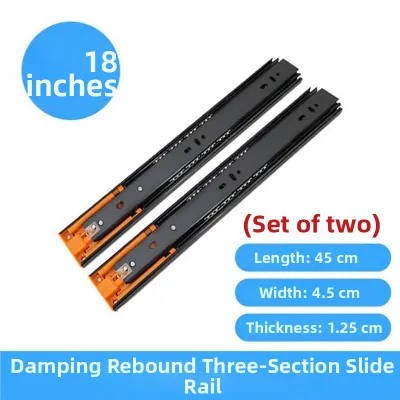
3 Lazada user ratings
ok na to sukat na sukat. salamat st meron cya kasama na tornilyo hindi kagaya ni Mogee Hardware wala kasama na tornilyo pero intayin ipadala…Read full reviewShow less
ok na to sukat na sukat. salamat st meron cya kasama na tornilyo hindi kagaya ni Mogee Hardware wala kasama na tornilyo pero intayin ipadala.
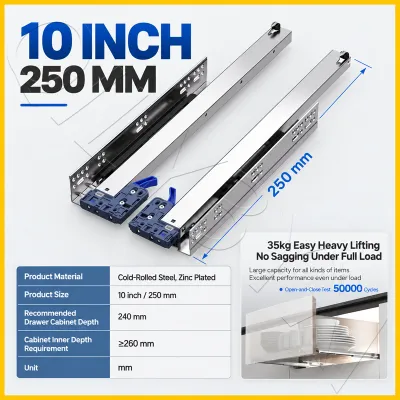
Prices are valid at publication and may change. Please refer to the product page for the latest price.
In contrast, a roller slide typically consists of just two main parts per side: a cabinet profile and a drawer profile. Each profile features a single wheel—usually made of durable nylon, though heavy-duty industrial versions may use steel—mounted at opposite ends. As you pull the drawer out, the drawer wheel rolls along the cabinet track while the cabinet wheel supports the drawer track from underneath. This rolling wheel design is inherently simpler and usually limits the drawer to partial extension, meaning a portion of the drawer box remains inside the cabinet frame when fully opened. The physical profile of roller slides is often wider and less compact than the sleek, vertical profile of ball-bearing slides, which directly influences how they are integrated into furniture designs.
How do ball-bearing and roller slides handle heavy loads differently?
Ball-bearing slides distribute weight evenly across dozens of tiny steel balls along the entire length of the track, whereas roller slides concentrate the entire load onto a few wheel axles and the base of the track. This structural distinction makes ball-bearing mechanisms highly resilient under heavy dynamic loads, while roller slides are more susceptible to axle strain and track deformation when overloaded.

Because ball-bearing slides feature multiple points of contact spread across the entire length of the telescoping members, the physical stress of a heavy drawer is shared broadly. This multi-point distribution prevents localized pressure points, allowing the slide to maintain its structural shape even when supporting heavy cast-iron cookware, tools, or canned goods. To ensure safety and longevity, always check the manufacturer’s stated dynamic and static load ratings on the product specification sheet before purchase. Dynamic load ratings indicate the maximum weight the slide can support while in motion, which is crucial for heavy-duty applications where drawers are frequently opened and closed.
Roller slides, by contrast, rely on only two primary contact points per side where the wheels meet the tracks. When a drawer is heavily loaded, the entire weight is concentrated directly onto the small axles of these wheels and the specific point of the track they are resting on. Under extreme weight, nylon wheels can develop flat spots or crack, and the metal tracks can bow or spread apart, causing the drawer to slip off its tracks.
Beyond the hardware itself, you must verify that the cabinet side panels can structurally support the rated load without bowing or pulling away from the slides. Heavy drawers exert significant leverage on the cabinet walls, especially when fully extended. If your cabinet carcass is constructed from thin or low-density materials like standard particle board, the mounting screws may strip or the panels may warp under the weight. For heavy-duty setups, ensure the cabinet walls are made of thick plywood or solid wood, or reinforce the mounting zones to handle the physical strain.
How does sliding smoothness compare under heavy weight?
Under heavy weight, ball-bearing slides maintain a highly consistent, low-friction glide due to their continuous multi-point contact, while roller slides can experience increased resistance and potential tracking misalignment if debris enters the channel or the wheels deform under stress. This operational difference directly affects how much physical effort is required to open and close fully loaded drawers.
The multi-point contact of ball bearings ensures that lateral forces are minimized, preventing the drawer from twisting or ‘racking’ when you pull it from one side rather than the center. This stability is particularly noticeable when handling wide, heavy drawers, as the precision tracks keep the drawer box moving in a perfectly straight line. Furthermore, many heavy-duty ball-bearing slides are equipped with specialized features like soft-close dampeners, self-closing springs, or progressive movement, where all slide members extend simultaneously to eliminate sudden jerks and reduce noise.
Roller slides operate with a simpler rolling action that can feel smooth when empty but often degrades under heavy loads. Because the wheels roll along an open, horizontal channel, any dust, wood shavings, or kitchen debris that falls into the track will cause a bumpy, uneven ride. Under heavy stress, the friction between the wheel axle and the wheel itself increases, requiring more physical effort to initiate movement.
To verify how a slide will perform in your specific environment, check product descriptions for dampening features and look for verified user reviews that mention performance under load. Testing a physical sample can also reveal whether the slide exhibits play or wobbling when extended. If reviews or tests indicate sticking, racking, or uneven tracking under weight, it is a strong sign that the slide mechanism may not be robust enough for your heavy-duty storage needs.
What installation clearances and mounting requirements must you verify?
Successful installation requires verifying that your cabinet opening and drawer box dimensions match the exact side-clearance tolerances specified by the slide manufacturer, which typically ranges from 12.7 mm (1/2 inch) per side for standard ball-bearing slides to varying widths for roller slides. Precise physical measurements and robust mounting hardware are critical to prevent the tracks from binding, separating, or failing under heavy loads.
Standard side-mount ball-bearing slides require a highly precise clearance—almost universally 12.7 mm (exactly half an inch) on each side of the drawer box. If your drawer box is even slightly too wide, the slides will bind and refuse to move; if it is too narrow, the slides will not engage properly, putting lateral stress on the bearings and potentially causing them to spill out of their retainers. Roller slides, particularly those designed for bottom-corner mounting, sometimes offer slightly more forgiving tolerances, but they still require careful alignment to ensure the wheels stay securely within their tracks.
Before purchasing any hardware, measure the drawer box exterior and the cabinet interior opening at the front, middle, and back. This step is crucial because cabinets are not always perfectly square. If you detect any variance, you may need to use shims behind the slides to ensure they run perfectly parallel to one another. Out-of-parallel slides will bind, increase friction, and wear out prematurely under heavy loads.
Mounting heavy-duty slides also demands robust mounting screws and proper anchoring methods. Standard short screws may pull out of the cabinet walls under the leverage of a fully extended, heavy drawer. Use deep-threaded wood screws of the maximum length your cabinet walls can accommodate, and ensure they are driven perfectly straight. Protruding screw heads can catch on the moving members of ball-bearing slides, stopping them in their tracks. Always consult the specific product’s installation manual for exact dimensional tolerances, recommended screw sizes, and pilot hole depths to ensure a secure, long-lasting fit.
How should you maintain heavy-duty drawer slides to prevent failure?
Maintaining heavy-duty drawer slides involves conducting regular visual inspections for track debris, loose mounting screws, and signs of physical wear, followed by gentle cleaning to keep the rolling elements free of obstruction. Proper care prevents premature wear of the bearings or wheels and ensures the drawer remains safe and functional over years of heavy use.
Begin your maintenance routine with a simple visual check. Open the drawer fully and inspect the tracks for any accumulated dust, pet hair, or spilled kitchen items. Check that all mounting screws remain tight and flush against the metal profiles; loose screws can cause the slide to sag, leading to misalignment and binding. For roller slides, inspect the nylon wheels for cracks, flat spots, or wobble. For ball-bearing slides, look closely at the plastic retainers to ensure no steel balls have escaped or become misaligned.
To clean the tracks, wipe them down with a clean, dry, or slightly damp microfiber cloth to remove dust and grit. Avoid using harsh chemical solvents or abrasive cleaners, as these can strip away the factory-applied grease that protects the bearings and reduces friction. If the tracks have accumulated sticky residue, a mild soap solution on a damp cloth is usually sufficient, followed immediately by a dry cloth to prevent moisture from sitting on the metal.
A common mistake is applying thick, dust-attracting lubricants like standard WD-40 or heavy automotive grease to the tracks. These substances act as magnets for dust and debris, creating an abrasive paste that quickly grinds down bearings and ruins the slide mechanism. Unless the manufacturer’s care instructions explicitly recommend a specific lubricant, it is best to leave the factory grease intact. If lubrication is necessary, manufacturers typically recommend a dry silicone spray or a light, high-quality lithium grease applied sparingly to the bearing tracks.
Finally, know when to stop making DIY adjustments and replace the hardware entirely. If you observe visible metal deformation, bent tracks, broken wheels, or severe track damage that prevents smooth operation, the slide is no longer safe to use. Operating a compromised heavy-duty slide can lead to sudden failure, potentially causing the drawer to fall and cause injury or property damage. Replacing worn hardware promptly is the best way to maintain a safe and reliable storage system.

Community discussion
Share your experience or ask a question. Comments are reviewed before publication.