
Choosing the best bedside table with lock depends on balancing your daily routine with the specific level of security you require. For most homes, a digital or biometric lock offers the highest level of modern convenience and quick access, while traditional key locks provide unmatched mechanical reliability without relying on batteries. If you frequently misplace keys but want to avoid electronic components, a mechanical combination lock serves as an excellent middle ground. To find the right fit, you must evaluate what you are storing, who you are keeping out, and how the tropical climate might affect the physical furniture over time.
Assessing Your Security and Privacy Needs
Before comparing locking mechanisms, you must define the primary purpose of securing your bedside table. Are you trying to keep curious toddlers away from daily medications, or are you looking to secure personal journals and electronics from house guests, roommates, or domestic staff? Identifying the specific threat level helps you avoid over-spending on high-tech systems when a simple privacy lock would suffice, or conversely, relying on a flimsy lock for highly sensitive items.
Access frequency is another critical factor in this decision. If you need to reach for your reading glasses, prescription medicine, or a personal diary every single night, a lock that requires a tedious unlocking process will quickly become a daily frustration. For items you access multiple times a day, keyless digital or biometric locks offer seamless entry. On the other hand, if you are using the drawer primarily for long-term storage of sensitive documents or spare household keys, a traditional key lock that remains locked for weeks at a time is highly practical.
Products mentioned in this guide
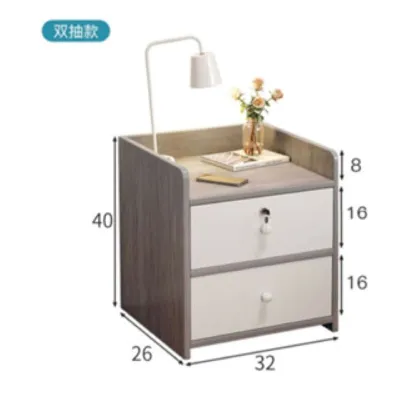
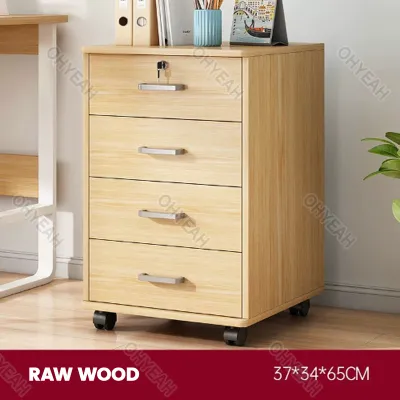
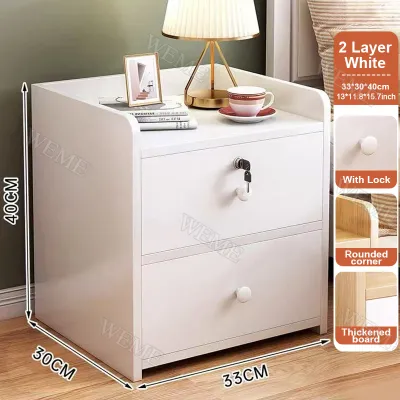
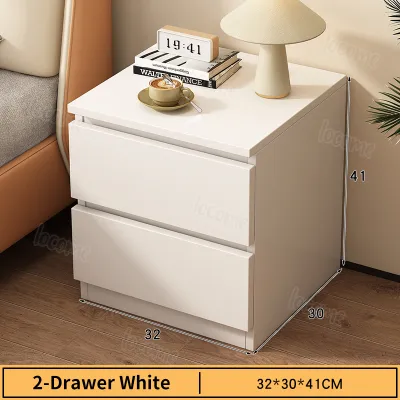
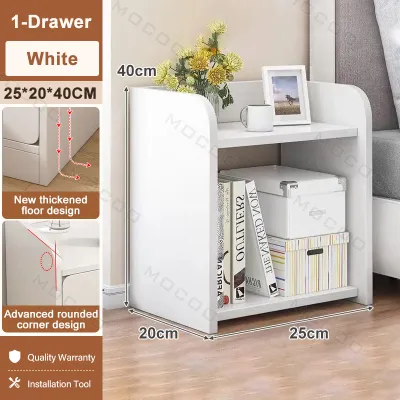
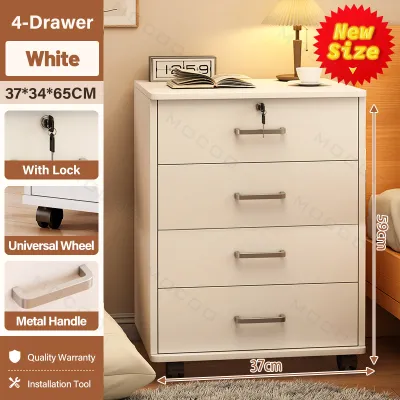
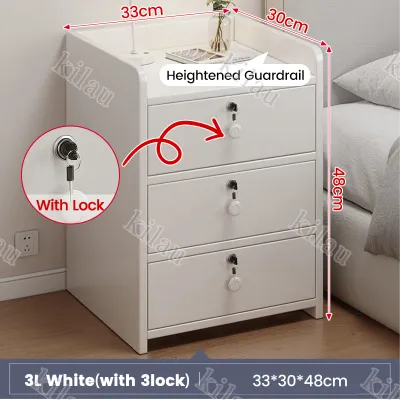
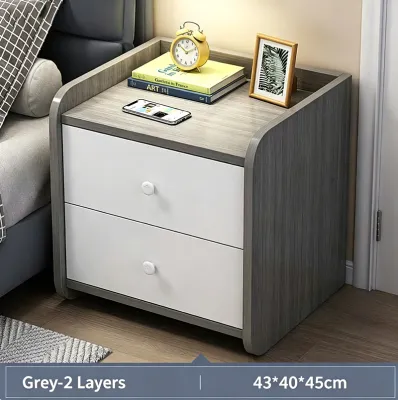
Prices are valid at publication and may change. Please refer to the product page for the latest price.
The physical environment and household dynamics also play a major role, especially in tropical climates like the Philippines where high humidity can affect wooden furniture. In shared living arrangements, boarding houses, or homes with frequent visitors, a bedside table is often the only private sanctuary for your personal belongings. If your bedroom doubles as a semi-public space during family gatherings, having a reliable lock ensures your peace of mind. Understanding these daily patterns allows you to select a locking system that integrates smoothly into your lifestyle without causing unnecessary delays.
Comparing Bedside Table Lock Mechanisms
Selecting the right bedside table with lock requires a clear understanding of the three primary locking systems available on modern bedroom furniture. Each mechanism offers a distinct balance of security, convenience, and maintenance, allowing you to tailor your choice to your household’s specific daily routines.

Key Locks: Traditional and Mechanical
Traditional key locks remain a staple in bedroom furniture due to their straightforward, mechanical design. Because they operate entirely without batteries or electrical wiring, you never have to worry about power failures, system glitches, or sudden lockouts during a power outage. The physical act of turning a key provides a reassuring, tactile confirmation that your drawer is securely locked. This simplicity makes mechanical key locks highly reliable over years of continuous use.
However, physical keys come with inherent vulnerabilities that require careful management. Misplacing or losing the key is a common issue that can leave you locked out of your own drawer, requiring a locksmith or destructive entry to resolve. Additionally, standard furniture keys are relatively easy to duplicate, and basic lock cylinders can sometimes be bypassed with simple tools by a determined intruder. Over time, the internal pins and the key itself can experience physical wear, especially in humid coastal environments where salt air or moisture might accelerate minor corrosion inside the keyway.
This traditional mechanism is ideal for individuals who prefer a classic, low-maintenance setup and do not mind carrying a physical key. It is highly suited for private master bedrooms where the primary goal is basic privacy rather than high-security theft prevention, and where access does not need to be shared with other household members.
Combination Locks: Keyless and Convenient
Mechanical combination locks, featuring either rotating dials or push-button keypads, eliminate the need for a physical key while avoiding the complexities of electronic systems. By memorizing a three-digit or four-digit code, you gain instant access to your bedside table without rummaging through your room for a key. This keyless convenience makes combination locks highly practical for busy households where multiple family members might need authorized access to shared items.
Despite their convenience, combination locks have distinct drawbacks that you must consider. Forgetting the code can result in a frustrating lockout, often requiring you to try every possible combination or force the lock open if there is no master reset key. There is also a risk of shoulder surfing, where someone observes you entering the code, or code guessing if you set the lock to a simple, predictable pattern like sequential numbers. Furthermore, budget-friendly mechanical combination locks can sometimes suffer from internal alignment issues or mechanical jamming if the dials are turned too forcefully or if dust accumulates in the mechanism.
A combination lock is highly recommended for shared guest rooms, rental properties, or for individuals who frequently lose physical keys. It provides a reliable, battery-free security barrier that keeps children and casual snoopers out of your personal drawers while keeping daily operation relatively simple.
Digital and Electronic Locks: Advanced Access
Digital and electronic locks represent the cutting edge of furniture security, utilizing PIN pads, biometric fingerprint scanners, or even RFID cards to grant access. These systems offer unparalleled convenience, allowing you to unlock your bedside drawer in a fraction of a second with a simple touch of your finger or by entering a quick digital code. Many electronic locks also feature automatic locking functions, ensuring the drawer secures itself the moment you slide it shut, which eliminates the risk of accidentally leaving your valuables exposed.
These advanced features come with practical constraints that require active management. Because these locks are battery-operated, you must monitor battery levels and replace them periodically to avoid lockouts. Electronic components are also sensitive to extreme humidity and moisture, which can cause circuit failures or premature battery drain in tropical environments. Additionally, digital locks carry a higher initial cost, require a more complex initial setup, and present a risk of electronic malfunction over years of heavy use.
This high-tech option is best suited for tech-savvy users who prioritize rapid access, want to avoid physical keys entirely, or require advanced features like temporary access codes for guests. It is also excellent for securing sensitive work items, personal electronics, or daily medications that must be accessed quickly but kept strictly out of reach of others.
Furniture and Hardware Checks Before Buying
When shopping for a bedside table with lock, the quality of the furniture itself is just as important as the locking mechanism. Before making a purchase, you must verify the physical dimensions of the unit to ensure it fits comfortably next to your bed without blocking walkways, power outlets, or closet doors. Measure the drawer clearance and the door swing radius carefully; a drawer that cannot open fully due to a nearby bed frame or wall renders the storage space useless. Additionally, check the manufacturer’s specified weight capacity to ensure the table can safely support your bedside lamp, books, and the valuables stored inside without sagging or wobbling.
The structural integrity of the drawer construction is a critical factor in how secure the lock will actually be. Inspect the joints of the drawer box—dovetail or dowel joints offer significantly more strength and resistance to prying than simple glued or stapled butt joints. Examine the drawer slides as well; smooth, ball-bearing metal slides keep the drawer aligned, preventing the locking bolt from rubbing or jamming against the frame. In humid climates, solid wood or high-quality plywood is generally more stable than low-grade particleboard, which can swell, warp, or crumble under moisture, potentially misaligning the lock and making it easy to force open.
Finally, take a close look at the lock’s hardware integration. The strike plate—the metal piece attached to the furniture frame where the lock bolt latches—must be securely screwed into solid wood or a reinforced metal bracket. If the strike plate is mounted on thin, flimsy plastic or soft engineered wood, a gentle pull on the drawer could rip the lock right out of its housing. Ensure the latch mechanism aligns perfectly with the strike plate when the drawer is closed, and check that the handle or pull tab is integrated in a way that allows you to operate the lock smoothly without pinching your fingers or straining the hardware.
Understanding Security Limitations and Alternatives
It is vital to maintain realistic expectations regarding the security provided by a bedside table with lock. Standard bedroom furniture, whether constructed from solid hardwood, medium-density fiberboard (MDF), or plywood, is designed primarily for organization and privacy rather than high-security theft prevention. A determined intruder with basic household tools, such as a screwdriver, crowbar, or hammer, can easily pry open a wooden drawer, break the lock cylinder, or split the wood surrounding the strike plate in a matter of seconds.
Because of these physical limitations, certain high-value or high-risk items should never be stored in a standard locked bedside table. Items such as firearms, large sums of cash, expensive jewelry, and critical legal documents like land titles or passports require a dedicated, heavy-duty, fire-rated steel safe. These specialized safes are designed to withstand physical attacks, extreme heat, and tool tampering, providing a level of protection that no wooden nightstand can replicate.
If you choose to store moderately valuable items in your bedside table, you can enhance its security through strategic placement and installation. Position the table in a discreet corner of the room, away from direct line-of-sight from windows or open doorways. To prevent an intruder from simply lifting and carrying the entire bedside table out of your home, anchor the furniture securely to the wall studs using heavy-duty L-brackets or anti-tip safety straps. Anchoring not only deters theft but also provides essential safety by preventing the furniture from tipping over when heavy drawers are pulled open, protecting children and pets in the household.
Frequently Asked Questions (FAQ)
Can I install a lock on my existing bedside table?
Yes, you can retrofit an aftermarket lock onto an existing bedside table, provided the drawer or door has sufficient structural integrity. Before drilling, you must measure the thickness of the drawer front to ensure the lock cylinder fits properly without protruding excessively or interfering with the internal drawer space. Use a sharp spade drill bit or hole saw to make clean cuts, preventing the wood or laminate from chipping or splitting during installation.
However, retrofitting carries several risks, including the potential to void any existing manufacturer warranties on your furniture. If the wood splits or if you misalign the drill holes, you could permanently damage the drawer front or cause the drawer slides to bind. If you lack the proper tools, such as a power drill, clamps, and measuring square, or if you feel unsure about the process, it is highly recommended to consult a professional carpenter or locksmith to ensure a clean, secure installation.
What happens if a digital lock runs out of battery?
Most modern digital and electronic furniture locks are designed with built-in fail-safes to prevent you from being permanently locked out when the batteries die. Manufacturers typically provide a physical override key that bypasses the electronic system entirely, or an external emergency power port (often a micro-USB or USB-C port) where you can connect a portable power bank to temporarily power the lock and enter your code.
To avoid emergency situations, you should establish a regular battery replacement schedule, such as changing the batteries once a year or immediately when the low-battery warning indicator flashes or beeps. Always keep the physical override key in a separate, secure, and easily accessible location outside of the locked bedside table itself—such as a secure key cabinet or a different room—so you can access it quickly when needed.
Community discussion
Share your experience or ask a question. Comments are reviewed before publication.