
Selecting the right bedside table with integrated charging ports for an elderly family member in the Philippines requires balancing modern convenience with physical safety. As mobility and vision change with age, a bedside table ceases to be a mere decorative surface; it becomes a critical hub for supporting daily routines, housing essential medical devices, and keeping communication lines open. However, finding a model that safely integrates electrical components within a stable, accessible wooden or composite frame can be challenging. Because specific product availability and safety certifications fluctuate across local retail channels and online marketplaces, this guide provides a structured evaluation framework, measurement checklists, and conditional matching criteria to help you confidently filter options. By focusing on physical stability, ergonomic port placement, and material resilience against tropical humidity, you can secure a setup that promotes independence while minimizing household hazards.
Key Physical Features for Accessibility and Safety
The physical design of a bedside table directly impacts an elderly user’s safety, particularly during nighttime hours or moments of low visibility. Edge treatments are the first line of defense against painful bumps and bruises. Standard rectangular nightstands often feature sharp, ninety-degree wooden or metal corners that present significant bruising hazards if a user loses their balance. When browsing options, prioritize tables designed with rounded corners, beveled edges, or soft-upholstered perimeter panels. These softened profiles significantly reduce the impact force of accidental collisions, offering peace of mind in tight bedroom layouts.
Drawer and cabinet hardware must also be evaluated through the lens of joint comfort and grip strength. Intricate, recessed, or tiny metal knobs can be incredibly difficult to grasp for individuals experiencing arthritis or hand tremors. Instead, look for furniture equipped with wide, easy-grip D-pull handles or full-width integrated lip pulls that allow the entire hand to assist in opening. The internal hardware is equally critical; drawers should operate on smooth, ball-bearing gliding tracks that prevent sticking or sudden resistance. Ensure the product specifications or assembly instructions confirm the inclusion of built-in drawer stops or anti-drop mechanisms, which prevent the drawer from being pulled completely out of the frame and spilling heavy contents onto the user’s feet.
Products mentioned in this guide
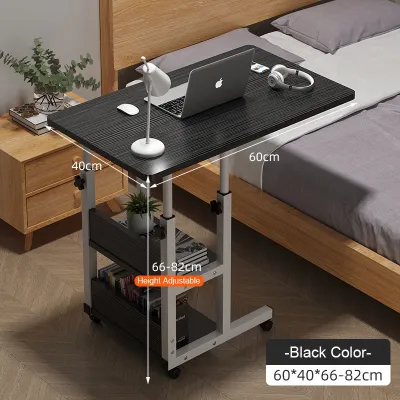
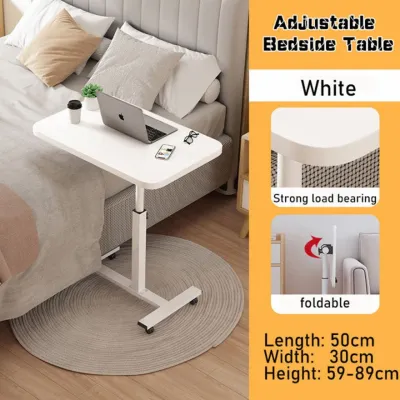



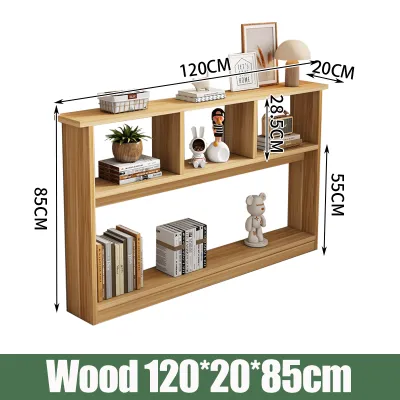
Prices are valid at publication and may change. Please refer to the product page for the latest price.
Matching the table’s overall height to the top of the mattress is another essential ergonomic consideration. If the table is too high, the user must awkwardly reach upward from a lying position, risking shoulder strain or tipping items over. Conversely, a table that sits too low forces the user to bend or lean precariously over the edge of the bed to retrieve a phone or glass of water, which can compromise sitting balance. Aim for a table surface that sits flush with, or up to two inches below, the top of the compressed mattress. This alignment allows the user to slide items horizontally onto the table surface without excessive vertical lifting or leaning.
Assessing Charging Port Placement and Electrical Safety
Integrating electrical outlets into bedroom furniture introduces specific safety considerations that must be carefully managed, especially in humid tropical environments. The physical placement of the charging ports determines how easily an elderly user can plug in their devices without straining. Avoid models where the USB ports or AC outlets are recessed deeply into a top-surface well or positioned near the floor along the back legs. Top-surface wells are prone to collecting dust, lint, and spilled liquids, which creates a direct short-circuit hazard. Floor-level ports, on the other hand, force the user to bend down or crawl to plug in a cord. Look for tables that position the charging module on a raised side panel, an elevated back splash, or integrated directly into the front apron just below the tabletop.

The configuration of the ports and their visual clarity also play a major role in daily usability. A practical charging station should offer a balanced mix of USB-A and USB-C ports alongside standard AC outlets to accommodate both modern smartphones and older medical equipment, such as nebulizers or CPAP machines. For users with low vision, look for modules that feature high-contrast labeling around each port or subtle, low-glare LED indicators that guide the hand in the dark without casting a disruptive glare across the bedroom. If the built-in light is too bright, it can interfere with sleep quality, so a soft, diffused glow is preferable to a harsh blue light.
Electrical safety must be verified by examining the manufacturer’s technical specifications rather than relying on aesthetic appeal. Because the Philippines experiences frequent voltage fluctuations and high relative humidity, the built-in charging strip must feature integrated overload and surge protection. Check the product documentation to confirm that the electrical components are housed in a fire-retardant enclosure and that the main power cord is thick, heavily insulated, and equipped with a grounded three-prong plug. Additionally, look for models with built-in cable routing channels or rear-mounted clips. These design elements keep power cords neatly organized and flush against the wall, preventing loose wires from draping across the floor where they could easily become a dangerous tripping hazard for the user or their caregivers.
Checking Stability, Dimensions, and Room Clearance
A bedside table must remain rock-solid under pressure, particularly if an elderly user relies on it for physical support when standing up or sitting down. Evaluate the base structure of the table to ensure it resists tipping under uneven weight distribution. Models with narrow, tapered legs or top-heavy drawer configurations are inherently unstable and should be avoided. Instead, look for tables with a wide, low-slung base, solid plinth foundations, or sturdy four-legged frames reinforced with lower stretchers. If the user has a history of falls or balance issues, prioritize tables that include dedicated wall-anchoring kits, allowing you to secure the back of the unit directly to the wall studs for absolute stability.
Spatial clearance around the bed is a critical factor that dictates the maximum allowable width of the bedside table. In many homes, bedrooms must accommodate mobility aids such as walkers, canes, or wheelchairs, as well as space for a caregiver to assist the user. Before purchasing, measure the distance from the edge of the bed to the nearest wall or doorway. Ensure that even with the bedside table in place, there remains a clear, unobstructed pathway of at least eighty to ninety centimeters. This clearance allows a walker or wheelchair to turn smoothly without scraping against the furniture or forcing the user to navigate tight, hazardous angles.
Finally, verify the load-bearing capacity of both the tabletop and the individual drawers by consulting the manufacturer’s manual. A bedside table for an elderly user often carries more weight than a standard nightstand, frequently holding heavy water pitchers, multiple electronic devices, reading lamps, and occasionally specialized medical monitors. Ensure the tabletop is rated to support at least fifteen to twenty kilograms of static weight. Because high humidity in the Philippines can cause certain engineered woods to sag or warp over time under heavy loads, check that the structural joints are reinforced with dowels or metal brackets, and verify that the surface finish is moisture-resistant to prevent damage from condensation on cold water glasses.
Building a Conditional Shortlist Based on User Needs
To narrow down your options on e-commerce platforms or in physical furniture showrooms, match the table’s specific configuration to the daily physical capabilities of the user. For individuals with significantly limited mobility or severe arthritis, prioritize tables that feature large, open cubbies or open lower shelves rather than closed drawers. Open storage eliminates the need to operate hardware entirely, allowing the user to easily grab items like tissues, medication organizers, or reading glasses with minimal effort. For this user profile, side-mounted charging ports are ideal, as they keep cords accessible without requiring the user to reach over items stored on the main tabletop.
For users who manage multiple daily items, personal care products, and medical accessories, a model with multiple drawers is highly beneficial to keep the bedside organized and clutter-free. In this scenario, focus on models that offer smooth-gliding drawers with adjustable internal dividers, which prevent small items from rolling to the back. It is vital to verify the durability of the drawer runners; metal ball-bearing slides are highly preferable to plastic tracks, which can warp under the weight of stored items or degrade quickly in warm, humid environments.
If the bedroom layout is tight or requires frequent rearrangement to accommodate medical visits or changing care needs, evaluate mobile bedside tables equipped with heavy-duty caster wheels. These mobile units can be easily rolled out of the way to allow caregiver access or to facilitate bed-making. However, safety is paramount when selecting a wheeled model. You must verify that at least two of the casters feature robust, easy-to-operate locking brakes. The braking mechanism should be positioned in a way that the user can easily engage or disengage it with a foot or a long-handled reacher tool without having to bend down completely to the floor.
Pre-Purchase Measurements and Assembly Safety Checks
Before finalizing any furniture purchase, a few practical checks can prevent costly delivery mistakes and assembly hazards. Begin by measuring the entire delivery path within your home. Confirm that the packaged dimensions of the bedside table can easily clear your front door, narrow hallways, stairwells, and elevator doors. If you live in a multi-story condominium or a home with tight staircases, these clearances are critical. Additionally, review the retailer’s return and exchange policies for bulky furniture items, ensuring you can return the product if it arrives damaged or does not fit the designated space.
Assembly conditions must also be carefully evaluated, particularly regarding the electrical components and structural anchoring. While many bedside tables are sold as flat-pack items requiring self-assembly, securing anti-tip wall anchors or routing internal electrical wiring safely may require professional assistance. If you are not confident in your ability to securely anchor the table to your specific wall type—whether concrete, plaster, or drywall—or if the electrical module requires manual wiring, budget for a professional handyman or assembly service to ensure the installation is structurally sound.
Lastly, establish clear stop conditions during your shopping process. If a product listing on an online marketplace lacks clear documentation regarding its electrical safety certifications, or if the manufacturer cannot provide explicit weight limits for the tabletop and drawers, halt the purchase immediately. Do not compromise on safety for a lower price point or an appealing aesthetic. A bedside table with uncertified electrical components or an unverified load capacity poses a direct fire and physical collapse risk, making it entirely unsuitable for an elderly user’s living space.
Frequently Asked Questions (FAQ)
Can I add charging ports to an existing bedside table?
While retrofitting an existing wooden bedside table with charging capabilities might seem like a cost-effective solution, DIY electrical modifications carry significant risks. Drilling holes into solid wood or engineered panels to install aftermarket power strips can compromise the structural integrity of the table, potentially causing joints to split or drawers to misalign. Furthermore, amateur wiring or using uncertified drop-in grommets increases the risk of electrical shorts, especially in high-humidity environments. A much safer, non-invasive alternative is to use an independent, heavy-duty desktop charging hub equipped with built-in surge protection. You can secure this hub to the tabletop using non-damaging adhesive strips and use clamp-on cable organizers to keep the cords neatly routed and prevent them from falling behind the furniture.
What is the ideal height for a bedside table for someone in a wheelchair?
For a user who primarily navigates their bedroom in a wheelchair, the height of the bedside table must be carefully calibrated to match their specific chair and bed configuration. Start by measuring the height of the wheelchair’s armrests from the floor, as well as the height of the mattress top. To facilitate easy, strain-free transfers of items like phones, water glasses, or medication, the tabletop surface should be positioned flush with or slightly lower than the wheelchair’s armrests. This alignment allows the user to slide items horizontally rather than lifting them over a high barrier. Additionally, check the under-table clearance; if the user needs to pull the wheelchair close to the side of the table, ensure there is sufficient open space beneath the tabletop or between the legs to accommodate the wheelchair’s footrests and front casters without colliding.

Community discussion
Share your experience or ask a question. Comments are reviewed before publication.