
Choosing between bendable plywood and regular plywood for your study room bookcase comes down to a fundamental choice between architectural curves and structural load capacity. Regular plywood is the undisputed champion for flat, heavy-duty shelving, offering the multidirectional rigidity needed to support heavy volumes without sagging. Bendable plywood, on the other hand, is a highly specialized material engineered to wrap around tight radiuses and form dramatic curves, but it possesses virtually no structural strength on its own. To build a bookcase that is both visually striking and structurally sound, you must understand how these two materials behave under load and how they can even be used together.
Evaluating your specific design goals, the weight of your book collection, and your carpentry resources will determine which material successfully delivers your ideal study space. While a standard rectangular bookcase is easily built with regular plywood, introducing arches, rounded corners, or cylindrical elements requires the unique properties of bendable panels. Balancing these material characteristics ensures your finished shelving is both safe and beautiful.
Understanding the Core Differences
To choose the right material, it helps to look at how each type of plywood is manufactured. Regular plywood is constructed by gluing together multiple thin layers of wood veneer, known as plies, with the grain direction of each layer running perpendicular to the one next to it. This cross-banded structure distributes strength evenly in both directions, which minimizes expansion, contraction, and warping while providing excellent dimensional stability across the entire sheet.
Products mentioned in this guide
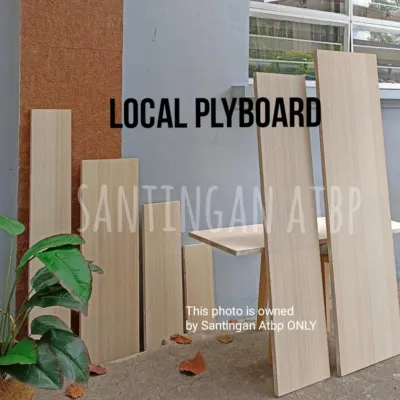


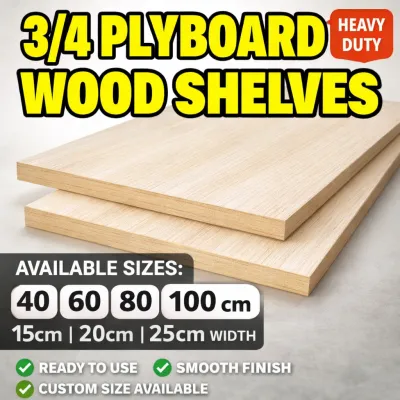
![PARTICLE BOARD/ WOODEN BOARD/ WOOD PLANKS/ WOOD SHELVES PLYBOARD PRE-CUT FOR D.I.Y. [PLAIN WHITE]](https://img.lazcdn.com/g/p/f7c90cb32b6475831dd4a86b7bef55ad.png_400x400q80.png_.webp)
Prices are valid at publication and may change. Please refer to the product page for the latest price.
Bendable plywood, often referred to in the trade as flexiply, is manufactured differently. Its veneers are layered with the grain of all plies running in the same parallel direction, or it features a specialized, highly flexible core layer. This unique configuration allows the sheet to bend easily along a single axis, wrapping into tight cylinders or sweeping curves without splitting. Depending on how the sheet is cut, it will bend either along its length or across its width.
However, this flexibility comes with a major structural trade-off. Because the grain runs in only one direction, bendable plywood lacks the multidirectional stiffness of regular plywood. When bent, it behaves more like a flexible skin than a rigid board. It cannot support its own weight or the weight of books without being laminated to another layer or mechanically fastened to a rigid internal frame.
Structural Integrity and Weight Capacity for Books
Books are deceptively heavy, and a fully loaded shelf can easily experience significant downward force over time. Regular plywood is highly resistant to bending along its length, making it the standard choice for horizontal shelves. When using regular plywood for book storage, selecting a thickness of at least 18mm (3/4 inch) is highly recommended to prevent the middle of the shelf from sagging under the weight of heavy textbooks, binders, or encyclopedias.

If you attempt to use a single layer of bendable plywood as a horizontal shelf, it will immediately sag under even the lightest load. To use bendable plywood in a structural capacity, you must build a rigid skeleton or frame out of solid wood or regular plywood, and then laminate the bendable plywood over that frame. Alternatively, you can glue multiple layers of bendable plywood together over a curved mold; once the adhesive cures completely, the laminated layers lock into a rigid, structural shape.
Before purchasing any panels, always check the manufacturer specifications, thickness tolerances, and grade stamps. Look for high-grade panels with minimal core voids, as voids can compromise the structural integrity of both regular and bendable plywood. For heavy book loads, plan to support your shelves with solid wood cleats, dado joints, or heavy-duty shelf pins, and keep unsupported horizontal spans within reasonable limits to maintain long-term stability.
Proper joinery is also critical for structural safety. Regular plywood holds screws, nails, and dowels exceptionally well when fastened into the face of the panel, though care must be taken not to split the edges. Bendable plywood relies heavily on high-quality wood glues, staples, and uniform clamping pressure during assembly to ensure it bonds tightly to its supporting frame without lifting or shifting over time.
Design Flexibility and Aesthetics
If your dream study room features a modern, minimalist aesthetic with clean, straight lines and modular open shelving, regular plywood is the ideal material. It provides flat, stable surfaces that are easy to cut, assemble, and finish. You can easily cover the exposed, layered edges of regular plywood with solid wood lipping, iron-on veneer edge banding, or high-pressure laminates to achieve a polished, professional look.
For those who prefer organic shapes, arched alcoves, or rounded corner bookcases, bendable plywood opens up a world of creative possibilities. It allows you to design curved fascia boards, rounded end-panels, or cylindrical display columns that soften the sharp angles of a traditional study room. These curved elements can make a custom bookcase look like a high-end, architecturally integrated feature of the home.
However, finishing curved surfaces made of bendable plywood requires extra care and patience. Standard rigid edge banding cannot easily conform to tight curves, meaning you will need to use highly flexible veneer strips, specialized trim, or multiple coats of high-build filler and paint to hide the raw edges. Sanding curved faces also requires hand-sanding or flexible sanding blocks to avoid creating flat spots on the curved profile.
Before starting your project, inspect the surface veneer of both plywood types. Look for smooth, paint-grade or stain-grade faces that are free of patches, splits, or rough grain. If you plan to stain your bookcase, ensure the face veneer species matches the rest of your study room furniture to maintain a cohesive color palette and grain pattern throughout the space.
Cost, Workability, and Local Sourcing
Regular plywood is highly accessible and budget-friendly. In the Philippines, standard commercial plywood and marine-grade plywood are widely available at local hardware stores and lumber yards in various thicknesses and sheet sizes. Marine-grade plywood is particularly popular for home furniture projects because it is manufactured with waterproof adhesives, offering better resistance to delamination in humid environments.
Bendable plywood is a specialty product that is generally more expensive and harder to find. You will likely need to source it from specialized timber importers, large-scale construction supply depots, or dedicated cabinetmaking suppliers. Because of its specialized manufacturing process and lower production volume, bendable plywood carries a noticeable price premium per sheet compared to standard regular plywood.
Working with bendable plywood also demands a higher level of carpentry skill and specialized tools. To achieve clean, consistent curves, you must build precise wooden templates or molds to bend the plywood over. You will also need an assortment of specialized clamping tools, such as strap clamps or vacuum bags, along with high-quality polyurethane or aliphatic wood glues that cure rigidly to lock the curved shape in place.
When sourcing your materials locally, always inspect the delivered sheets carefully before starting construction. Check for pre-existing warping, signs of delamination at the edges, and any moisture damage or mold. In tropical climates, store your plywood sheets completely flat on a raised, dry platform in a well-ventilated area to allow them to acclimate to your home’s humidity levels without bending or twisting.
Decision Framework: Which Plywood Fits Your Project?
To finalize your material selection, evaluate your bookcase design against your budget, tools, and skill level. Choosing the wrong material can lead to sagging shelves or frustrating assembly issues, while the right choice ensures a smooth build and a durable finished product.
Choose regular plywood if:
- Your bookcase design consists of traditional straight shelves, vertical dividers, and flat cabinet doors.
- You need to support heavy book collections, encyclopedias, or heavy decorative items.
- You are working with a standard budget and want materials that are easily sourced at any local hardware store.
- You plan to build the bookcase yourself using standard DIY tools like a circular saw, pocket hole jig, and basic clamps.
Choose bendable plywood if:
- Your design features prominent curved elements, such as arched tops, rounded corners, or wave-shaped decorative panels.
- You have the budget to invest in specialty materials, high-quality adhesives, and specialized clamping equipment.
- You are working with an experienced carpenter or have the advanced woodworking skills required to build bending templates and molds.
In many high-end study rooms, the best solution is a hybrid approach. You can use thick, regular plywood to construct the structural carcass and load-bearing shelves of the bookcase, ensuring the unit remains perfectly rigid and safe. Then, use bendable plywood to create decorative curved valances, arched face frames, or rounded outer end-panels, giving you the perfect balance of structural strength and elegant design.
Frequently Asked Questions (FAQ)
Can I use bendable plywood for the actual shelves that hold books?
No, bendable plywood should not be used as unsupported horizontal shelving. Because its wood grain runs in a single direction, it lacks the multidirectional stiffness required to resist gravity under load. If you place books on an unsupported shelf made of bendable plywood, it will immediately sag and potentially fail. If you want curved shelves, you must laminate multiple layers of bendable plywood together over a rigid mold using high-strength wood glue, or veneer the bendable plywood over a solid, pre-curved support frame.
Does regular plywood come in flexible variants for slight curves?
Standard regular plywood does not come in a flexible variant, as its cross-banded construction is specifically designed to resist bending. However, woodworkers can bend regular plywood slightly using a technique called kerf bending. This involves cutting a series of closely spaced, parallel slots (kerfs) on the back side of the panel, leaving only a thin veneer on the face intact. While kerf bending allows regular plywood to curve, it significantly weakens the panel and requires precise calculations to prevent the face veneer from cracking or telegraphing the cuts.
How do I protect plywood bookcases from humidity in the Philippines?
To protect your plywood bookcase from high tropical humidity, start by choosing high-quality marine-grade or moisture-resistant regular plywood. Ensure that all surfaces, including the back panel and the bottom edges that touch the floor, are completely sealed with a high-quality polyurethane, varnish, or wood sealer to block moisture absorption. Keep your study room well-ventilated, use dehumidifying packets or electronic dehumidifiers if necessary, and avoid pushing the bookcase completely flush against concrete walls to allow for proper air circulation.
Community discussion
Share your experience or ask a question. Comments are reviewed before publication.