
Selecting a sofa set for living room spaces in busy, multi-generational homes requires balancing comfort, physical space, and structural durability. For large families, a 3-5 seater sofa set is more than just a place to sit; it is the focal point for daily gatherings, afternoon siestas, and hosting extended relatives. Finding the right set involves analyzing your household’s daily traffic, understanding how tropical humidity affects different materials, and choosing a configuration that matches your room’s layout.
Investing in a large sofa is a significant financial decision, with mid-range configurations typically running between ₱20,000 and ₱50,000, and premium modular sets exceeding ₱75,000. To ensure your investment survives years of heavy use, you must look past aesthetic appeal and evaluate the underlying construction, frame materials, and suspension systems. This guide provides a comprehensive framework to help you select, measure, and maintain the ideal high-capacity sofa set for your family home.
Understanding the Needs of a Large Family Living Room
To choose the right sofa set for living room use, you must first distinguish between daily family lounging and formal guest hosting. Daily lounging demands deep seat depths—typically 22 to 24 inches or more—and plush, supportive cushioning that allows family members to stretch out, watch television, or nap. Formal guest hosting, on the other hand, requires structured, upright seating with a shallower seat depth of 18 to 20 inches and firmer foam. This firmer support ensures that guests, especially older relatives, can sit down and stand up easily without sinking uncomfortably deep into the cushions.
Products mentioned in this guide
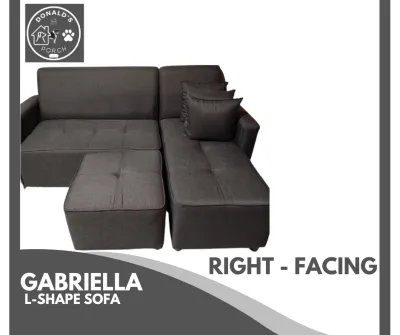
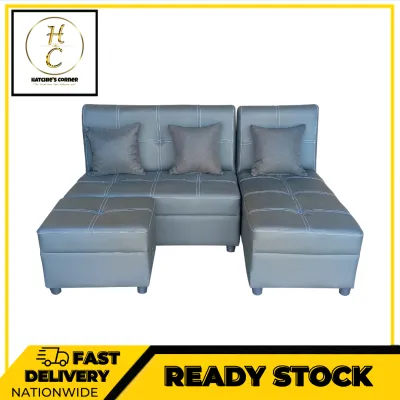
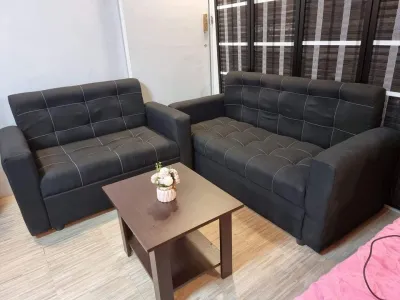
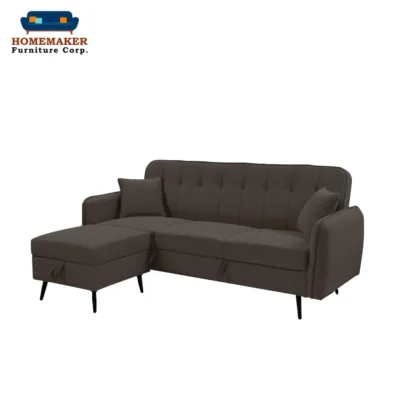
Prices are valid at publication and may change. Please refer to the product page for the latest price.
The tropical climate of the Philippines introduces unique challenges for furniture preservation, making breathability and moisture resistance top priorities. High relative humidity accelerates the degradation of low-quality adhesives and promotes mold growth within dense, unventilated cushions. Upholstery fabrics must allow heat to dissipate to prevent sweat buildup during warm afternoons, while the internal wood frame must be treated to resist fungal decay and insect infestations. Selecting materials that do not trap heat or moisture ensures long-term comfort and prevents the development of musty odors over time.
When evaluating a “3-5 seater” label, you must look at the actual physical footprint and weight capacity rather than the nominal seat count. A standard 3-seater sofa typically measures between 180 and 220 centimeters in width, which comfortably accommodates three adults but can feel cramped for a larger household. A true 5-seater configuration, often arranged as a sectional or a multi-piece set, requires a continuous width or combined footprint of over 300 centimeters. Furthermore, a high-traffic family sofa must feature a robust weight capacity, ideally rated to support at least 100 to 120 kilograms per seating section, to safely handle the dynamic loads of children playing and multiple adults sitting together.
Recommended 3-5 Seater Sofa Configurations
Different living room layouts and family dynamics require specific structural configurations to maximize seating efficiency and room flow.

L-Shaped (Sectional) Sofas for Corner Optimization
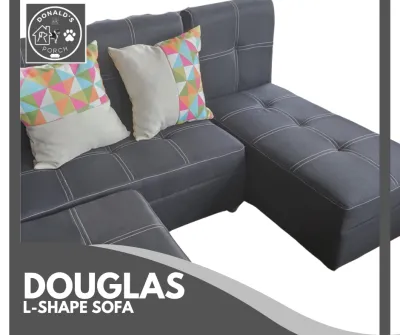
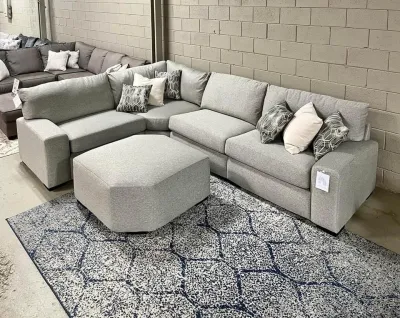
Sectional sofas excel at corner optimization, making them highly efficient for open-plan living areas or square family rooms. By hugging two intersecting walls, an L-shaped sofa frees up the center of the room, providing a safe play area for children or clear pathways for foot traffic. This configuration anchors a large room visually, defining the living zone without the need for physical room dividers or extra walls.
The extended chaise lounge of an L-shaped sectional serves as a highly versatile zone for informal relaxation. It allows one person to recline fully while leaving the remaining sections open for other family members to sit upright. During family gatherings, the chaise can also function as a deep seating platform where multiple children can sit together. This informal layout fosters a cozy, communal atmosphere that is perfect for movie nights or casual weekend afternoons.
However, sectionals come with strict spatial limitations that you must consider before purchasing. Most L-shaped sofas feature a fixed left-arm facing (LAF) or right-arm facing (RAF) orientation, meaning the chaise cannot be swapped to the opposite side. This fixed design limits your ability to rearrange your living room layout in the future. If you relocate to a new home with a reverse floor plan, a fixed sectional may block main entryways or cover windows, forcing you to position the furniture awkwardly.
Modular Sofa Sets for Maximum Flexibility
Modular sofa sets offer unmatched adaptability for dynamic households that frequently host social gatherings or rearrange their spaces. These systems consist of independent seating units—including corner pieces, armless chairs, and standalone ottomans—that can be configured in multiple ways. You can lock the modules together to form a massive U-shaped pit for family gatherings, or separate them into individual armchairs and loveseats to facilitate conversation during formal parties.
When shopping for a modular sofa set for living room use, you must closely inspect the quality of the interlocking connectors. High-quality modular sets use heavy-duty steel gator clips or interlocking brackets mounted beneath the frame to prevent the sections from drifting apart. You should also verify the stability of the individual modules; ensure they feature rubberized feet or sufficient base weight so they do not slide on polished tiled or hardwood floors when a user sits down.
The primary long-term advantage of a modular system is its cost-effective repairability. In a busy household, accidents are inevitable, whether it is a severe fabric stain, a pet tear, or a broken spring. With a traditional one-piece sofa, a localized area of damage often requires replacing or re-upholstering the entire unit. With a modular set, you can simply remove, repair, or replace the single damaged module, preserving the rest of your investment and extending the overall lifespan of your living room furniture.
Classic 3-Seater Plus 2-Seater or Accent Chairs
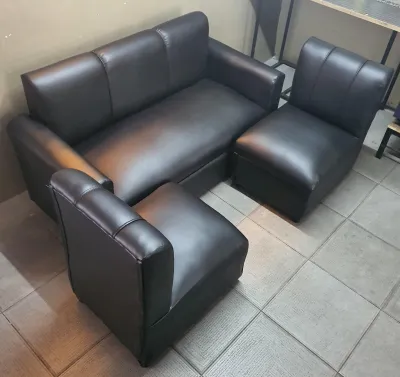
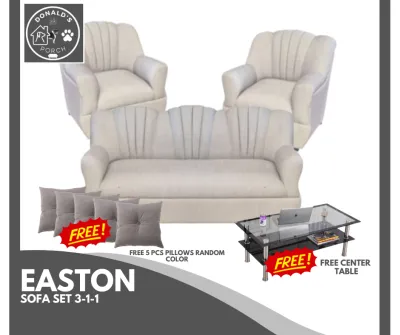
The traditional combination of a 3-seater sofa paired with a 2-seater (loveseat) or individual accent chairs remains a highly effective layout for formal living rooms. This configuration allows you to position the pieces facing each other or in an L-shape, creating a structured conversational circle. This layout encourages face-to-face interaction and eye contact, making it the ideal setup for hosting guests, playing board games, or holding family discussions.
Mixing a large 3-seater with smaller, elevated accent chairs helps balance the visual weight of the room. A single massive sectional can easily overwhelm a medium-sized living room, making the space feel cramped and dark. By pairing a primary sofa with chairs that feature exposed legs and low backrests, you allow light and air to pass through the room. This design choice maintains an airy, spacious aesthetic while still providing the necessary seating capacity for five or more people.
Additionally, multi-piece configurations simplify home maintenance and cleaning routines. Because the individual pieces are lighter and physically separate, you can easily slide them aside to sweep, vacuum, or mop the floors underneath. This mobility is particularly beneficial in tropical regions, where dust, pet dander, and humidity-driven mold spores can quickly accumulate in dark, undisturbed spaces behind and beneath heavy, immovable furniture.
Crucial Buying Criteria for High-Traffic Households
To ensure your sofa set survives the rigors of daily family life, you must evaluate its materials and construction using verifiable technical specifications rather than relying on generic marketing descriptions.
- Upholstery Durability and Breathability: Do not assume a fabric is durable simply because it feels thick. Check the manufacturer's technical specifications for double-rub ratings, which are determined by standardized Martindale or Wyzenbeek abrasion tests. For a high-traffic family home, look for a minimum rating of 15,000 to 20,000 double rubs. Seek out performance fabrics treated with factory-applied stain-release finishes, which allow liquid spills to bead on the surface rather than soaking into the fibers. For homes without continuous air conditioning, prioritize highly breathable synthetic blends, such as heavy-duty polyester-nylon weaves, and avoid thin polyurethane (PU) or PVC faux leathers, which trap body heat, feel sticky, and tend to peel within a few years in humid climates.
- Frame Construction and Joinery: The internal skeleton of the sofa dictates its structural lifespan. Insist on frames constructed from kiln-dried hardwoods, such as mahogany, acacia, or gmelina. The kiln-drying process reduces the wood's internal moisture content to a stable 6% to 8%, which prevents the frame from warping, cracking, or rotting when exposed to high tropical humidity. Examine the joint construction; quality frames are built using double-doweled joints reinforced with corner blocks and heavy-duty wood screws. Avoid frames that rely solely on staples, nails, or cheap water-soluble glues, as these fasteners will quickly pull apart under the dynamic weight of active children.
- Suspension and Cushion Density: The suspension system and foam density determine how well the sofa resists sagging over time. High-quality sinuous (S-shaped) steel springs or traditional eight-way hand-tied spring systems offer the best balance of support and longevity, distributing weight evenly across the frame. For the cushions, look for high-resiliency (HR) polyurethane foam with a density rating of 1.8 to 2.2 pounds per cubic foot (approximately 28 to 35 kilograms per cubic meter). Low-density foam (under 1.5 pounds per cubic foot) will flatten permanently within a year or two of daily use, leaving family members sitting directly on the hard wooden frame.
Space Planning and Delivery Logistics
Before finalizing your purchase of a 3-5 seater sofa set for living room use, you must perform precise spatial measurements to ensure the furniture fits both your room and your home’s entry pathways.
Start by mapping out the exact footprint of the proposed sofa set on your living room floor using painter’s tape or laid-out newspapers. Walk around this mock-up to ensure you maintain a clear walkway of at least 18 to 24 inches (45 to 60 centimeters) between the sofa and adjacent walls or other furniture pieces. This clearance is essential for maintaining a natural traffic flow and preventing family members from bumping into corners. Additionally, ensure there is a distance of 14 to 18 inches between the front edge of the sofa cushions and your coffee table, providing comfortable legroom while keeping drinks within easy reach.
Next, perform a strict “Pinch Point” check to guarantee the delivery team can physically transport the sofa into your living room. Measure the width, height, and diagonal clearance of every doorway, hallway corner, stairwell turn, and elevator door the sofa must pass through. If you live in an urban condominium, pay close attention to the elevator’s internal dimensions and ceiling height. A large 3-seater sofa measuring 220 centimeters in length may not clear the low ceiling of a standard residential elevator cabin, which could result in a failed delivery or force the team to carry the heavy piece up multiple flights of stairs.
Finally, inspect the designated sofa wall for potential physical obstructions. Measure the height of your window sills to ensure the sofa’s backrest does not block natural ventilation or cover window frames. Locate all wall outlets, light switches, and media ports to confirm they will not be buried behind a massive solid backrest, which could create a fire hazard or block access to chargers. If you are purchasing a reclining sofa set, check the manufacturer’s required “wall-hugger” clearance; many motion sofas require 4 to 6 inches of empty space behind the backrest to fully recline without scraping and damaging your living room wall.
Everyday Maintenance for Family Sofas
Establishing a consistent maintenance routine is the most effective way to extend the lifespan of your family sofa and preserve its appearance.
- Weekly Vacuuming and Cushion Rotation: Use a vacuum cleaner equipped with an upholstery brush attachment to clean deep inside the crevices of the sofa every week. This removes abrasive dust, food crumbs, and pet hair that grind into the fabric fibers and accelerate wear. If your sofa features loose, reversible cushions, flip and rotate them every two to four weeks. This simple task distributes the mechanical wear and compression evenly across the foam cores, preventing localized sagging in the most popular seating spots.
- Consulting Care Labels: Before attempting to clean any spills or stains, locate the manufacturer's care label, which is typically sewn onto the bottom dust cover or under the seat cushions. Follow the standardized cleaning codes strictly: "W" means you can use water-based cleaning solutions; "S" indicates you must use water-free dry-cleaning solvents; "WS" allows for both; and "X" means the fabric must only be vacuumed or brushed gently. Applying water to an "S-coded" fabric can cause permanent water rings, fabric shrinkage, or dye bleeding.
- Knowing When to Call a Professional: For minor liquid spills on water-safe fabrics, immediately blot the area with a clean, dry microfiber cloth, working from the outside of the spill inward. Never rub or scrub the fabric, as rubbing forces the liquid deeper into the fibers and can damage the weave or strip protective coatings. If a tough stain persists after gentle blotting, or if your sofa is upholstered in delicate materials, stop DIY cleaning attempts immediately. Applying incorrect household chemicals can permanently set the stain or discolor the fabric. At this point, consult a professional upholstery cleaning service to safely extract the deep-set dirt without risking structural damage.
Frequently Asked Questions (FAQ)
How do I calculate the exact seating capacity of a deep or curved sofa?
To calculate the practical seating capacity of any sofa, apply the standard rule of allocating 20 to 24 inches (50 to 60 centimeters) of flat, usable cushion width per adult. While deep or curved sofas look exceptionally spacious, their physical curves and deep profiles often reduce actual seating capacity. On a curved sofa, the angled sections compress the legroom in front of the cushions, making it uncomfortable for multiple adults to sit side-by-side without bumping knees. Always verify the flat, linear seat width from the manufacturer’s specification sheet rather than relying on the overall external width of the frame.
What is the best layout for a 3-5 seater set in a narrow rectangular living room?
In a narrow rectangular living room, avoid bulky L-shaped sectionals or double-sofa configurations that block natural pathways and make the space feel cramped. Instead, position a single, linear 3-seater sofa against the longest wall, leaving a 2-to-3-inch gap behind it to create an illusion of depth and improve air circulation. To accommodate more people, pair this main sofa with lightweight, leggy accent chairs or low-profile ottomans placed opposite or adjacent. These secondary pieces can be easily moved out of the way when not in use, keeping the central traffic lane clear and maintaining a balanced, open flow through the room.
Community discussion
Share your experience or ask a question. Comments are reviewed before publication.