
Quick Answer: Which Material Wins for a Humid Climate?
Selecting the right mattress for a 60×120 cm crib in the Philippines requires balancing infant safety with the unique challenges of a tropical climate. High relative humidity—often exceeding 80 percent during the rainy season—and year-round warmth make heat dissipation and moisture control top priorities for your baby’s sleep environment.
Natural latex and innerspring mattresses are the most effective options for humid environments. These materials allow air to circulate freely, preventing heat buildup and reducing the risk of mold growth. Traditional memory foam, by contrast, tends to trap body heat and moisture, which can cause discomfort, heat rashes, and unsafe sleeping temperatures for an infant.
Regardless of the material you choose, safety standards dictate that a crib mattress must be exceptionally firm and fit the crib frame perfectly. A snug fit prevents dangerous gaps, while a firm surface supports the infant’s developing spine and keeps their airway clear. Your final choice should align with your nursery’s ventilation, your budget, and your maintenance preferences.
Products mentioned in this guide
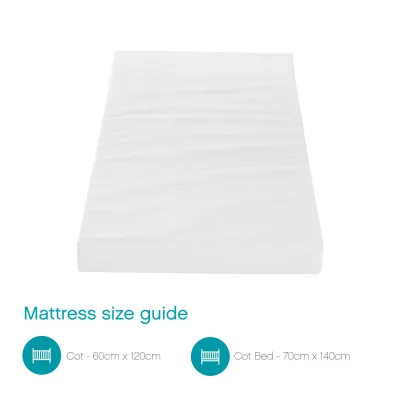
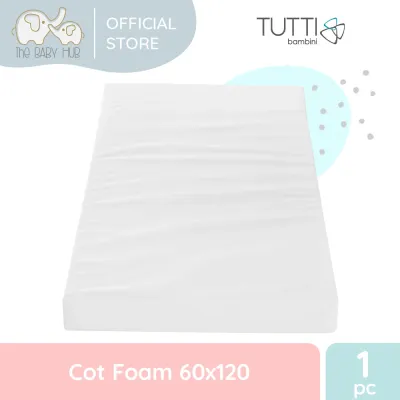
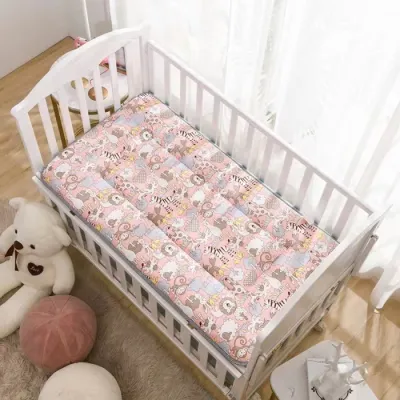
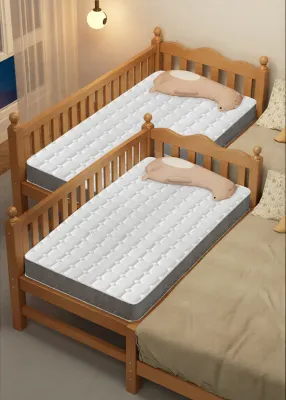

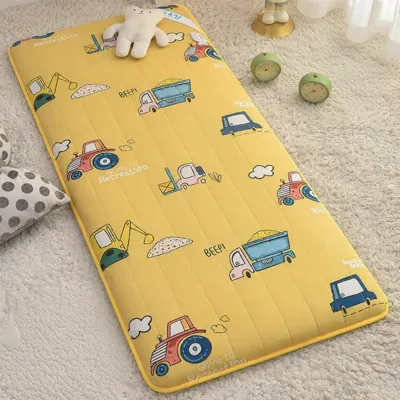
Prices are valid at publication and may change. Please refer to the product page for the latest price.
Critical Safety and Fit Rules for a 60×120 Crib
Before evaluating the performance of latex, springs, or foam, you must ensure the mattress meets strict safety and sizing standards. The 60×120 cm mattress is a standard size for cribs and playpens in the Philippines, but manufacturing tolerances can vary. Even a discrepancy of one or two centimeters can create a hazardous gap between the mattress and the wooden crib rails.

To verify a safe fit, always measure the internal dimensions of your wooden crib or playpen with a physical tape measure before buying. Measure directly from the inside of the slats or solid panels, not from the outer frame. In humid climates, wooden crib frames can swell or warp slightly over time, which can alter the internal dimensions and affect how the mattress sits.
Once the mattress is placed inside the crib, perform the “two-finger rule” to check the gap. If you can fit more than two fingers between the edge of the mattress and any side of the crib frame, the mattress is too small. This gap poses a severe risk of limb or head entrapment for an active baby who rolls during the night. Conversely, a mattress that is too large will bunch up at the edges, creating dangerous ridges and an uneven sleeping surface.
Firmness is the single most critical safety factor for infant bedding. Pediatric health guidelines globally emphasize that babies must sleep on a flat, rigid surface to reduce the risk of Sudden Infant Death Syndrome (SIDS). A soft mattress that contours to the baby’s head can obstruct their breathing if they roll onto their stomach. The mattress should not conform to the shape of the baby’s head or body; instead, it must support them flat on top of the surface.
The physical weight of the mattress also impacts the structural safety of the crib. Heavier mattresses, such as those made from solid natural latex, exert significant downward force on the crib base. Ensure your crib’s slatted base or solid support board is rated to handle the combined weight of a heavy mattress and your growing child. A sagging base can compromise the flat sleeping surface, creating an unsafe incline.
Material Breakdown for Tropical Nurseries
Evaluating how different materials perform under high relative humidity and warm temperatures is key to creating a healthy nursery. Below is a detailed analysis of latex, innerspring, and memory foam mattresses, focusing on their behavior in tropical conditions.
Latex Mattresses (Natural vs. Synthetic)
Natural latex is derived from the sap of rubber trees, a resource abundantly harvested across Southeast Asia. This material possesses an inherent open-cell structure, which functions as a network of tiny, interconnected air pockets. This structure allows warm air and body heat to escape rather than remaining trapped beneath the sleeping infant.
For crib mattresses, natural latex manufactured using the Dunlop process is highly recommended. The Dunlop process results in a denser, firmer foam compared to the softer Talalay method, providing the rigid support necessary for infant safety. This density ensures the mattress maintains its flat surface even as your baby grows and becomes more active.
In the humid climate of the Philippines, mold, mildew, and dust mites are persistent household challenges. Natural latex contains organic compounds that make it naturally resistant to these common allergens and microbes. This resistance is highly beneficial for infants, as it helps maintain a hygienic sleeping surface without the need for harsh chemical treatments.
However, synthetic latex or blended latex options do not share these performance characteristics. Synthetic latex is made from petroleum-based compounds, which tend to retain more heat and lack the natural breathability of organic latex. Over time, high humidity can cause synthetic latex to degrade, crumble, or lose its supportive firmness much faster than its natural counterpart.
To care for a natural latex mattress in a humid environment, never expose the latex core to direct sunlight, as ultraviolet rays will rapidly degrade the natural rubber. Instead, if the mattress needs airing out, remove the cover and place the core in a shaded, well-ventilated indoor space. Always check the manufacturer’s care instructions before cleaning any spills.
When shopping, check the physical law label or manufacturer specifications for the exact percentage of natural latex. Do not rely solely on front-page marketing terms like “green” or “eco-latex,” which can be misleading. Look for independent material certifications, such as the Global Organic Latex Standard (GOLS) or OEKO-TEX Standard 100, to verify the purity and safety of the material.
Innerspring (Coil) Mattresses
Innerspring mattresses utilize a network of tempered steel coils to provide structural support. The defining feature of an innerspring mattress is its hollow core, which consists mostly of open air. This open design provides the highest level of ventilation of any mattress type, allowing air to circulate freely through the entire body of the mattress.
This continuous airflow is exceptionally effective at preventing heat retention. On hot afternoon nap times or humid rainy-season nights, an innerspring mattress helps keep the baby’s body temperature regulated. By allowing sweat and ambient moisture to evaporate quickly, it minimizes the dampness that often leads to heat rashes.
You will generally choose between open coil (Bonnell) systems and pocket spring systems. Open coil systems feature interconnected springs that offer a very firm, traditional feel and maximum airflow. Pocket springs are individually wrapped in fabric sleeves, which can dampen motion transfer but may restrict airflow slightly more than open coils.
Innerspring systems naturally deliver the consistent, flat firmness required for infant safety. The steel coils provide a rigid, resilient foundation that does not sag under localized pressure. This structural stability ensures the mattress remains flat and safe throughout the baby’s first few years of life.
To ensure long-term safety, pay close attention to the edge support of an innerspring mattress. Look for models featuring border rods or high-density foam encasements around the perimeter. Strong edges prevent the mattress from sagging when your baby stands up or leans against the crib rails, reducing the risk of slipping into a gap.
Additionally, because high humidity and salty air in coastal regions of the Philippines can cause metal components to rust, the protective layers are critical. Ensure the coil system is wrapped in high-quality, moisture-resistant padding and enclosed in a breathable, water-resistant cover. This prevents moisture from diaper leaks or humid air from corroding the internal steel springs.
Memory Foam Mattresses
Traditional memory foam is made from polyurethane treated with chemicals to increase its density and viscosity. This material is engineered to soften in response to body heat and pressure, molding itself to the shape of the sleeper. While this contouring pressure relief is comfortable for adults, it presents distinct challenges and safety risks for infants.
The contouring nature of memory foam creates a pocket around the baby’s body, trapping heat and restricting airflow. In a tropical home without continuous air conditioning, this heat retention can cause the baby to overheat rapidly. Overheating is not only uncomfortable but is also a recognized risk factor for sleep disturbances and infant health complications.
Furthermore, high relative humidity can accelerate the physical breakdown of polyurethane foam. Over time, moisture in the air penetrates the foam cells, causing them to soften prematurely. This softening directly compromises the safety-critical firmness of the mattress, increasing the risk of sagging.
More importantly, soft memory foam poses a direct suffocation hazard. If an infant rolls onto their stomach on a contouring surface, the foam can mold around their nose and mouth, blocking their airway. Because babies lack the neck strength to lift themselves out of a soft depression, memory foam must generally be avoided unless it is specifically engineered and certified as extra-firm for infants.
Some modern foam mattresses incorporate “open-cell” designs or gel infusions intended to draw heat away from the body. While these technologies improve thermal performance, they do not automatically guarantee safety. You must still verify that the foam is dense and rigid enough to pass infant firmness tests, and that the mattress cover is highly breathable.
If you choose a foam mattress, ensure the nursery is kept in a climate-controlled environment with active air conditioning. Pair the mattress with a high-performance, moisture-wicking cover to help manage sweat. Always prioritize safety certifications like CertiPUR-US to ensure the foam is manufactured without harmful chemicals or heavy metals.
Head-to-Head Comparison: Latex vs. Spring vs. Memory Foam
To help you visualize the trade-offs between these three materials in a humid tropical environment, the table below compares them across four critical dimensions.
| Evaluation Dimension | Natural Latex | Innerspring (Coil) | Memory Foam |
|---|---|---|---|
| Breathability & Airflow | High (due to open-cell structure) | Excellent (hollow core allows free airflow) | Low (dense structure retains heat) |
| Firmness & Support | Very High (resilient, quick bounce-back) | Very High (rigid steel coil support) | Variable (often too soft; requires strict verification) |
| Moisture & Mold Resistance | High (naturally resistant to mold and mites) | Moderate (requires a protective cover to prevent rust) | Low (can trap moisture within the foam core) |
| Weight & Handling | Heavy (difficult to lift for sheet changes) | Moderate to Light (easy to lift and rotate) | Light (easy to handle and clean) |
Use the following conditional decision framework to choose the best option for your home:
- Choose Innerspring if: Your primary goals are maximum ventilation, lightweight handling for easy sheet changes, and a traditionally firm sleeping surface. This option is ideal for naturally ventilated nurseries or homes without continuous air conditioning, as the hollow core prevents heat buildup. It is also highly practical for parents who must lift the mattress frequently to change sheets after nighttime accidents.
- Choose Natural Latex if: You want a highly durable, naturally hypoallergenic, and mold-resistant mattress. This is an excellent investment if your baby has sensitive skin or respiratory issues, provided your crib has a sturdy base to support the heavier weight of the latex. Keep in mind that solid latex is heavy and requires more physical effort to lift during sheet changes.
- Avoid Standard Memory Foam unless: The mattress is explicitly certified as extra-firm for infants, the nursery is consistently air-conditioned to mitigate heat retention, and the outer cover is made of a highly breathable, moisture-wicking fabric. Standard adult-grade memory foam should never be used in an infant's crib.
Pre-Purchase Checklist: Verifying Claims and Fit
To ensure you are buying a safe and suitable mattress rather than relying on marketing claims, complete these verification steps before finalizing your purchase:
- Check the Physical Law Label: Look at the tag stitched into the mattress seams. It lists the exact percentages of materials used in the core and cover. Do not rely on front-page website descriptions, which may highlight natural materials while hiding synthetic fillers.
- Verify the Exact Dimensions: Measure the length, width, and thickness of the mattress. For a 60×120 cm crib, the thickness should ideally be between 10 and 13 centimeters. A mattress thicker than 13 centimeters can reduce the effective height of your crib rails, making it easier for an older baby to climb out or fall.
- Perform the Hand-Press Test: Before placing your baby on the mattress, press your hand firmly into the center and along the edges. The mattress should feel rigid and spring back immediately to its flat shape when you release the pressure. If your hand leaves a temporary indentation or sinks easily, the mattress is too soft for safe infant sleep.
- Inspect the Cover Material: Look for a cover made from breathable natural fibers, such as organic cotton or bamboo. Ensure any waterproof backing is made from Thermoplastic Polyurethane (TPU) rather than polyvinyl chloride (PVC) or heavy vinyl. TPU provides a reliable barrier against liquids while remaining quiet and breathable, whereas vinyl traps heat and creates a noisy, sweaty sleeping surface.
- Confirm Certification Validity: If a manufacturer claims their mattress is organic or chemical-free, check for valid registration numbers from organizations like OEKO-TEX, GOTS, or CertiPUR-US. You can verify these numbers on the respective organization's public databases to ensure the certifications are active and legitimate.
- Review Manufacturer Instructions: Always read the manufacturer's care and maintenance guidelines before applying any cleaning solutions or protectors. If instructions conflict between the mattress cover and a third-party protector, defer to the mattress manufacturer's guidelines to avoid voiding the warranty or damaging the materials.
Frequently Asked Questions (FAQ)
Do I need a waterproof cover for a latex or spring crib mattress?
Yes, a waterproof cover is highly recommended to protect the mattress core from diaper leaks, spills, and the high ambient humidity of the Philippines. Without protection, moisture can seep into the core, leading to mold growth in latex or rust in steel coils. However, avoid thick, non-breathable vinyl covers. Instead, choose a protector with a breathable, waterproof TPU backing and a soft cotton or bamboo top layer to maintain airflow.
Can I use a second-hand 60×120 mattress for a new baby?
It is strongly advised to avoid using a second-hand crib mattress. Over time, mattress materials can sag and lose the firm, flat support necessary to prevent suffocation risks. Furthermore, in humid tropical climates, a used mattress may harbor hidden mold spores, dust mites, and bacteria deep within its core from previous use or improper storage. Investing in a new, firm mattress is the safest choice for your baby’s health and safety.
Community discussion
Share your experience or ask a question. Comments are reviewed before publication.