
Finding the right adult net hammock (duyan lambat for adult) in the Philippines requires balancing refreshing airflow with absolute structural safety. In our tropical climate, where high humidity, intense sun, and sudden downpours are common, an open-weave net design is the most practical choice for balconies and gardens. The best options are those made from weather-resistant synthetic fibers that dry rapidly, offer verified load capacities, and match your specific physical space.
Key Features to Evaluate in Adult Net Hammocks
Material and Breathability
In the Philippines, humidity can make solid fabric hammocks feel uncomfortably warm. An open-weave net design allows breeze to pass through freely, cooling the body from underneath during hot afternoons. Nylon and polyester are the premier synthetic choices because they resist UV degradation and do not rot when exposed to sudden monsoon rains.
Natural cotton, while soft, absorbs moisture like a sponge, leading to mold, mildew, and weakened fibers over time. When browsing, check the manufacturer’s care label to verify if the fibers are UV-stabilized or treated for outdoor use. Avoid assuming a material’s weather resistance based solely on its name; always check for specific manufacturer care instructions.
Products mentioned in this guide

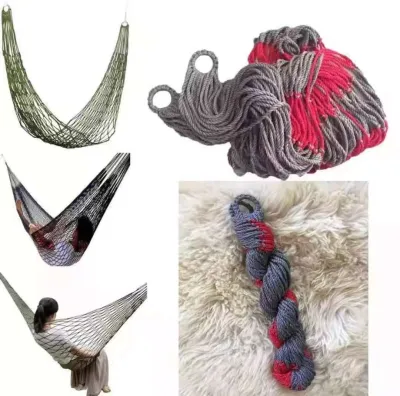
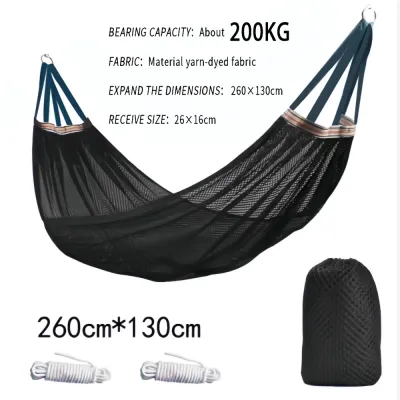
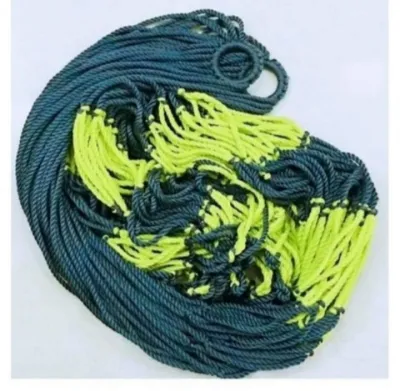
Prices are valid at publication and may change. Please refer to the product page for the latest price.
Weight Capacity and Dimensions
An adult net hammock must be physically long and wide enough to prevent a cramped, uncomfortable posture. Look for a bed length of at least 200 centimeters for a single adult to allow for a comfortable diagonal lay. More importantly, never assume weight capacity based on the visual thickness of the ropes.
Always verify the manufacturer’s specified load limit on the physical tag or official spec sheet before purchasing. For a single adult, a minimum rating of 120 to 150 kilograms is recommended to account for dynamic movement. If you plan to share the space, look for double-sized models rated for 200 kilograms or more.
Suspension and Hardware
The stability of your setup depends entirely on the suspension system. Look for packages that include heavy-duty, multi-loop tree straps or polyester webbing rather than simple nylon ropes, which can stretch and slip under weight.
Carabiners should be made of high-strength steel or aviation-grade aluminum and must carry an explicit weight rating that matches or exceeds the hammock’s capacity. If the hammock features wooden spreader bars, inspect them for a smooth, weather-resistant varnish to prevent splintering and wood rot. All included hardware must be explicitly rated to match or exceed the hammock’s stated weight capacity.
Matching Hammock Styles to Your Balcony or Garden
Space-Saving Options for Balconies
Urban living in high-rise condominiums or apartments across Metro Manila and other major cities often limits outdoor space. Traditional long hammocks require a wide horizontal span that most balconies cannot accommodate. In these compact settings, a net hammock chair (or swing chair) is an excellent space-saving alternative.

These designs suspended from a single overhead anchor point require a fraction of the floor space while providing the same weightless, cradling sensation. They allow you to enjoy the outdoors without blocking the entire walkway of your balcony.
For renters or those who cannot drill into structural concrete, standalone net hammocks with integrated metal or wooden stands are the ideal solution. A high-quality stand provides a stable base without violating lease agreements or risking structural damage.
However, before purchasing, you must measure your balcony’s footprint, railing clearance, and ceiling height. Ensure there is at least one meter of clearance on all sides of the stand to allow for safe entry, exit, and gentle swaying without colliding with walls or glass doors.
Additionally, consider how the stand will be transported to your balcony. Verify the packaged dimensions of the frame to ensure it can fit through standard doorways, narrow hallways, or condominium service elevators. A heavy-duty steel frame with a powder-coated finish is highly recommended for balcony use, as it resists rust from salty coastal air or humid city drafts while providing a stable, tip-resistant foundation.
Spacious Setups for Gardens and Yards
If you have a spacious garden, backyard, or provincial lawn, you have the freedom to install larger, traditional gathered-end net hammocks or expansive spreader-bar designs. Gathered-end hammocks conform closely to the shape of your body, creating a secure, cocoon-like pocket.
Spreader-bar net hammocks, on the other hand, keep the bed flat and open, making them easier to get into and out of, though they require a more tensioned, wider hanging distance to remain stable. Both styles offer excellent relaxation but require different spacing.
When hanging a hammock between natural anchor points, such as mature trees, measuring the distance is critical. The ideal distance between two trees is typically 3 to 4.5 meters, depending on the length of your hammock.
To achieve the most comfortable, ergonomic lay, aim for a 30-degree hanging angle for the suspension straps. If the trees are too far apart, you will need extra-long, heavy-duty tree straps to bridge the gap without overtensioning the hammock, which can put excessive stress on the seams and anchor points.
Before wrapping straps around any tree, carefully inspect its health and physical dimensions. Only use mature, healthy hardwood trees with a trunk diameter of at least 15 to 20 centimeters. Avoid young saplings, softwoods, or decorative palms, which can bend, snap, or suffer severe bark damage under load.
Always use wide, flat polyester tree straps rather than thin ropes or wires; flat straps distribute weight evenly across the trunk, protecting the tree’s delicate cambium layer from being stripped or girdled.
Safe Installation and Structural Checks
Assessing Anchor Points
Safety begins with identifying load-bearing structures. When installing a hammock indoors or on a covered patio, look for solid concrete walls, reinforced concrete ceilings, or heavy structural timber beams.
Never attempt to mount a hammock to drywall, plasterboard, thin wooden studs, PVC pipes, or unverified brick masonry, as these materials cannot support the dynamic force of a human body. If you are unsure of your balcony’s structural integrity, consult a structural engineer or your building’s administration before proceeding.
Hardware and Knots
To secure the hammock, use dedicated, load-rated hardware such as stainless steel eye bolts, heavy-duty wall anchors, or specialized tree straps. Avoid using random ropes, clotheslines, or hardware store chains that lack certified load ratings.
If your setup requires tying knots, refer to the manufacturer’s official installation guide for recommended knots, such as the bowline or taut-line hitch, which are designed to hold under tension without slipping. Ensure all carabiners are fully locked and aligned along their major axis before putting any weight on the system.
Pre-Use Testing and Inspection
Before climbing into your newly installed net hammock, perform a gradual weight-loading test. Hang the hammock so that its lowest point is no more than 30 to 45 centimeters off the ground when occupied.
Place heavy objects, such as sandbags, into the hammock first, or slowly apply your weight while keeping your feet firmly on the ground. Establish a routine visual inspection schedule: check the netting for frayed cords, inspect metal hardware for rust or hairline cracks, and examine stitching on the suspension loops for signs of stretching or separation.
Maintaining Your Net Hammock in a Tropical Climate
Routine Cleaning
The high humidity and coastal salt air of the Philippines can accelerate the buildup of sweat, body oils, and environmental grime on your net hammock. To keep the fibers strong and odor-free, gently hand-wash or spot-clean the netting.
Fill a large basin with lukewarm water and a small amount of mild liquid soap. Submerge the hammock and gently agitate it by hand, using a soft-bristled brush to clean any stubborn spots. Avoid harsh chemical cleaners, bleach, or fabric softeners, as these can degrade the synthetic fibers and strip away UV-resistant coatings.
Drying and Storage
After washing, rinse the hammock thoroughly with clean water to remove all soap residue. Hang it up to air-dry completely in a shaded, well-ventilated area.
Never place a net hammock in a mechanical dryer, and avoid leaving it in direct, intense sunlight to dry, as excessive heat can weaken synthetic fibers. Ensure the hammock is 100 percent dry before folding or rolling it up.
Storing a damp net hammock in a closed space will rapidly lead to mold, mildew, and unpleasant odors, which can permanently damage the material. Store it in a breathable mesh bag in a cool, dry indoor closet.
Weather Protection
While high-quality synthetic net hammocks are built for outdoor use, continuous exposure to the elements will shorten their lifespan. During the Philippine monsoon season, or when heavy storms and typhoons are forecasted, always take your hammock indoors.
If you use a standalone stand that must remain outside, invest in a heavy-duty, waterproof cover to protect the frame and hammock bed from pooling rainwater. Always refer to the manufacturer’s care label for specific instructions regarding machine washing, water temperature limits, and chemical compatibility.
Frequently Asked Questions (FAQ)
Can I leave my net hammock outside all year round?
While high-quality synthetic net hammocks are designed to withstand outdoor conditions, leaving them exposed to constant tropical sun, heavy rain, and high humidity year-round is not recommended. Over time, UV rays will degrade even treated polyester or nylon fibers, making them brittle and unsafe. To maximize the lifespan of your hammock, take it down and store it indoors when it is not in use for extended periods, or protect it with a dedicated weatherproof cover.
How do I hang a hammock on a concrete balcony ceiling?
Hanging a hammock from a concrete balcony ceiling requires drilling and installing heavy-duty masonry anchors, such as sleeve anchors or wedge anchors, that are explicitly rated for dynamic loads. Because drilling into concrete carries the risk of hitting structural rebar or hidden electrical conduits, you should always consult a professional contractor or your building administration first. If drilling is not permitted or safe, a freestanding hammock stand is the best alternative.
What is the difference between a net hammock and a fabric hammock?
The primary difference lies in breathability and drying speed. Net hammocks (duyan lambat) feature an open-weave design that allows maximum airflow, keeping you cool in hot, humid tropical climates, and they drain water quickly after a rain shower. Fabric hammocks, made of solid canvas or quilted cotton, offer a warmer, more enclosed feel but can trap heat and sweat, and they take significantly longer to dry, making them more susceptible to mold and mildew outdoors.
Community discussion
Share your experience or ask a question. Comments are reviewed before publication.