
Organizing a wardrobe in the Philippines requires a careful balance between visual neatness and practical protection. The country’s high relative humidity, seasonal dust, and tropical climate mean that clothing storage cannot rely on open shelves alone without risking musty odors, mold, or fabric degradation. Utilizing aesthetic plastic storage boxes—commonly referred to locally as duraboxes—offers an ideal solution. These containers protect garments from environmental elements while transforming chaotic closet interiors into serene, visually cohesive spaces.
To achieve a successful wardrobe organization system, you must select containers that harmonize with your bedroom’s interior design while meeting strict functional requirements. The ideal storage setup utilizes modular, stackable boxes in neutral tones or transparent finishes, sized precisely to fit your existing shelving. By selecting the right styles for specific clothing categories and verifying physical clearances before purchasing, you can create an efficient, beautiful closet that simplifies your daily routine.
Defining the Balance: Aesthetic Appeal vs. Wardrobe Functionality
When designing a modern bedroom interior in the Philippines, the concept of aesthetics has shifted away from purely decorative elements toward functional minimalism. Contemporary design movements, such as Japandi and warm minimalism, emphasize clean lines, clutter-free surfaces, and a cohesive color palette dominated by soft whites, creams, warm grays, and muted earth tones. In a wardrobe, this translates to replacing mismatched hangers and chaotic piles of clothing with uniform, structured storage containers that create a sense of visual order.
Products mentioned in this guide
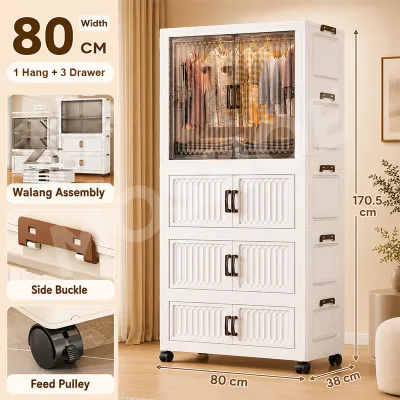
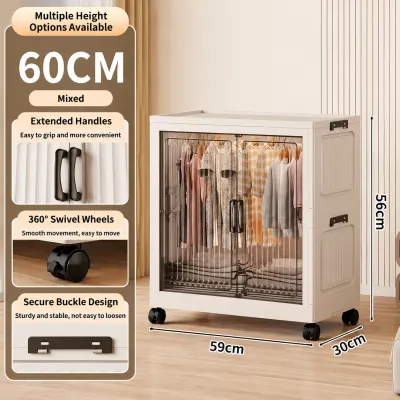
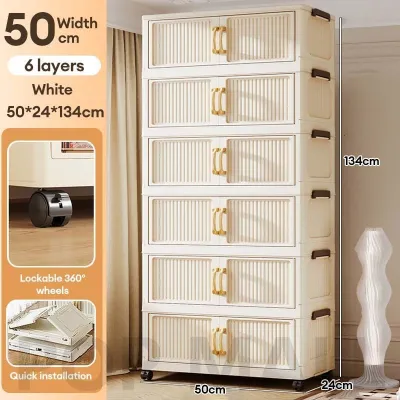
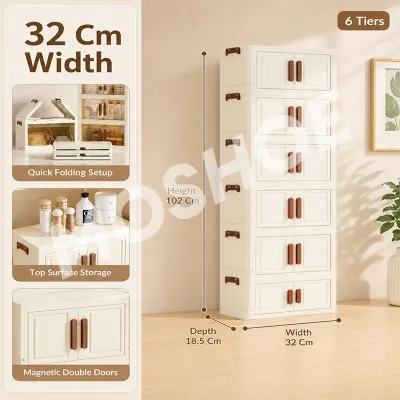
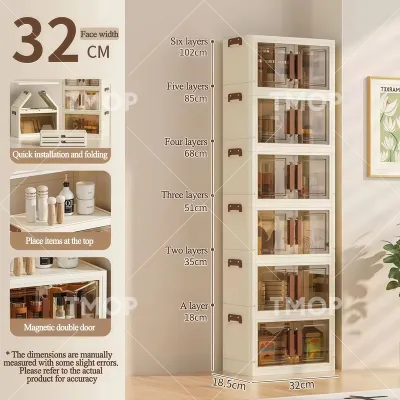
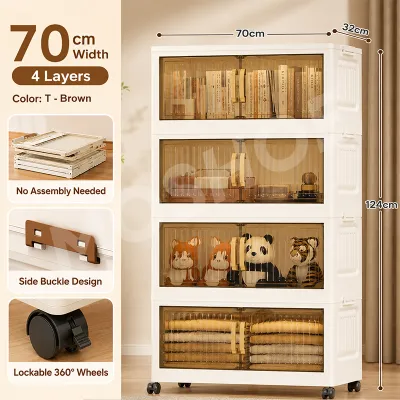
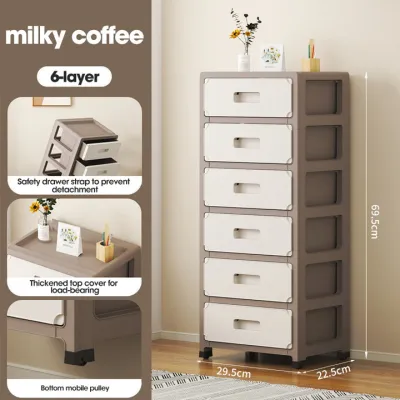
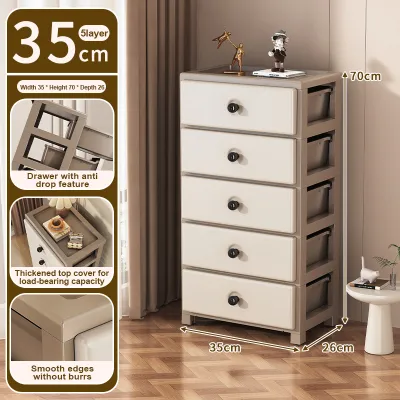
Prices are valid at publication and may change. Please refer to the product page for the latest price.
However, visual appeal must never come at the expense of wardrobe functionality. A storage box is only as good as its ability to preserve and organize your clothing. In tropical climates, functional storage requires dust-proof lids that fit securely to keep out airborne particles and insects. Furthermore, the boxes must feature smooth, injection-molded edges both inside and out to prevent snagging delicate fabrics like silk, lace, or fine knits. They also require flat, reinforced bases and recessed lids that allow for secure, wobble-free vertical stacking.
Balancing these two aspects is critical for long-term satisfaction. If you prioritize aesthetics alone, you might choose beautiful woven baskets that lack lids, leaving your off-season clothes exposed to dust and humidity. Conversely, choosing industrial-grade utility tubs might protect your garments but will ruin the calming, sophisticated atmosphere of your bedroom. The key is to select high-quality plastic storage units designed specifically for home interiors, ensuring they match your aesthetic preferences while offering the structural integrity needed to protect your wardrobe.
Curated Aesthetic Durabox Styles for Different Storage Needs
Minimalist Opaque and Frosted Bins
Minimalist opaque and frosted plastic bins are the premier choice for creating a clean, uniform look inside your wardrobe. These boxes are typically made from high-density polypropylene, which offers a smooth, matte finish in solid neutral shades like off-white, beige, or charcoal, or a semi-translucent frosted appearance that softly diffuses the colors inside.

- Best Use Cases: These bins are ideal for storing mixed-color garments, off-season apparel, bulky winter wear used for travel, or miscellaneous accessories that tend to look chaotic when grouped together. They are also excellent for open-shelf wardrobes where you want to completely hide visual clutter from view.
- Aesthetic Value: By hiding the varied textures and colors of your clothing, opaque bins create a clean, uniform facade. This uniformity establishes a calming, hotel-like aesthetic inside your closet, making the entire room feel more spacious and organized.
- Limitations: Because the contents are completely hidden, it is easy to forget what is stored inside each container. To prevent the frustration of opening multiple boxes to find a single item, you must implement a disciplined labeling system. Using minimalist label makers, uniform hangtags, or subtle adhesive pocket labels on the front of each box will maintain the clean look while ensuring high usability.
Clear and Stackable Modular Boxes
Clear modular storage boxes, often constructed from rigid polystyrene or acrylic, offer crystal-clear visibility. Unlike traditional cloudy plastic tubs, these high-transparency boxes act like glass showcases for your wardrobe contents.
- Best Use Cases: Clear boxes are best suited for folded t-shirts, denim, sweaters, towels, and activewear. They work exceptionally well when you organize your clothing using vertical folding methods, where items are filed upright rather than stacked on top of one another.
- Aesthetic Value: The aesthetic appeal of clear boxes relies entirely on the neatness of their contents. When your clothes are folded uniformly and arranged in color-coordinated rows, clear boxes create a stunning, boutique-style display. They maximize the perception of space within a wardrobe by allowing light to pass through, preventing the closet from feeling cramped.
- Limitations: These containers have zero tolerance for untidiness. A single hastily thrown-in garment or a messy pile of clothes will be instantly visible, ruining the clean aesthetic of your wardrobe. Additionally, clear rigid plastics are more prone to showing exterior dust, fingerprints, and micro-scratches, requiring regular wiping with a soft cloth to maintain their pristine appearance.
Drawer-Style Storage Units
Drawer-style plastic organizers feature an outer structural frame housing a slide-out drawer. These units can be stacked vertically to mimic the functionality of a traditional wooden chest of drawers, but with the lightweight flexibility of modular plastic.
- Best Use Cases: These units are perfect for daily-use items that require frequent access, such as underwear, socks, daily-wear t-shirts, activewear, and pajamas. They eliminate the need to unstack and lift heavy lids to retrieve items at the bottom of a stack.
- Aesthetic Value: Stacked drawer units provide a built-in, custom-closet appearance. They feature uniform, flat drawer fronts with integrated, low-profile handles that blend seamlessly into modern wardrobe interiors. This structured front hides the contents while presenting a sleek, architectural look.
- Limitations: Drawer units require precise physical clearance. You must ensure that the wardrobe doors can open fully to allow the drawers to extend without hitting hinges, door frames, or sliding door tracks. Additionally, because of the double-wall construction of the frame and the drawer, these units generally take up slightly more vertical and horizontal space per storage layer than simple lidded boxes.
Textured and Woven-Look Plastic Bins
Textured plastic bins are designed to mimic the organic look of natural woven materials, such as rattan, wicker, or knit fabrics. They are manufactured using advanced injection molds that replicate these intricate textures while utilizing durable, moisture-resistant polymers.
- Best Use Cases: These bins are excellent for open wardrobe shelving, vanity tops, or bedroom corners where the storage is highly visible. They are ideal for storing lightweight accessories, scarves, belts, hats, and small handbags.
- Aesthetic Value: Natural rattan and wicker can easily rot, harbor dust mites, or snag fabrics in humid tropical climates. Textured plastic bins solve this by offering the warm, organic aesthetic of bohemian or rustic design while remaining completely washable, durable, and resistant to moisture and pests.
- Limitations: The textured exterior surfaces feature small crevices that can trap dust, lint, and pet hair over time. Cleaning these bins requires more effort than wiping down smooth plastic; you may need to use a soft-bristled brush or rinse them under running water occasionally. Furthermore, you must inspect the interior of these bins for any rough molding seams that could snag delicate knitwear or silk accessories.
How to Measure Your Wardrobe and Plan the Layout
To ensure your chosen aesthetic duraboxes fit perfectly and operate safely, you must perform accurate physical measurements of your wardrobe space before making a purchase. Relying on visual estimation often leads to boxes that are too wide for the shelves, too deep for the doors to close, or too heavy for the shelf structure to support.
Step-by-Step Wardrobe Measuring Guide
- Measure the Interior Depth: Extend your measuring tape from the back wall of the wardrobe to the front edge of the shelf. If you have sliding doors, measure only up to the inner track. If you have hinged doors, ensure you measure up to the point where the door sits when closed.
- Measure the Interior Width: Measure the usable horizontal width of each shelf from left to right. Be sure to measure the narrowest point, especially if your wardrobe has interior vertical supports or door hinges that protrude into the shelf space.
- Measure the Vertical Height: Measure the distance from the surface of one shelf to the underside of the shelf above it. Do this for each individual compartment, as shelf heights can vary within a single wardrobe unit.
Checking for Critical Clearances
Once you have the raw dimensions, you must account for the clearances required to actually use the boxes.
- Hinge and Track Obstructions: Many wardrobes feature cabinet hinges that protrude several centimeters into the opening. If you place a wide box on a shelf, it may clear the inner shelf width but get blocked by the hinge when you try to slide it out. Always subtract the width of any protruding hinges or sliding door overlaps from your usable width.
- Lid and Drawer Clearance: For lidded boxes, you need at least 2 to 3 centimeters of vertical clearance above the box to comfortably lift the lid or slide the box out without scraping the shelf above. For drawer-style units, ensure there is enough floor or shelf depth in front of the wardrobe to allow the drawer to extend fully without hitting nearby bedroom furniture.
Planning Your Layout for Stability and Safety
When planning where to place your boxes, always follow the principle of descending weight. Place larger, heavier boxes containing items like denim, heavy sweaters, or bed linens on the lowest shelves or the wardrobe floor. This lowers the center of gravity of the entire wardrobe unit, preventing it from becoming top-heavy and tipping forward.
Save the higher shelves for smaller, lighter modular boxes containing accessories, activewear, or seasonal items. If you are stacking boxes, never stack them higher than chest level unless they are secured or feature robust interlocking lids that prevent shifting. Stacking boxes too high makes retrieving items dangerous and increases the risk of the stack collapsing.
Finally, verify the weight capacity of your wardrobe shelves. Many mass-produced wardrobes are constructed from particleboard or medium-density fiberboard (MDF), which can bow, sag, or snap under concentrated loads. Standard 15mm particleboard shelves typically have a safe load limit of 10 to 15 kilograms distributed evenly. If you plan to stack multiple plastic boxes filled with heavy textiles on a single shelf, ensure the combined weight of the boxes and their contents does not exceed the manufacturer’s recommended weight rating.
Quick Comparison: Matching Box Styles to Your Clothes
| Storage Box Style | Visual Clutter Hiding | Content Visibility | Ease of Cleaning | Best Stored Items |
|---|---|---|---|---|
| Minimalist Opaque / Frosted | Excellent (completely hides contents) | Low (requires labeling) | High (smooth surfaces wipe clean easily) | Off-season garments, travel wear, mismatched accessories |
| Clear & Stackable | Low (reveals all contents) | Excellent (instant visual tracking) | Medium (shows dust and fingerprints easily) | Color-coordinated folded t-shirts, jeans, towels |
| Drawer-Style | High (uniform front panels) | Medium (visible only when pulled open) | High (smooth plastic frame and drawer) | Underwear, socks, activewear, daily-use folded shirts |
| Textured / Woven-Look | High to Medium (textured patterns diffuse view) | Low (usually opaque) | Low (crevices require brushing or rinsing) | Lightweight accessories, scarves, belts, small handbags |
Where to Shop and Final Checks Before Buying
When shopping for aesthetic duraboxes in the Philippines, it is best to purchase from reputable sources to ensure material safety and product longevity. Look for official home organization brand stores on major e-commerce platforms, visit local specialty home goods retailers, or explore physical furniture showrooms. Purchasing from established channels ensures you receive genuine, food-grade, or high-quality virgin plastic products that are free from toxic chemical odors and accompanied by reliable customer support.
Before finalizing your purchase and moving to checkout, perform these final quality and compatibility checks:
- Verify Exact Dimensions: Do not rely solely on the stated capacity in liters (e.g., "30L" or "50L"). Liters measure volume, not shape. A 30-liter box can be tall and narrow or short and wide. Always check the exact exterior width, depth, and height measurements provided in the product specifications.
- Check the Return Policy: Plastic storage boxes are bulky and can occasionally suffer cracks, chips, or warped lids during transit. Ensure the retailer offers a clear, hassle-free return or replacement policy for items damaged during shipping.
- Read Customer Reviews: Look closely at recent reviews to assess the durability of the lid's snap-fit mechanism and the stability of the interlocking stack design. If multiple reviews mention that the plastic is brittle or that the lids do not close tightly, look for an alternative model.
- Factor in Shipping Costs: Because storage boxes are bulky, online marketplaces often calculate shipping fees based on dimensional weight (volume) rather than actual weight. Keep this in mind when budgeting, as shipping fees for large, non-collapsible boxes can add a significant premium to the total cost.
Frequently Asked Questions (FAQ)
How do I prevent clear plastic boxes from yellowing over time?
To keep clear plastic storage boxes from yellowing and losing their pristine transparency, you must protect them from ultraviolet (UV) light and harsh chemicals. Avoid placing the boxes in areas of your bedroom that receive direct, intense sunlight through windows, as UV rays break down the polymers and cause discoloration.
When cleaning the boxes, avoid using abrasive scrubbers, bleach, or alcohol-based chemical cleaners, which can create micro-scratches and cause the plastic to turn cloudy. Instead, wash them gently using a soft microfiber cloth, lukewarm water, and a few drops of mild dish soap, then dry them completely before placing them back in your wardrobe.
Is it safe to stack multiple heavy duraboxes on standard wardrobe shelves?
Stacking multiple heavy storage boxes is safe only if you verify the structural integrity of both the boxes and your wardrobe shelving. First, ensure the boxes are designed for stacking, featuring recessed lids and reinforced corners that distribute weight evenly down the sides of the container rather than pressing directly onto the center of the lid below.
Second, check the weight capacity of your wardrobe shelves, particularly if they are made of composite materials like particleboard or MDF, which are prone to sagging over time. To maximize safety, place your heaviest items in the bottom-most boxes on the wardrobe floor or the lowest, sturdiest shelf. This lowers the center of gravity, reduces the load on elevated shelves, and prevents the stack from tipping over when you open the wardrobe doors.
Community discussion
Share your experience or ask a question. Comments are reviewed before publication.