
Skipping the headboard is one of the smartest design choices you can make when furnishing a child’s bedroom in the Philippines. A bed frame without a headboard maximizes limited floor space, adapts effortlessly as your child grows, and eliminates a major dust-collecting surface in humid tropical environments. By focusing on a streamlined base, you gain the flexibility to position the bed against any wall or tuck it neatly under low windows and sloped ceilings.
Choosing the right headboard-less frame requires balancing structural stability with child-friendly safety features. Because children use their beds for far more than just sleeping—often turning them into reading nooks, play zones, or study areas—the frame must withstand daily wear and tear. From low-profile platform designs for toddlers to space-saving trundle setups for shared rooms, selecting the ideal frame involves verifying weight limits, material finishes, and joint construction to ensure a safe and comfortable environment.
Why Choose a Headboard-Less Bed Frame for a Child's Room?
Selecting bedroom furniture for growing children requires a long-term perspective, especially when dealing with the compact layouts typical of many Philippine homes. Standard headboards add significant bulk, often extending several inches beyond the mattress and locking the bed into a single, rigid position against a wall. Removing this component immediately frees up valuable physical and visual space, making even a small bedroom feel significantly more open and airy.
Products mentioned in this guide
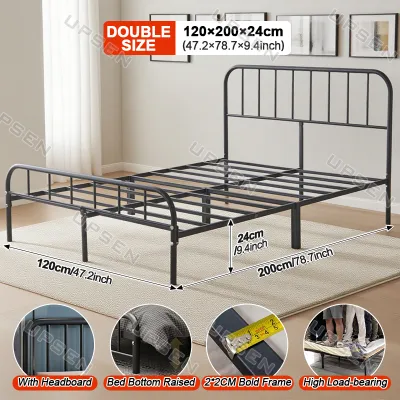
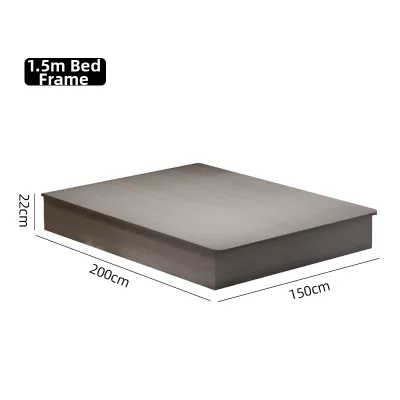
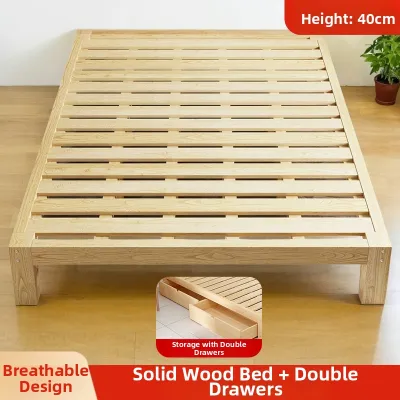
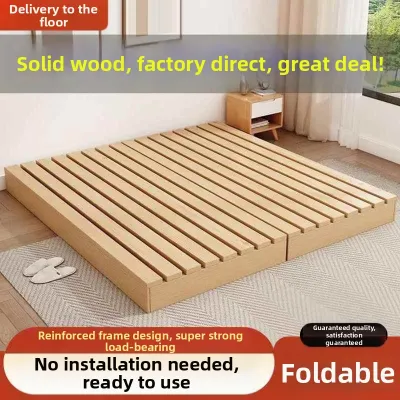
Prices are valid at publication and may change. Please refer to the product page for the latest price.
This spatial flexibility is particularly beneficial when arranging furniture around fixed architectural features like low windows, built-in wardrobes, or electrical outlets. Without a tall headboard blocking the wall, you can place the bed in a corner, slide it beneath a window sill, or position it flush against an accent wall. This adaptability allows you to reconfigure the room layout as your child’s needs change over the years, transforming a toddler’s play area into a teenager’s study zone without needing to buy new furniture.
Safety is another compelling reason to opt for a minimalist, headboard-free design. Traditional headboards often feature decorative slats, gaps, or heavy ornamental details that can present safety hazards for active toddlers and young children. Gaps can trap small limbs, while sharp corners pose a bump risk during energetic play. Eliminating the headboard removes these potential hazards entirely, creating a safer environment where children can move around freely without the risk of knocking against hard, elevated structures.
From a health and maintenance perspective, headboards are notorious for accumulating dust, pet dander, and allergens in their crevices, tufts, and joints. In the humid climate of the Philippines, these hard-to-clean areas can also harbor mold or dust mites, which may trigger respiratory issues or allergies in sensitive children. A streamlined, headboard-less frame is exceptionally easy to clean and wipe down, allowing you to maintain a hygienic sleeping environment with minimal effort.
What to Look for When Buying a Bed Frame Without a Headboard
Before purchasing any bed frame for your child’s room, it is essential to look beyond aesthetics and evaluate the structural details that guarantee safety and longevity. Children’s furniture must endure active daily use, making rigorous quality checks a necessity.

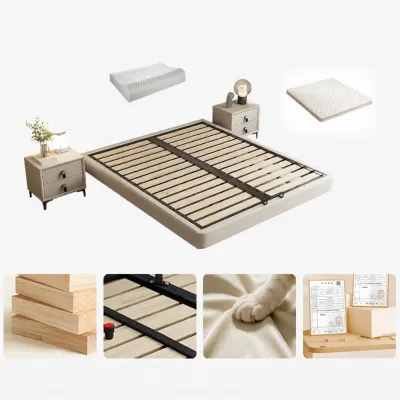
Slat Support and Weight Capacity Do not assume a bed frame is durable simply because of the material name. Instead, actively verify the manufacturer’s stated weight capacity and inspect the slat configuration. For children’s beds, look for closely spaced slats—ideally no more than three inches apart—to prevent the mattress from sagging and to distribute weight evenly. If your child likes to jump or play on the bed, or if you plan to sit with them for bedtime stories, the frame must support the combined weight of the mattress, the child, and an adult. Look for frames that feature a center support rail with adjustable legs, especially for semi-double or double sizes, to prevent the frame from bowing over time.
Material and Finish Verification The tropical, humid climate of the Philippines demands materials that can withstand moisture fluctuations without warping, cracking, or rusting. If you choose a wooden frame, verify that it has been treated with a moisture-resistant sealant and that all surfaces are sanded perfectly smooth to prevent splinters. For metal frames, check for a durable, rust-resistant powder coating. Most importantly, always ask the manufacturer for verification that the paints, stains, or finishes used on the frame are certified non-toxic and low in volatile organic compounds (VOCs). This ensures your child is not exposed to harmful chemical off-gassing in their sleeping area.
Height and Clearance The ideal height of the bed frame depends heavily on your child’s age and physical development. For toddlers transitioning from a crib, a low-profile frame that sits close to the floor is the safest choice, as it minimizes the risk of injury from accidental falls and allows them to climb in and out independently. For older children and teenagers, an elevated frame offers valuable under-bed clearance. This open space can be utilized for storage boxes, extra bedding, or seasonal items, which is incredibly useful in homes where storage space is at a premium. Always measure the height of your chosen mattress alongside the frame to calculate the final step-up height for your child.
Joint Structures and Stability A squeaky, wobbly bed can disrupt your child’s sleep and indicates weak structural integrity. Examine how the frame’s corners and support rails join together. High-quality frames utilize reinforced metal-on-metal brackets, heavy-duty bolts, or threaded inserts rather than simple wood screws that can strip and loosen over time. If the frame relies on wooden dowels, ensure they are paired with robust hardware. Checking these connection points before assembly, and tightening them periodically, will ensure the bed remains stable and silent through years of use.
Recommended Types of Headboard-Less Bed Frames for Kids
To help you navigate the many options available in the Philippine market, we have categorized the most practical headboard-less bed frames based on their design, functionality, and suitability for different age groups. Each type addresses specific spatial challenges and developmental stages, allowing you to choose the perfect match for your family’s lifestyle.
The following comparison table summarizes the key characteristics of each frame type to assist you in making an informed decision:
| Frame Type | Recommended Age Group | Primary Benefit | Space Requirement | Key Maintenance Check |
|---|---|---|---|---|
| Low-Profile Platform | Toddlers to Early School Age | Fall prevention & independence | Moderate floor footprint | Check under-bed airflow for moisture |
| Trundle / Pull-Out | School Age to Teens | Extra sleeping space for guests | Large (requires clearance to pull out) | Inspect wheel locks & drawer glides |
| Minimalist Metal | Older Kids to Teens | Lightweight & highly durable | Compact and versatile | Tighten joint bolts to prevent squeaks |
| Minimalist Wood | All Ages (with proper height) | Classic aesthetic & sturdy weight | Compact to moderate | Check wood sealant for humidity wear |
Low-Profile Platform Frames for Toddlers and Young Kids
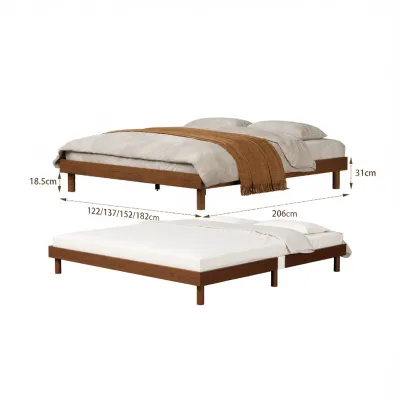
Low-profile platform frames are an excellent choice for younger children, particularly those transitioning out of a crib. By keeping the mattress close to the floor, these frames align perfectly with Montessori principles, encouraging independence by allowing your child to bed down and wake up without adult assistance. If an accidental roll-off does occur during the night, the minimal fall height significantly reduces the risk of injury.
While low-profile frames excel in safety, they do come with trade-offs regarding storage and airflow. Placing a frame very close to the floor limits your ability to store items underneath, which might be a drawback in smaller bedrooms. Furthermore, in the humid Philippine climate, restricted airflow beneath the bed can trap moisture, potentially leading to mold growth on the underside of the mattress. To mitigate this risk, choose a low platform frame that features ventilated slats rather than a solid wooden board, and periodically prop the mattress up to let it air out.
Before finalizing your purchase, verify the manufacturer’s recommended mattress thickness. A mattress that is too thick can negate the safety benefits of a low-profile frame by raising the sleeping surface too high, while a mattress that is too thin might slide around if the frame’s outer lip is deep. Aim for a balanced combination where the mattress sits snugly within the frame’s recessed perimeter, leaving just enough of a lip to keep it securely in place.
- Best for: Toddlers and preschool-aged children.
- Safety check: Ensure the mattress fits tightly with no gaps along the edges.
- Maintenance tip: Vacuum the slat area regularly to prevent dust buildup.
Trundle and Pull-Out Frames for Shared Rooms or Sleepovers
If you have siblings sharing a room or a child who loves hosting sleepovers, a headboard-less trundle bed frame is an exceptionally efficient space-saving solution. These designs feature a primary bed frame with a secondary, slightly smaller frame tucked underneath. During the day, the lower bed slides completely out of sight, freeing up the bedroom floor for play, study, or other activities.
When shopping for a trundle frame, the durability of the pull-out mechanism is paramount. Look for heavy-duty caster wheels that roll smoothly across your specific flooring, whether you have smooth ceramic tiles, polished concrete, or wood laminates. If the bed is placed on tiles, ensure the caster wheels feature reliable locks to prevent the lower bed from rolling away when your child climbs in. The pull-out drawer should slide straight without catching on the main frame’s legs or support posts.
It is crucial to verify the dimensional limits for both the main frame and the trundle compartment. The trundle bed typically requires a thinner mattress than the top bed to ensure it can slide underneath the main frame without jamming. Check the maximum allowable mattress height for the lower tier specified by the manufacturer. Additionally, confirm the weight capacity for both levels; the trundle frame often has a lower weight limit than the primary frame and is best reserved for younger children or occasional guests.
- Best for: Shared bedrooms, small spaces, and frequent sleepovers.
- Safety check: Ensure the trundle wheels lock securely when extended.
- Clearance check: Measure the room to ensure there is ample space to fully extend the trundle without blocking doorways.
Minimalist Metal and Wood Frames for Older Children and Teens
As children grow into their teenage years, their tastes change, and their furniture needs to adapt. Minimalist metal and wood frames without headboards offer a timeless, neutral aesthetic that easily coordinates with evolving bedroom decor. These frames are typically higher off the ground, providing excellent under-bed clearance for storage or study bins.
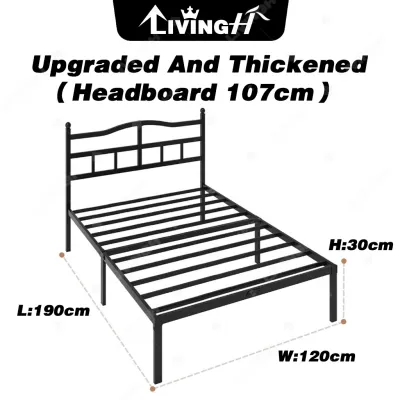
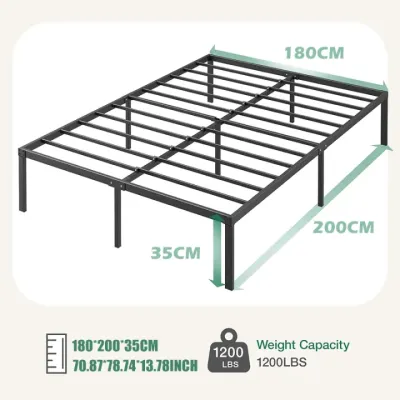
Lightweight metal frames are highly practical for busy households. They are easy to disassemble, move, and reassemble if you decide to rearrange the bedroom or move to a new home. In the Philippines, where coastal humidity can accelerate metal corrosion, it is vital to check that the frame features a high-quality, rust-resistant powder-coated finish. Metal frames are also inherently resistant to pests, making them a durable choice for long-term use.
Solid wood frames, on the other hand, offer a classic, sturdy feel that adds warmth to a room. To ensure they withstand the local climate, verify that the wood is properly kiln-dried and sealed with a protective topcoat to prevent moisture absorption, warping, or insect damage. Because wood can naturally expand and contract with seasonal humidity changes, the joint connections may loosen over time. To prevent squeaking, make it a habit to check the bolts and brackets every few months and tighten them as needed.
- Best for: Older school-aged children, pre-teens, and teenagers.
- Safety check: Verify that all corner edges are rounded or capped to prevent scratches.
- Storage advantage: Look for frames with at least 10 to 12 inches of under-bed clearance for storage boxes.
Safety, Sizing, and Installation Checks Before You Buy
Buying a bed frame involves more than just selecting a style; you must also ensure the physical product can be safely delivered, assembled, and positioned within your home. Taking precise measurements beforehand prevents costly delivery headaches and ensures a safe setup for your child.
Delivery and Access Before placing an order, map out the path the delivery team will take to reach your child’s bedroom. Measure the width and height of all doorways, narrow hallways, staircase turns, and elevator doors. Many residential condominiums and subdivisions in the Philippines have tight stairwells or strict elevator size limits. Ensure the packaged boxes of the bed frame can navigate these tight spots without damaging your walls or the furniture itself. If you live in a multi-story home, verify if the frame is shipped flat-packed, which is generally much easier to transport through tight spaces.
Room Layout and Clearances Do not rely on visual estimation when planning your child’s room layout. Use a tape measure to mark out the exact footprint of the assembled bed frame on the floor. Ensure that the bed’s placement does not obstruct wardrobe doors, study desk drawers, or the main bedroom door from opening fully. Leave at least 2 feet of walking clearance around the open sides of the bed so your child can move safely without tripping. If you are placing the bed in a corner, account for the thickness of baseboards, which can create a small gap between the frame and the wall.
Mattress Fit and Gaps A poorly fitting mattress is a significant safety hazard in a child’s room. If the mattress is too small for the frame, dangerous gaps can form along the sides or corners, creating entrapment zones where a child’s hand, foot, or toy could get stuck. Measure your existing mattress or the one you plan to buy, and compare its dimensions directly with the frame’s internal mattress compartment dimensions. The mattress should fit snugly against the frame’s inner edges with minimal wiggle room.
Floor Protection and Slipping Active children often jump on or climb vigorously onto their beds, which can cause a lightweight frame to slide across smooth flooring like ceramic tiles or polished concrete. This sliding can scratch your floors and, more importantly, cause the bed to shift unexpectedly, leading to falls. To prevent this, place high-quality rubber anti-slip pads under each leg of the bed frame. If the frame is positioned on a polished floor, placing a sturdy area rug underneath the bed can also help anchor it in place while adding a soft surface for your child to step onto in the morning.
Frequently Asked Questions (FAQ)
Do bed frames without headboards need to be anchored to the wall?
Low-profile platform frames and standard, low-height single bed frames generally do not require wall anchoring because their center of gravity is very low, making tipping highly unlikely. However, if you are using an elevated frame, a loft-style setup, or a modular frame with high footboards, the risk of tipping increases if a child attempts to climb the outer edges. Always consult the manufacturer’s assembly manual for specific tipping hazard warnings and guidelines. If your child is highly active and prone to climbing furniture, securing taller frames to the wall with heavy-duty safety straps or brackets provides valuable peace of mind.
Can I add a headboard later to a headboard-less bed frame?
Yes, many headboard-less bed frames can be retrofitted with a headboard later, but this depends entirely on the frame’s design. Before purchasing, check the back legs of the frame for pre-drilled mounting holes or universal brackets designed to accept standard headboards. If your frame does not have these attachment points, you should avoid drilling custom holes into the frame, as this can weaken the structure and void the manufacturer’s warranty. Instead, consider using a wall-mounted headboard or a freestanding, floor-standing headboard that sits securely between the wall and the bed frame without needing to be physically attached to the bed itself.
What is the best mattress type for a low-profile kids' bed frame?
The best mattress for a low-profile frame is one that matches the frame’s internal dimensions and slat spacing requirements. To maintain your mattress warranty and ensure proper spinal support for your growing child, verify that the frame’s slat spacing aligns with the mattress manufacturer’s guidelines—typically 3 inches or less for foam or pocket spring mattresses. In the humid climate of the Philippines, select a mattress made with breathable materials, such as open-cell latex or pocket springs, which promote airflow and resist moisture buildup. Avoid excessively thick mattresses (over 10 inches), as they can raise the sleeping height too much, reducing the safety benefits of a low-profile frame.
Community discussion
Share your experience or ask a question. Comments are reviewed before publication.