
Finding the right balance between storage and floor space is a common challenge when furnishing small bedrooms in the Philippines. In many urban condominiums and townhomes, bedroom layouts are highly compact, leaving very little room on either side of the bed. Standard, bulky nightstands with deep drawers often block walkways, restrict cabinet doors, and make the entire room feel visually cluttered. A bedside table with shelf integration offers an ideal solution by maximizing vertical storage without expanding the physical footprint of the furniture. By prioritizing open or semi-open shelving, you can keep your nightly essentials organized, maintain a clean aesthetic, and ensure your bedroom remains a relaxing, functional sanctuary.
Selecting the perfect bedside table with shelf options requires a clear understanding of your room’s physical dimensions, your daily storage habits, and the environmental factors unique to tropical climates. Whether you are dealing with a tight corner in a studio apartment in Manila or trying to make a guest room more accommodating, the right shelving design can transform your bedside area. This guide covers everything you need to know about measuring your space, choosing the right style, and selecting durable materials that stand up to daily use.
Why a Bedside Table with a Shelf Maximizes Small Bedrooms
Traditional nightstands with heavy, solid drawer units tend to dominate a small bedroom visually, creating a blocky silhouette that makes the surrounding space feel closed-off and cramped. In contrast, a bedside table with shelf elements introduces visual lightness. The open spaces between the shelves allow light and air to pass through, which instantly makes a tight room feel more open and spacious. This design strategy is particularly effective in small bedrooms where every square centimeter counts, as it prevents the furniture from overwhelming the bed frame or blocking natural light from nearby windows.
Products mentioned in this guide

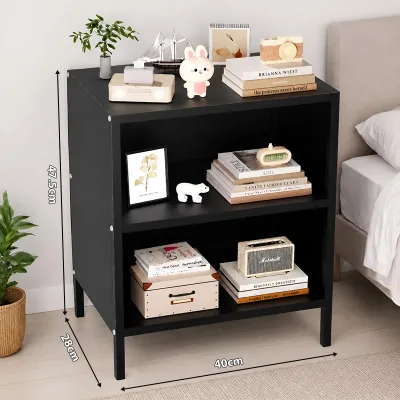
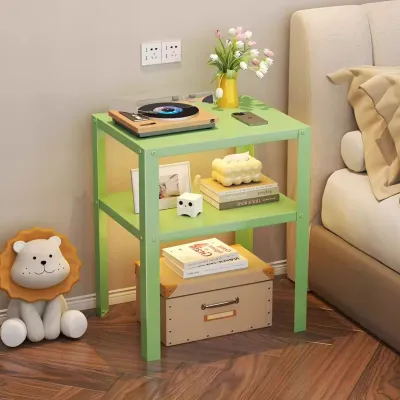

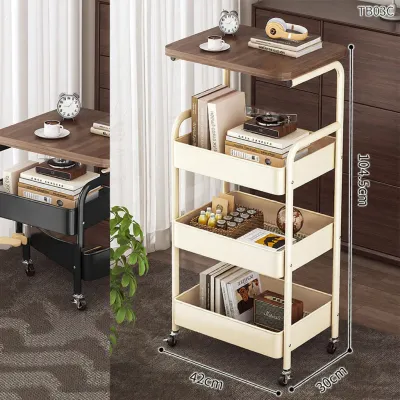
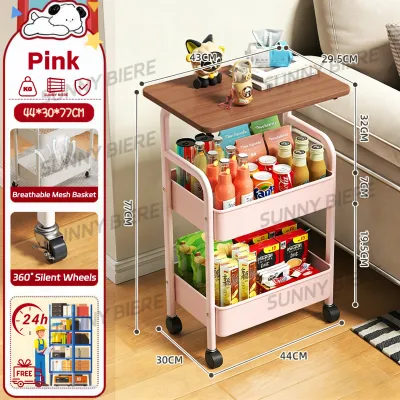
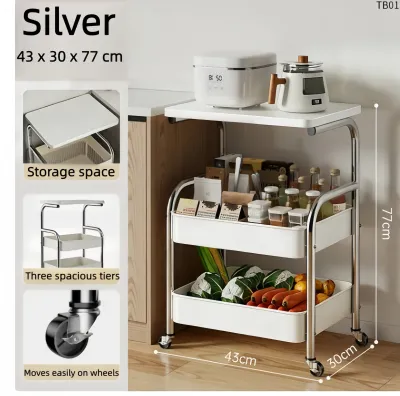
Prices are valid at publication and may change. Please refer to the product page for the latest price.
Beyond aesthetics, utilizing vertical tiers instead of horizontal width allows you to multiply your storage options on a single, compact footprint. Instead of cluttering the main tabletop with books, glasses, charging cables, and decorative items, you can distribute these pieces across different levels. For example, the top surface can remain completely clear for immediate necessities like a glass of water, a reading lamp, or your phone. Meanwhile, the lower or middle shelves can house your current reading materials, a tissue box, or small storage baskets. This dual-purpose functionality keeps your personal items within arm’s reach while maintaining a neat, uncluttered environment that promotes better sleep.
How to Measure Your Bedside Area Accurately
To avoid the frustration of purchasing a bedside table that does not fit or blocks essential pathways, you must establish a precise measuring framework before shopping. Start by measuring the absolute width available from the outer edge of your bed frame to the nearest wall, wardrobe door, or architectural obstruction. This measurement determines the maximum width your new table can have. Next, measure the depth from the wall behind your headboard outward into the room. A table that protrudes too far past the mattress can make getting in and out of bed difficult and may interfere with the flow of the room.

When taking these measurements, do not forget to account for the thickness of your baseboards or skirting boards. These lower wall moldings often prevent furniture frames from sitting completely flush against the wall. If your baseboard is two centimeters thick, your bedside table will be pushed forward by that same distance, which can affect how far it extends into your walkway or how it aligns with your mattress.
Additionally, map out the locations of all wall sockets, light switches, and air conditioning controls around your bed. A bedside table with shelf units should never block access to electrical outlets, as you will need easy access to charge your devices or plug in a bedside lamp. If a shelf unit is too tall, it might cover light switches or interfere with the airflow from low-wall air conditioning units or wall-mounted fans, which are common in Philippine homes.
Finally, verify the clearance needed for nearby doors and walkways. Open your wardrobe doors and bedroom doors completely to ensure they do not collide with the proposed location of your bedside table. As a general rule, maintain a walkway clearance of at least 50 to 60 centimeters around the bed to allow for comfortable, safe movement, especially during late-night hours when visibility is low.
Space-Saving Bedside Table Styles with Integrated Shelves
Open-Tiered and Cubby Designs
Open-tiered and cubby designs are classic floor-standing options that feature one or more open shelves beneath the main tabletop. These models are highly favored for their immediate, multi-directional accessibility, allowing you to reach for a book or a glass of water from almost any angle. Because they lack heavy drawer fronts and solid side panels, they maintain a lightweight, breezy appearance that complements modern, minimalist, or Scandinavian-inspired bedroom decors. When shopping for this style, prioritize a narrow footprint—ideally between 30 and 40 centimeters in width—to conserve valuable floor space. Keep in mind that because everything stored on open shelves is fully visible, maintaining a tidy arrangement is essential to prevent the room from looking disorganized.
Floating and Wall-Mounted Tables
For bedrooms with extremely limited floor space, floating and wall-mounted tables offer an exceptional, zero-floor-space solution. By anchoring directly to the wall, these shelves leave the ground completely clear, which visually expands the room and makes floor cleaning incredibly easy. This is a significant advantage in tropical environments where dust and pet dander can accumulate quickly under low furniture. However, successful installation depends entirely on your wall type. Many homes and condominiums in the Philippines feature solid concrete or hollow block walls, which require a masonry drill and heavy-duty wall anchors to secure the brackets. Drywall partitions, on the other hand, require specialized toggle bolts or must be anchored directly into studs. Always verify the manufacturer’s specified structural weight limits before purchasing to ensure the shelf can safely support your belongings.
Nesting and Drop-Leaf Options
Nesting and drop-leaf designs provide highly flexible, expandable surface solutions that adapt to your daily routines. Nesting tables consist of two or three individual tables of graduating sizes that slide completely underneath one another when not in use. This allows you to pull out an extra shelf or surface only when you need it—such as when working on a laptop in bed or hosting a guest—and tuck it away afterward to reclaim floor space. Drop-leaf options feature a hinged tabletop section that can be raised and locked into place for temporary use, or folded down flat against the frame when you need to clear the walkway. This style is incredibly practical for beds pushed close to walls, offering temporary functional space without a permanent spatial commitment.
Material and Design Checks for Compact Rooms
The materials and design features you select directly influence how spacious and comfortable your bedroom feels. To minimize visual weight, look for bedside tables finished in lighter colors, such as soft whites, light oaks, or pale grays. These shades reflect natural light, making dark corners appear brighter and more open. Choosing a design with slender metal or wooden legs raises the bulk of the table off the floor, allowing more ground area to remain visible, which tricks the eye into perceiving a larger room.
Safety is another critical consideration in tight spaces. Walkways in small bedrooms are often narrow, increasing the risk of accidental bumps. To prevent painful bruises, select bedside tables with rounded or chamfered edge profiles rather than sharp, 90-degree corners. This small design detail makes navigating around the bed in the dark significantly safer and more comfortable.
Given the high humidity levels and warm temperatures characteristic of the Philippine climate, you must evaluate material durability carefully. Rather than assuming a material name guarantees weather or moisture resistance, check the manufacturer’s care instructions and product labels. Engineered woods like MDF or particleboard must have high-quality, water-resistant laminates or protective sealants to prevent swelling and warping during the monsoon season. Solid woods should be treated with proper varnishes or sealants to guard against mold and moisture absorption. In the local market, budget-friendly options under ₱1,500 are often made of engineered wood, while premium solid wood designs can range upwards of ₱5,000, allowing you to find a style that fits both your space and your budget.
Additionally, look for integrated cable management features, such as built-in grommets, cord clips, or dedicated channels. In a small room, a tangle of charging cables hanging off a shelf can quickly create visual clutter and pose a tripping hazard. A bedside table that keeps your phone, tablet, and lamp cords neatly organized on the shelf helps maintain a clean, streamlined look.
Common Sizing and Placement Mistakes to Avoid
One of the most frequent mistakes when selecting a bedside table with shelf storage is choosing a unit that is too deep. A table that extends past the thickness of your mattress often leads to painful shin bumps when you get in or out of bed. To maintain a safe and comfortable layout, select a table depth that aligns closely with or sits slightly recessed from the edge of your mattress.
Furthermore, always account for the bed frame’s overhang, headboard depth, and thick pillows when calculating the usable width next to your bed. A bed frame with wide side rails or a bulky headboard can push the entire mattress several centimeters away from the wall, reducing the actual space available for a bedside table. Measuring only the mattress width can lead to buying a table that is too wide for the remaining gap.
Another common oversight is placing open shelves too close to the floor. Lower surfaces tend to accumulate dust rapidly, especially in ground-floor rooms or homes near busy roads. Shelves positioned too low are not only difficult to clean but also expose your stored items to dirt and floor-level moisture. Aim for a table where the lowest shelf is elevated at least 15 to 20 centimeters above the floor to allow for easy cleaning underneath.
Lastly, be cautious of blocking essential room features with tall or bulky shelf units. Avoid placing a tall bedside table where it blocks air conditioning vents, interferes with the natural drape of window curtains, or obstructs natural light. Proper airflow and lighting are essential for keeping a small bedroom feeling fresh, cool, and comfortable throughout the year.
Frequently Asked Questions (FAQ)
How much weight can a floating bedside table hold?
The weight capacity of a floating bedside table depends entirely on the wall material, the type of mounting anchors used, and the design of the brackets. A floating shelf securely mounted to a solid concrete wall using high-quality masonry anchors can typically support more weight than one installed on drywall with basic plastic plugs. To ensure safety and prevent damage to your wall, always follow the manufacturer’s specified load limit and avoid placing heavy items, such as large ceramic lamps or heavy stacks of books, on wall-mounted surfaces.
Are open shelves harder to maintain in humid climates?
Yes, open shelves can require more frequent upkeep in humid, tropical environments like the Philippines. Because the shelves are completely exposed, they accumulate airborne dust quickly, and stored items are directly subjected to ambient indoor humidity. To keep your bedside area clean, wipe the shelves regularly with a dry or slightly damp microfiber cloth. Using small, breathable decorative storage boxes or woven baskets on the shelves can help protect delicate items from dust and moisture while keeping the open space looking tidy. Always check the product’s care instructions for specific guidelines on cleaning and humidity tolerance.
Community discussion
Share your experience or ask a question. Comments are reviewed before publication.