
A black leather sofa can serve as a striking focal point in a Japandi living room, provided its design emphasizes simplicity, organic textures, and functional elegance. While Japandi style typically leans toward light, neutral tones and natural materials, a carefully selected black leather sofa introduces a grounding element that anchors the space. The key lies in choosing a piece with a low profile, clean geometric lines, and a matte or natural finish that avoids the cold, sterile look of high-gloss synthetic materials.
In tropical climates like the Philippines, where humidity and warmth are constant considerations, selecting the right leather type and sofa structure is essential to ensure both comfort and longevity. By focusing on minimalist silhouettes and balancing the dark upholstery with warm, natural accents, you can create a harmonious living space that feels both cozy and refined.
Key Design Features for a Japandi Black Leather Sofa
To successfully integrate a black leather sofa into a Japandi aesthetic, you must look closely at its proportions and structural details. The silhouette should prioritize a low-slung, grounded appearance that keeps the visual weight close to the floor. This design choice mimics traditional Japanese floor seating while maintaining the elevated comfort associated with Scandinavian furniture design.
Products mentioned in this guide
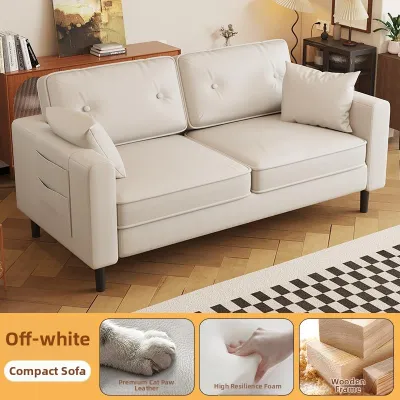
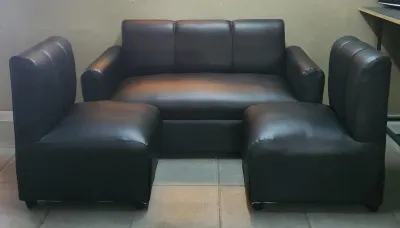
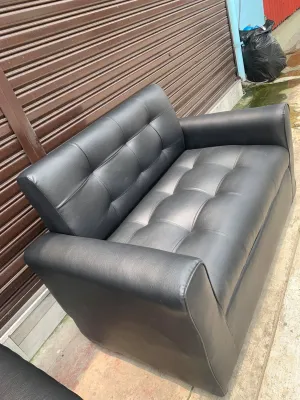
Prices are valid at publication and may change. Please refer to the product page for the latest price.
Arm and leg styles play a critical role in defining the sofa’s visual impact. Opt for slim, straight track arms or completely armless designs that reduce unnecessary bulk. Legs should be minimalist and constructed from natural materials; tapered wooden legs in light oak, ash, or beech introduce a warm, organic touch. Alternatively, a recessed or hidden base can create a floating effect that keeps the surrounding floor area looking open and uncluttered.
Texture and finish are equally important when selecting leather for a Japandi space. Prioritize matte, semi-aniline, or natural grain leathers over high-gloss or heavily corrected varieties. A matte finish allows the natural texture of the hide to show through, which aligns with the appreciation for organic imperfection. In warm, humid environments, high-quality semi-aniline leather also offers better breathability compared to heavily coated synthetic alternatives, making it more comfortable for daily use.
Recommended Black Leather Sofa Styles for Japandi Spaces
Japandi design relies on structural honesty and the elimination of unnecessary ornamentation. When integrating a black leather sofa, the focus must remain on how the piece interacts with the surrounding space. The following sofa styles represent the most effective ways to incorporate black leather without overwhelming the room’s minimalist aesthetic.

By selecting a style that emphasizes clean lines and functional simplicity, you ensure that the sofa complements rather than competes with the natural wood, soft textiles, and minimalist decor characteristic of Japandi interiors.
Low-Profile Platform Sofas
Platform sofas feature a solid wood base that extends slightly beyond the cushions, emphasizing horizontal lines and a grounded presence. This style reduces the visual height of the room, making ceilings feel higher and spaces more open—a valuable asset in compact urban apartments and townhouses.
When selecting a platform sofa, check the wood species used for the base. Light-toned woods like ash, beech, or white oak provide an excellent contrast to black leather, highlighting the intersection of Japanese and Nordic design. The exposed wooden platform acts as a visual bridge, connecting the dark leather to other wooden elements in the room.
Cushion firmness is another critical factor for this style. Look for high-density foam cushions that maintain their crisp, clean shape over time. Soft, slouchy cushions can quickly make a platform sofa look untidy, detracting from the precise lines required for a cohesive Japandi look. Verify the cushion specifications with the manufacturer to ensure they offer sufficient support without excessive bulk.
Minimalist Track Arm Sofas
Track arm sofas are defined by their straight, squared-off arms that run parallel to the seat. This geometric simplicity maximizes the usable seating area while minimizing the sofa’s overall footprint, making it highly space-efficient and ideal for maintaining smooth traffic flow.
Unlike rolled-arm or traditional styles, which introduce classical curves and heavy visual weight, track arm designs align perfectly with the architectural simplicity of Japandi spaces. They create clean sightlines that allow the eye to move easily through the room, preserving a sense of calm and order.
When evaluating track arm options, inspect the upholstery detailing carefully. Avoid any models featuring decorative tufting, button-back detailing, skirts, or brass nailhead trim. The leather should be pulled taut over the frame with clean, simple seams that emphasize the sofa’s structural form rather than its embellishments.
Modular Sofas with Clean Lines
Modular configurations offer exceptional flexibility, allowing you to adapt the seating arrangement to the specific layout of your living room. In a Japandi context, modularity supports the principle of functional adaptability, enabling you to reconfigure the space as your lifestyle or seating needs change.
To maintain a streamlined look, select modular pieces that feature hidden connection systems. Visible brackets or loose gaps between sections disrupt the visual continuity of the sofa. The seams should appear seamless and unbroken across the entire configuration, creating a unified and restful appearance.
Pay close attention to the scale of each module. Avoid oversized chaise sections or excessively deep seats that can block traffic pathways or crowd the room. The goal is to preserve negative space around the sofa, ensuring that the layout feels balanced and airy rather than cramped.
Balancing Black Leather in a Japandi Living Room
Because black leather carries significant visual weight, balancing it with lighter, softer elements is crucial to achieving the warm, inviting feel of Japandi design. Introduce natural textures nearby to soften the leather’s smooth, dark surface and create a layered, tactile environment.
Pair the sofa with light-colored textiles, such as a textured wool or cotton area rug in cream, beige, or soft oatmeal. Drape a linen throw blanket over one corner of the sofa, and add accent pillows made from organic fabrics like jute, boucle, or raw silk. These materials introduce warmth and break up the solid block of black color.
Incorporate light wood furniture, such as a white oak coffee table or a rattan lounge chair, to bridge the gap between the dark leather and the rest of the room. Keep the surrounding walls light and neutral—using warm off-whites or soft stone tones—to provide a high-contrast backdrop that makes the black leather feel intentional rather than oppressive. Avoid cluttering the immediate vicinity of the sofa to let its clean lines stand out.
Pre-Purchase Checklist for Space and Material
Before purchasing a black leather sofa, careful preparation is required to ensure the piece fits your physical space, lifestyle, and environmental conditions.
- Measure for Delivery and Placement: Measure your living room dimensions, paying close attention to clearance around doorways, hallways, staircases, and elevator doors. In many residential buildings, tight corners and narrow lifts can restrict the delivery of larger furniture pieces.
- Verify Leather Type and Care: Look for top-grain or semi-aniline options, and review the manufacturer's care instructions. In tropical climates, leather requires protection from direct sunlight and high humidity to prevent cracking or mold growth. Ensure you have a plan for regular conditioning and dust removal.
- Check Frame Construction: A high-quality sofa should feature a kiln-dried hardwood frame with reinforced joints, such as mortise-and-tenon or double-doweled connections. Check the manufacturer's specified weight capacity to ensure long-term structural stability.
- Assess Cushion Support: Verify that the cushion filling consists of high-density polyurethane foam or a pocket-spring system. This ensures the cushions retain their clean, geometric shape over years of daily use without sagging.
Frequently Asked Questions (FAQ)
Is black leather too dark for Japandi style?
No, black leather is not too dark if it is balanced correctly. In Japandi design, dark elements are often used to create contrast and ground a space, drawing inspiration from the Japanese concept of finding beauty in simplicity and the use of dark, natural tones. To prevent the room from feeling heavy, ensure the sofa is surrounded by light-colored walls, natural wood tones, and plenty of natural light.
What leather finish works best for Japandi?
A matte, semi-aniline, or lightly distressed finish works best for Japandi interiors. These finishes highlight the natural grain, scars, and texture of the leather, aligning with the appreciation for organic materials and natural imperfection. Avoid high-gloss, heavily coated, or highly uniform corrected leathers, as their reflective surfaces can feel cold, synthetic, and overly formal.
Community discussion
Share your experience or ask a question. Comments are reviewed before publication.