
Quick Guide: Matching Your Collection to the Right Organizer Style
Selecting the ideal book shelves organizer is not merely a matter of aesthetic preference; it is a critical decision that directly impacts the lifespan of your books and the structural safety of your furniture. The most effective organizer style for your home depends entirely on three interrelated factors: the total volume of your book collection, the physical weight and dimensions of your volumes, and how frequently you retrieve them.
For small, highly curated collections of 1 to 20 books, simple solutions like weighted bookends or clear vertical dividers are ideal, as they keep books upright without occupying valuable shelf space. Medium-sized collections of 20 to 100 books benefit from structured desktop racks or dedicated shelf inserts that prevent leaning and spine damage. Large, high-volume libraries containing 100 or more books—including a mix of paperbacks, heavy textbooks, and children’s books—require heavy-duty storage bins, deep baskets, or modular combination systems that distribute weight evenly and protect pages from dust and moisture.
By understanding the main categories of organizers—dividers, bins, racks, and modular systems—you can easily match these styles to your specific collection profile and shelf dimensions. This guide will walk you through evaluating your library, choosing the right organizer types, and verifying crucial safety and material specifications to ensure your shelves remain stable, organized, and beautiful.
Products mentioned in this guide
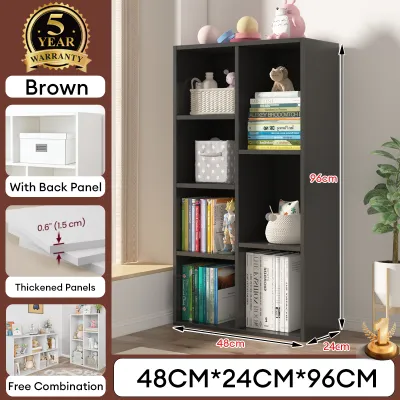
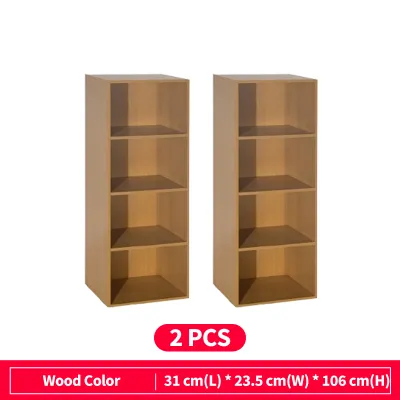
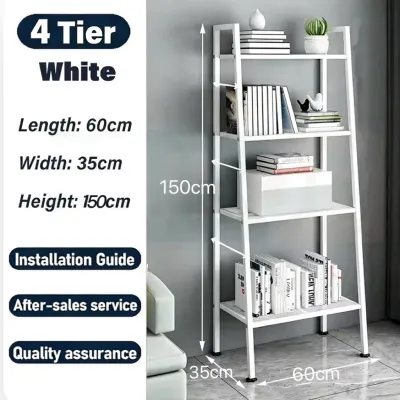
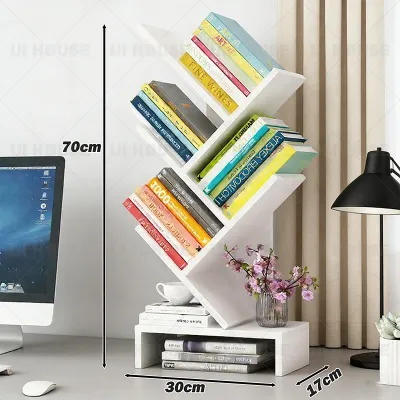
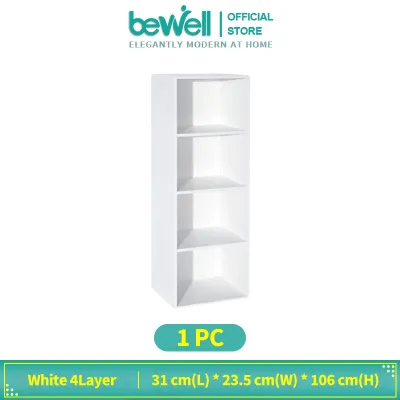
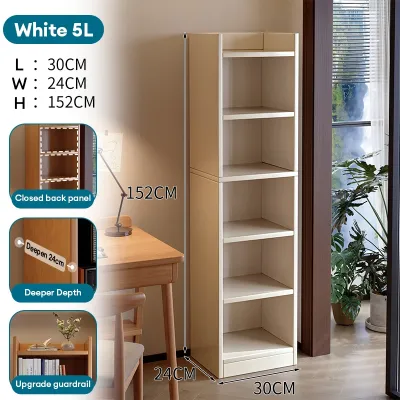
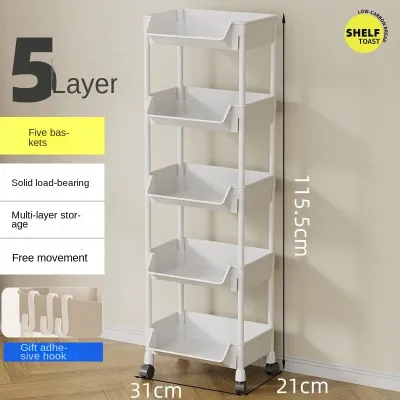
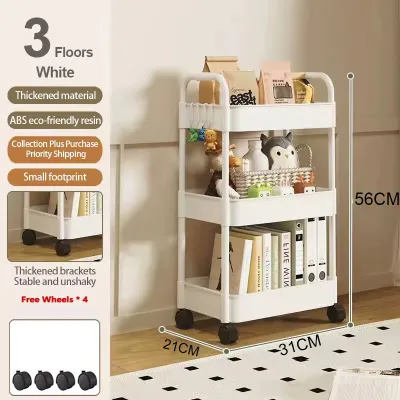
Prices are valid at publication and may change. Please refer to the product page for the latest price.
How to Assess Your Book Collection Before Buying Organizers
Before purchasing any organizing accessories, a thorough audit of your current library and shelf space is essential. Jumping into a purchase without precise measurements and a clear understanding of your books’ physical characteristics often results in ill-fitting organizers, overloaded shelves, or damaged book spines.

Volume and Growth Expectations
Begin by estimating your current shelf space utilization and predicting your future acquisition rate. Count your books and measure the total linear centimeters they occupy when lined up side-by-side. Compare this number to the total linear space available on your existing bookshelves. If you regularly purchase new books, you must plan for future growth. A general rule of thumb is to leave at least 10% to 15% of your shelf space empty. This empty space not only allows you to retrieve books easily without scraping their covers but also accommodates new additions without requiring a complete reorganization of your shelves.
Weight and Dimensions of Your Volumes
Books vary dramatically in weight and size, and these variations dictate the type of organizer you need. Standard mass-market paperbacks are lightweight and uniform, making them easy to organize with simple dividers. However, heavy hardcovers, law books, medical textbooks, and oversized coffee table art books exert significant downward and lateral force. Weigh a representative stack of your heaviest books to understand the load you are placing on your shelves. Oversized books require deep organizers with high back support to prevent them from bowing or tipping over, while standard paperbacks can sit comfortably in shallower bins or behind lightweight bookends.
Usage Frequencies and Accessibility Needs
Consider how you interact with your collection daily. Books that you reference frequently—such as school textbooks, cookbooks, or professional manuals—must be stored at eye level and kept highly accessible. These books should be organized using open dividers or slide-out racks that allow for quick retrieval and replacement. Conversely, archival novels, rare editions, or fragile family heirlooms that you rarely open should be placed in protective storage bins or closed display cases. This separation shields delicate pages from dust, handling wear, and environmental factors while keeping your daily-use books within arm’s reach.
Shelf Compatibility and Structural Integrity
Never select an organizer without taking precise measurements of your existing bookshelves. Record the exact depth of the shelves, the clear vertical height between shelves, and the overall width of each section. Crucially, verify the manufacturer’s specified weight capacity for your bookshelf unit. In tropical environments like the Philippines, high humidity can soften engineered woods like particleboard or medium-density fiberboard (MDF), making them highly susceptible to sagging or bowing under heavy loads. Knowing your shelf’s weight limit prevents structural hazards and ensures that adding heavy metal organizers or fully loaded storage bins will not cause the shelf to fail.
Best Book shelves Organizer Types for Every Collection Size
To create an organized and structurally sound library, you must select organizer styles tailored to your specific collection profile. Treating each organizer type as a targeted solution for a distinct storage scenario ensures that your books remain in pristine condition while maximizing your available space.
Bookends and Dividers for Small to Medium Collections
For readers managing a modest collection of standard-sized paperbacks and hardcovers, heavy-duty bookends and vertical shelf dividers are the most efficient and space-saving choices. When books are allowed to lean on a shelf, gravity exerts uneven pressure on their bindings, eventually causing the spine to warp, the glue to crack, and the pages to pull away. High-quality bookends prevent this damage by keeping books perfectly upright.
When selecting bookends, look for options with weighted bases, non-slip rubber padding, or magnetic bottoms if you are using steel shelving. The friction between the base of the bookend and the shelf surface is the primary force that prevents the row of books from sliding outward. L-shaped metal bookends are highly effective because the weight of the books sits directly on the flat horizontal tongue of the bookend, using the books’ own weight to anchor the organizer in place.
However, standard bookends have clear limitations. They are generally unsuitable for exceptionally tall, heavy, or oversized books, as the lateral force of a tall book can easily tip a lightweight bookend. They also offer no protection against dust or humidity. Before buying, always check the base width and actual weight of the bookends against your shelf surface to ensure there is adequate friction and structural support.
Storage Bins and Baskets for Large or Mixed Collections
If your collection consists of a high volume of paperbacks, odd-sized children’s books, or a mix of books and study materials like notebooks, sketchpads, and stationery, storage bins and baskets are highly effective. Containerization allows you to group books by genre, author, or reading level, turning a chaotic shelf into a clean, uniform display.
In the Philippines, where seasonal humidity levels can rise significantly, choosing the right material for your storage bins is critical. Breathable woven baskets made of natural fibers like rattan or seagrass provide excellent air circulation, which helps prevent moisture from trapping against book pages. However, natural fibers must be checked regularly for dust accumulation and signs of mold. Alternatively, sturdy plastic bins with integrated ventilation holes are highly durable, easy to clean, and resistant to moisture, making them ideal for high-humidity areas.
The primary risk with storage bins is weight. A large plastic bin packed tightly with twenty heavy paperbacks can easily weigh 5 to 7 kilograms. This concentrated weight can exceed the safe load capacity of individual shelf points, causing the shelf to bow. Always verify the bookshelf’s weight limit before placing multiple loaded bins on a single level. Additionally, ensure the bins you choose have reinforced bases and sturdy, comfortable handles to facilitate safe lifting and slide-out retrieval.
Display Racks and Easels for Curated or Fragile Collections
For collectors of art books, rare editions, or visually striking covers, display racks and individual easels offer a beautiful way to showcase your library. This is a low-density storage solution that prioritizes aesthetics, visual accessibility, and preservation over sheer volume.
Using clear acrylic easels or tiered display racks allows you to position books face-out rather than spine-out. This method is particularly beneficial for delicate or antique bindings that should not be subjected to the compression of a tightly packed shelf. Displaying a book face-out also makes it a focal point of your study or living room, adding a personalized touch to your home decor.
Because this is an open storage method, you must consider environmental exposure. Open displays expose books to dust, ambient light, and potential UV damage. If you place display racks in sunlit rooms, ensure they are positioned away from direct sunlight to prevent the covers and pages from fading or yellowing. For maintenance, check the manufacturer’s care instructions for cleaning delicate display materials; acrylic easels, for instance, can scratch easily if wiped with abrasive cloths, so a soft microfiber cloth and a mild soap solution are recommended.
Modular and Combination Systems for Growing or Massive Collections
For extensive, rapidly expanding home libraries, static organizers are rarely sufficient. Modular and combination systems—such as adjustable shelving inserts, stackable acrylic cubbies, or interlocking wooden crates—provide the flexibility to scale your storage as your collection grows.
These systems allow you to customize your shelving layout to accommodate a mix of vertical stacking (best for standard books), horizontal laying (ideal for heavy, oversized volumes), and open display zones. By using stackable modules, you can utilize the full vertical height of your shelves, converting empty overhead space into functional storage. This is particularly useful in compact urban homes where floor space is limited.
However, because modular systems rely on stacking or interlocking components, verifying their structural safety is paramount. Always check the manufacturer’s maximum load capacity per module and the recommended stacking height limits. Ensure all interlocking connections are fully engaged and stable. If your modular stack exceeds waist height, verify whether wall-anchoring hardware is required and included, and follow the manufacturer’s installation instructions strictly to prevent accidental tip-overs.
Crucial Specifications to Check Before You Buy
To ensure your chosen book shelves organizer functions safely and fits your space perfectly, keep these practical check guidelines in mind before making a purchase.
Dimensions and Clearances
Always measure your shelf depth and the vertical clearance between shelves before buying any organizer. A good organizer should leave at least 2 to 3 centimeters of clearance at the top and back of the shelf. This small gap is essential for two reasons:
- Air Circulation: In tropical climates, stagnant air combined with high humidity creates an ideal environment for mold and mildew growth on paper. Adequate clearance allows air to flow around your books, keeping them dry.
- Easy Retrieval: A tight fit forces you to pull books out at an angle, which can scrape the top edges of your books against the shelf above or damage the organizer itself.
Material and Surface Care
Do not assume performance based on material names alone. A “wooden” organizer might be made of untreated particleboard or MDF, which can swell, warp, and lose structural integrity rapidly in high-humidity areas. Conversely, sealed solid wood, bamboo, or powder-coated metal resists moisture much better.
- Check the manufacturer's label for specific properties like rust resistance, moisture seals, or scratch-resistant coatings.
- If you are placing heavy metal or hard plastic organizers on delicate wooden or glass shelves, apply self-adhesive felt pads or silicone feet to the bottom of the organizer. This simple step prevents the organizer from scratching the shelf surface and provides extra friction to keep it from sliding.
Weight Capacity and Stability
Books are deceptively heavy; a single shelf of books can easily weigh 15 to 25 kilograms. You must verify the load limit of both your organizer and the shelf it sits on.
- To maintain stability, place heavier books and organizers on the lower shelves of your bookcase to keep the center of gravity low.
- If using tall dividers or modular stacks, ensure they are stable on their own or secured according to the manufacturer's safety guidelines.
Assembly and Maintenance
Review the product specifications to see if the organizer requires assembly and if the necessary hardware (such as screws, hex keys, or non-slip pads) is included. Check the care instructions to see how the material should be cleaned. For example, metal organizers may require a dry cloth to prevent rust, while plastic or acrylic can handle a damp cloth but should be dried immediately.
Frequently Asked Questions (FAQ)
How do I keep tall books from falling over on deep shelves?
Tall books, such as atlases, art portfolios, or textbooks, often tip over on deep shelves because standard bookends lack the height and base depth to support them. To solve this, use deep-shelf bookends that feature a wide, heavy steel base and a height of at least 20 centimeters. Alternatively, you can install adjustable shelf dividers that clamp or slide onto the shelf itself, securing the books from the sides. Adding a non-slip rubber shelf liner under the books provides extra grip, preventing the bases of the books from sliding outward. Always measure your shelf’s exact depth and height clearance before purchasing to ensure the dividers or tall bookends fit without obstruction.
Are acrylic book organizers safe for heavy hardcovers?
Acrylic book organizers are safe for heavy hardcovers only if they are constructed from high-grade, thick acrylic (typically 4mm to 6mm or thicker). Thin, low-quality acrylic can bow, crack, or snap under the lateral pressure of heavy books. Before buying, check the manufacturer’s product specifications for the maximum weight capacity and recommended book types. Ensure the organizer has a wide, flat base to distribute the weight of the hardcovers evenly across the shelf. If you notice any flexing or bowing in the acrylic material when books are placed, reduce the load immediately to prevent structural failure and potential damage to your books.
What is the best way to organize children's books on a low shelf?
The best way to organize children’s books on a low shelf is to use forward-facing display racks or shallow, lightweight bins. This setup allows children to see the colorful covers rather than just the spines, making it easier for them to select and put away books independently. When choosing organizers for children’s spaces, verify that the products have rounded edges, smooth finishes, and non-toxic materials. Ensure the bins or racks have a low center of gravity and stable bases to prevent tipping. If a display rack or low bookshelf unit is taller than 60 centimeters, always anchor it securely to the wall using the manufacturer’s provided safety brackets to prevent accidental tip-over injuries.
Community discussion
Share your experience or ask a question. Comments are reviewed before publication.