
Finding the right bookshelves rack organizer for a small study space in the Philippines requires balancing tight floor plans with heavy book collections. Whether you are setting up a study corner in a Metro Manila condominium or optimizing a bedroom in a provincial family home, floor space is always at a premium. The key to successful organization lies in shifting your storage strategy from horizontal to vertical while selecting materials that can survive the local climate.
By choosing an organizer tailored to your room’s specific layout, you can keep your desk clear and your study materials structured. The right setup not only improves your productivity but also protects your physical books from damage. Evaluating your physical space, understanding the strengths of different shelf designs, and implementing proper maintenance are the essential steps to creating an efficient study environment.
How to Evaluate Bookshelf Organizers for Compact Rooms
When dealing with a small room, every square centimeter of floor space matters. Before browsing online marketplaces, measure the exact footprint you can allocate to a rack. However, the more critical measurement is vertical clearance. Look up toward your ceiling and note any obstructions such as wall-mounted air conditioning units, window frames, curtain rods, or electrical outlets. A tall, narrow bookshelves rack organizer maximizes your storage capacity without eating into your limited walking space.
Products mentioned in this guide
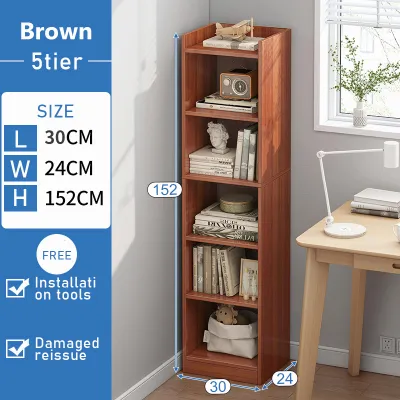
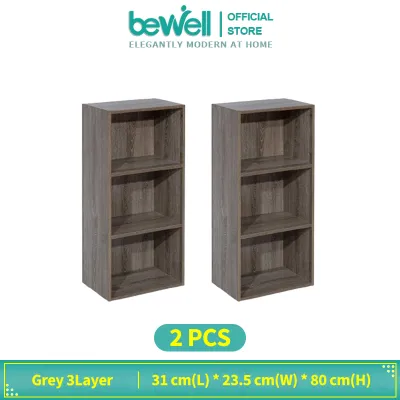
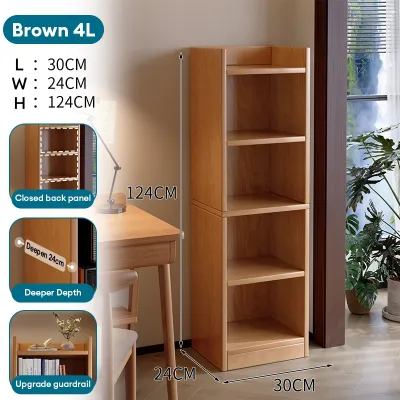
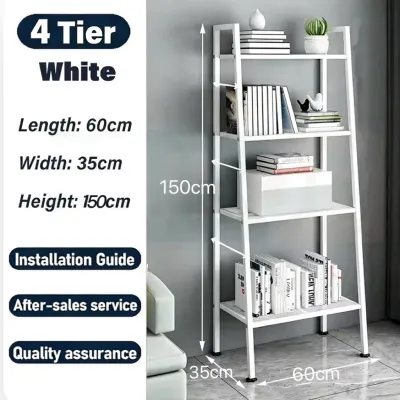
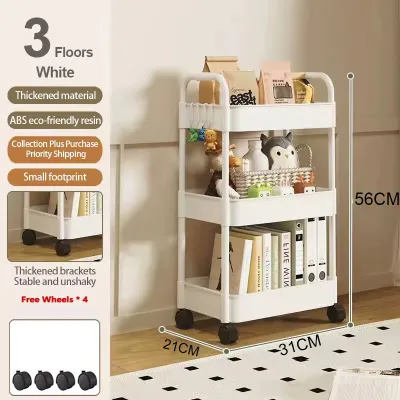
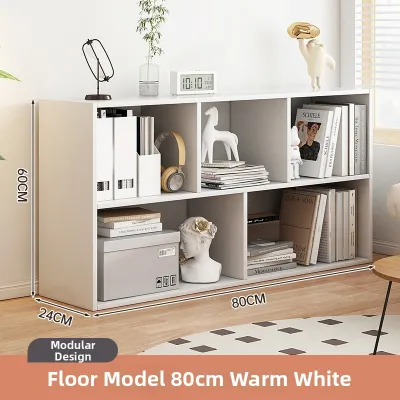
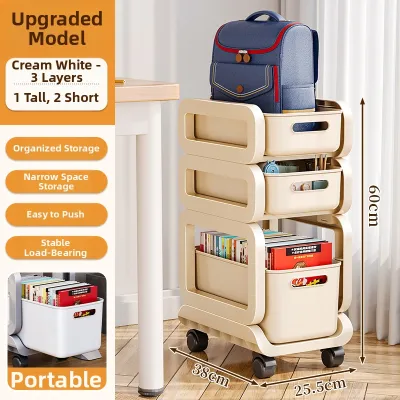

Prices are valid at publication and may change. Please refer to the product page for the latest price.
Books are surprisingly heavy, making weight capacity and structural integrity vital considerations. A single shelf filled with college textbooks or thick reference manuals can easily weigh 15 to 25 kilograms. When evaluating organizers, look for the manufacturer’s specified weight limit per shelf, rather than just the overall weight capacity of the unit. Tall, slim designs are highly efficient but inherently less stable. You must verify if the unit’s frame is rigid enough to resist swaying when fully loaded.
The Philippine climate presents unique challenges for furniture materials. High relative humidity during the wet season can cause unprotected materials to degrade quickly. Standard engineered wood, such as low-grade particle board or medium-density fiberboard (MDF), absorbs moisture from the air, leading to swelling, warping, and structural failure. If you prefer engineered wood, ensure it features fully sealed edges, such as melamine-faced chipboard with thick PVC edge banding. For metal frames, look for powder-coated or rust-resistant painted finishes to prevent corrosion caused by humid air. Solid wood options, while durable, must be properly treated to prevent wood rot and termite damage.
Many popular bookshelf organizers purchased online are delivered flat-packed to save on shipping costs. Before placing your order, check the dimensions of the shipping box. If you live in a high-rise condominium or an apartment complex, confirm whether the package can fit inside the building’s elevator or navigate tight stairwell corners. Additionally, review the assembly requirements. Some units require only a basic screwdriver or an included Allen key, while others may require a rubber mallet or a power drill for wall mounting.
Best Bookshelves Rack Organizer Types for Small Study Spaces
Wall-Mounted Floating Shelves
Wall-Mounted Floating Shelves are an excellent option for rooms where floor space is virtually non-existent. By anchoring your storage directly to the wall, you keep the floor area completely clear for your desk, chair, and legroom. This setup creates a light, airy visual aesthetic that makes a small room feel larger than it actually is.

However, successful installation depends heavily on your wall type. Most residential walls in the Philippines are built from solid concrete or concrete hollow blocks (CHB), though some modern partitions use gypsum drywall. Solid concrete walls provide excellent support but require a masonry drill bit and heavy-duty plastic or metal expansion wall plugs (tox screws) to hold the shelf brackets securely. If you are mounting on drywall, you must use specialized toggle bolts or locate the wooden or metal wall studs; standard screws will quickly pull out under the weight of books, causing damage to your wall and your belongings.
Keep in mind that floating shelves have strict weight limits. They are ideal for displaying a curated selection of active textbooks, notebooks, and lightweight decorative items, but they are not designed to hold massive encyclopedia sets. Additionally, drilling multiple holes into concrete is a permanent modification, which may not be permitted if you are renting your study space.
Over-the-Desk Storage Racks
An Over-the-Desk Storage Rack is a highly efficient solution that utilizes the empty air space directly above your workstation. These racks can be freestanding units that sit on top of your desk surface or frames that arch over the desk from the floor. They allow you to store reference books, stationery, and study lamps within arm’s reach without sacrificing your primary writing or typing area.
Before choosing this type, measure the distance between your desk surface and the ceiling. You must ensure there is sufficient clearance for your computer monitor or laptop screen, especially if you use a larger external display. Additionally, check that the rack does not block overhead room lighting or cast shadows over your workspace, which can cause eye strain during late-night study sessions.
Stability is paramount for over-the-desk units. Because these racks sit close to your active workspace, any wobbling can be highly distracting. Look for metal-framed models that feature a rear diagonal cross-brace (an X-shaped bar) and adjustable leveling feet. These features help stabilize the frame on slightly uneven tile or wood laminate floors, preventing the unit from shaking when you grab a book.
Corner Tiered Shelves
Corner Tiered Shelves are designed to reclaim the often-wasted 90-degree corners of a room. By turning awkward angles into functional storage zones, these units help you maximize every corner of a small study room. They are particularly useful for creating a dedicated reading nook or housing secondary reference materials.
When planning for a corner shelf, do not assume your walls meet at a perfect 90-degree angle. Older homes and quickly constructed apartments often have slightly uneven walls. Use a corner square or measure carefully to check for deviations. You must also account for the thickness of your floor baseboards. If your baseboards are thick, they will prevent the corner shelf from sitting flush against the wall, leaving an unstable gap at the top. Look for units with a baseboard cutout or adjustable wall anchors to compensate for this gap.
A key limitation of corner shelves is their geometric shape. Because the shelves are typically triangular or rounded quadrants, the usable depth decreases toward the corner and on higher tiers. This makes them less suitable for wide ring binders, large textbooks, or deep storage boxes. They are best reserved for standard paperbacks, small notebooks, and compact study accessories.
Stackable Cube Storage Units
Stackable Cube Storage Units offer modular flexibility that can adapt to your changing storage needs. You can arrange these square compartments horizontally under a window to keep your sightlines open, or stack them vertically to fit a narrow strip of wall space. This adaptability makes them a highly practical investment for growing book collections.
When evaluating cube organizers, pay close attention to the internal dimensions of each individual cube. Standard A4 documents, ring binders, and vertical folder organizers require an internal height and depth of at least 33 to 35 centimeters. Many budget-friendly modular cubes sold online are smaller, often measuring only 28 centimeters or less, which limits their use to smaller novels and paperbacks.
Safety is a major consideration when stacking modular units. If you stack cubes more than two levels high, ensure the interlocking mechanisms (such as wooden dowels, metal pins, or plastic connectors) are secure and tight. Because modular units can shift under heavy, uneven loads, you must use an anti-tip kit to anchor the top of the stack to the wall, especially in high-traffic study areas.
Installation, Stability, and Maintenance Checks
Securing Tall Units with Anti-Tip Anchors Any bookshelves rack organizer that stands taller than one meter, or has a depth of less than 30 centimeters, poses a potential tipping hazard. In a small, high-traffic study room, the risk of accidentally bumping into a tall shelf is high. To prevent serious accidents, always anchor the unit to the wall using heavy-duty L-brackets or anti-tip safety straps. If you are mounting to a concrete wall, use appropriate masonry anchors. For drywall, ensure the bracket is screwed directly into a wall stud.
Strategic Load Distribution Proper loading is essential for maintaining the stability of your bookshelf organizer. Always place your heaviest items, such as multi-volume textbooks, heavy binders, and filled storage boxes, on the lowest shelves. This keeps the unit’s center of gravity low, making it much harder to tip over. Reserve the middle and upper shelves for lighter paperbacks, notebooks, and decorative items. Never overload the top shelves, as a top-heavy rack is highly unstable and prone to structural failure.
Managing Humidity and Preventing Mold The high humidity of the tropical Philippine climate can quickly damage both paper books and wooden shelving. To prevent mold growth, avoid pushing your bookshelves rack organizer completely flush against an exterior wall. Exterior walls can get warm during the day and cool down at night, leading to condensation build-up behind your furniture. Leave a gap of at least 2 to 5 centimeters between the back of the rack and the wall to allow for natural airflow. For extra protection, place moisture-absorbing silica gel packs or small dehumidifier tubs on the shelves, and clean your books regularly with a dry microfiber cloth.
Pre-Purchase Dimensional Audit Before finalizing your purchase from an online furniture store, conduct a final verification check. Create a physical checklist of your room’s measurements, including door clearance, window locations, and electrical outlet access. Cross-reference these dimensions with the retailer’s listed outer dimensions of the bookshelf. Finally, estimate the total weight of the books you plan to store and compare it against the manufacturer’s specified weight limits per shelf. This step ensures your new organizer will fit your space perfectly and safely support your collection.
Frequently Asked Questions (FAQ)
Can I use a tension pole bookshelf instead of drilling into the wall?
Yes, tension pole bookshelves are an excellent option for renters or anyone who wants to avoid drilling holes into their walls. These systems work by using a spring-loaded or screw-tension mechanism to press firmly between the floor and the ceiling. However, they have strict weight limitations compared to wall-anchored shelves and are best suited for lighter books and decorative items. They require perfectly flat, solid concrete floors and ceilings to remain stable; they cannot be safely installed against suspended drop ceilings or hollow plasterboard ceilings. You must also check the tension periodically, as temperature fluctuations and building settling can cause the poles to loosen over time.
How do I protect my books from dust in an open rack organizer?
Open rack organizers offer easy access but expose your books to dust, which is particularly common in urban areas. To protect your collection, use compatible fabric storage bins, plastic baskets, or decorative boxes to enclose less frequently read volumes. If your rack’s frame allows, you can install aftermarket acrylic clip-on doors or magnetic dust covers. Keep a microfiber duster or a small handheld vacuum cleaner nearby for quick weekly maintenance. Additionally, avoid placing your bookshelf directly under or opposite air conditioning vents, as the active airflow will blow dust particles directly onto your exposed books.
Community discussion
Share your experience or ask a question. Comments are reviewed before publication.