
Finding the right cabinet for sink installations in a compact Philippine kitchen requires balancing limited floor space with high-humidity storage needs. In tight layouts like Metro Manila studio condos or traditional townhouses, a standard bulky cabinet can quickly crowd the room and block essential walkways. The ideal solution is a compact, moisture-resistant sink cabinet that maximizes vertical under-sink space, accommodates plumbing fixtures cleanly, and leaves enough clearance for daily kitchen activities. By choosing configurations specifically designed for tight footprints—such as single-bowl bases with integrated pull-outs or specialized corner units—you can turn a chaotic plumbing hub into an organized, highly functional workspace.
Sizing and Selection Criteria for a Small Kitchen Cabinet for Sink
Before purchasing any cabinet for sink setups, accurate physical measurements are your absolute first line of defense. In small kitchens, every centimeter counts, and an oversized unit can block refrigerator doors, conflict with stove clearances, or restrict the main walkway. Start by measuring the depth and width of your designated floor area, ensuring you account for the swing radius of adjacent appliance doors and the cabinet’s own doors. If your kitchen has narrow walkways, a cabinet with a depth of 50 to 55 centimeters is often more practical than the standard 60-centimeter depth, provided your sink basin fits within those parameters.
Do not forget to measure the delivery route. Many homeowners in the Philippines face the frustration of buying a pre-assembled cabinet only to find it cannot clear the condominium’s service elevator, narrow stairwells, or tight entryway doors. Always verify the finished external dimensions of the cabinet against all entry points before finalizing your purchase.
Products mentioned in this guide
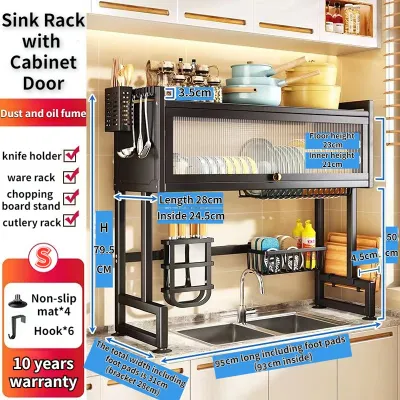
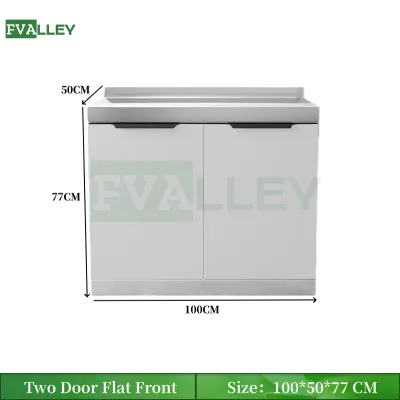
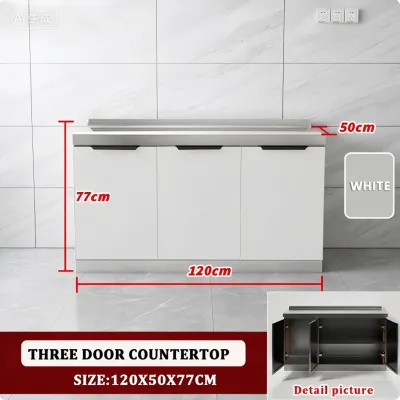
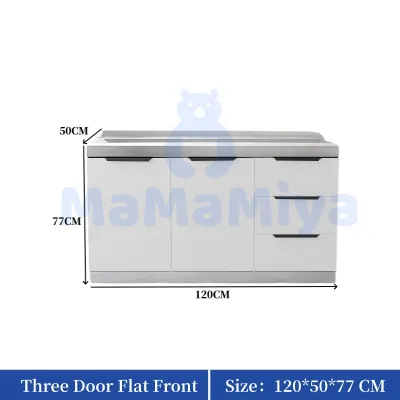
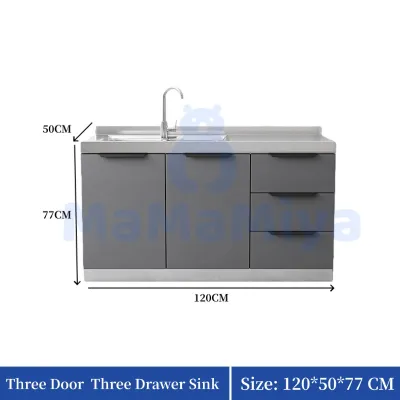
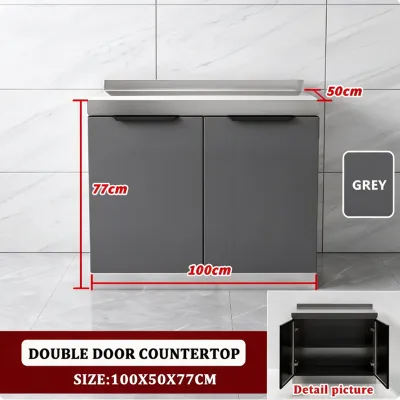
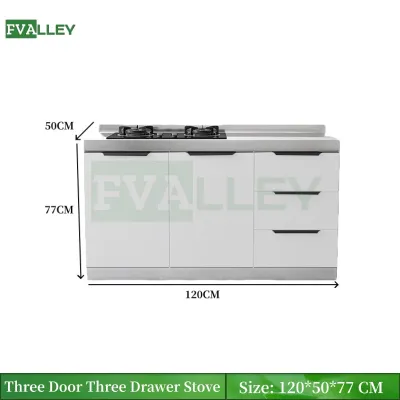
Prices are valid at publication and may change. Please refer to the product page for the latest price.
Beyond external dimensions, internal clearance is what determines whether a cabinet is truly functional. The interior of a sink cabinet must house the sink basin’s underside, the P-trap, water supply lines, and potentially a water filtration system or a small grease trap, which is a common requirement in many Philippine condo developments. Before choosing a cabinet, map out where your wall or floor drainage outlets sit. If the internal shelves or drawer backs are not designed with plumbing cutouts, you will end up having to saw through the cabinet material, which can compromise its structural integrity and void the manufacturer’s warranty.
The door mechanism you choose also dictates how easily you can access this cramped space. Traditional swing doors are highly common and budget-friendly, but they require significant clearance to open fully, which can block narrow galley walkways. Sliding doors or deep pull-out drawers are excellent alternatives for tight spaces. Pull-out drawers bring the contents of the cabinet directly to you, eliminating the need to bend down and reach into dark, deep corners, though they do require careful plumbing alignment to avoid hitting the drawer tracks.
Finally, pay close attention to the load capacity and structural reinforcement of the cabinet floor. A kitchen sink basin filled with water and heavy cookware can weigh upwards of 30 to 40 kilograms. The cabinet frame must be robust enough to support this downward force without sagging over time. Look for models with reinforced back panels, sturdy corner brackets, and adjustable leveling feet that keep the cabinet stable on uneven kitchen tiles.
Best Sink Cabinet Configurations for Compact Kitchen Layouts
Selecting the right structural layout is the most effective way to solve the spatial challenges of a small kitchen. Rather than trying to fit a standard, large-scale cabinet into a tight corner, homeowners should focus on configurations designed specifically to optimize compact floor plans and streamline daily workflows.

Single-Bowl Base Cabinets with Pull-Out Drawers
For narrow kitchen counters, a single-bowl base cabinet paired with deep pull-out drawers offers an incredibly efficient use of space. Unlike double-bowl setups that require wide cabinets of 80 centimeters or more, a single-bowl configuration can easily fit into a compact 50- to 60-centimeter cabinet footprint, freeing up precious counter space for food preparation.
Integrating pull-out drawers or tiered sliding shelves within this compact footprint completely changes how you interact with under-sink storage. Instead of kneeling on the floor to rummage through cleaning supplies hidden in the dark back corners, a simple pull brings the entire contents of the cabinet into plain view. Many modern designs utilize U-shaped drawers that curve neatly around the central P-trap, allowing you to use the awkward space on either side of the plumbing pipes that would otherwise go to waste.
However, this configuration does come with specific technical limitations. Because the drawer slides are fixed to the inner walls of the cabinet, your plumbing must be installed with high precision. Any deviation in the angle of your drainage pipes or the position of your shut-off valves can block the drawers from closing completely. Additionally, the mechanical tracks and the U-shaped cutouts naturally reduce the total volume of storage space compared to an open, empty cabinet, meaning you must be highly selective about what you store inside.
Corner Sink Cabinets with Lazy Susans or Pull-Out Trays
In L-shaped or U-shaped kitchen layouts, corners are notorious for becoming dead space that is difficult to reach and organize. Placing the sink cabinet in the corner is a smart architectural trick to reclaim this lost area, turning an awkward junction into the functional anchor of your kitchen.
To make a corner cabinet for sink installations practical, specialized internal hardware is essential. Blind corner pull-out shelves or heavy-duty Lazy Susans can be installed inside the cabinet, allowing you to swing or slide your stored items out into the light. These systems are engineered to navigate around the drop-in sink basin and the vertical plumbing lines, ensuring that even the deepest, darkest corners of the cabinet remain fully usable for storing bulky items like dishwashing liquids, spare sponges, or water filtration canisters.
The primary trade-off with corner configurations is the complexity and cost of the hardware. High-quality pull-out mechanisms that can withstand the humid environment under a sink require robust, rust-resistant metal tracks, which can significantly increase your initial budget. Furthermore, precise installation is non-negotiable; if the corner cabinet is even slightly out of alignment, the pull-out trays may scrape against the cabinet frame or collide with the plumbing pipes, leading to premature wear and tear.
Slim-Profile Cabinets with Open Lower Shelving
For extremely tight galley kitchens, studio apartments, or micro-condos, a slim-profile cabinet with open lower shelving provides a visually light and highly functional alternative to traditional solid-door cabinetry. By eliminating the heavy doors, these units create an illusion of more floor space, making a cramped kitchen feel less claustrophobic.
From a practical standpoint, open shelving or slatted lower tiers offer immediate, unobstructed access to your daily cleaning supplies, trash bins, and dish towels. In the tropical climate of the Philippines, where high humidity is a constant challenge, open shelving promotes excellent air circulation. This increased airflow helps wet sponges, damp microfiber cloths, and scrub brushes dry much faster, significantly reducing the risk of musty odors and bacterial growth under the sink.
The obvious drawback to this design is the lack of concealed storage. Because everything is completely visible, any clutter or disorganization will immediately make the entire kitchen look messy. You will need to invest in uniform storage baskets or bins to keep items neat, and commit to frequent tidying. Additionally, open shelves offer no protection against airborne dust, grease from cooking, or curious pets, meaning you must clean the stored items and the shelves themselves more frequently to maintain a hygienic environment.
Practical Under-Sink Storage Solutions for Tight Spaces
Once you have selected the ideal cabinet configuration, implementing smart, targeted organization strategies is key to keeping the space functional and clutter-free. The area directly beneath a kitchen sink is notoriously difficult to organize due to the irregular shapes of the P-trap, hot and cold water supply lines, and drainage hoses.
To maximize this awkward space, consider installing aftermarket tiered sliding shelves or modular U-shaped organizers. These freestanding units are designed to sit on the cabinet floor and slide out smoothly, wrapping around the plumbing column without interfering with the pipes. By utilizing the vertical height of the cabinet, these organizers allow you to stack dish soaps, sponges, and cleaning agents safely, effectively doubling your usable storage area.
Another highly effective, low-cost trick is to install an adjustable tension rod near the very top of the cabinet interior. By stretching the rod tightly between the left and right cabinet walls, you create a convenient hanging rack for spray bottles. Hanging the bottles by their triggers keeps them upright, prevents accidental leaks, and frees up the cabinet floor for heavier items like buckets or trash bins.
Do not overlook the valuable real estate on the back of your cabinet doors. Installing over-the-door wire baskets or heavy-duty adhesive hooks allows you to store lightweight, frequently used items like scrub brushes, rubber gloves, and dishwashing sponges. This keeps them within arm’s reach while keeping the main cabinet floor clear. If you are using adhesive hooks on laminated surfaces, ensure the surface is thoroughly cleaned and dried before application to guarantee a strong, long-lasting bond.
Finally, always place a heavy-duty waterproof mat or a plastic drip tray at the base of your cabinet. Even the most well-installed plumbing can experience minor condensation or slow, microscopic leaks over time. A waterproof barrier protects the cabinet’s wood or composite floor from water pooling, preventing wood rot, swelling, and structural failure. Choose a mat with a raised lip around the edges so it can contain spills or leaks until you can wipe them dry.
What to Check on Product Labels for Humid Climates
The tropical climate of the Philippines, characterized by high temperatures and intense relative humidity, poses a severe challenge to indoor wooden furniture. When shopping for a cabinet for sink installations, relying on generic material names like “wood” or “MDF” is not enough to guarantee longevity. You must carefully inspect the manufacturer’s product labels and technical specifications to ensure the unit can withstand constant moisture exposure.
First, check the label for the specific type of core material used in the cabinet’s construction. For humid environments, look for cabinets built with marine-grade plywood or high-density moisture-resistant (HDMR) board. Unlike standard particleboard or low-grade MDF, which act like sponges and swell rapidly when exposed to water, these specialized materials are bonded with water-resistant resins that maintain their structural integrity even in damp conditions. If the label simply says “engineered wood,” ask the retailer or manufacturer to clarify the exact grade and moisture-resistance rating.
Second, verify the specifications of all metal hardware, including hinges, drawer slides, and handles. High humidity, combined with the chemical fumes from stored household cleaning agents, can cause standard steel hardware to rust and seize within a few months. Look for product labels that explicitly specify the use of rust-resistant materials, such as Grade 304 stainless steel or hardware with a certified anti-corrosion electroplated coating. Soft-close hinges are also highly recommended, as they prevent doors from slamming, which can loosen joints over time.
Third, closely inspect the edge banding and surface seals of the cabinet doors and panels. Water damage almost always starts at the edges where different panels meet. Look for cabinets that feature hot-melt polyurethane (PUR) edge banding or seamless vacuum-sealed PVC wraps. These technologies create an airtight, watertight barrier along the edges of the board, preventing water droplets from seeping into the core material and causing unsightly bubbling or delamination.
Lastly, always review the manufacturer’s care, maintenance, and warranty guidelines. A reputable manufacturer will provide clear instructions on how to clean the cabinet surfaces and specify any limitations regarding direct water exposure. Be sure to check if the warranty covers moisture-related damage or structural warping, as this is a strong indicator of the manufacturer’s confidence in their product’s durability in tropical climates.
Frequently Asked Questions (FAQ)
Can I install a sink cabinet myself in a condo?
While assembling a flat-pack sink cabinet is a highly feasible DIY project for many homeowners, the actual installation process in a condominium often requires professional assistance. Connecting water supply lines, aligning the drain pipe with the building’s main stack, and sealing the sink basin to the countertop must be done with extreme precision to prevent leaks that could damage your unit or the condo below you.
Additionally, most condominium administrations in the Philippines enforce strict house rules regarding plumbing modifications and contractor work. Before attempting any installation, you must check with your condo’s property management office regarding required permits, waterproofing warranties, and approved working hours. In many cases, hiring a licensed plumber is mandatory to ensure the work complies with the building’s safety standards and avoids costly penalties.
How do I prevent mold under the sink cabinet?
Preventing mold growth under your sink cabinet requires consistent, proactive moisture control. Start by performing regular visual inspections of the P-trap, supply valves, and hose connections. Even a tiny, slow drip that goes unnoticed can create a damp environment where mold thrives. If you spot any moisture, tighten the connections or replace worn-out rubber washers immediately.
To combat the natural humidity of the local climate, keep the cabinet interior as dry as possible. Avoid storing wet sponges, damp dishcloths, or dripping scrub brushes inside the cabinet; instead, let them dry completely on an over-the-sink rack before putting them away. You can also place moisture-absorbing desiccant packs or charcoal deodorizer bags inside the cabinet to capture excess humidity from the air, and periodically leave the cabinet doors open for a few hours to allow fresh air to circulate.
Community discussion
Share your experience or ask a question. Comments are reviewed before publication.