
Selecting the right cabinet organizer for your buffet or display cabinet in the Philippines is the most effective way to protect delicate dinnerware, maximize storage capacity, and streamline hosting prep. Buffet cabinets often feature deep, dark compartments and high vertical spaces that make accessing heavy serving platters or fine glassware difficult. By introducing targeted organization systems—such as sliding baskets, non-slip shelf risers, and adjustable drawer dividers—you can transform underutilized areas into highly functional, accessible storage. Because the tropical Philippine climate introduces challenges like high humidity and wood expansion, choosing organizers with the correct materials, weight capacities, and installation methods is essential to preserving both your storage accessories and your furniture.
To make an informed decision, you must evaluate your specific cabinet layout, the weight of the items you intend to store, and how well the organizer’s materials will perform over time. Standard buffet cabinets house heavy stoneware, delicate porcelain, and bulky serving trays, meaning generic plastic bins or flimsy wire racks rarely suffice. A systematic approach to measuring, selecting, and installing these organizers ensures that your heirloom pieces remain safe and your cabinet structures undamaged.
How to Choose the Right Cabinet Organizer for Your Buffet
Before purchasing any cabinet organizer, you must take precise measurements of your cabinet’s interior dimensions while accounting for structural obstacles. Do not rely on the external dimensions of the buffet cabinet, as wood thickness, back panels, and face frames significantly reduce the actual internal space. Measure the interior width, depth, and height at multiple points to account for any natural warping or structural irregularities in the wood. Crucially, subtract the space occupied by door hinges, magnetic catches, and door clearance when the doors are fully open, as sliding organizers can easily catch on these protrusions.
Products mentioned in this guide

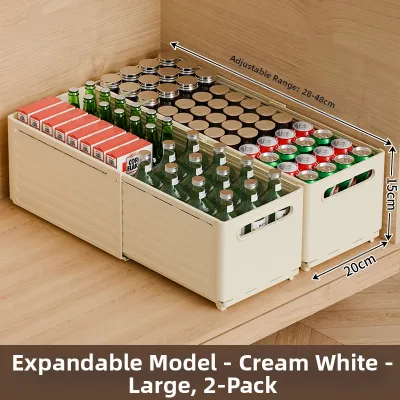
Prices are valid at publication and may change. Please refer to the product page for the latest price.
Weight capacity is a primary safety consideration when organizing buffet cabinets, which typically hold heavier items than standard kitchen pantries. A stack of ceramic dinner plates, stoneware serving bowls, or heavy glass platters can easily exceed 10 to 15 kilograms. When selecting organizers, look for verified weight ratings provided by the manufacturer rather than assuming all metal or wooden racks can handle heavy loads. Overloading an unrated shelf riser or sliding basket can lead to sagging, structural failure, or damage to your valuable dinnerware.
In the humid Philippine climate, material selection is critical to preventing mold, rust, and structural degradation. Generic iron wire organizers without proper protective coatings will rust rapidly when exposed to high relative humidity, potentially staining your cabinet shelves and dinnerware. Evaluate the surface treatments of metal organizers, prioritizing thick powder-coated steel, chrome plating with clear protective topcoats, or genuine stainless steel. If you prefer wooden or bamboo organizers, verify that they have been treated with food-safe, moisture-resistant sealants to prevent mold growth and warping during the wet monsoon season.
Finally, you must assess your cabinet’s base stability and overall load-bearing limits before adding heavy sliding mechanisms. Pull-out organizers shift the center of gravity forward when fully extended, which can cause lightweight or freestanding buffet cabinets to tip forward. Ensure your buffet is structurally sound, level, and ideally anchored to the wall if you plan to install heavy-duty sliding shelves. Inspect the bottom panel of the cabinet to ensure it is thick enough to support mounting screws and the concentrated weight of a fully loaded sliding basket.
Best Cabinet Organizer Types for Buffet and Display Storage
Different zones of your buffet cabinet require distinct organizational strategies to maximize space and maintain accessibility. Lower cabinets benefit most from deep storage solutions, middle shelves require vertical optimization, and shallow drawers need meticulous compartmentalization.

Pull-Out Shelves and Sliding Baskets
Pull-out shelves and sliding baskets are the ideal solution for deep, dark lower buffet compartments where items at the back are difficult to reach. Instead of kneeling and removing multiple items to find a specific serving platter, a sliding drawer allows you to pull the entire contents into the light. This setup is highly recommended for heavy dinnerware sets, small kitchen appliances like blenders or food processors, and bulky serving trays that are otherwise awkward to store.
When choosing sliding organizers, prioritize track smoothness and heavy-duty ball-bearing slide mechanisms over simple friction tracks. Ball-bearing slides ensure that even when loaded to capacity, the drawer glides smoothly without jerking, which protects delicate glassware from rattling and chipping. You must also choose between side-mount and bottom-mount slides; bottom-mount slides are generally easier to install as a DIY project because they screw directly into the existing cabinet floor, eliminating the need to build precise side-support frames.
However, sliding systems do have inherent limitations that you must consider before purchasing. The track hardware, mounting brackets, and drawer frames naturally consume a portion of your cabinet’s usable interior width, often reducing it by 3 to 5 centimeters. Additionally, sliding baskets require a perfectly flat and solid cabinet base; if your buffet has thin, flexible plywood backing or a hollow bottom, you will need to reinforce the base with a solid wood sheet before mounting the tracks to prevent binding or sagging.
Tiered Shelf Risers and Step Organizers
Tiered shelf risers and step organizers are designed to maximize vertical space in upper cabinets and glass-door display sections. Standard buffet shelves often leave 20 to 30 centimeters of empty vertical space above short items like coffee mugs, teacups, and dessert bowls. Placing a shelf riser in these spaces effectively doubles your usable storage area without requiring you to stack items directly on top of one another, which can cause scratches and instability.
When comparing risers, you will find adjustable, expandable, and fixed-height options. Adjustable and expandable risers offer excellent flexibility, allowing you to stretch the organizer to match the exact width of your cabinet or adjust the height to clear tall glassware. Regardless of the style, look for risers equipped with non-slip rubber or silicone feet to prevent the organizer from sliding on polished wood or glass shelves. For stacked units, verify that they feature secure interlocking pins or nesting grooves to prevent the top tier from tipping over.
Keep in mind that shelf risers are not suitable for exceptionally tall, top-heavy, or unbalanced items. Placing heavy stoneware platters on a high, thin wire riser can create a top-heavy structure that is prone to flexing or collapsing. Always distribute weight logically by placing your heaviest, widest items on the solid cabinet floor beneath the riser, and reserving the elevated platform for lighter, smaller items like teacups, saucers, or wine glasses.
Drawer Dividers and Acrylic Bins
Drawer dividers and clear acrylic bins are essential for organizing smaller accessories, cutlery, table linens, and serving utensils within buffet drawers and display shelves. Buffet drawers often become cluttered catch-alls for mixed silverware, napkin rings, cake servers, and coasters. Using dividers allows you to assign a dedicated home for every item, preventing them from rolling around and scratching each other when the drawer is opened and closed.
Adjustable, spring-loaded tension dividers are highly beneficial because they can be customized to fit the exact length or depth of your drawers without requiring glue or screws. They are typically made of finished bamboo or durable plastic and can be repositioned easily as your storage needs change. For display shelves or deep compartments, clear acrylic bins are excellent because they group small, loose items—like tea packets, folded cloth napkins, or cocktail accessories—while keeping them fully visible and dust-free.
Despite their convenience, these organizers require specific care and have structural limitations. High-quality acrylic bins can scratch easily if hard metal utensils are tossed inside carelessly; clean them only with a soft microfiber cloth, mild dish soap, and warm water, avoiding abrasive sponges or harsh chemical cleaners. For spring-loaded dividers, ensure the drawer interior is clean and completely smooth, as dust, wood polish residue, or warped drawer sides can cause the tension pads to slip, causing the divider to snap out of place.
How to Measure and Install Cabinet Organizers Safely
To ensure a seamless installation and avoid damaging your buffet cabinet, you must follow a meticulous measuring protocol before buying any organizer. Wooden furniture can expand, contract, or bow slightly over time, meaning a single measurement may not represent the entire space. Follow these steps to measure your cabinet accurately:
- Measure Width: Take three separate width measurements—at the front opening, the middle, and the very back of the cabinet. Use the narrowest measurement of the three as your maximum organizer width.
- Measure Depth: Measure from the back panel of the cabinet to the inside of the closed door. Subtract at least 2 centimeters to ensure the organizer does not prevent the cabinet doors from closing fully.
- Measure Height: Measure the vertical clearance from the cabinet floor to the underside of the shelf above, checking both the left and right sides.
- Verify Door Clearance: Open the cabinet doors completely (to a 90-degree angle or wider) and measure the clear opening width from the edge of the open door or hinge to the opposite frame. This is the absolute maximum width available for any pull-out or sliding organizer.
Once you have your measurements, consider the installation method that best suits your furniture and living situation. Freestanding organizers require no tools and are the safest choice for antique, highly valuable, or rented buffet cabinets, as they leave no permanent marks. Adhesive-mounted organizers offer quick, tool-free installation for lightweight items, but they carry a high risk of peeling off delicate wood veneers, paint, or varnish when removed. Screw-mounted organizers provide the highest stability and weight capacity for heavy sliding baskets, but they require drilling permanent pilot holes into your cabinet’s interior panels.
Always prioritize safety and structural integrity during installation. If an organizer requires you to drill into load-bearing side panels, remove fixed wooden shelves, or cut away a vertical center stile, stop immediately. Fixed shelves and center stiles often provide vital lateral support that keeps the cabinet from swaying or collapsing under heavy loads. Consult a qualified professional carpenter or the cabinet manufacturer before making any permanent structural modifications to ensure you do not compromise the safety of the furniture or void its warranty.
Where to Buy Cabinet Organizers in the Philippines
When sourcing cabinet organizers in the Philippines, you can choose between local home improvement centers, specialized furniture hardware stores, and online marketplaces. Visiting physical retail stores in major urban centers—such as Manila, Cebu, or Davao—allows you to physically inspect the build quality of the organizers. You can test the smoothness of drawer slides, feel the thickness of wire grids, and verify the rigidity of plastic or acrylic bins before committing to a purchase.
If you prefer the convenience of online marketplaces, you must take extra precautions to ensure the products you receive match your expectations. Read recent customer reviews carefully, paying close attention to user-uploaded photos that show the organizer in actual use. These photos often provide a more realistic view of the material thickness, weld quality, and true color than polished promotional images. Additionally, check the seller’s return policy specifically regarding sizing issues, as return shipping for bulky metal organizers can be costly if you make a measuring error.
Avoid purchasing from unverified online listings that lack detailed product descriptions, exact millimeter measurements, or clear technical diagrams. Low-cost, generic imports often use thin, low-grade metal wire that will bend under the weight of standard dinnerware or rust within a few months of exposure to local humidity. Investing in reputable brands that clearly state their material specifications, weight capacities, and rust-resistant coatings will save you money and protect your dinnerware in the long run.
Frequently Asked Questions (FAQ)
Can I install pull-out shelves in a cabinet with a center stile?
Yes, you can install pull-out shelves in a cabinet with a vertical center stile, but you cannot install a single wide shelf that spans the entire width of the cabinet. The center stile restricts the usable door opening width on either side. Instead, you must measure the clear opening on each side of the stile individually and install two separate, narrower sliding baskets. Never cut or remove a center stile without verifying if it is structural, as doing so can cause the top of the cabinet to sag under heavy loads.
How do I prevent metal organizers from rusting in a humid climate?
To prevent metal organizers from rusting in the high humidity of the Philippines, always choose products with verified rust-resistant finishes, such as high-grade powder coatings, chrome plating with protective sealants, or genuine Grade 304 stainless steel. For maintenance, wipe down spills or condensation immediately with a dry cloth, and avoid using harsh abrasive cleaners or steel wool, which can scratch and compromise the protective coating. Additionally, maintain good air circulation inside your cabinets, and consider placing moisture-absorbing silica packets or small dehumidifier tubs in closed compartments to keep the interior air dry.
Community discussion
Share your experience or ask a question. Comments are reviewed before publication.