
Fitting a folding sofa bed into a 20 square meter condo living room requires balancing daytime seating comfort with nighttime sleeping space. For a room of this size, the most practical folded width ranges from 120 to 150 centimeters (equivalent to a compact double or full-size sofa), while the unfolded depth should not exceed 200 centimeters. This ensures that when the bed is fully extended, you still preserve the essential clearance needed to move around the unit without bumping into walls or other furniture. By carefully measuring your usable floor area and selecting a mechanism that matches your room’s layout, you can create a highly functional, multi-purpose living space that feels open and inviting.
Assessing Your 20 Sqm Living Room Layout
In a typical urban condominium, the gross floor area of your living room does not represent the actual space available for furniture. Structural pillars, entryways, kitchen counters, and balcony doors significantly reduce the usable footprint. To map this out accurately, start by measuring the continuous wall space where you plan to place the sofa. Be sure to account for baseboards and light switches, which can prevent a wide sofa frame from sitting flush against the wall.
Standard interior design guidelines recommend maintaining a main walkway clearance of at least 75 to 90 centimeters for high-traffic paths. In a compact condo, this usually means the path leading from the main entrance to the kitchen or the balcony. Secondary pathways, such as the space between the sofa and a media console, can be slightly tighter but should still measure at least 60 centimeters to allow comfortable movement.
Products mentioned in this guide
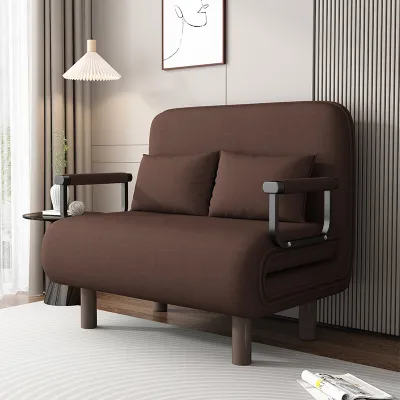
![[Manila 24-hour Boat] 88/108/128/158*78*85CM Foldable Sofa Bed with Storage Cabinet Dual Purpose Small Unit Living Room Lazy Person Sofa Single/Double/Queen Size with Roller Sofa Bed Side Pocket Multi-functional Telescopic Bed 2 Free Throw Pillows](https://img.lazcdn.com/g/p/97417428c04a59ff3f75ec882c347f3f.jpg_400x400q80.jpg_.webp)

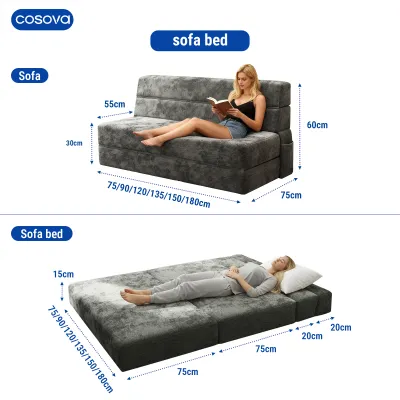
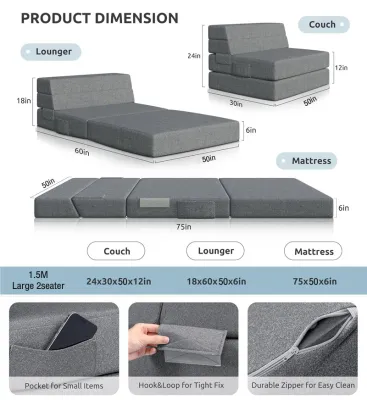
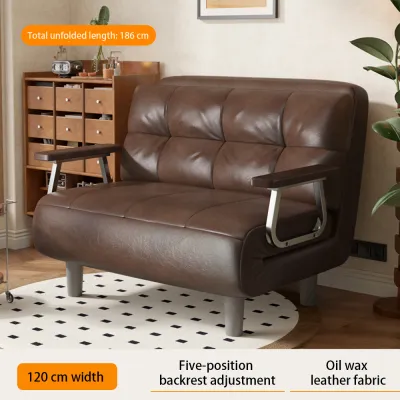
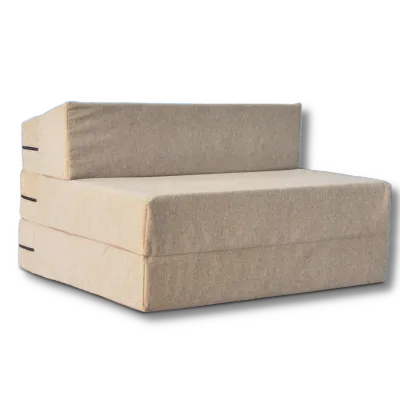
Prices are valid at publication and may change. Please refer to the product page for the latest price.
Identifying the primary focal point of the room is also crucial for determining the optimal placement zone. If your living room centers around a television or a scenic window view, the sofa bed must align with this focal point without blocking natural light or ventilation. In tropical climates, placing a sofa bed directly under an air conditioning unit or too close to a sunny window can affect comfort, so plan the layout to allow balanced airflow throughout the room.
Ideal Folding Sofa Bed Dimensions for Small Spaces
When shopping for a folding sofa bed, comparing the folded footprints of different frame sizes is the first step to avoiding an overcrowded room. A single-size sofa bed (typically 90 to 100 centimeters wide) is highly versatile and leaves plenty of room for side tables, but it only accommodates one sleeper. A double-size sofa bed (typically 130 to 140 centimeters wide) strikes a practical balance for a 20 square meter space, offering comfortable seating for two or three people and a cozy sleeping area for overnight guests.

A queen-size model (typically 150 to 160 centimeters wide) offers excellent sleeping comfort but can easily overwhelm a short wall. If your living room has a limited continuous wall length, a queen-size frame may force you to eliminate other essential furniture, such as a dining table or a workspace. Therefore, it is vital to measure your wall length and compare it against the total outer width of the sofa, including the armrests.
Unfolded depth is another critical dimension that is often overlooked until the furniture is delivered. Most pull-out mechanisms extend to a total depth of 190 to 220 centimeters from the back wall. In a narrow living room, this extension can completely block the path to the balcony or press directly against your media console. To maintain a proportional visual scale, look for a seat depth of 50 to 55 centimeters and a backrest height under 90 centimeters, which keeps the furniture low-profile and prevents the room from feeling visually cramped.
In high-humidity environments, choosing breathable fabrics like linen or cotton-polyester blends over synthetic leather can prevent the seating surface from feeling sticky or peeling prematurely. Be sure to check the manufacturer’s care instructions to ensure the fabric can withstand regular cleaning and tropical conditions.
Space-Saving Features and Mechanisms to Look For
The type of folding mechanism you choose directly impacts how much clearance you need and how much effort is required for daily conversion. Click-clack models are highly popular because they fold flat quickly by tilting the backrest backward until it clicks, then laying it flat. However, many traditional click-clack designs require you to pull the entire sofa frame away from the wall before converting it, which can be physically demanding. If you prefer this mechanism, look for a “zero-wall” click-clack design that can transition without needing extra rear clearance.
In contrast, pull-out mechanisms extend forward from the base of the sofa. While they allow the back of the sofa to remain flush against the wall, they require substantial front clearance to unfold completely. For a 20 square meter room, armless designs are excellent space-savers because they eliminate 15 to 30 centimeters of unnecessary frame width, maximizing the actual seating and sleeping surface without increasing the sofa’s overall footprint.
Additionally, consider the visual weight of the sofa bed’s design. Raised-leg designs, where the sofa sits on wooden or metal legs, expose more of the floor underneath, creating an optical illusion of openness that makes a small condo feel larger. Choosing a model with integrated under-seat storage is another smart way to maximize utility, providing a dedicated spot to store pillows, blankets, and bedsheets without taking up valuable closet space.
Common Sizing Mistakes and How to Avoid Them
One of the most frustrating mistakes condo owners make is purchasing a sofa bed that fits perfectly in the living room but cannot be delivered into the unit. Many modern high-rise developments have tight service elevators, narrow corridors, and sharp stairwell turns. Before finalizing your purchase, measure the height, width, and diagonal clearance of your building’s elevator door, as well as your own front door frame, to ensure the boxed furniture can safely pass through.
Another common error is ignoring the swing radius of the folding mechanism and the space required to actually make the bed. If the mattress extends right up to the opposite wall or media console, you will find it incredibly difficult to tuck in sheets, change pillowcases, or step out of bed in the morning. Always leave at least 60 centimeters of clearance at the foot or sides of the extended bed for comfortable access.
Finally, plan for your complementary furniture to be highly mobile. A heavy, solid wood coffee table can become a major obstacle when it is time to unfold the bed. Instead, opt for lightweight nesting tables, a small ottoman with hidden storage, or a side table on wheels that can easily be rolled to the corner of the room when the sofa bed is in use.
Frequently Asked Questions (FAQ)
Can a queen-size folding sofa bed fit in a 20 sqm living room?
Yes, a queen-size folding sofa bed can fit, but its feasibility depends entirely on the room’s shape and layout flexibility. In a long, rectangular living room, a queen-size frame (typically 150 to 160 centimeters wide) can work well if placed against the longest wall, provided the unfolded length of approximately 210 centimeters does not block major pathways. However, in a square room or a layout with multiple structural pillars, a queen-size bed will likely restrict movement, making a compact double sofa bed a much more practical choice.
How much clearance is needed in front of a pull-out sofa bed?
You should plan for a minimum of 60 to 75 centimeters of open space beyond the fully extended foot of the bed. This clearance ensures you can walk around the bed comfortably, open nearby cabinet doors, and easily convert the unit back into a sofa without feeling trapped. When planning your layout, add this clearance value to the fully extended depth of the sofa bed to determine the absolute minimum room width required for safe operation.

Community discussion
Share your experience or ask a question. Comments are reviewed before publication.