
The best hanging shoe racks for closet organization in the Philippines are those that maximize vertical space, resist high tropical humidity, and securely support your footwear collection without damaging your closet infrastructure. To find the ideal match, you must choose between closet rod organizers, over-the-door racks, or enclosed cubbies based on your closet’s physical dimensions and the specific materials required to prevent mold in a humid climate.
Selecting the right organizer involves balancing storage capacity with structural safety. By focusing on accurate measurements, material breathability, and weight limits, you can keep your shoes organized, clean, and well-preserved.
How to Measure and Assess Your Closet for a Hanging Shoe Rack
Before purchasing a hanging shoe rack, measure the diameter of your closet rod. Standard closet rods are typically 1 to 1.5 inches in diameter. Hanging organizers use either metal hooks or fabric hook-and-loop wrap straps to attach to the rod. Ensure the hook opening or strap length is compatible with your rod’s thickness; a hook that is too small will not fit, while a strap that is too loose will slide, causing the organizer to tilt and spill your shoes.
Products mentioned in this guide
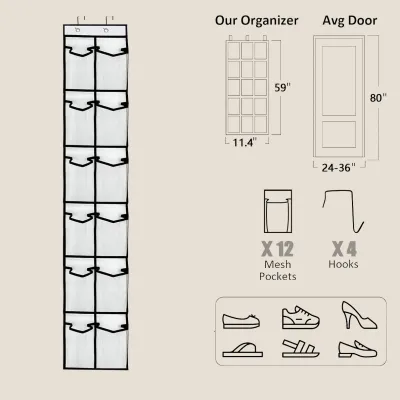
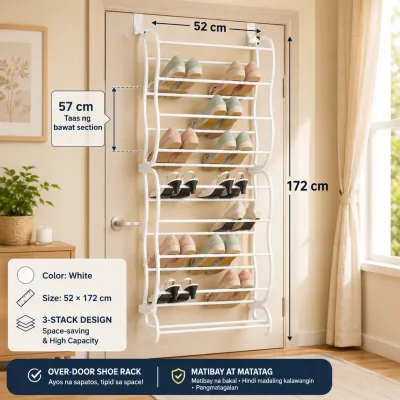
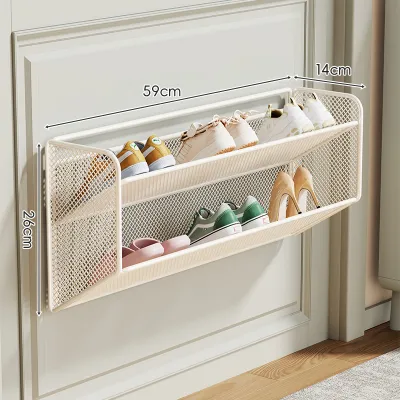
Prices are valid at publication and may change. Please refer to the product page for the latest price.
If you are eyeing an over-the-door model, measure the door thickness. Most residential doors in the Philippines are 35mm to 40mm thick, but custom wooden doors can be thicker. Check the top gap clearance between the door and the frame; you generally need at least 2mm to 3mm of clearance so the metal hooks do not scrape the frame or jam the door. Also, inspect the hinge placement to ensure the back of the door has enough clearance to swing open fully without the rack hitting adjacent walls or furniture.
Evaluate the vertical space inside your closet. Measure the distance from your closet rod to the floor or the top of any bottom drawers. A standard 6-tier hanging shoe organizer can be 100cm to 120cm long. If your hanging rod is positioned low, a long organizer will drag on the floor, accumulating dust and bending the lower compartments. Ensure there is at least a 10cm gap between the bottom of the rack and the floor. Additionally, consider how much horizontal rod space the organizer will occupy—usually 15cm to 30cm—and verify that this will not crowd your existing hanging clothes, causing wrinkles.
Take inventory of your footwear before selecting shelf dimensions. Flat sneakers, sandals, and slippers fit easily into standard cubbies that measure 13cm to 15cm in height. However, high heels, ankle boots, or bulky athletic shoes require taller or wider compartments. Measure your longest and tallest pair of shoes. If your collection consists of larger men’s shoes (e.g., size 43 and above) or high-top sneakers, look for racks with wider compartments (at least 20cm wide and 30cm deep) to prevent the shoes from sticking out and warping the fabric.
Top Hanging Shoe Rack Types for Different Closet Layouts
Selecting the right hanging shoe rack depends heavily on the layout of your bedroom or closet. Different designs solve specific space limitations, whether you have a spacious walk-in wardrobe, a compact built-in closet, or limited storage in a rented apartment.

Closet Rod Hanging Organizers
Closet rod hanging organizers are vertical fabric columns featuring multiple open cubbies that suspend directly from your main closet rod. This design is highly effective at utilizing the empty vertical space beneath shorter hanging items like shirts and folded trousers, converting unused air space into structured compartments.
These organizers are particularly well-suited for deep built-in closets or walk-in wardrobes where floor space is at a premium but you have plenty of horizontal rod space. They allow you to keep your shoes at eye level, making it easy to coordinate outfits while keeping your footwear off the dusty floor.
However, rod-hung models have distinct limitations regarding weight capacity and space allocation. Because they hang from a single point or a pair of hooks, they concentrate all the weight of your shoes onto your closet rod. If your rod is made of thin wood or lightweight plastic, a fully loaded shoe rack can cause the rod to bow or break. Furthermore, because they sit directly on the rod, they will crowd your hanging garments if your closet is already packed, reducing air circulation and potentially causing clothes to smell musty.
Over-the-Door Hanging Shoe Racks
Over-the-door hanging shoe racks utilize the flat, unused vertical surface of your closet or bedroom door. These organizers typically feature metal hooks that slip over the top edge of the door, holding a vertical fabric sheet with pockets or a metal wire frame that holds shoes at an angle.
The primary advantage of this design is its completely non-destructive, drill-free installation. This makes it an exceptional choice for renters in the Philippines who cannot make permanent modifications to their rooms, as well as anyone looking to maximize a small studio apartment where every square inch of floor space counts.
When selecting an over-the-door model, you must carefully check the door’s clearance. If the hooks are too thick, they will scrape the paint off the door frame every time you open or close the door. Additionally, look for models with soft felt or foam backing on the hooks and the rear of the rack to prevent scratching the door’s finish and to muffle the rattling noise when the door swings.
These racks are highly versatile and can be hung on the inside of bedroom doors, bathroom doors, or utility room doors, providing secondary storage when your main closet is completely full.
Enclosed Hanging Shoe Cubbies and Bags
Enclosed hanging shoe cubbies and bags feature front covers—often secured by zippers, buttons, or hook-and-loop fasteners—that completely seal the compartments. This design is engineered to provide maximum protection for your footwear collection.
An enclosed design is ideal for protecting delicate or high-value shoes, such as leather dress shoes, suede heels, or collectible sneakers, from dust, pet hair, and accidental scuffs. It also prevents insects or spiders from nesting inside your shoes, which can be a common issue in semi-open storage areas.
However, in the warm and humid Philippine climate, enclosed designs present a significant risk if they lack proper ventilation. Completely sealed plastic or heavy vinyl enclosures trap moisture inside, creating a humid microclimate that accelerates the growth of mold, mildew, and unpleasant odors.
To balance protection and airflow, look for enclosed organizers that combine clear vinyl front windows (for easy visibility) with breathable mesh side panels. This setup allows you to see your shoes instantly while ensuring continuous air circulation to keep the materials dry.
Choosing Moisture-Resistant Materials for a Tropical Climate
The tropical climate of the Philippines, characterized by high relative humidity and warm temperatures, requires careful consideration of the materials used in your closet organizers. Standard materials that perform well in dry climates can quickly deteriorate, sag, or foster mold growth when exposed to local humidity.
When evaluating fabric hanging organizers, look for breathable synthetic materials such as non-woven polypropylene, heavy-duty polyester mesh, or high-density canvas. Non-woven polypropylene is lightweight and naturally resistant to absorbing ambient moisture, making it less prone to sagging under humid conditions. Polyester mesh is highly recommended for pocket-style organizers because it allows maximum airflow around the shoes, letting damp footwear dry out naturally. Canvas offers excellent structural strength, but you must ensure it has a water-resistant coating or is kept in a well-ventilated closet, as untreated natural cotton canvas can absorb moisture from the air.
Avoid organizers made entirely of cheap, solid plastic or non-breathable vinyl. While these materials are easy to wipe clean, they act as vapor barriers. If you place a pair of shoes that are slightly damp from sweat or rain into a solid plastic pocket, the moisture has nowhere to escape. This trapped humidity will rapidly lead to mold and mildew growth, which can permanently ruin leather and suede shoes, leaving unsightly stains and stubborn odors.
Pay close attention to the hardware components, such as hooks, eyelets, and internal support frames. In humid coastal or tropical areas, standard steel hardware can rust quickly, staining the organizer’s fabric and potentially transferring rust to your clothes or shoes. Look for organizers that feature rust-resistant hardware, such as powder-coated iron, stainless steel, or heavy-duty molded ABS plastic. Powder-coated metal hooks provide the necessary strength to support heavy shoe loads while resisting corrosion.
When shopping on online marketplaces or in local home stores, do not rely solely on generic marketing terms like “durable” or “heavy-duty.” Use this checklist to verify the materials:
- Fabric Weight: Check the product specifications for the exact fabric weight, usually measured in GSM (grams per square meter); look for at least 80 GSM to 120 GSM for non-woven fabrics to ensure tearing resistance.
- Reinforced Stitching: Look for reinforced stitching along the seams and around the hanging hooks, as humidity can weaken poorly glued or single-stitched seams over time.
- User Reviews: Read customer reviews specifically searching for keywords like "mold," "amoy" (smell), "sagging," or "rust" to see how the product performs in actual Philippine households over several months.
Safe Installation and Maintenance for Long-Lasting Use
Proper installation and consistent maintenance are key to ensuring your hanging shoe rack remains stable and does not cause damage to your closet structure. Because these organizers suspend heavy loads from a single point, improper use can lead to bent closet rods, warped doors, or torn fabric.
When loading your hanging shoe rack, always distribute the weight of your shoes evenly. Place your heaviest shoes—such as leather boots, heavy sneakers, or thick-soled wedges—in the lowest compartments. This lowers the organizer’s center of gravity, reducing the swaying motion when you browse your closet. Place lighter footwear, such as flip-flops, sandals, and canvas flats, in the upper tiers. This distribution minimizes the tension on the top seams and hooks, preventing the fabric from stretching out of shape.
Never exceed the manufacturer’s stated weight capacity. Most standard fabric hanging organizers are designed to support a total weight of 5 to 10 kilograms, while heavy-duty models can support more. Overloading the top tiers can cause the hanging straps to tear away from the main body or cause your closet rod to bow permanently. If you notice the top shelf of the organizer beginning to sag or tilt downward, it is a clear sign that the load is too heavy and needs to be reduced immediately.
Establish a regular cleaning routine to extend the lifespan of both your organizer and your shoes. Every few months, completely empty the rack. Use a vacuum cleaner attachment to remove dust, lint, and dry dirt from the corners of each cubby. Wipe down the shelves with a damp cloth mixed with a mild, diluted disinfectant, then allow the organizer to air dry completely in a well-ventilated area before putting your shoes back. Keep a small moisture-absorbing sachet or silica gel packet nearby (ensuring it does not directly touch your shoes) to help manage ambient humidity inside the closet.
Inspect the structural integrity of your organizer regularly. If you notice that the internal cardboard or plastic support boards inside the shelves have bent permanently, the fabric has begun to rot or tear, or the metal hooks are showing signs of flaking rust, it is time to retire the organizer. Continuing to use a damaged or rusty rack can lead to a sudden collapse, potentially damaging your footwear or causing the metal hooks to scratch your closet rod or door.
Frequently Asked Questions (FAQ)
Finding the right hanging shoe organizer often involves addressing specific practical concerns about daily use, weight limits, and moisture control. Below are answers to the most common questions regarding hanging shoe racks in Philippine homes.
Can hanging shoe racks hold heavy sneakers or work boots?
Most standard fabric hanging shoe racks are engineered for lightweight daily footwear like flats, sandals, and running shoes. While some heavy-duty models made of thick canvas or reinforced polyester can support heavier shoes, they are generally not suitable for multiple pairs of heavy leather work boots or bulky basketball sneakers. If you must store heavier shoes, place them on the very bottom shelves of the organizer to minimize strain on the closet rod or door hinges. Always verify the manufacturer’s maximum weight capacity per shelf—typically around 1 to 1.5 kilograms per cubby—before loading heavy footwear.
How do I prevent mold on fabric shoe organizers in humid weather?
To prevent mold, never store damp or sweaty shoes directly in a fabric organizer; always allow your shoes to air dry completely in a well-ventilated space before putting them away. Choose organizers made from highly breathable materials, such as polyester mesh or non-woven polypropylene, rather than solid plastic. Additionally, place disposable dehumidifier tubs or silica gel packets on your closet floor or adjacent shelves to pull excess moisture from the air. Periodically open your closet doors during dry, sunny days to encourage fresh air circulation throughout the wardrobe.
Will an over-the-door rack damage my bedroom or closet door?
An over-the-door rack can damage your door if the mounting hooks are too thick, causing them to rub against the door frame, or if the rack swings freely and strikes the door surface. To prevent scratches and paint chipping, select models that include foam padding or rubber backing on the hooks and the rear frame. You can also apply small felt pads or double-sided mounting tape to the bottom of the rack to stabilize it, preventing it from rattling or hitting the door when it is opened and closed.
Community discussion
Share your experience or ask a question. Comments are reviewed before publication.