
Maximizing a compact kitchen in the Philippines requires a strategic balance between stationary storage and mobile flexibility. The ideal setup utilizes every available centimeter of floor, wall, and corner space while keeping walkways clear for daily meal preparation. To achieve this, homeowners must look beyond standard bulky cupboards and instead opt for specialized slim tall cabinets, wall-mounted units, multi-tier rolling utility carts, and expandable kitchen islands. These versatile kitchen cabinets and organizers address the unique challenges of local housing, such as tight condominium layouts, narrow townhouse corridors, and the high humidity levels characteristic of the tropical climate.
Selecting the right furniture involves assessing how each piece fits into your daily routine, how it handles the weight of heavy kitchen items, and how well its surfaces withstand local environmental conditions. By combining fixed, high-capacity cabinets for long-term storage with mobile carts that act as temporary workspaces, you can create a highly functional, clutter-free kitchen that feels spacious and organized.
How to Choose Storage Solutions for Compact Kitchens
Before purchasing any kitchen storage unit, measuring your available space is the most critical first step. You must measure not only the designated floor area but also the vertical clearance, especially if you plan to install tall cabinets or wall-mounted shelving beneath low ceilings. In Philippine homes, particularly high-rise condominiums or modern townhouses, you must also verify the dimensions of entryways, hallways, stairwells, and elevator doors. A beautiful pantry cabinet is of no use if it cannot pass through the main door or fit into the building lift during delivery. Always compare the manufacturer’s finished product dimensions against these access routes to avoid delivery failures.
Products mentioned in this guide
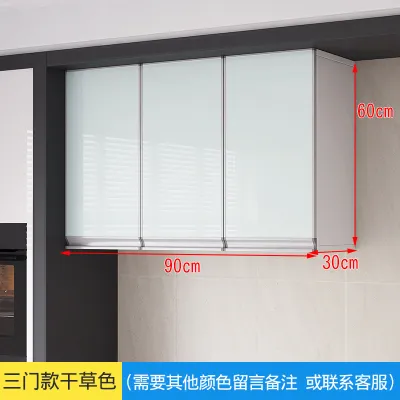
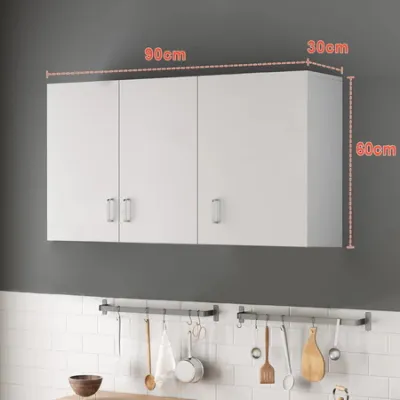
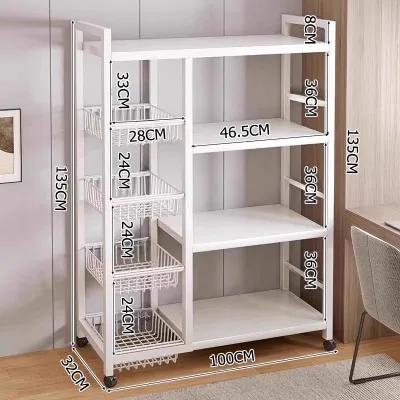
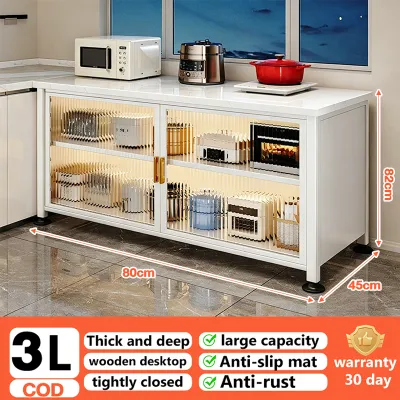
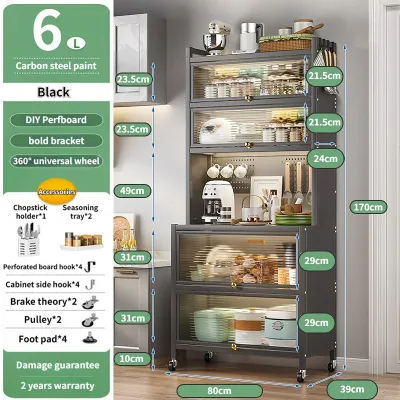
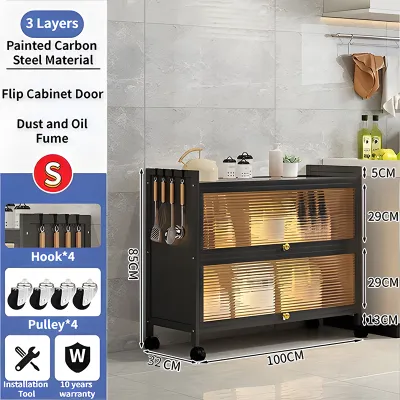
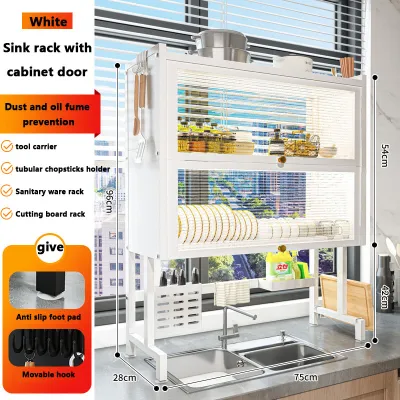
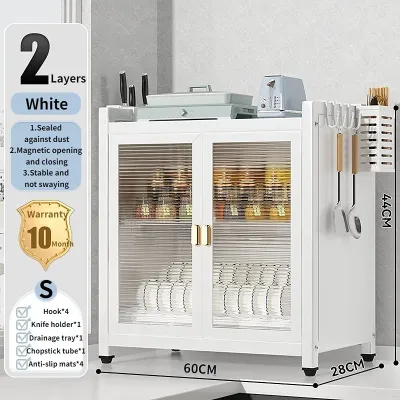
Prices are valid at publication and may change. Please refer to the product page for the latest price.
Evaluating weight capacity and structural stability prevents accidents and premature furniture failure. Stationary cabinets must have a solid, wide base or reliable wall-anchoring points to handle heavy loads like bags of rice, canned goods, and small appliances. For mobile units, a low center of gravity is essential to prevent tipping when the cart is in motion. Look for carts with robust, wide-set casters and check the manufacturer’s maximum load limits for each individual shelf. Placing heavier items on the lowest tier keeps the unit grounded and stable during use.
The tropical climate in the Philippines introduces high humidity levels, frequent temperature fluctuations, and exposure to airborne cooking oils, which can quickly degrade low-quality furniture. When evaluating materials like engineered wood, medium-density fiberboard (MDF), or steel, remember that the material name alone does not guarantee durability. Instead, inspect the surface treatments, finishes, and protective coatings. Look for water-resistant laminates, rust-resistant powder coatings on metal frames, and sealed joints that prevent moisture from seeping into the core material. Always verify the manufacturer’s care instructions to ensure the surface can withstand regular wiping with damp cloths and mild cleaning agents without warping or peeling.
Choosing Kitchen Cabinets and Organizers for Small Spaces
Stationary cabinets provide the heavy-duty storage foundation that small kitchens need to keep countertops clear. By choosing specialized designs tailored for tight areas, you can store bulk supplies and heavy cookware without consuming excessive floor space.

Slim Tall and Gap-Filler Cabinets
Slim tall cabinets are designed to exploit narrow vertical spaces that would otherwise go unused, such as the awkward gap between a refrigerator and a wall. These units typically range from 15 to 30 centimeters in width but extend upward to maximize storage capacity. When planning for a gap-filler cabinet, measure the width of the gap at three different points—front, middle, and back—to account for uneven walls, and ensure there is adequate clearance for any adjacent appliances that emit heat, such as refrigerators or ovens.
Adjustable shelving is a vital feature for slim cabinets, allowing you to customize the interior layout to accommodate tall bottles of cooking oil, soy sauce, and stacked canned goods. Because these units are tall and narrow, they are naturally prone to becoming top-heavy and unstable. To ensure safety, always install the manufacturer-provided anti-tip hardware to anchor the cabinet securely to the wall. Additionally, practice proper weight distribution by storing heavy items like glass jars and bulk grains on the bottom shelves, leaving the upper shelves for lightweight items like cereal boxes and paper towels.
Under-Sink and Corner Storage Cabinets
Under-sink areas and deep corner cabinets are notorious for becoming cluttered, dark zones where items are easily lost. To reclaim this wasted space, look for cabinets equipped with specialized pull-out mechanisms, slide-out wire baskets, or L-shaped rotating shelves (often called lazy Susans). These hardware systems bring items stored in the very back directly into view, eliminating the need to bend down and reach into deep, dark recesses.
When selecting under-sink storage, you must first map out the path of your plumbing, garbage disposal units, and water filtration systems. Measure the remaining clear space carefully and choose modular organizers that fit around these pipes without putting pressure on the connections. Proper ventilation is crucial in these damp areas to prevent the growth of mold and mildew, which thrive in the humid Philippine climate. Ensure the cabinet doors have slatted designs or ventilation grilles, and regularly inspect the interior surface specifications to verify they have a water-resistant finish capable of handling minor condensation or occasional splashes.
Wall-Mounted and Over-Appliance Cabinets
Wall-mounted cabinets and over-appliance shelving units utilize the empty air space above countertops, microwave ovens, or mini-refrigerators, preserving valuable floor space for foot traffic. These units are highly effective for storing lightweight everyday items, such as drinking glasses, coffee mugs, spice jars, and dry ingredients. Placing these frequently used items at eye level keeps them within easy reach while you are preparing meals.
Installing wall-mounted units requires careful attention to the structural integrity of your walls. In the Philippines, kitchen walls are commonly constructed from concrete hollow blocks or drywall. You must use the correct anchoring hardware—such as heavy-duty masonry plugs for concrete or toggle bolts for drywall—to ensure the cabinet remains securely attached under load. Additionally, position the cabinets at a safe height, typically at least 45 to 50 centimeters above the countertop, to prevent head bumps while working, and avoid overloading them with heavy ceramic dinnerware or iron cast pans unless the wall and cabinet are specifically rated for such weight.
Best Mobile Cart Designs for Flexible Kitchen Layouts
Mobile carts offer a dynamic solution for kitchens that need to adapt to different tasks throughout the day. They can serve as extra prep surfaces, temporary serving stations, or portable pantries that slide out of sight when guests arrive.
Multi-Tier Rolling Utility Carts
Multi-tier rolling utility carts are highly versatile, compact organizers that can be wheeled wherever they are needed most. When choosing a utility cart, consider the design of the shelves: mesh or wire baskets are excellent for storing fresh produce like onions, garlic, and potatoes because they allow constant airflow, which helps prevent rot in humid weather. Solid shelves, on the other hand, provide a flat, stable surface ideal for holding small appliances like rice cookers, blenders, or coffee makers.
Safety and stability are paramount for any cart on wheels. Ensure the unit features high-quality casters with reliable locking mechanisms on at least two wheels, allowing you to lock the cart firmly in place when prepping food or operating an appliance. Be mindful of the manufacturer’s weight limits and avoid overloading the top shelf. Placing a heavy microwave on the top tier of a lightweight plastic or thin metal cart creates a high center of gravity, making the cart highly susceptible to tipping over when pushed across uneven floor tiles or door thresholds.
Drop-Leaf and Expandable Kitchen Islands
For kitchens that lack built-in counter space, a drop-leaf mobile kitchen island provides an expandable prep area that can be folded down when not in use. These units feature a hinged countertop extension that raises and locks into place, instantly doubling your workspace for chopping vegetables, rolling dough, or serving meals. When the work is done, the leaf folds flat against the side of the cart, reducing its footprint so it can be parked neatly against a wall or in a corner.
Before purchasing, evaluate the support mechanism of the drop-leaf to ensure it remains stable and level when fully extended and loaded with heavy ingredients or prep bowls. You should also check the surface specifications of the countertop. Many islands feature wood, stainless steel, or tiled tops; always verify if the surface is heat-resistant before placing hot pots or rice cooker inner pots directly on it. If the manufacturer does not explicitly state heat resistance, always use trivets or hot pads to protect the finish from bubbling or scorching.
Slim Slide-Out Carts with Wheels
Slim slide-out carts are ultra-narrow mobile units designed to slip into tight gaps, such as the space between your washing machine and utility wall, or next to the kitchen stove. These carts typically feature multiple tiers of narrow shelving, making them perfect for organizing bottled condiments, cooking oils, canned goods, and cleaning supplies. Because they are pulled out from the front, they maximize deep, narrow spaces that are otherwise inaccessible.
To ensure a proper fit, measure the width of your target gap and subtract at least two centimeters to account for handle protrusions, cabinet hardware, or slightly uneven walls. Look for carts equipped with smooth-gliding, heavy-duty casters that can roll in a straight line without wobbling, especially when loaded with heavy glass bottles or liquid detergents. Since these carts are frequently moved in and out of tight spaces, choose models with protective side rails on each shelf to prevent tall bottles from tipping over and falling out during transit.
Stationary Cabinets vs. Mobile Carts: Which Do You Need?
Choosing between stationary cabinets and mobile carts depends on your kitchen’s layout, your storage priorities, and whether you own or rent your home. Many efficient kitchens use a combination of both to balance high-capacity storage with flexible workspace.
| Feature | Stationary Cabinets | Mobile Carts |
|---|---|---|
| Space Footprint | Fixed floor or wall space; utilizes vertical height. | Compact, flexible; can be tucked away when folded. |
| Installation Effort | High; requires wall anchoring, leveling, or assembly. | Low to moderate; usually involves basic wheel attachment. |
| Mobility | None; permanently installed or heavy to move. | High; rolls on casters for flexible positioning. |
| Best Use Case | Heavy dinnerware, small appliances, long-term pantry storage. | Daily food preparation, temporary counter space, serving. |
| Stability | Excellent; anchored to walls or heavy base units. | Moderate; depends on wheel locks and load distribution. |
If your primary goal is to store heavy, bulky items such as large pots, small appliances, and bulk sacks of rice, stationary cabinets are the superior choice. They offer maximum weight capacity, structural stability, and allow you to utilize full vertical height up to the ceiling. Stationary units are ideal for homeowners who want a permanent, seamless look and have the freedom to drill into walls for secure anchoring.
Conversely, if your kitchen suffers from a lack of counter space or has an awkward layout that changes depending on the task, mobile carts offer the flexibility you need. They are highly recommended for renters who cannot drill holes into walls or modify the existing cabinetry. A mobile cart can serve as a prep station next to the stove, roll over to the dining table to act as a bar cart, and then tuck away into a corner when the kitchen needs to be cleared for foot traffic.
Installation and Maintenance Tips for Humid Climates
Proper installation and regular maintenance are essential to extend the lifespan of your kitchen furniture, particularly in the high-humidity environment of the Philippines. When assembling new cabinets or carts, always follow the manufacturer’s step-by-step instructions and use the exact hardware provided. Substituting screws or omitting structural brackets can compromise the stability of the unit, leading to sagging shelves or structural failure under load.
Moisture accumulation is the primary cause of mold, mildew, and wood warping in tropical climates. To combat this, ensure there is adequate air circulation around your stationary cabinets. Avoid pushing large wooden cabinets flush against exterior concrete walls, which can sweat during the rainy season; instead, leave a small gap of one to two centimeters to allow air to flow freely. For under-sink cabinets, place moisture-absorbing sachets or charcoal deodorizers inside, and open the cabinet doors occasionally during dry days to let fresh air circulate.
Mobile carts and sliding cabinets require routine maintenance to keep their moving parts functioning smoothly. Dust, pet hair, and spilled ingredients can accumulate in wheel casters and drawer tracks, causing them to stick or grind. Periodically inspect the wheels and tracks, clearing out any debris with a small brush or vacuum attachment. Wipe down the surfaces of your cabinets and carts weekly with a soft microfiber cloth dampened with water and mild dish soap to remove sticky residues from cooking oils and humidity. Avoid using harsh abrasive cleaners or soaking the surfaces, as excess water can penetrate seams and cause engineered wood to swell.
If you encounter difficulties during installation—such as drilling into hard concrete walls without the proper rotary hammer drill—or if you notice signs of structural warping, sagging shelves, or loose joints on older furniture, stop using the unit immediately. Consult a professional carpenter or installation specialist to reinforce the structure or properly anchor the cabinets to prevent tipping hazards.
Frequently Asked Questions (FAQ)
How do I prevent a mobile kitchen cart from tipping over?
To prevent a mobile kitchen cart from tipping, always practice proper load distribution by placing the heaviest items—such as large pots, small appliances, or bulk ingredients—on the bottom shelf. This keeps the cart’s center of gravity low and stable. Never overload the top shelf or hang heavy items from the side handles. Additionally, always engage the locking casters on the wheels when the cart is stationary, especially during food preparation, and push the cart slowly and smoothly when moving it across uneven floors or door thresholds.
Can I install wall-mounted cabinets on hollow blocks or drywall?
Yes, you can install wall-mounted cabinets on both hollow blocks and drywall, but you must use the appropriate anchoring hardware designed for each wall type. For concrete hollow blocks, which are common in Philippine homes, you must use heavy-duty masonry anchors or sleeve anchors that expand inside the block to grip securely. For drywall, you must locate the vertical metal or wood studs behind the wall and screw directly into them, or use heavy-duty toggle bolts if mounting between studs. If you are unsure of your wall’s load-bearing capacity or do not have the proper tools, consult a qualified contractor to perform the installation safely.
What is the standard clearance needed for a rolling cart to move smoothly?
To ensure a rolling kitchen cart can move smoothly through your kitchen without scraping walls or bumping into appliances, you should measure the cart’s widest point—including any protruding handles, towel racks, or side hooks. Add at least 5 to 8 centimeters (about 2 to 3 inches) of clearance on all sides of this measurement. This extra space allows you to comfortably maneuver the cart around corners, open refrigerator or oven doors, and walk past the cart safely while it is in use.
Community discussion
Share your experience or ask a question. Comments are reviewed before publication.