
Selecting the right kitchen island with built-in storage can transform a busy kitchen into an organized, efficient workspace. For homes navigating the balance between compact layouts and rich culinary traditions, this addition serves as a prep station, dining table, and storage hub all at once. The ideal choice must fit your specific floor plan, withstand the local tropical climate, and accommodate the heavy cookware and small appliances common in local households.
To make a successful purchase, you must evaluate spatial dimensions, mobility requirements, and material specifications. Balancing these factors ensures your new furniture piece remains highly functional and structurally sound for years to come.
Why Built-In Storage Matters in Philippine Kitchens
Daily meal preparation in local households is often a multi-step process involving fresh ingredients, heavy cookware, and a variety of specialized appliances. Preparing staple dishes requires ample counter space for chopping, marinating, and plating. When counter space is limited, the cooking process can quickly become frustrating and disorganized.
Products mentioned in this guide
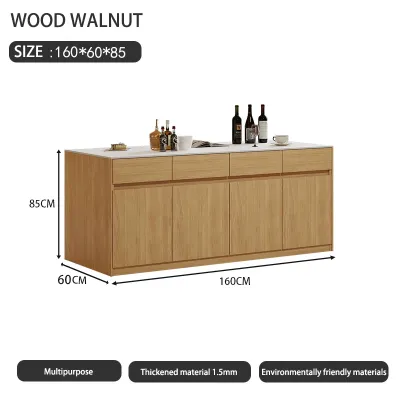
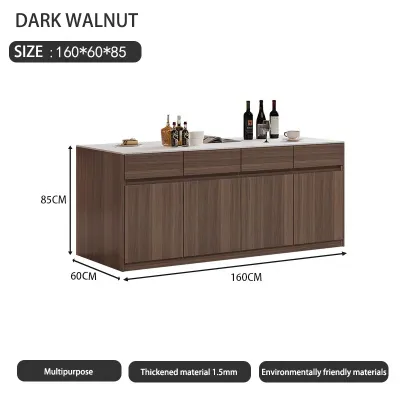
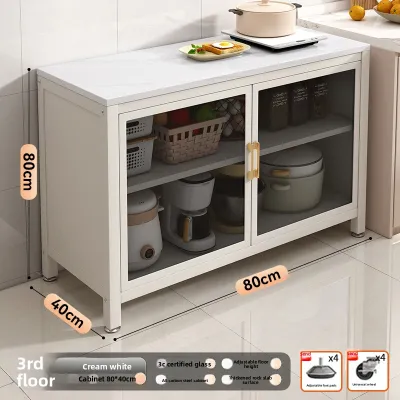
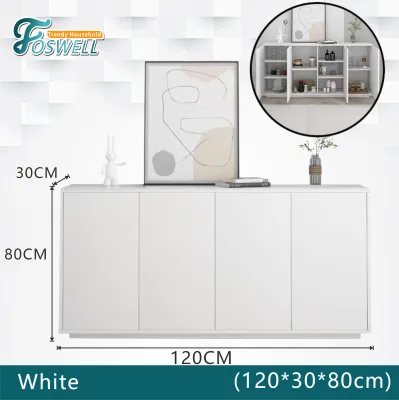

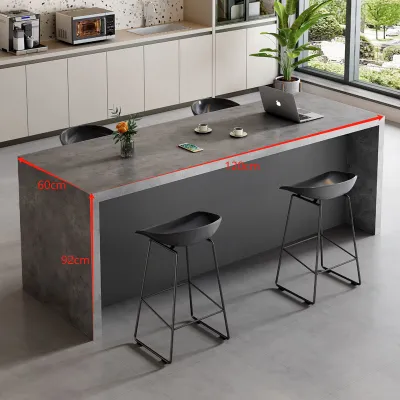
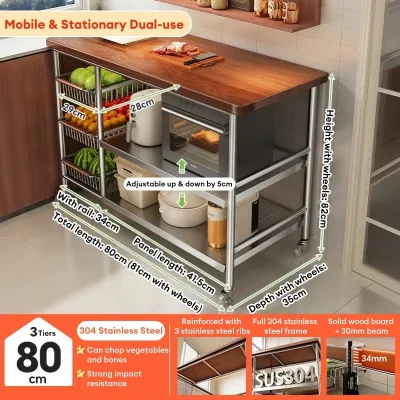
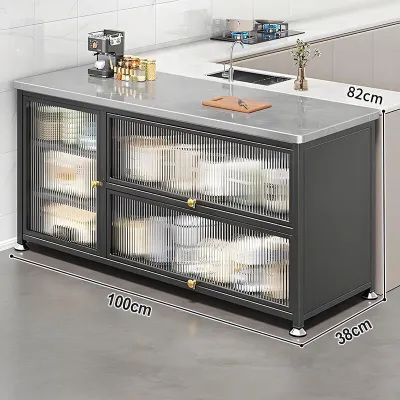
Prices are valid at publication and may change. Please refer to the product page for the latest price.
Many kitchens utilize multiple small appliances on a daily basis. Items such as rice cookers, air fryers, blenders, and electric kettles often crowd the primary countertops. Storing these active appliances on main work surfaces leaves very little room for actual food preparation.
In urban areas, modern condominiums, townhouses, and starter family homes frequently feature compact, single-wall or L-shaped kitchen layouts. These architectural configurations prioritize open-concept living but often sacrifice dedicated kitchen workspace. Without a dedicated area for culinary tasks, daily cooking can feel constrained.
Integrating a kitchen island with built-in storage addresses these spatial challenges directly. By moving secondary appliances, dry pantry goods, and bulky cooking vessels into the island’s base, you instantly reclaim your primary countertops. This organization keeps active walkways clear, reduces visual clutter, and establishes a centralized, efficient zone for meal preparation.
How to Measure Your Space for a Kitchen Island
Spatial planning is the most critical step before purchasing any substantial furniture piece. To maintain a safe and comfortable workflow, you must preserve adequate clearance around all sides of the kitchen island. Standard spatial guidelines recommend maintaining a minimum walkway clearance of 90 cm to 120 cm.

A clearance of 90 cm is generally sufficient for a single cook to move and work comfortably. If your household features multiple cooks or if the island sits along a primary traffic path, aim for a clearance of 120 cm. This extra space prevents physical bottlenecks and allows two people to pass each other without collision.
You must also account for the clearance required by appliance doors and low-level cabinets. Measure the swing radius of your refrigerator, oven, dishwasher, and surrounding cabinet doors when they are fully open. Ensure that these doors can open completely without striking the island’s base or blocking the path of someone working nearby.
Delivery logistics are another vital consideration that buyers often overlook. Measure the exact height, width, and depth of all entryways, front doors, hallway corners, stairwells, and elevator doors. If you reside in a high-rise condominium, check the interior dimensions of the service elevator and verify building administration rules regarding large furniture deliveries.
Finally, assess the floor conditions and load capacity of your kitchen. Heavy islands, particularly those featuring solid timber, engineered quartz, or natural stone tops, exert significant continuous downward pressure. The kitchen floor must be structurally sound and perfectly level to prevent the island from tilting, which can cause cabinet doors to hang crookedly and drawer slides to misalign.
Top Kitchen Island Styles with Built-In Storage
Drop-Leaf Islands with Concealed Cabinets
Drop-leaf kitchen islands offer an adaptable solution for homes where space is at a premium. These units feature a hinged tabletop section that can be raised and locked into place using wooden supports or metal brackets. This mechanism instantly extends your prep surface or creates a casual dining bar when needed.
When the meal or prep work is complete, the drop-leaf section folds flat against the side of the island. This allows you to reclaim valuable floor space and keep walkways completely unobstructed during non-cooking hours. It is an excellent way to balance daily dining needs with spatial efficiency.
Beneath the versatile countertop, concealed lower cabinets provide a tidy storage solution. These cabinets are equipped with solid doors that hide away dry goods, bulk ingredients, or less-attractive small appliances. Keeping these items behind closed doors maintains a clean, minimalist aesthetic in open-concept living spaces.
This style is highly recommended for renters, condominium residents, and those with narrow galley kitchens. Its ability to transition from a compact prep cart to a multi-functional dining table makes it a highly practical investment for dynamic, small-scale living.
Rolling Cart Islands with Tiered Shelving
Mobility offers unmatched flexibility in active households. Rolling cart islands are equipped with heavy-duty casters that allow you to glide the unit wherever it is needed most. You can pull the cart close to your main stove during intensive meal prep, then roll it away when cleaning the kitchen.
To ensure safety during food preparation, look for rolling carts with high-quality, dual-lock casters. These mechanisms lock both the wheel rotation and the swivel action, preventing the island from shifting when you apply downward pressure. Robust locking hardware is essential for maintaining a stable work surface.
These mobile units typically feature a combination of open tiered shelving and shallow drawers. The open shelves provide instant visual access to frequently used ingredients, spice jars, mixing bowls, and kitchen towels. Shallow drawers are ideal for organizing knives, peelers, measuring spoons, and other small utensils.
This style is ideal for home cooks who require a temporary prep station or who frequently entertain guests. The ability to roll the island into an adjacent dining area allows it to serve as a mobile bar, beverage station, or dessert buffet during family gatherings.
Fixed Cabinet-Base Islands with Deep Drawers
For larger family homes and dedicated home cooks, a fixed cabinet-base island serves as a permanent, heavy-duty culinary anchor. Because these units are stationary and do not rely on wheels, they can support much heavier, premium countertop materials. This stability is crucial for demanding kitchen tasks.
The defining advantage of a fixed base is its capacity for deep, high-volume drawers. Unlike standard shallow cabinets, deep drawers allow you to store heavy pots, cast-iron pans, clay cooking pots, and bulk pantry items. Full-extension drawer slides ensure you can easily access items stored at the very back.
The structural stability of a fixed island ensures that vigorous culinary activities can be performed with confidence. Tasks such as kneading heavy dough, grinding spices, or chopping tough ingredients can be completed without any movement, vibration, or wobbling. This solid construction provides a professional-grade feel to your home kitchen.
This style is best suited for spacious, open-concept kitchens where the island functions as the central gathering point for the household. It is a long-term furniture investment that enhances both the storage capacity and the overall value of your kitchen space.
Evaluating Materials and Finishes for Humid Environments
The tropical climate of the Philippines, characterized by high relative humidity and seasonal temperature fluctuations, demands careful material selection. Standard indoor furniture materials can quickly degrade if they are not specifically manufactured to withstand humid conditions.
When evaluating countertops, do not rely on the material name alone. A “hardwood” or “stone” label does not guarantee long-term durability unless the surface has been properly treated and sealed. Check the manufacturer’s technical specifications for heat, stain, and moisture resistance before making a decision.
Engineered quartz is highly recommended for humid environments because its non-porous structure resists water absorption, staining, and bacterial growth. If you prefer the look of natural wood, ensure it has been treated with a marine-grade polyurethane or food-safe sealer. Unsealed wood can easily absorb airborne moisture, leading to warping, cracking, or mold development.
For the base cabinetry, standard particle board is highly susceptible to swelling and structural failure when exposed to ambient humidity or minor spills. Instead, look for moisture-resistant medium-density fiberboard (MR-MDF) or high-quality marine plywood. These materials are engineered to resist moisture absorption and maintain their structural integrity.
Examine the edges of the cabinet panels closely. They should be sealed with thick, professionally applied edge banding (such as ABS or PVC) using moisture-resistant adhesives. This protective barrier prevents humid air and liquid spills from infiltrating the core material, which is the primary cause of panel swelling.
Hardware is another critical component that is highly vulnerable to the local climate. High humidity can cause standard steel hinges and drawer slides to rust, leading to squeaking, sticking, or complete mechanical failure. Prioritize hardware made of stainless steel or treated with specialized rust-preventative coatings.
Soft-close hinges and full-extension drawer slides should feature sealed mechanisms to keep out moisture and kitchen dust. Always review and follow the manufacturer’s care and maintenance instructions. Avoid using abrasive scrubbing pads or harsh chemical cleaners, which can erode protective sealants and leave the underlying material exposed.
Pre-Purchase and Assembly Checklist
Before finalizing your purchase from any online furniture retailer, perform a thorough dimension check. Use painter’s tape or cardboard layouts on your kitchen floor to physically represent the island’s footprint. This simple step helps you visualize how the island will affect traffic flow and ensures you can move comfortably around it.
During assembly, precision is essential for long-term functionality. Use a high-quality spirit level to verify that the unit is assembled perfectly square and sits level on your kitchen floor. If the island is not level, the cabinet doors may not close properly, drawer slides will experience uneven wear, and the unit may wobble during use.
If your kitchen floor has a slight slope or uneven tiles, look for islands equipped with adjustable leveling feet. These feet allow you to compensate for floor imperfections, ensuring a stable and level work surface. Taking the time to level the unit during assembly prevents premature wear on the hardware.
Consult the product manual to understand the specific weight limits of the unit. Pay close attention to the load capacity of drop-leaf extensions and individual shelves. Overloading these components can lead to structural sagging, joint failure, or sudden collapse, posing a safety hazard in the kitchen.
For tall, narrow, or top-heavy islands, stability is a primary safety concern. If you have young children, pets, or live in an area prone to seismic activity, consider anchoring the island to the floor or an adjacent wall. If you are unsure how to secure the unit safely without damaging your flooring, consult a qualified local carpenter or contractor.
Frequently Asked Questions (FAQ)
Can I install a sink or cooktop in a freestanding kitchen island?
Adding a sink or cooktop to a freestanding kitchen island requires permanent plumbing and electrical routing. For a sink, you must run hot and cold water supply lines, a drain pipe, and proper venting through the floor. For a cooktop, you need high-voltage electrical wiring or gas lines, along with overhead ventilation.
In most finished homes, especially high-rise condominiums and townhouses, cutting into concrete floor slabs to route these utility lines is structurally impractical, extremely expensive, or prohibited by building regulations. Before attempting any modifications, consult with a licensed plumber, electrician, and your building administration.
If routing utilities through the floor is not viable, it is best to keep your freestanding kitchen island dedicated strictly to food preparation and dry storage. This keeps the installation simple, reversible, and compliant with local building standards.
How do I prevent a rolling kitchen island from moving while chopping?
Safety is paramount when using sharp knives on a mobile surface. First, always ensure that the locking mechanisms on all casters are fully engaged before you begin any food preparation. Locking all wheels provides the necessary resistance against lateral movement.
Second, pay close attention to weight distribution. Store your heaviest items, such as cast-iron cookware, heavy appliances, or bulk pantry goods, on the lowest shelves or drawers. This lowers the island’s center of gravity, making it significantly more stable and less prone to tipping or sliding.
Finally, consider your flooring material. Many homes feature smooth, polished ceramic or porcelain floor tiles, which provide very little traction for caster wheels. To prevent the locked wheels from sliding across these slick surfaces, place a heavy-duty, non-slip rubber mat or a low-profile silicone-backed rug directly underneath the island’s wheels.
Community discussion
Share your experience or ask a question. Comments are reviewed before publication.