
Selecting the right fixtures for a compact Philippine home requires balancing spatial efficiency with long-term durability. In urban condominiums, studio apartments, and traditional townhomes, floor space is at a premium, and the kitchen is often the hardest-working area of the house. A kitchen sink with cabinet set offers a highly practical, all-in-one solution that integrates your primary washing zone with essential under-sink storage. By combining these two features into a single, pre-engineered footprint, you can bypass the high costs and lengthy timelines of custom masonry or bespoke carpentry.
To find the ideal set, you must look beyond aesthetics and carefully evaluate the unit’s physical dimensions, the layout of your existing plumbing, and the resilience of the materials against the country’s high tropical humidity. A well-chosen cabinet set not only organizes your cleaning supplies and kitchen essentials but also protects your walls and floors from moisture damage. Prioritizing moisture-resistant materials and smart spatial configurations ensures your kitchen remains highly functional, clean, and structurally sound for years to come.
Your final choice will ultimately depend on your daily cooking habits, the physical limits of your kitchen layout, and your budget. Whether you cook daily or primarily use your kitchen for light meal preparation, understanding the technical specifications of these integrated units will help you make an informed decision.
Products mentioned in this guide
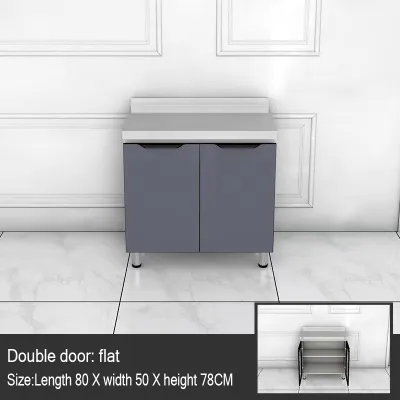
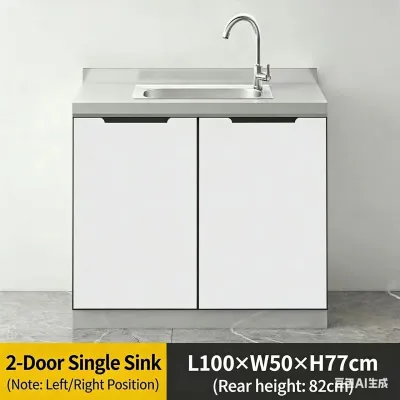
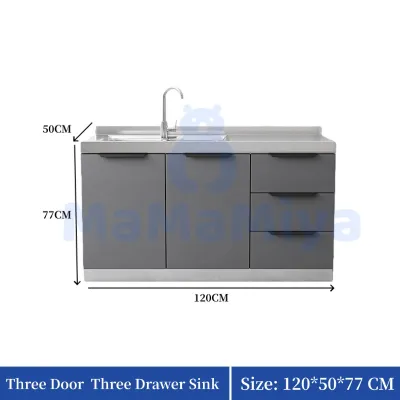
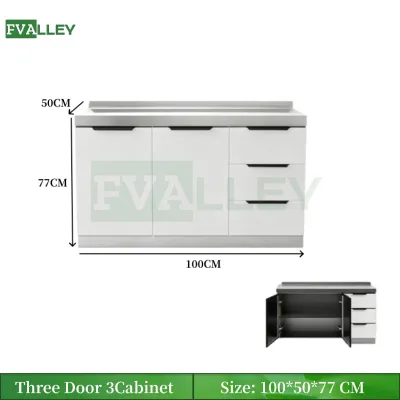
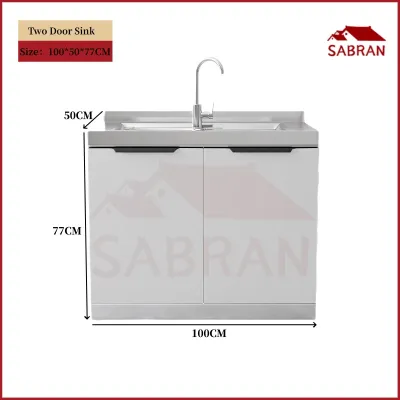
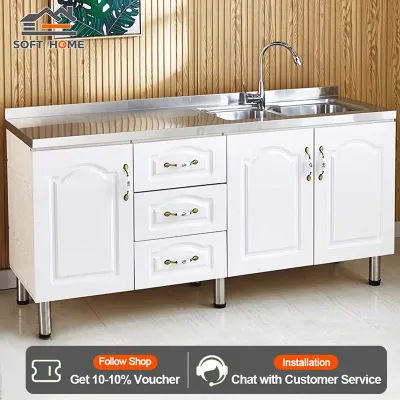
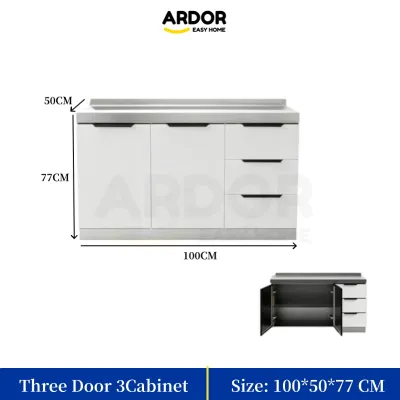
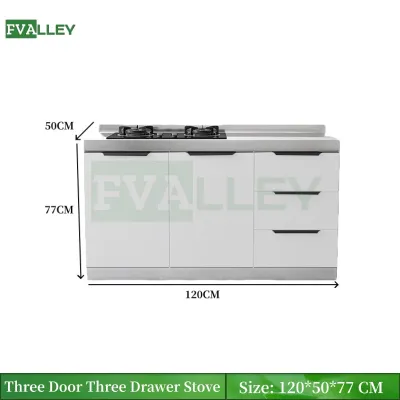
Prices are valid at publication and may change. Please refer to the product page for the latest price.
Essential Features for Compact and Humid Kitchens
Cabinet Materials
Standard particle boards and low-grade medium-density fiberboards (MDF) are highly susceptible to swelling, warping, and structural failure when exposed to water leaks or persistent ambient humidity. In the Philippines, where relative humidity levels frequently exceed 80 percent, selecting the right cabinet base material is critical. Marine plywood is a premier choice among local builders because it is manufactured with waterproof glue, allowing it to withstand occasional water exposure without delaminating. Alternatively, aluminum composite panels (ACP) offer a lightweight, rust-proof, and entirely termite-proof cabinet body that is highly suited to tropical environments. For the maximum possible longevity, heavy-duty stainless steel cabinets provide exceptional resistance to both moisture and mechanical wear, though they generally carry a higher price tag.
Sink Bowl Choices
When dealing with a limited counter run, a single deep sink bowl is almost always superior to a shallow double-bowl configuration. A single basin with a depth of 20 to 22 centimeters allows you to wash large rice cooker inner pots, woks (kawali), and tall pitchers without splashing water onto the surrounding countertop or cabinet doors. Splitting a compact width of 60 centimeters into two separate basins results in two tiny compartments that are highly impractical for washing everyday family cookware. If you frequently multi-task, look for single-bowl sets that come with removable colanders or prep boards that slide along the top rim, effectively converting your sink into a temporary workspace.
Hardware and Hinges
High humidity and regular exposure to household cleaning chemicals accelerate the rusting of standard metal hardware. To prevent sagging doors and broken latches, verify that the cabinet set uses SUS 304 stainless steel soft-close hinges. Soft-close mechanisms are not just a luxury feature; they prevent doors from slamming, which reduces structural stress on the cabinet frame and keeps the doors properly aligned over time. Additionally, check that the door handles or drawer pulls are made of rust-resistant materials, such as anodized aluminum or brushed stainless steel, to maintain a clean appearance and smooth operation.
Under-Sink Ventilation
The dark, enclosed space beneath a kitchen sink is a prime breeding ground for mold, mildew, and musty odors due to temperature fluctuations and pipe condensation. To combat this, look for cabinet designs that incorporate built-in ventilation features, such as louvered door slats, wire-mesh front panels, or dedicated ventilation grilles on the side panels. If you are considering a fully sealed cabinet door design, ensure there is an open cutout at the rear of the cabinet to allow air to circulate freely. Proper ventilation keeps the interior dry, protects your stored cleaning items, and prevents mold spores from spreading into your food preparation areas.
Top Kitchen Sink with Cabinet Configurations to Consider
Single-Bowl Sink with Deep Under-Sink Storage
A single-bowl sink paired with a full-height, two-door base cabinet is the most space-efficient standard layout available for narrow kitchens. This configuration typically ranges from 50 to 60 centimeters in width, making it exceptionally easy to integrate into existing straight-line kitchen counters. By eliminating drawers and middle dividers, this design provides a single, large open cavity underneath the basin, maximizing the vertical and horizontal storage volume available for bulky items.

Because the plumbing trap (whether an S-trap or P-trap) occupies the center of this cabinet space, organizing the interior requires a strategic approach. Homeowners can maximize this area by installing adjustable, tension-mounted under-sink shelving units that wrap around the vertical drainpipe. Utilizing stackable plastic bins, door-mounted organizer baskets for dishwashing liquids, and adhesive utility hooks allows you to store sponges, trash bags, and cleaning agents neatly without interfering with the plumbing connections.
This configuration is highly compatible with standard pre-existing plumbing layouts in Philippine apartments and subdivisions. Because it utilizes a straightforward vertical drain alignment, installation is generally simpler and less expensive than more complex multi-bowl or corner configurations. It represents a highly practical entry-point solution for those looking to upgrade their kitchen layout on a modest budget.
Integrated Dish Drying Rack and Cabinet Combos
In a small kitchen, finding space for a separate dish drying rack can instantly crowd your limited food preparation countertops. An integrated sink cabinet set featuring an attached stainless steel drainboard or an overhead drying rack solves this common pain point. The built-in drainboard is sloped directly toward the sink basin, allowing freshly washed plates, cups, and utensils to air-dry while directing all runoff water straight down the drain.
This design prevents water from pooling on your countertops, which is a common cause of water damage, laminate peeling, and mold growth along wall seams. Some advanced sets feature an integrated overhead wire rack supported by sturdy vertical pillars anchored directly to the cabinet frame. This vertical arrangement utilizes the unused wall space above the sink, keeping your countertops completely clear for food prep boards, rice cookers, or induction hobs.
Before purchasing an integrated drying rack set, it is essential to measure the total horizontal width, as these units typically require a wider footprint of 80 to 120 centimeters. You must also verify the vertical clearance above the sink to ensure that an overhead rack does not block nearby kitchen windows, interfere with wall-mounted range hoods, or obstruct your movement while washing dishes.
Corner Sink Cabinets for Awkward Layouts
L-shaped and irregular kitchen layouts often suffer from “dead corners”—deep, angular spaces that are difficult to reach and frequently end up wasted. A corner kitchen sink with cabinet set is a specialized solution designed to fit snugly into a 90-degree corner, transforming an awkward architectural feature into the primary washing hub of your home. This frees up the straight runs of your countertop for uninterrupted food preparation and cooking appliances.
While highly space-efficient, corner sink bases present unique trade-offs that require careful planning. The plumbing connections must be carefully aligned within a tight, angled space, which often requires flexible connector hoses and precise positioning of the main drain pipe. Additionally, because corner cabinets are exceptionally deep, reaching items stored in the far back corners can be physically challenging without proper organizational accessories.
To make this deep storage space highly functional, consider integrating specialized hardware such as a heavy-duty lazy Susan, rotating wire baskets, or kidney-shaped swing-out organizers. These mechanisms pull your stored items outward into the light with a simple tug, preventing items from being forgotten in the dark recesses of the cabinet. Ensure that the cabinet door design allows for a wide opening angle to facilitate easy access to these internal organizing systems.
Space Planning and Installation Checklist
Measuring the Footprint
Before browsing online marketplaces or visiting local home improvement centers, you must take precise measurements of your kitchen’s physical space. Measure the available width, depth, and height of the installation zone, and compare these with the outer dimensions of the cabinet set. Standard kitchen counter depths are typically 60 centimeters, but compact sets designed for small spaces may have a shallower depth of 45 to 50 centimeters. Ensure there is adequate clearance in front of the unit for the cabinet doors to swing open fully without striking dining tables, refrigerators, walls, or adjacent appliances.
Door and Hallway Clearance
A common oversight is purchasing a pre-assembled cabinet set only to find that it cannot physically fit through the home’s entryways. Measure the width and height of all doorways, narrow hallways, tight stairwells, and passenger elevators that the delivery team must navigate to reach your kitchen. If your building has tight access points, a flat-pack cabinet set that you assemble directly inside the kitchen is often the safest option, though it requires careful assembly to ensure structural stability.
Plumbing Alignment
Examine the exact locations of your existing hot and cold water supply valves and the main wastewater drain pipe on your kitchen wall or floor. Rerouting plumbing lines behind concrete walls is a costly, dusty, and complex process that is often strictly prohibited in high-rise condominiums and rental properties. Choose a kitchen sink cabinet set that aligns closely with your existing pipe outlets, and verify that the cabinet’s back panel has a pre-cut opening or is easily modifiable to accommodate your specific plumbing layout.
Weight and Support
A kitchen sink cabinet set must support the weight of the cabinet itself, the stainless steel basin, a full load of water, and a stack of heavy ceramic dishes. Ensure that your kitchen floor is perfectly level and structurally sound; uneven floors can cause the cabinet frame to twist, leading to misaligned doors and strained joints. If your chosen cabinet set includes wall-mounted upper cabinets or relies on wall anchoring for stability, verify the wall construction material. Solid concrete walls or concrete hollow blocks (CHB) offer excellent support when paired with heavy-duty masonry anchors, whereas gypsum board or light fiber-cement walls require specialized wall studs or toggle bolts to prevent the unit from pulling away from the wall.
Buying Guide: What to Verify Before You Order
Checking Seller Credentials
When shopping on online marketplaces or ecommerce platforms, prioritize buying from official brand stores, flagship outlets, or highly rated, established home improvement retailers. Carefully read the customer review section, paying close attention to uploaded photos and videos from buyers in the Philippines. These real-world images provide invaluable clues regarding the actual thickness of the stainless steel basin, the quality of the cabinet laminate, and whether the unit arrives safely packaged or prone to transit damage.
Verifying Inclusions
Product listings for kitchen sink with cabinet sets are frequently styled with high-end gooseneck faucets, soap dispensers, cutting boards, and decorative items that may not be included in the base price. Carefully read the product description to verify exactly what is included in your purchase. A complete, hassle-free set should ideally include the cabinet base, the sink basin, the waste strainer, the siphon or P-trap assembly, and flexible drainage hoses. If the faucet or mounting brackets are sold separately, make sure to budget for these additional items before finalizing your order.
Reviewing Return and Damage Policies
Because sink cabinet sets are bulky, heavy, and expensive to transport, returning a damaged or incorrect item can be a difficult and costly process. Before checking out, review the seller’s specific return, refund, and warranty policies regarding transit damage, missing hardware, or manufacturing defects. Upon delivery, it is highly recommended to record a continuous unboxing video from the moment you cut the packaging tape; this serves as indisputable proof of the item’s condition should you need to file a claim for a dented basin or a chipped cabinet panel.
Budgeting in PHP
When planning your kitchen renovation, establish a realistic budget in Philippine Pesos (PHP) that covers both the product purchase and the associated installation costs.
- Entry-Level Sets (₱3,500 to ₱7,000): Typically feature lightweight aluminum frames or PVC plastic cabinets paired with thinner stainless steel basins, suitable for light rental use or outdoor auxiliary kitchens.
- Mid-Range Sets (₱8,000 to ₱18,000): Offer sturdy marine plywood, thick aluminum composite panels, or stainless steel frames with high-quality SUS 304 single-bowl sinks, providing excellent durability for daily family cooking.
- Premium Integrated Systems (₱20,000 to ₱35,000+): Feature thick-gauge stainless steel, soft-close hardware, integrated multi-functional drainboards, overhead racks, and designer pull-out faucets.
- Additional Costs: Always set aside an extra ₱1,500 to ₱3,500 to cover professional plumbing installation, silicone sealants, Teflon tape, and the disposal of your old kitchen sink unit.
Frequently Asked Questions (FAQ)
Can I install a kitchen sink cabinet set myself?
Assembling the flat-pack cabinet frame and mounting the doors is generally a straightforward DIY task that can be completed with basic household tools like a screwdriver and a leveling bubble. However, connecting the water supply lines, installing the faucet, and securing the waste strainer and drain trap to ensure a completely watertight seal requires specific plumbing skills. It is highly recommended to hire a licensed local plumber to handle the final plumbing connections. A professional installation prevents hidden, slow leaks behind the cabinet base that can cause costly water damage to your floors, promote mold growth, and potentially void your product warranty.
How do I prevent mold under the sink cabinet?
To prevent mold growth in the humid Philippine climate, start by regularly inspecting all pipe joints, valves, and hose connections under the sink for micro-leaks or condensation. Place disposable moisture-absorbing tubs or silica gel packs inside the cabinet corners, and replace them promptly once they fill with water. Ensure the cabinet remains well-ventilated by leaving the doors slightly ajar after heavy dishwashing sessions, or install small plastic ventilation grilles on the side panels. Finally, periodically empty the cabinet and wipe down all interior surfaces with a mild disinfectant or white vinegar solution to eliminate lingering moisture, food residues, and mold spores.
Community discussion
Share your experience or ask a question. Comments are reviewed before publication.