
To optimize a Filipino kitchen, finding the right balance between space efficiency and heavy-duty storage is essential. Whether you live in a compact condominium in Metro Manila or a spacious standalone house in the provinces, your kitchen storage must withstand high humidity, accommodate unique cooking habits, and fit within specific spatial limits. Selecting a cabinet for kitchen storage requires looking beyond aesthetics to evaluate how a piece of furniture handles daily wear, heavy loads, and tropical environmental factors.
Spatial constraints are often the first hurdle in local homes. Condominium units frequently feature narrow galley kitchens or open-plan layouts where every centimeter of floor space counts. Before purchasing any freestanding unit, you must map out your floor plan, paying close attention to doorway clearances and vertical space. A cabinet that is too deep can block the natural flow of traffic, making it difficult for multiple people to prep meals simultaneously. Conversely, in older, standalone homes, uneven floors and high ceilings present different challenges that require highly stable or adjustable furniture.
Filipino cooking habits also dictate specific storage requirements. Unlike Western kitchens that prioritize dry boxed goods, local pantries often center around heavy staples like 10-kilogram or 25-kilogram sacks of rice, bulk condiments, soy sauce gallons, and heavy cookware like cast-iron skillets or traditional metal kawali. These items demand exceptional weight capacity. Storing a heavy sack of rice or a stack of iron woks on a flimsy shelf will cause bowing and eventual structural failure. You should calculate the total weight of your heaviest kitchen essentials before shopping so you can compare your needs against the manufacturer’s rated load limits.
Products mentioned in this guide
Prices are valid at publication and may change. Please refer to the product page for the latest price.
Furthermore, the tropical climate in the Philippines is a major factor in furniture longevity. High humidity levels, especially during the monsoon season, accelerate the degradation of poorly sealed wood and cause untreated metals to rust rapidly. Salt air in coastal regions can worsen this corrosion. When selecting kitchen storage, you must prioritize materials designed to resist moisture absorption and oxidation. This means checking for protective powder coatings on metal frames and water-resistant finishes on wood surfaces.
High-Capacity Freestanding Cabinet for Kitchen Storage Solutions
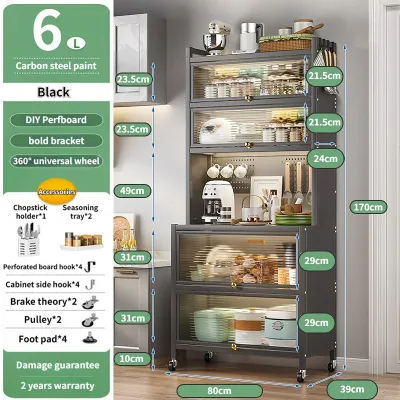
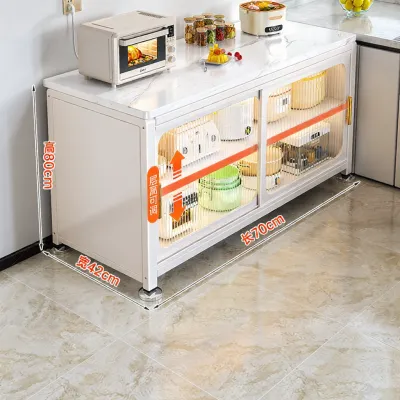
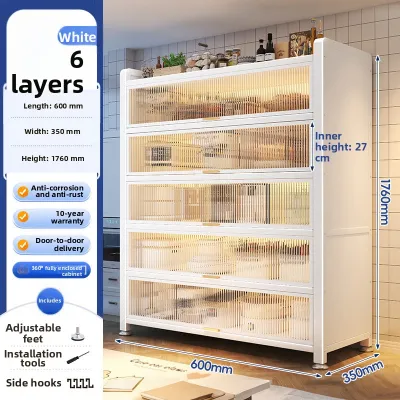
Freestanding cabinets offer an excellent, non-permanent storage solution for both renters and homeowners who want to avoid the high costs and permanent commitment of built-in renovations. These high-capacity units can be positioned wherever you have open floor space, and they can easily move with you if you relocate. They are particularly effective for centralizing pantry items, large appliances, and heavy cookware that would otherwise clutter your countertops.
When choosing a freestanding cabinet, adjustable shelving is a critical feature to look for. Kitchen needs change over time; a shelf height that fits a standard rice cooker today might need to accommodate a tall air fryer or a stack of mixing bowls tomorrow. Cabinets with pre-drilled adjustment tracks allow you to customize the interior layout to prevent wasted vertical space. Additionally, proper ventilation is essential for cabinets housing dry food items like rice, onions, or garlic. Airflow prevents the buildup of stagnant, humid air, which can encourage mold growth and attract pests.
Heavy-Duty Metal and Wire Cabinets
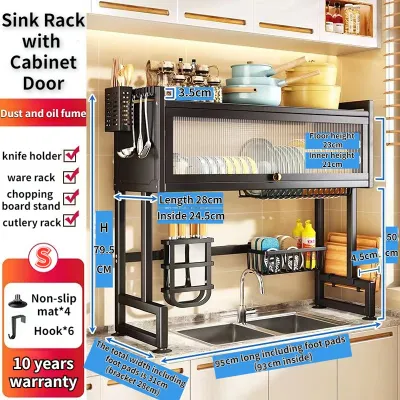
If your primary goal is to store heavy cookware, small appliances, or bulk pantry goods, heavy-duty metal and wire cabinets are highly practical options. These units are built to support substantial weight, making them ideal for holding heavy rice dispensers, slow cookers, and metal pots. When shopping for metal storage, look for cabinets with powder-coated or galvanized finishes. These specialized coatings provide a protective barrier against moisture, helping to prevent rust in humid kitchen environments. Always verify the specific type of coating with the manufacturer to ensure it is rated for high-humidity areas.
Load-bearing capacity is another critical specification to verify. Instead of assuming all metal shelves are equally strong, check the manufacturer’s exact weight limit per shelf. Some heavy-duty industrial wire shelving units can support over 100 kilograms per shelf when weight is evenly distributed, while lightweight decorative metal units may support far less. Knowing these limits prevents dangerous structural collapses in your kitchen.
Wire shelving is particularly advantageous for tropical kitchens because the open design allows maximum airflow around stored items. This ventilation is beneficial for fresh produce like potatoes and onions, as well as dry goods that must stay dry. However, the open wire design has a minor drawback: small spice jars, bottles, or utensils can easily slip through the gaps or tip over. To solve this, you can use flat shelf liners, plastic bins, or shallow baskets to create stable surfaces for smaller items while retaining the airflow benefits on the rest of the shelf.
Wood and Engineered Wood Cabinets
For dining rooms or open-concept kitchens where aesthetics are just as important as storage capacity, wood and engineered wood cabinets provide a warm, classic look. These enclosed cabinets are excellent for hiding clutter, organizing dinnerware, and keeping spices protected from dust and light. However, because wood is naturally porous, you must pay close attention to how the material is constructed and sealed to ensure it survives kitchen humidity.
When evaluating wood cabinets, look for units with moisture-resistant edge banding and fully sealed surfaces. Edge banding prevents moisture from penetrating the raw edges of the boards, which can cause the material to swell and warp. It is also wise to check the core material used in the cabinet’s construction. While solid wood and marine plywood offer excellent moisture resistance and durability near sinks or high-steam areas, standard medium-density fiberboard (MDF) or particle board can deteriorate quickly if exposed to direct water leaks. If you choose engineered wood, ensure it is specifically rated for kitchen use or placed in a dry area of the room.
Hardware quality is another indicator of a cabinet’s lifespan. Inspect the hinges and drawer slides to ensure they are robust and rust-resistant. Soft-close mechanisms are highly recommended, as they prevent doors from slamming, reducing wear on the cabinet frame over time. Lastly, look for cabinets equipped with adjustable leveling feet. Many homes in the Philippines feature tiled floors that may have slight slopes or uneven grout lines; leveling feet allow you to stabilize the cabinet and prevent it from wobbling or tipping.
Flexible Mobile Carts and Islands for Extra Prep Space
When fixed counter space is limited, mobile kitchen carts and rolling islands offer a versatile way to expand your prep area and storage simultaneously. These movable units can adapt to your daily needs, serving as a food prep station during lunch prep, a serving cart during family gatherings, or a temporary holding zone for hot dishes. Their mobility makes them incredibly useful in tight layouts where a permanent island would block movement.

The primary benefit of a mobile cart is its ability to bridge the gap between different zones of your home. You can roll a cart filled with ingredients from the pantry to the stove, or wheel a cart loaded with dishes directly to the dining table. To make these movements safe, high-quality locking casters are absolutely critical. At least two of the wheels must have reliable locking mechanisms to keep the cart completely stationary while you are chopping vegetables or kneading dough.
Before purchasing a mobile unit, carefully consider its footprint and storage dimensions. You want to ensure that the cart can be easily tucked away into a corner, pantry, or alcove when it is not in use. Measuring your walkways is essential; a mobile cart should enhance your kitchen’s workflow, not act as an obstacle that you have to squeeze past.
Multi-Tier Utility and Appliance Carts
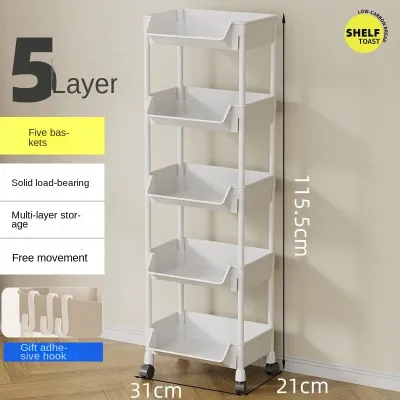
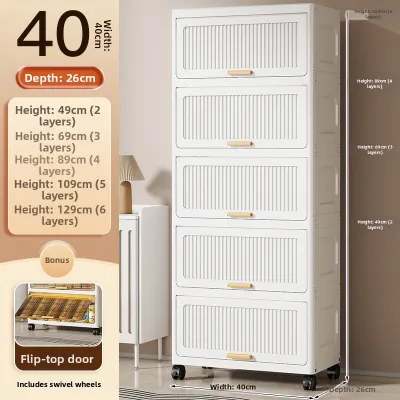
Multi-tier utility carts are compact, narrow storage units designed to maximize tight spaces. These carts are ideal for utilizing the awkward gaps that often exist between your refrigerator and the wall, or between your counter and a doorway. Despite their small footprint, they can hold a surprising number of items, from daily spices and cooking oils to small appliances like blenders or hand mixers.
To get the most out of a utility cart, look for practical design details that enhance organization. Pull-out wire baskets are excellent for storing garlic, onions, or ginger, as they keep these items ventilated and visible. Integrated towel racks, side hooks for hanging utensils, and top trays with raised edges are also valuable features. Raised edges are particularly important on mobile units, as they prevent bottles of soy sauce or cooking oil from sliding off the edge when the cart is in motion.
However, because utility carts are often tall and narrow, you must pay close attention to their stability and center of gravity. Loading heavy items like gallon jugs of vinegar or heavy ceramic bowls on the top shelf can make the cart top-heavy and prone to tipping over when rolled over door thresholds or uneven tiles. Always place your heaviest items on the bottom shelf to keep the center of gravity low, and pull the cart gently rather than pushing it abruptly.
Rolling Kitchen Islands with Prep Surfaces
For home cooks who need serious extra counter space, a rolling kitchen island is a substantial upgrade. These larger mobile units feature a wide, flat top surface designed specifically for active meal preparation, such as chopping vegetables, rolling out dough, or plating meals. They combine the functionality of a prep table with deep underlying storage, making them a centerpiece of kitchen activity.
The material of the prep surface is a key factor in both usability and maintenance. Common options include sealed hardwood, stainless steel, and stone-composite tops. While these materials are durable, remember that material names alone do not guarantee stain or scratch resistance. For instance, a wooden top must be properly sealed with food-safe mineral oil or polyurethane to prevent it from absorbing moisture and juices from raw ingredients. Stainless steel is incredibly hygienic and easy to clean, but it can scratch easily if you cut food directly on its surface without a cutting board.
When selecting a rolling island, verify the physical details of the top surface, such as its thickness, overhang, and edge profiling. A slight overhang allows you to stand closer to the prep surface comfortably without stubbing your toes on the base of the unit. Below the prep surface, look for a storage configuration that matches your habits. A combination of deep drawers for pots and pans, open lower shelves for heavy mixing bowls, and dedicated side racks for cutting boards will help you keep your most-used tools within arm’s reach.
Maximizing Vertical and Corner Space in Compact Kitchens
In compact kitchens, floor space is a premium commodity that must be preserved. When you run out of room on the floor, the best strategy is to look upward and utilize your walls and awkward corners. Maximizing these underutilized areas can dramatically increase your storage capacity without making your kitchen feel cramped or difficult to navigate.
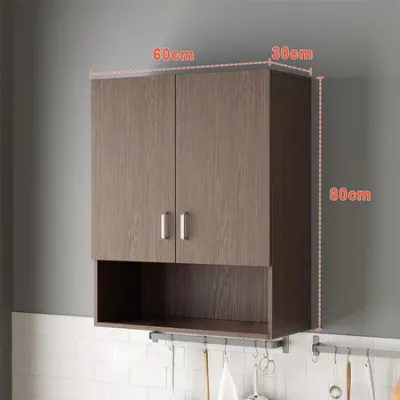
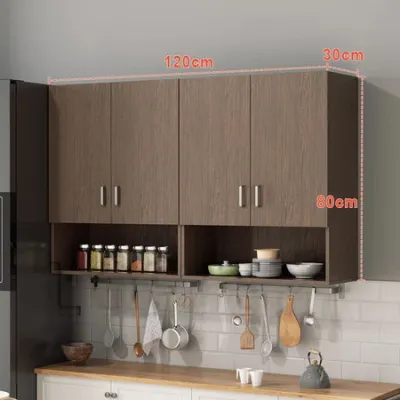
Wall-mounted cabinets and shelves are highly effective for keeping floors clear. Elevating your storage not only creates a more open, spacious feel in the room, but it also simplifies floor cleaning. Sweeping and mopping are much easier when you do not have to maneuver around multiple furniture legs. Furthermore, wall-mounted storage protects your valuable items from ground-level hazards, such as minor flooding from heavy rains or plumbing leaks under the sink.
However, installing wall-mounted units in the Philippines requires careful attention to structural requirements. Unlike some countries where homes are built primarily with timber studs and drywall, local residential construction heavily utilizes concrete hollow blocks (CHB) or solid concrete walls. Mounting a heavy cabinet onto a concrete wall requires specialized masonry anchors (such as plastic tox anchors or heavy-duty metal sleeve anchors) and a hammer drill. If you are mounting onto a drywall partition in a modern condominium, you must locate the metal or wooden studs behind the wall; anchoring a heavy cabinet directly into plasterboard without structural support can lead to a dangerous wall collapse.
Corner spaces are another common source of wasted area in kitchen layouts. Standard deep corner cabinets often become “dead zones” where items are pushed to the back, forgotten, and left to gather dust. To reclaim this space, look for corner cabinets equipped with specialized hardware, such as rotating lazy Susans or pull-out blind corner organizers. These mechanisms bring the items stored in the deep recesses of the cabinet directly to you, making it easy to access pots, pans, or food jars without straining your back.
Regardless of the wall or corner solution you choose, always check the maximum weight limits of the mounting brackets, shelves, and hardware. Wall-mounted units are excellent for lightweight items like spices, dinnerware, coffee mugs, and dry pantry goods. However, you should avoid storing heavy cast-iron pans, large slow cookers, or massive sacks of rice on high wall shelves. Keep these heavy items in low, floor-based cabinets to ensure structural safety and prevent accidental injuries from falling objects.
Final Pre-Purchase Checks for Space, Delivery, and Safety
Before you finalize your purchase of a cabinet for kitchen storage or a mobile cart, conducting a thorough pre-purchase check is essential. Taking the time to verify measurements, delivery logistics, and safety features will help you avoid the frustration of buying a piece of furniture that does not fit your home or fails prematurely.
First, measure your intended kitchen space with precision. Do not rely on visual estimates. Use a tape measure to record the width, depth, and height of the area where the furniture will stand. Be sure to account for baseboards, wall trim, and the locations of electrical outlets, light switches, and window sills. You must also measure the door swing clearances of the cabinet itself; ensure that the cabinet doors or drawers can open fully without hitting your refrigerator, dining table, or opposite walls. For mobile carts, map out their path of movement to ensure they can roll smoothly without blocking doorways.
Second, consider the logistics of getting the furniture into your home. Whether your cabinet arrives fully assembled or as a flat-pack kit, it must be transported from the delivery vehicle to its final spot. Measure the dimensions of your building’s elevator, narrow stairwells, corridors, and unit doorways. Many apartment dwellers have faced the disappointment of purchasing a beautiful freestanding cabinet only to find that it cannot fit inside the building’s elevator or turn the corner in a tight hallway.
Third, prioritize structural safety, especially if you are purchasing a tall, freestanding cabinet. Tall furniture can present a serious tip-over hazard, particularly during earthquakes or if children attempt to climb the shelves. Check if the cabinet includes anti-tip wall anchoring hardware. If it does not, you should purchase a compatible wall strap or bracket separately and anchor the unit securely to your wall. This safety step is highly recommended for any cabinet over 120 centimeters in height.
Finally, review the manufacturer’s warranty and care guidelines. Look for warranties that specifically cover moisture damage, rust on metal components, or caster wheel failure, as these are the most common issues encountered in tropical climates. Before using your new furniture, read the care instructions to understand how to clean and maintain the surfaces. For example, some engineered wood surfaces require immediate drying if water spills on them, while certain metal coatings should only be wiped with a damp cloth rather than harsh chemical cleaners. Following these guidelines will help ensure your kitchen storage remains functional and attractive for years to come.
Frequently Asked Questions (FAQ)
How do I prevent mold and rust on kitchen cabinets in a humid climate?
To prevent mold and rust in a tropical climate, maintaining good ventilation is your first line of defense. Avoid placing your cabinets directly against damp exterior walls or uninsulated water pipes, as temperature differences can cause condensation to form on the back of the furniture. Leave a gap of at least two to five centimeters between the cabinet and the wall to allow air to circulate freely.
Inside enclosed cabinets, especially those used to store dry goods or flour, use disposable moisture absorbers or reusable silica gel packs to keep the air dry. It is also important to establish a routine cleaning schedule. Periodically wipe down metal tracks, hinges, and casters with a dry cloth to remove dust and salt buildup, which can accelerate corrosion. If you notice any spills or moisture on the shelves, dry them immediately to prevent water from penetrating wood joints or causing metal surfaces to oxidize.
Can I assemble large kitchen cabinets myself, or should I hire a professional?
Deciding between DIY assembly and hiring a professional depends on the complexity of the furniture and your comfort level with tools. Simple mobile carts, utility racks, and small three-tier shelves are generally straightforward to assemble using basic hand tools and the included instruction manual. These are excellent projects for DIY enthusiasts.
However, for large freestanding cabinets, tall pantry units, or any wall-mounted storage, hiring a professional is highly recommended. Properly mounting a heavy cabinet onto concrete hollow blocks or masonry walls requires specialized tools, such as a hammer drill, and the correct choice of heavy-duty anchors. An experienced carpenter or professional installer can ensure that the cabinet is perfectly level, securely anchored to prevent tip-overs, and structurally safe to hold heavy kitchen loads. Investing in professional installation protects your walls, your new furniture, and your household from potential accidents.
Community discussion
Share your experience or ask a question. Comments are reviewed before publication.