
Finding the right kitchen utensils cabinet for a small Philippine kitchen requires balancing limited floor space with high storage capacity. In typical metropolitan condos and studio apartments, every square centimeter counts, and high humidity levels demand durable, moisture-resistant materials. The most effective solutions are slim pull-out base cabinets that fit into unused gaps, mobile kitchen carts with dedicated cutlery drawers, and vertical wall-mounted or over-sink organizers. By choosing designs that maximize vertical height or offer multi-functional mobility, you can keep your cooking tools organized, accessible, and protected from tropical dampness.
How to Evaluate Utensil Cabinets for Compact Layouts
When dealing with a compact kitchen footprint, floor area is your most precious resource. Before purchasing any kitchen utensils cabinet, measure your available floor space with a tape measure, noting any baseboard protrusions or electrical outlets. In small studio layouts, extending upward is far more efficient than expanding outward. Look for tall, narrow pantry-style cabinets or wall-mounted units that utilize the vertical wall space up to the ceiling. This approach keeps your walkways clear while providing multiple tiers of storage for items you do not use daily. Additionally, if you are purchasing a pre-assembled tall cabinet, verify the dimensions of your condo’s elevators, doorways, and tight hallway corners to ensure the unit can be safely delivered to your unit.
The internal layout of your cabinet determines how efficiently it stores your utensils. A mix of shallow and deep drawers is ideal for a versatile kitchen setup. Shallow drawers, typically between 8 to 12 centimeters deep, are perfect for flatware, spatulas, and small gadgets because they prevent items from being buried. Deep drawers, measuring 20 centimeters or more, are better suited for bulkier items like whisks, potato mashers, or small appliances. Look for cabinets that include adjustable or modular dividers, allowing you to customize the compartments as your utensil collection changes.
Products mentioned in this guide
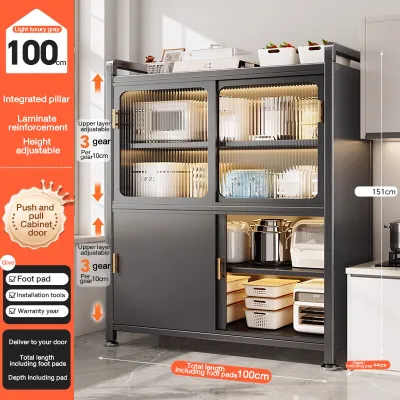
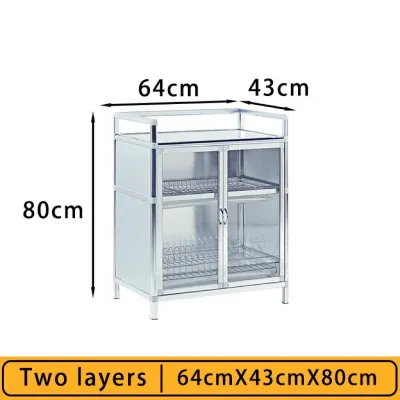
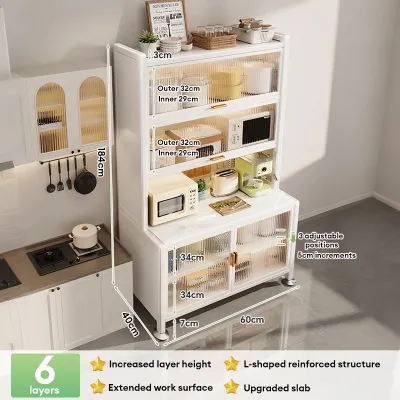
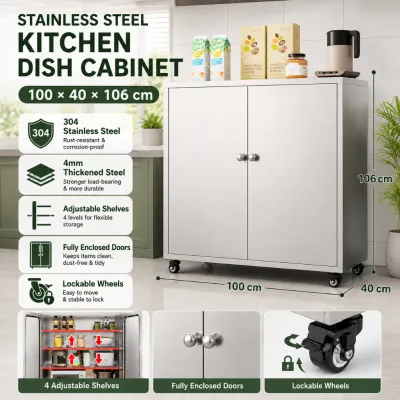
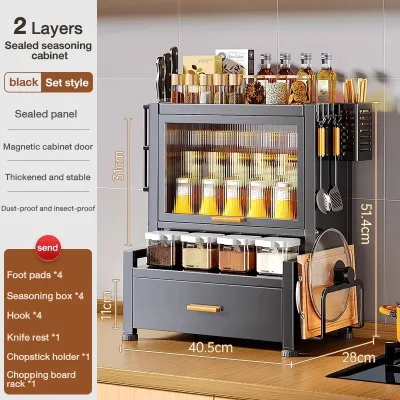
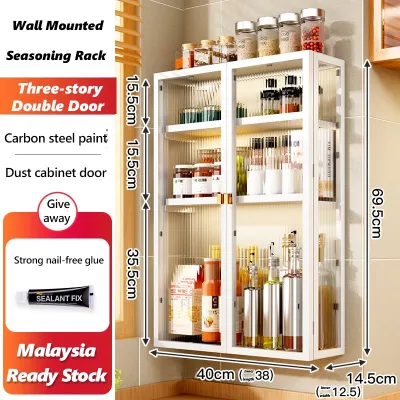
Prices are valid at publication and may change. Please refer to the product page for the latest price.
The tropical climate of the Philippines introduces significant moisture challenges, making material selection critical. Generic wood terms can be misleading, so you must inspect the product specifications for moisture-resistant finishes or specialized boards. For wooden cabinets, look for medium-density fiberboard (MDF) or high-density fiberboard (HDF) treated with a water-resistant melamine or laminate overlay. Solid wood options should be sealed with a polyurethane clear coat to block moisture absorption. If you choose metal cabinets or components, verify that they use rust-resistant materials like grade 304 stainless steel or powder-coated carbon steel to withstand high relative humidity.
A cabinet that fits perfectly on paper can still ruin your kitchen’s usability if it blocks movement when open. You must account for the clearance required for door swings and full drawer extensions. In a narrow galley kitchen, a standard cabinet door requires at least 40 to 50 centimeters of swing clearance, which can easily block the entire walkway. Measure your walkway width and ensure you have at least 90 centimeters of open space when all cabinet doors and drawers are fully extended. If space is exceptionally tight, consider sliding cabinet doors or open shelving to eliminate swing-path obstructions entirely.
Best Space-Saving Cabinet Designs for Utensil Storage
Slim Pull-Out Base Cabinets
Ideal Scenario: These ultra-narrow cabinets are designed to slide into the awkward, unused gaps that often exist between major kitchen appliances and walls. If you have a gap of 15 to 30 centimeters next to your refrigerator, stove, or sink, a slim pull-out cabinet can transform that dead zone into highly functional storage.

Advantages: Pull-out cabinets keep your utensils completely enclosed, protecting them from kitchen grease, dust, and airborne moisture. Because they pull straight out on sliding tracks, you can view and access your entire collection of cooking spoons, ladles, and spice jars from either side. The vertical, multi-tiered design allows you to organize items by height, keeping tall spatulas upright and small measuring spoons in shallow upper trays.
Limitations & Checks: These units require highly precise width, depth, and height measurements before installation, as even a five-millimeter error can prevent the cabinet from sliding smoothly. You must check the weight capacity of the sliding drawer runners, which should ideally be rated for at least 15 to 20 kilograms. Overloading a slim pull-out cabinet with heavy cast-iron tools or canned goods can easily warp the tracks, causing the mechanism to stick or derail.
Mobile Kitchen Carts with Dedicated Drawers
Ideal Scenario: Mobile kitchen carts are excellent for renters or anyone living in a condo with limited built-in cabinetry. They function beautifully in flexible layouts where you need an extra food preparation surface that can be moved out of the way when guests arrive or during deep cleaning.
Advantages: A mobile cart offers excellent dual functionality by combining a sturdy countertop prep surface with lower storage drawers and shelves. Many models feature shallow top drawers specifically designed with built-in cutlery trays, keeping your everyday knives and forks organized. Because the unit is on wheels, you can roll it directly next to your stove while cooking, then tuck it against a wall or into a corner when you are finished.
Limitations & Checks: Mobile carts occupy active floor space, so they may not be suitable for extremely narrow galley kitchens where any floor obstruction is problematic. When shopping, always verify that the cart features heavy-duty, 360-degree swiveling casters, and ensure at least two of the wheels have reliable locking mechanisms to prevent the cart from rolling while you chop vegetables. Additionally, check the cart’s overall stability; narrow, top-heavy carts can tip forward if you pull out multiple fully loaded drawers simultaneously.
Wall-Mounted and Over-Sink Organizers
Ideal Scenario: When floor space is completely unavailable, wall-mounted cabinets and over-sink organizers utilize the empty vertical zones of your kitchen. This setup is particularly effective above the kitchen sink or on an empty wall adjacent to your main countertop prep area.
Advantages: These organizers keep your most frequently used cooking utensils, knives, and drying racks within arm’s reach while completely freeing up your countertops. Over-sink models are especially clever because they allow washed utensils to drip-dry directly into the sink, eliminating the need for a separate, space-consuming dish drying mat on your counter.
Limitations & Checks: Wall-mounted units require secure, permanent anchoring to ensure they do not pull away from the wall under heavy loads. In many Philippine condos, kitchen walls are made of solid concrete or hollow concrete blocks, requiring a masonry drill bit and heavy-duty wall anchors rather than standard drywall screws. You must also measure the vertical clearance between your countertop and the bottom of any wall-mounted cabinet to ensure you have enough room to operate small appliances like blenders or rice cookers underneath.
Installation and Stability Checks for Tight Spaces
Safety is paramount when installing any vertical storage unit in a compact environment. Tall pantry cabinets, heavy wall-mounted shelves, and slim storage towers must be securely anchored to the wall structure. Because the Philippines is located in an active seismic zone, minor tremors can easily cause unanchored, top-heavy furniture to tip over. If you are mounting to concrete, use expansion bolts or heavy-duty plastic wall plugs. For drywall partitions, you must locate the vertical metal or wooden studs using a stud finder and drive your mounting screws directly into them, as simple plasterboard anchors may fail under the weight of heavy kitchen utensils.
Uneven floor tiles are a common issue in both older apartments and newly constructed high-rises. If a freestanding kitchen utensils cabinet is placed on an uneven surface, it will wobble, which puts unnecessary stress on the joints and can cause drawers to slide open on their own. Choose cabinets equipped with adjustable leveling feet, which allow you to thread individual legs up or down until the unit is perfectly level. If your chosen cabinet does not have adjustable feet, you can use high-density plastic shims placed discreetly under the base to stabilize the unit.
Properly distributing the weight of your kitchen items is a simple yet highly effective way to prevent tipping accidents. Always place your heaviest items—such as cast-iron skillets, heavy ceramic baking dishes, and large mortar and pestle sets—in the lowest drawers or bottom shelves of the cabinet. Reserve the upper drawers and shelves for lightweight items like plastic containers, silicone spatulas, whisks, and microfiber towels. This practice keeps the cabinet’s center of gravity low, significantly increasing its overall stability when drawers are pulled out.
In a tight kitchen walkway, protruding hardware can easily snag your clothing or cause painful bumps. Inspect the design of the cabinet handles and knobs before buying; recessed pull handles or sleek, low-profile edge pulls are much safer for narrow spaces than long, pointed bar pulls. Furthermore, verify that all hinges and drawer slides are high-quality, soft-closing mechanisms. Soft-close hinges prevent doors from slamming shut, reducing wear and tear on the cabinet frame and ensuring that delicate glassware or ceramic utensils do not rattle and chip inside.
Protecting Cabinets and Utensils in Humid Climates
The high relative humidity in the Philippines can trap moisture inside closed cabinets, creating an ideal breeding ground for mold, mildew, and musty odors. To combat this, select cabinets that feature slatted doors, wire mesh panels, or built-in ventilation grommets that allow air to circulate freely. If your cabinet is completely enclosed, make it a habit to leave the doors open for a few hours during dry, sunny days or run a kitchen exhaust fan to encourage active airflow through the storage compartments.
Enclosed drawers containing metal utensils are highly susceptible to trapping humidity, which can lead to premature rusting of knives, whisks, and peeler blades. To protect your investment, place several high-capacity silica gel packets or reusable hanging moisture absorbers inside your cabinet drawers. These absorbers pull excess water vapor out of the air before it can condense on metal surfaces. Remember to check these absorbers monthly and replace or reactivate them according to the manufacturer’s instructions.
Preventing mold and bacterial growth requires a strict routine of keeping both your cabinet and your utensils dry. Never place damp utensils, plates, or cutting boards directly into an enclosed cabinet. Allow all items to air-dry completely on an open rack, or dry them thoroughly with a clean microfiber towel before storing them away. On a bi-weekly basis, wipe down the interior shelves and drawer liners of your cabinet with a mild mixture of warm water and dish soap, then dry the surfaces immediately with a clean cloth to prevent water spots from damaging the finish.
The metal drawer slides, hinges, and screws in your kitchen cabinet are constantly exposed to moisture and salty air, especially if you live in a coastal region. Periodically inspect these metal components for early signs of orange rust or corrosion. If you notice any stiffness or squeaking, wipe the hardware clean and apply a thin layer of silicone-based lubricant to the moving parts, provided the manufacturer’s care instructions allow it. Avoid using heavy penetrating oils like standard WD-40 on drawer slides, as they can attract dust and kitchen grease, eventually gumming up the sliding mechanism.
Frequently Asked Questions (FAQ)
Can I install a pull-out cabinet in a rented condo?
If you are renting a condo, permanent structural modifications like installing a built-in pull-out cabinet between your existing countertops usually require written landlord approval. However, you can easily find non-permanent alternatives that offer the same space-saving benefits without risking your security deposit. Look for freestanding, narrow rolling storage towers or slim utility carts on wheels. These units slide perfectly into tight gaps between appliances and can be pulled out easily when needed. Because they require no drilling or mounting to your existing cabinetry, you can simply pack them up and take them with you when your lease ends.
How do I organize deep drawers for small utensils?
Deep drawers are excellent for storing large pots, but they often become chaotic clutter zones when used for small utensils like vegetable peelers, garlic presses, and measuring spoons. To maximize a deep drawer, use modular, stackable storage bins or adjustable bamboo drawer dividers to create distinct compartments for different tool categories. You can also install a tiered sliding drawer insert, which adds a shallow, independent sliding tray directly above the main deep drawer space. This double-layer setup allows you to store flat cutlery and small tools on the top sliding tier while keeping larger cooking utensils organized in the deep section below.
Community discussion
Share your experience or ask a question. Comments are reviewed before publication.