
Establishing a functional grooming station in a compact bedroom requires a deliberate approach to furniture selection. In many homes across the Philippines, where urban condo living and cozy bedroom layouts are common, floor space is at a premium. A standard, wide dressing table often creates physical bottlenecks, making the room feel cramped and disorganized. The most effective solution is a dedicated makeup desk cabinet designed specifically for tight spaces, prioritizing vertical storage, multi-functional surfaces, and smart organization.
By shifting the focus from horizontal sprawl to vertical efficiency, you can secure ample storage for cosmetics, skincare, and hair tools without sacrificing valuable walking paths. Choosing the right configuration involves assessing your room’s layout, understanding how different designs utilize unused areas, and selecting materials that can withstand local environmental factors. This guide provides the practical frameworks, spatial measurements, and safety checks necessary to select a compact vanity cabinet that enhances both your daily routine and your bedroom’s layout.
Key Features to Look for in Compact Vanity Cabinets
When space is limited, every square centimeter of a vanity cabinet must serve a clear purpose. The primary design conflict in small bedrooms is balancing a minimal footprint with maximum storage capacity. Tall, narrow cabinet units that extend upward are generally more space-efficient than wide, low-profile desks for small rooms. These vertical designs utilize wall space that otherwise goes unused, allowing you to store taller bottles, hair styling tools, and backup supplies on higher shelves while keeping the immediate desktop clear.
Products mentioned in this guide
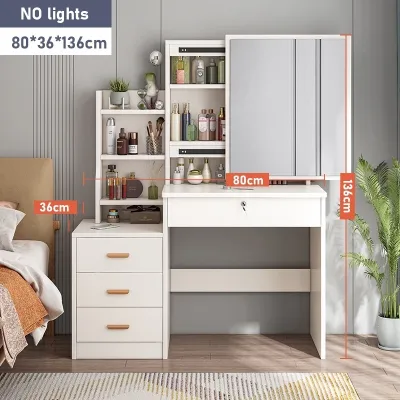
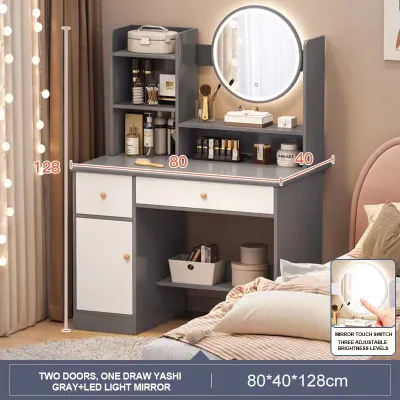
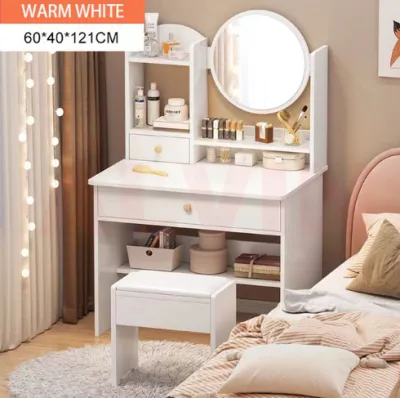
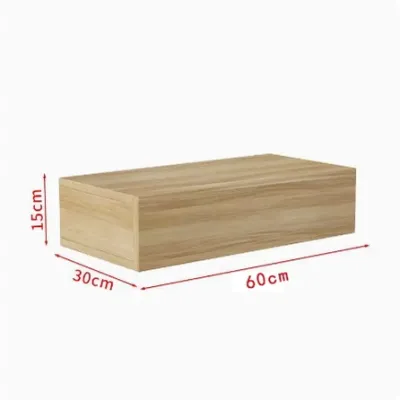
Prices are valid at publication and may change. Please refer to the product page for the latest price.
Internal organization is another critical factor that prevents a small vanity from becoming cluttered. Look for cabinets that feature hidden compartments, adjustable shelving, and built-in acrylic organizers. Adjustable shelves allow you to customize the interior layout based on the height of your skincare bottles, preventing wasted vertical space within the cabinet itself. Built-in dividers and shallow drawers keep smaller items like lipsticks, brushes, and eye palettes organized and easily accessible, eliminating the need for bulky external storage boxes on top of the desk.
The choice of mirror and lighting also directly impacts how much usable surface area you maintain. Built-in mirrors—especially those that fold down, slide, or feature tri-fold panels—save significant space compared to large, freestanding tabletop mirrors. Integrated LED lighting is highly beneficial in small bedrooms, which may suffer from poor natural light due to window placement or nearby buildings. Selecting a cabinet with built-in, dimmable lighting eliminates the need for bulky desk lamps, keeping the power cords hidden and the tabletop free for your active makeup routine.
Finally, material durability is paramount, particularly in the tropical climate of the Philippines. High humidity levels can cause low-grade engineered woods, such as untreated particleboard, to swell, warp, or develop mold over time. Additionally, cosmetics, oil-based serums, and alcohol-based toners can easily stain or degrade delicate surfaces. Prioritize cabinets constructed from moisture-resistant MDF, solid wood with protective polyurethane sealants, or high-pressure laminates. These materials offer better resistance to daily wear, humidity, and accidental cosmetic spills, ensuring the unit remains easy to clean and structurally sound for years.
Best Makeup Desk Cabinet Configurations for Small Spaces
Selecting the ideal configuration requires analyzing your bedroom’s existing layout, traffic flow, and lighting sources. There is no single design that fits every small room, as the shape of the space, the position of the bed, and the location of windows all dictate where a vanity can realistically stand. The goal is to find a configuration that minimizes physical obstruction while maximizing your comfort during use.

When deciding on a style, you must weigh the trade-offs between a highly specialized, dedicated vanity and a multi-purpose unit. A dedicated vanity offers specialized storage and optimal mirror placement but serves only one function. A multi-purpose unit, such as a desk-vanity hybrid, provides flexibility for remote work or study but may require you to clear away items before transitioning between tasks. Evaluating how you use your bedroom throughout the day will help you choose the configuration that best aligns with your lifestyle.
Corner Vanity Desks with Built-in Cabinets
Corners are often underutilized in small bedrooms, making them excellent locations for a compact makeup station. Corner vanity desks feature triangular or L-shaped footprints designed to tuck neatly into these intersecting walls. By utilizing the corner, these units preserve the central floor area of the room, keeping walking paths clear and making the bedroom feel more open.
Before purchasing a corner unit, it is essential to perform several physical checks. Measure the corner angles carefully, as older walls are not always perfectly square, which can leave unsightly gaps behind the furniture. You must also check for baseboard clearances to ensure the cabinet can sit flush against the wall. Additionally, locate nearby wall outlets; because corners are often dark, you will need easy access to power for integrated lighting, hair dryers, or styling irons without running extension cords across the floor.
While corner vanities are highly space-efficient, they do have limitations regarding natural light. Because they are tucked away, they are rarely positioned directly in front of windows. To compensate for this, you will need to rely more heavily on high-quality artificial lighting. Choosing a corner cabinet with integrated LED lights or installing dedicated wall sconces can help ensure you have even, shadow-free illumination for your makeup application.
Fold-Down or Flip-Top Vanity Dressers
For bedrooms that must maintain a clean, minimalist aesthetic, fold-down or flip-top vanity dressers offer an elegant solution. These units feature a hinged desktop panel with a mirror mounted on the underside. When the lid is closed, the unit functions as a sleek console table, writing desk, or standard chest of drawers. When flipped open, it reveals a fully organized vanity station with recessed compartments for cosmetics and tools.
The primary advantage of this design is its ability to conceal visual clutter instantly. Cosmetics, brushes, and skincare bottles remain stored in their designated compartments beneath the lid, protected from dust and humidity. This is particularly beneficial in small bedrooms, where visible clutter can quickly make the entire space feel chaotic and cramped.
However, the mechanical nature of flip-top units requires careful inspection before buying. Because the lid will be opened and closed daily, the hinges and support mechanisms must be exceptionally sturdy. Look for units equipped with safety stays, soft-close hinges, or gas lift struts that prevent the heavy mirror lid from slamming shut unexpectedly. Additionally, keep in mind that you must clear the desktop surface entirely before opening the lid, which requires maintaining a disciplined habit of not leaving items on top of the closed desk.
Slim Floating Vanities with Drawer Storage
Floating vanities are wall-mounted units that lack traditional legs, leaving the floor space beneath them completely open. This design trick is highly effective in small bedrooms, as exposing more floor area creates the visual illusion of a larger, more spacious room. The open space underneath also provides a convenient spot to tuck away a stool, ottoman, or storage basket completely out of sight when not in use.
Because floating vanities rely entirely on wall support, proper installation is critical for safety. You must identify the location of wall studs or solid masonry before mounting the unit. Standard drywall or thin plasterboard anchors are generally insufficient to support the combined weight of the wooden cabinet, drawers, mirrors, and heavy cosmetic bottles. The vanity must be anchored securely into studs or solid concrete walls using heavy-duty mounting hardware to prevent the unit from pulling away from the wall over time.
While floating vanities excel at saving floor space, they offer less overall storage volume than freestanding, floor-to-ceiling cabinets. They typically feature shallow drawers or open cubbies rather than deep cabinets. If you have an extensive collection of beauty products or heavy hair styling appliances, you may need to supplement a floating vanity with additional storage solutions, such as wall-mounted shelves or small rolling carts.
Multi-Functional Desk and Vanity Combos
In modern homes where bedrooms often double as home offices or study spaces, a multi-functional desk and vanity combo is a highly practical choice. These units are designed to transition smoothly between a professional workspace and a personal grooming station. They often feature sliding desktop panels, split-level surfaces, or hidden compartments that allow you to separate your work laptop and documents from your makeup and skincare products.
When evaluating a multi-functional combo, pay close attention to legroom and cable management. A comfortable workspace requires adequate clearance underneath the desk for your legs and an ergonomic chair. Look for designs that incorporate built-in cable routing holes or under-desk trays to keep computer chargers, phone cables, and vanity power cords organized and out of sight. This prevents a tangled mess of wires from cluttering your limited floor and desk space.
The main compromise with a hybrid unit is the division of storage space. You will need to share the cabinet and drawer capacity between office supplies, electronics, and cosmetics. To make this setup work effectively, use dedicated drawer dividers to keep work items physically separated from beauty products. This prevents makeup powders or liquids from accidentally damaging important documents or electronic devices.
Space Planning and Measurement Checklist
Before purchasing any makeup desk cabinet, taking precise measurements of your bedroom is the most critical step to avoid layout mistakes. Do not rely on visual estimation alone; even a discrepancy of a few centimeters can prevent drawers from opening fully or block essential pathways.
Begin by measuring the total footprint of the proposed vanity area. This includes not just the width and depth of the cabinet itself, but also the clearance required for daily operation. Measure the full extension distance of all drawers and cabinet doors to ensure they can open completely without hitting your bed, wardrobe, or bedroom door. If space is exceptionally tight, consider cabinets with sliding doors or open shelving instead of swing-out doors.
Next, verify the delivery path from your home’s entrance to the bedroom. Measure the width and height of all doorways, narrow hallways, stairwells, and elevator doors. Many apartment complexes and condominiums in the Philippines have tight corners and low ceilings that can make transporting fully assembled furniture difficult. If the delivery path is restricted, look for flat-pack units that can be assembled directly inside the bedroom, or confirm that the retailer offers professional on-site assembly services.
Finally, calculate the clearance needed for your seating. A standard vanity chair or stool requires at least 60 to 70 centimeters of clear space behind the desk to allow you to pull the chair out, sit down, and stand up comfortably. Ensure this movement zone does not overlap with major walking paths, closet doors, or the swing radius of your bedroom door. Opting for a backless stool that slides completely under the vanity desk when not in use is one of the easiest ways to save space in tight layouts.
Installation and Safety Checks for Small Bedrooms
Ensuring the physical safety and stability of your vanity cabinet is just as important as its aesthetic appeal. Tall, narrow freestanding cabinets are particularly susceptible to tipping over if they are top-heavy or if drawers are pulled out simultaneously. This poses a serious safety hazard, especially in households with young children or active pets. Always secure tall cabinets to the wall using anti-tip hardware kits, which typically consist of heavy-duty straps or brackets anchored into the wall structure.
For wall-mounted floating vanities, strictly adhere to the manufacturer’s specified weight limits. Overloading a floating unit with heavy glass bottles, hair dryers, and styling irons can strain the mounting brackets and damage your walls. Regularly inspect the mounting points to ensure there are no signs of sagging, cracking plaster, or loose screws. If you are unsure about your wall’s load-bearing capacity or lack the tools for secure installation, hiring a professional carpenter or handyman is a worthwhile investment to prevent costly damage.
If your makeup desk cabinet features integrated electrical components, such as built-in LED mirrors, USB ports, or power outlets, safety checks are essential. Ensure all wiring is neatly routed and protected from moisture, heat, and physical wear. Avoid overloading extension cords or wall outlets by plugging multiple high-wattage hair styling tools into a single strip. If the vanity requires assembly, carefully follow the manufacturer’s instructions regarding electrical connections, and ensure the power source is located away from any areas where water or liquid cosmetics could spill.
Frequently Asked Questions (FAQ)
How much space do you need for a makeup desk and chair?
To set up a comfortable and ergonomic vanity station, you generally need a minimum floor area of about 90 centimeters in width and 120 centimeters in depth. A standard compact vanity desk typically measures 60 to 80 centimeters wide and 40 to 45 centimeters deep, which provides enough surface area for a mirror and your immediate makeup items. The remaining 70 to 80 centimeters of depth behind the desk is necessary to accommodate a standard stool or chair and allow you to move comfortably. If your bedroom cannot accommodate these minimum dimensions, a floating vanity with a tuck-away stool or a fold-down wall desk is a more viable alternative to preserve space.
Can a regular dresser be used as a makeup vanity?
Yes, a regular dresser can be successfully repurposed into a makeup vanity, provided you make a few adjustments for comfort and functionality. To convert a dresser, you can place a high-quality tabletop mirror or mount a large mirror on the wall directly above it. Use shallow acrylic trays, drawer dividers, and small baskets to organize your cosmetics within the existing dresser drawers. However, keep in mind the ergonomic differences: standard dressers are typically 85 to 95 centimeters high, which is designed for standing use, whereas dedicated vanity desks are usually 75 centimeters high to allow for comfortable sitting. If you use a taller dresser, you will need an adjustable-height stool or bar-height chair to sit comfortably while applying makeup.
Community discussion
Share your experience or ask a question. Comments are reviewed before publication.