
For households operating without built-in countertops, daily meal preparation and dishwashing can quickly become a logistical headache. This challenge is particularly common in urban studio apartments, rental properties, and auxiliary outdoor kitchens across the Philippines, where permanent renovations are either structurally impossible or restricted by tenancy agreements. A mobile kitchen counter top with sink offers a highly practical, flexible, and cost-effective alternative. By combining a durable food-prep surface, an integrated washing basin, and structured storage compartments into a single wheeled unit, these freestanding carts establish a fully functional culinary workstation wherever a water source and drain are accessible. They eliminate the need for expensive masonry, permanent plumbing installations, or invasive carpentry, allowing you to optimize your kitchen layout while maintaining the freedom to relocate the entire setup easily.
Why a Freestanding Kitchen Cart with Sink Solves Counter Space Issues
In many Philippine residential settings, especially older apartments or rapidly constructed condominium units, kitchen layouts often prioritize floor space over counter space. This leaves residents with minimal surface area to slice vegetables, place appliances, or wash dishes. Installing permanent concrete or wooden countertops with integrated plumbing requires significant capital, structural modification, and landlord approval—hurdles that are often insurmountable for renters. A freestanding kitchen cart with a sink bypasses these obstacles entirely. Because these units are self-contained and require no structural anchoring, they can be rolled into place, connected to existing water outlets via flexible hoses, and used immediately.
The mobility of these carts introduces a level of versatility that fixed cabinetry simply cannot match. In a compact home, a single room often serves multiple purposes. A wheeled cart can function as a central food prep station during lunch preparation, transition into a temporary serving bar or extra dining surface during family gatherings, and then be rolled out of the way against a wall to clear the floor path afterward. For homes with outdoor cooking areas—commonly referred to as dirty kitchens—a mobile sink cart can easily be moved from the indoor dining area to the backyard patio, keeping messy food prep and heavy washing outside where ventilation is optimal.
Products mentioned in this guide
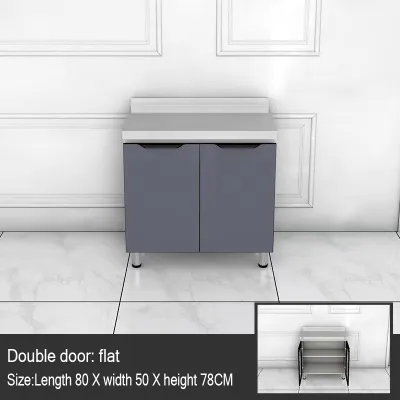
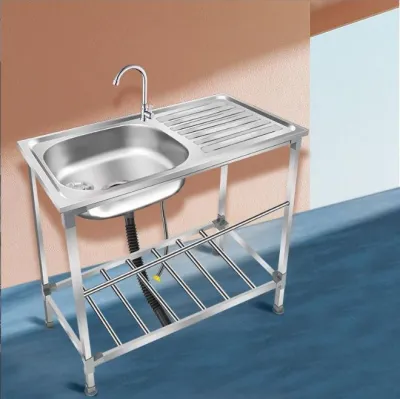
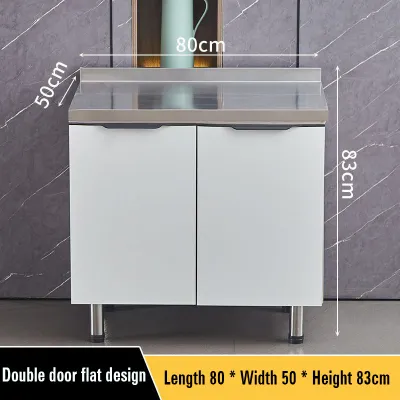
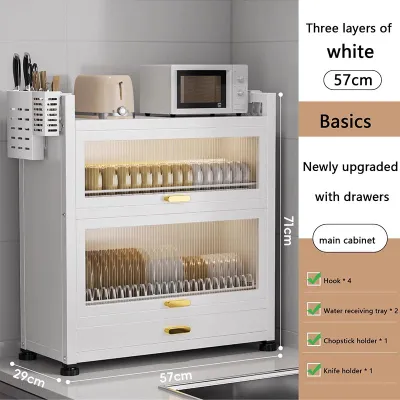
Prices are valid at publication and may change. Please refer to the product page for the latest price.
Furthermore, choosing a mobile cart prevents the financial loss associated with leaving permanent fixtures behind when moving to a new home. In a rental market, investing in built-in carpentry means donating those upgrades to the property owner. A high-quality mobile cart, however, is a personal asset. When your lease ends, you can simply disconnect the quick-release plumbing adapters, lock the cabinet doors, and transport the entire workstation to your next residence, ensuring your investment remains yours for years to come.
What to Look for in a Mobile Kitchen Countertop with Sink
Selecting the right mobile kitchen cart requires looking beyond basic aesthetics. Because this piece of furniture will handle both wet and dry tasks, it must withstand constant exposure to moisture, weight, and physical movement. Evaluating specific material properties, structural designs, and hardware specifications ensures that your selected cart remains stable, hygienic, and functional under daily use.

Countertop Materials and Sink Integration
The countertop material serves as the primary work surface and must endure chopping, heat, and water splashes. In the tropical climate of the Philippines, where high relative humidity can accelerate wood rot, metal corrosion, and laminate peeling, material selection is critical. Stainless steel (ideally food-grade SUS 304) is an excellent choice for hygiene and water resistance. It does not absorb liquids, resists bacterial growth, and handles hot pots directly from the stove without scorch marks. Sealed hardwoods, such as acacia or rubberwood, offer a warmer, more traditional aesthetic but require regular application of food-safe mineral oils to prevent water penetration and subsequent warping. Laminate tops are budget-friendly and easy to clean, but any breach in the edge banding will allow water to seep into the underlying particleboard, causing it to swell and degrade rapidly.
When analyzing sink integration, look closely at how the basin is joined to the countertop. Drop-in stainless steel sinks are common, but they rely heavily on the quality of the perimeter sealant. Over time, silicone seals can degrade, allowing water to pool in the microscopic gap between the sink lip and the countertop, which encourages mold growth. Integrated molded basins, where the sink and countertop are formed from a single continuous piece of stainless steel or composite material, eliminate these seams entirely. This seamless design prevents water from bypassing the basin and guarantees a much higher level of leak protection. Additionally, ensure the basin floor features a clear, stamped drainage slope toward the drain hole to prevent stagnant water from pooling in the corners.
Storage Configurations and Weight Capacity
A mobile cart must be structurally sound enough to handle significant loads. Water is heavy, weighing exactly one kilogram per liter. A sink basin filled with ten liters of water, combined with heavy pots, pans, and stored dry goods, can easily put over 30 to 50 kilograms of stress on the cart’s frame. To prevent wobbling, bowing, or structural failure, prioritize carts constructed with reinforced lower shelves, thick vertical support posts, and cross-bracing along the back or sides.
The configuration of the storage space should align with your specific organizational needs. Open shelving provides quick, ventilated access to frequently used items like colanders, mixing bowls, or root vegetables like onions and potatoes that benefit from air circulation. However, open shelves expose items to dust and grease. Enclosed cabinets with magnetic door latches are superior for storing cleaning agents, trash bins, or dry pantry goods that need to be kept out of sight and protected from pests. Drawers equipped with smooth, ball-bearing glides are ideal for organizing cutlery, dish towels, and small utensils. When purchasing, always verify the manufacturer’s stated maximum load capacity for both the individual shelves and the overall cart, rather than assuming structural integrity based solely on a bulky appearance.
Mobility and Locking Mechanisms
The utility of a mobile cart depends entirely on the quality of its wheel assembly. Standard, small plastic casters often struggle to roll smoothly over tile grout lines, uneven concrete, or door thresholds, and they can easily crack under heavy loads. Look for heavy-duty, industrial-grade caster wheels with a diameter of at least three to four inches. The wheels should feature ball-bearing swivels to allow effortless 360-degree maneuvering in tight kitchen corners.
Safety during food preparation requires robust braking systems. A cart that slides or swivels while you are slicing vegetables or handling hot liquids poses a severe safety hazard. Ensure that at least two of the caster wheels are equipped with dual-locking brakes. A dual-locking mechanism locks both the wheel rotation and the swivel axle simultaneously, anchoring the cart firmly in place. Additionally, consider the wheel material. Soft polyurethane or rubber-coated wheels are highly recommended because they absorb vibrations, roll quietly, and protect delicate indoor flooring—such as ceramic tiles, vinyl planks, or polished hardwood—from scratches and scuff marks, unlike hard, unyielding plastic wheels.
Recommended Mobile Kitchen Countertops with Sinks for Different Needs
Different households have varying cooking habits, spatial constraints, and aesthetic preferences. Understanding the strengths and limitations of different cart configurations allows you to select a unit that aligns perfectly with your daily routine.
Heavy-Duty Stainless Steel Carts for Frequent Cooking
For households that prepare multiple home-cooked meals daily, process fresh meats and seafood regularly, or operate a small home-based food business, a heavy-duty, all-stainless steel cart is a reliable option. These units are typically constructed from commercial-grade stainless steel, which offers high resistance to rust, chemical corrosion, and deep stains. Because the material is non-porous, it can be sanitized quickly with food-safe disinfectants without damaging the finish. These carts are built to withstand heavy impacts, making them ideal for vigorous chopping and holding heavy cast-iron cookware.
However, these utility-focused carts do have specific trade-offs. Their industrial, commercial-kitchen appearance may clash with cozy or modern residential interior decors, giving the space a somewhat cold or institutional feel. They are also significantly heavier than wooden or hybrid carts, making them more difficult to roll over carpeted areas or up small steps. Over time, stainless steel will inevitably develop fine surface scratches from knives and metal utensils, though these markings do not compromise its hygienic properties. This style is best suited for dedicated home cooks who prioritize durability, absolute sanitation, and long-term performance over decorative integration.
Compact Foldable Carts for Small Apartments and Dorms
Living in a micro-condo or a shared dormitory room requires maximizing every square centimeter of available floor space. For these environments, a compact, foldable kitchen cart with a small integrated sink is highly effective. These carts often feature drop-leaf or fold-down side tables that can be extended to provide extra prep space when cooking and folded flat against the frame when not in use. The sink basins in these models are typically smaller and shallower, designed primarily for washing hands, rinsing fruits, or cleaning individual sets of utensils.
The primary trade-off with foldable designs is a reduction in overall workspace and structural load capacity. Because the frame relies on hinges and folding joints, these carts cannot support heavy kitchen appliances like microwave ovens or large stand mixers. The storage options are also more limited, often consisting of slim vertical wire racks or fabric hanging organizers rather than deep wooden drawers or spacious cabinets. This setup is ideal for single occupants, students, or couples who dine out frequently, cook simple meals, and require a temporary, easily storable washing station that can be tucked into a closet or parked in a corner when guests arrive.
Multi-Tier Hybrid Carts for Balanced Prep and Pantry Storage
For busy families who need to balance food preparation with extensive dry pantry storage, multi-tier hybrid carts offer an excellent middle ground. These units typically feature a waterproof, heavy-duty top surface—such as a stainless steel sheet or a thick slab of sealed hardwood—housing the sink basin, while the lower tiers are constructed from painted steel wire, wood laminates, or plastic bins. This hybrid construction allows you to wash and chop ingredients on the top level while utilizing the lower shelves to organize dry ingredients, canned goods, spices, and small appliances.
While highly functional, hybrid carts require careful maintenance. Because the lower shelves are often made of materials that are less water-resistant than the top work surface, any water dripping or splashing from the sink must be wiped dry immediately. Wire shelves can rust if exposed to standing water, and wooden composite panels can swell if moisture penetrates the joints. This design is highly recommended for organized homemakers and bulk-buyers who need an all-in-one station that combines wet prep work with structured, accessible dry storage, provided they are committed to keeping the lower storage zones clean and dry.
Setting Up and Maintaining Your Freestanding Sink Cart
To ensure your mobile kitchen cart operates safely and lasts for years, proper initial setup and routine maintenance are essential. Because these units are mobile, their plumbing and structural components are subjected to regular movement, which can lead to leaks or loose fittings if not monitored.
Connecting the integrated sink to a water source can be achieved in two primary ways. If the cart is positioned near an existing water outlet—such as a laundry bib, a garden tap, or an under-sink valve—you can use flexible, braided stainless steel supply hoses to bridge the gap. Utilizing a brass Y-splitter valve allows you to share a single water outlet between two appliances, such as your washing machine and the cart’s faucet, without needing to constantly swap hoses. For spaces completely devoid of nearby plumbing, you can set up a self-contained portable water system. This involves placing a clean water jerry can inside the cart’s lower cabinet and connecting it to a small, automatic 12V or 220V diaphragm water pump, which delivers pressurized water directly to the faucet when opened.
Managing wastewater requires careful routing of the drainage hose to prevent water damage and safety hazards. Use a flexible, corrugated plastic drain hose secured tightly to the sink’s drain tailpiece with a stainless steel hose clamp. Route the hose with a continuous downward slope toward the nearest floor drain, utility sink, or external drainage outlet. Avoid sharp bends, loops, or kinks in the hose, as these will trap food particles, restrict water flow, and cause unpleasant odors. If the hose must cross a walkway, cover it with a heavy-duty rubber floor cord protector to prevent tripping hazards and protect the hose from being crushed by foot traffic or the cart’s own wheels.
Routine maintenance is vital to combat the high humidity of the Philippine climate, which can foster mold and mildew in damp kitchen corners. Inspect the silicone sealant around the sink rim every few months; if you notice peeling or black mold spots, scrape away the old sealant, clean the area with rubbing alcohol, and reapply a fresh bead of mold-resistant sanitary silicone. Regularly check and tighten the mounting bolts on the caster wheels, as the vibrations from rolling the cart can gradually loosen them. After each use, wipe down all surfaces—especially any wooden or laminated components—with a dry microfiber cloth to prevent water spots and moisture absorption.
If you are unsure about how to safely tap into your home’s main pressurized water lines, or if you reside in a condominium complex with strict building codes regarding plumbing alterations, always consult a licensed plumber. This ensures your setup complies with local safety standards and avoids accidental flooding or structural damage.
Frequently Asked Questions (FAQ)
Can I connect a mobile kitchen sink to a standard washing machine faucet?
Yes, you can connect a mobile kitchen sink faucet to a standard washing machine water bib. To do this without losing the use of your washing machine, install a brass Y-splitter valve directly onto the faucet thread (typically a 3/4-inch thread). This splitter divides the single outlet into two independently controlled valves. Connect your washing machine hose to one side and use a suitable thread adapter (usually reducing from 3/4-inch to a 1/2-inch flexible hose connector) to attach the mobile sink’s supply line to the other side, securing all threaded joints with Teflon tape to prevent drips.
How do I prevent the water drainage hose from leaking on the floor?
Preventing drainage leaks requires a secure mechanical connection and proper hose positioning. Always use an adjustable stainless steel hose clamp to tightly clamp the flexible drain hose onto the sink’s drain outlet. Ensure the hose maintains a continuous downward slope toward the floor drain without any upward loops, which can trap stagnant water and cause backflow. Additionally, secure the discharge end of the hose so it cannot whip or slide out of the drain grate under water pressure, and keep the hose end slightly elevated above the drain grate to ensure free flow.
Is a wooden countertop safe for a kitchen cart with a built-in sink?
A wooden countertop is safe to use with a built-in sink only if the wood is thoroughly treated with a high-quality, water-resistant finish. For food-preparation areas, the wood must be sealed with multiple coats of food-safe polyurethane, marine varnish, or regularly maintained with food-grade mineral oil and beeswax. Unsealed wood will absorb water rapidly, leading to warping, cracking, and deep mold growth, particularly in highly humid tropical environments. Any water splashed onto a wooden countertop should be wiped dry immediately after use to prolong the life of the protective seal.
Community discussion
Share your experience or ask a question. Comments are reviewed before publication.