
Preparing daily meals in a compact condominium, townhouse, or apartment in the Philippines often feels like a balancing act. With limited countertop space already occupied by dish racks, rice cookers, and ingredients, finding a dedicated area to chop vegetables or prep meat can be incredibly frustrating. Investing in a versatile movable kitchen counter can instantly transform your cooking workflow, providing a flexible solution that expands your workspace without the high cost and permanence of a kitchen renovation.
A movable kitchen counter—commonly referred to as a rolling kitchen cart or mobile island—serves multiple roles in a space-constrained home. It functions as an extra food preparation surface, houses hidden storage drawers, and can even act as a temporary dining spot or a dedicated station for small appliances. Because these units are built on wheels, they offer a level of adaptability that fixed cabinetry simply cannot match, allowing you to customize your kitchen layout on the fly.
The primary benefit of a mobile counter in a small layout is its ability to preserve essential walking paths. In narrow galley kitchens or open-plan studio units, floor space is at a premium. A rolling cart can be stationed in the center of the room while you prepare ingredients, then effortlessly rolled against a wall, tucked into a corner, or parked in an adjacent dining area once dinner is served. This mobility ensures your kitchen remains highly functional during active cooking hours without permanently sacrificing valuable foot traffic lanes.
Products mentioned in this guide
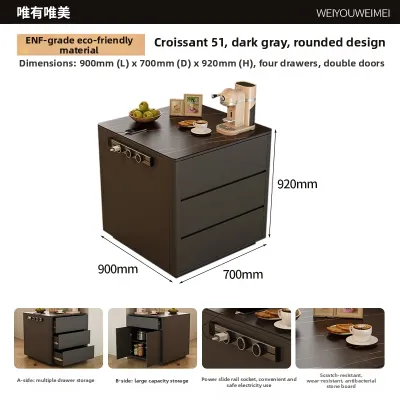
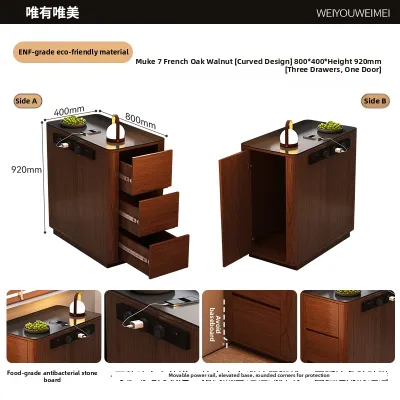
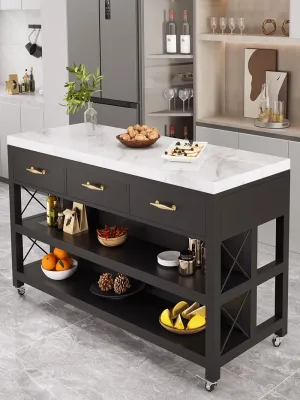
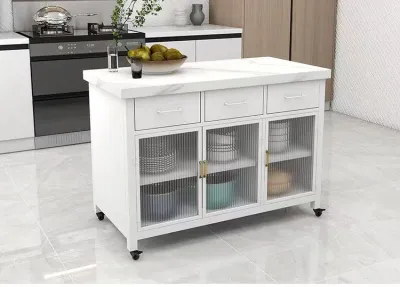
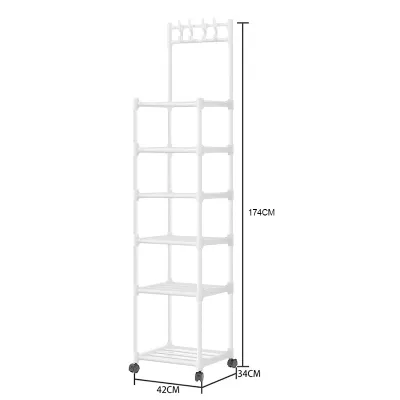
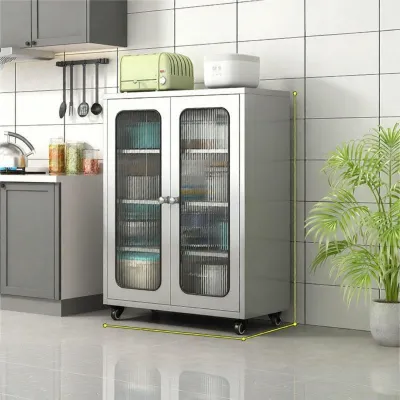
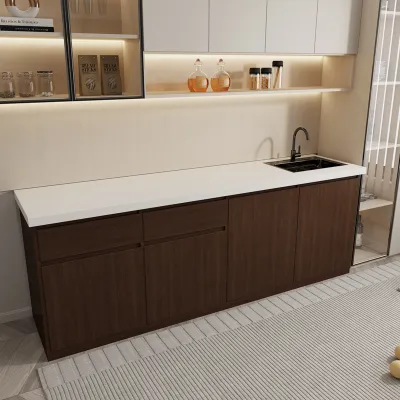
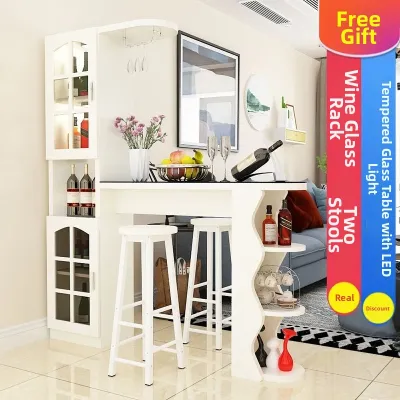
Prices are valid at publication and may change. Please refer to the product page for the latest price.
What to Look for in a Space-Saving Kitchen Cart
Selecting the right mobile cart requires a careful balance between utility and physical footprint. Because every square centimeter counts in a compact kitchen, you must evaluate how a cart’s materials, storage options, and hardware will perform under daily use. Focusing on these core criteria will help you find a unit that is both highly functional and durable enough to withstand a busy cooking environment.
Countertop Materials and Surface Care
The top surface of your cart is where the majority of the action happens, making material selection a critical decision. Common options include solid wood, stainless steel, sealed medium-density fiberboard (MDF), and bamboo. Solid wood and bamboo offer a warm, natural aesthetic and can serve as excellent prep surfaces, but they require diligent maintenance. Stainless steel provides an industrial, hygienic surface that is highly resistant to heat and moisture, making it ideal for heavy meal prep, though it can scratch over time.
In the tropical climate of the Philippines, high humidity levels can severely impact furniture longevity. Raw or poorly sealed wood is prone to absorbing airborne moisture, which can lead to warping, cracking, or mold growth over time. If you opt for a butcher block or solid wood top, verify that it has been treated with a food-safe sealant. Additionally, be prepared to apply mineral oil periodically to maintain the wood’s protective barrier and prevent moisture damage.
Sealed MDF is a highly popular and budget-friendly alternative, but it requires careful handling. While the laminate coating protects the underlying wood fibers from occasional spills, any deep scratches or chipped edges can allow water to seep in, causing the material to swell and bubble. Always check the manufacturer’s care instructions regarding water resistance, and avoid using the countertop as a direct chopping surface unless it is explicitly rated as a cutting board.
Storage Configuration vs. Floor Footprint
A great kitchen cart should maximize storage capacity without expanding its physical footprint on your floor. To achieve this, look for designs that incorporate clever vertical storage solutions. Built-in towel racks, side-mounted spice shelves, and utility hooks for hanging ladles or oven mitts add immense functionality to the exterior of the cart, utilizing space that would otherwise go to waste.
When evaluating the interior storage, consider the trade-offs between deep drawers and open shelving. Deep drawers are excellent for concealing heavy pots, pans, and cluttered food containers, keeping your kitchen looking tidy and organized. However, drawers require adequate clearance space to pull open fully. Open shelving, on the other hand, provides immediate access to frequently used items like mixing bowls or dry pantry goods, and it keeps the cart looking visually light, which helps a small room feel more open.
Be cautious of carts with oversized base shelves or low-hanging solid cabinets that extend too far forward. If a cart lacks proper toe clearance at the bottom, you may find yourself stubbing your toes or leaning forward at an uncomfortable angle while trying to prep food. Look for models where the bottom shelf is slightly recessed or elevated off the ground to allow comfortable foot placement.
Wheel Quality and Locking Mechanisms
The mobility of your cart relies entirely on the quality of its casters. Because kitchen floors in Filipino homes are predominantly finished with ceramic, homogeneous, or porcelain tiles, the material of the wheels is highly important. Hard plastic casters can struggle to grip smooth tiles, often sliding instead of rolling, and they can leave unsightly scuff marks or scratches over time. Look for wheels made of polyurethane or soft rubber, which glide quietly and protect delicate floor surfaces.
Stability is a major safety consideration when using a mobile surface for culinary tasks. When you are chopping dense vegetables, kneading dough, or mixing heavy batters, you exert significant downward and lateral force. If the cart shifts unexpectedly, it can lead to dangerous knife slips or spilled ingredients. Therefore, heavy-duty, lockable wheels are non-negotiable.
At a minimum, your chosen cart should feature two locking casters positioned diagonally from each other to provide basic stability. For maximum safety, especially if your kitchen floor has a slight slope or uneven grout lines, look for models with locking mechanisms on all four wheels. This ensures the unit remains completely stationary when locked, giving you a rock-solid work surface.
Top Movable Counter Designs for Compact Kitchens
Not all mobile counters are configured the same way. Depending on the specific layout of your kitchen and your storage pain points, certain design styles will serve your home much better than others. Understanding these primary configurations will help you narrow down your options to the most space-efficient layout.

Drop-Leaf and Fold-Down Kitchen Carts
Drop-leaf kitchen carts are the ultimate space-savers for homes that need temporary workspace. These units feature a hinged countertop extension that can be raised and locked into place when you are cooking, effectively doubling your available prep area. When the meal is ready or the prep work is finished, the leaf folds down flat against the side of the cart, restoring the unit to a slim, unobtrusive profile.
This design is particularly well-suited for narrow galley kitchens or small studio apartments where a permanently wide island would completely block the walkway. When the drop-leaf is folded down, the cart can be pushed against a wall to serve as a slim console table. When raised, it can even double as a casual breakfast bar or a two-person dining surface.
However, drop-leaf designs do come with structural limitations. The extended portion of the countertop is supported by folding wooden or metal brackets, which are not designed to support extreme weight. Avoid placing heavy kitchen appliances, such as stand mixers or multi-cookers, on the drop-leaf section. Always inspect the support brackets for stability and ensure they are fully engaged before applying any downward pressure.
Slim Rolling Carts with Vertical Storage
If your primary struggle is finding storage for dry goods, spices, and condiments rather than finding a massive prep area, a slim rolling cart is an excellent alternative. Often measuring between 15 and 25 centimeters in width, these ultra-narrow units are designed to slide effortlessly into tight, underutilized gaps, such as the space between your refrigerator and the kitchen wall, or next to a washing machine.
Despite their minimal width, these carts leverage vertical height to offer substantial storage. They typically feature multiple tiers of shallow shelves, often equipped with protective guardrails to prevent spice jars, cooking oils, and canned goods from tipping over when the cart is moved. The very top of the cart usually features a small, flat surface that can hold a cutting board or serve as a temporary landing spot for ingredients.
Before purchasing a slim rolling cart, it is vital to take precise measurements of the gap you intend to use. Remember to account for the thickness of your baseboards, wall outlets, or any protruding handles on your refrigerator, as even a minor obstruction can prevent a tight-fitting cart from sliding in and out smoothly.
Appliance and Microwave Utility Carts
In many small kitchens, the main countertops are cluttered with small appliances like microwaves, air fryers, coffee makers, and rice cookers, leaving almost no room for actual food preparation. An appliance utility cart is specifically engineered to solve this problem by acting as a dedicated, mobile “appliance garage” that frees up your primary counter space.
These carts are constructed with reinforced frames and heavy-duty shelves designed to safely support the weight and heat output of kitchen electronics. Many models feature a spacious top shelf for a microwave, a pull-out sliding shelf in the middle for a rice cooker (allowing steam to escape safely during cooking), and lower cabinets or wire baskets for storing appliance accessories and cookbooks.
When choosing an appliance cart, always verify the manufacturer’s stated weight capacity for each shelf to prevent structural sagging or tipping. Ensure the cart’s dimensions can comfortably accommodate the footprint of your specific appliances, leaving a few centimeters of clearance on all sides for proper ventilation. You will also want to consider proximity to wall outlets and plan your cable routing so that cords do not become tangled or strained when the cart is moved.
Pre-Purchase Checklist: Measuring Your Kitchen Layout
To ensure your new rolling cart integrates seamlessly into your daily routine, you must conduct a thorough spatial check before making a purchase. Taking a few minutes to measure your kitchen layout will prevent the frustration of buying a cart that is too bulky, blocks your appliances, or restricts movement. Use this practical checklist to verify your dimensions:
- Parking Spot Measurement: Measure the exact length, width, and height of the designated area where the cart will be stored when not in use. If you plan to park it under an existing countertop overhang or inside a pantry closet, ensure there is at least a 2-centimeter clearance on all sides, and remember to include protruding hardware like towel racks, spice holders, or handles in your total width calculations.
- Expanded Footprint Check: Calculate the total space the cart will occupy when it is fully open. If the cart has drawers, pull-out wire baskets, or cabinet doors, measure how far they extend when opened. For drop-leaf models, ensure you have enough clearance to fully raise and lock the leaf without hitting nearby walls or dining furniture.
- Traffic and Appliance Clearance: Visualize the cart in its active working position. Verify that there is still enough room for family members to walk past comfortably. Open your refrigerator, oven, dishwasher, and lower kitchen cabinets to ensure the cart does not block their swing paths or prevent you from standing comfortably in front of your appliances.
- Delivery and Access: If the cart is delivered fully assembled, or if you plan to roll it between different rooms, measure all doorways, hallways, and tight corners along the route. If you live in a high-rise condominium, check the dimensions of the service elevator and entry doors to guarantee the packaged unit can be brought up to your unit safely.
- Weight and Load Planning: Make a list of the items you plan to store on the cart. Estimate their cumulative weight—especially heavy items like cast-iron pans, sacks of rice, or large microwaves—and compare this total against the cart's specified load limits. Overloading a cart can bend the frame, strip the wheel mounts, or make the unit incredibly difficult to roll.
Safety and Maintenance Tips for Rolling Carts
Proper usage and routine maintenance are essential to keep your rolling cart functioning smoothly, protect your kitchen floors, and ensure a safe cooking environment. Because a mobile cart is subjected to frequent movement and physical forces, following these basic guidelines will prolong its lifespan:
- Operational Safety: Always engage the wheel locks before performing any kitchen tasks on the cart. Whether you are slicing bread, chopping vegetables, or mixing ingredients, applying pressure to an unlocked cart can cause it to roll away suddenly, potentially leading to injuries or spills.
- Load Distribution: To prevent the cart from becoming top-heavy and tipping over, always store your heaviest items on the lowermost shelves or inside the bottom cabinets. Keep lighter items, such as spices, kitchen towels, and small utensils, on the upper shelves or in the top drawers to maintain a low center of gravity.
- Wheel Maintenance: Over time, kitchen floors accumulate dust, hair, pet fur, and sticky grease splatters. This debris can easily wrap around the wheel axles, causing the casters to bind, drag, or scratch your floor. Periodically flip the cart over (or clear the bottom shelves) to clean the wheels, removing any debris and wiping down the casters with a damp cloth.
- Surface Care: In humid environments, liquid spills must be addressed immediately. If water, soy sauce, or vinegar is left pooling on a wooden or MDF surface, it can quickly seep into the joints or laminate seams, causing permanent swelling, warping, or mold. Wipe down the countertop immediately after use with a soft cloth, and follow the manufacturer's cleaning instructions regarding approved detergents and sealants.
Frequently Asked Questions (FAQ)
Can I use a movable kitchen counter as a dining table?
Yes, a movable kitchen counter can serve as a highly functional dining table, provided you choose a model with the right structural design. Standard kitchen counters and carts are typically 34 to 36 inches high, which is taller than a traditional dining table. Consequently, you will need to pair the cart with bar-height or counter-height stools rather than standard dining chairs.
For comfortable dining, look for a cart with a drop-leaf extension or an overhanging countertop. This design provides necessary legroom underneath the surface, allowing you to tuck your knees in comfortably. Avoid carts that feature solid bottom cabinets or storage shelves directly beneath the dining side, as the lack of leg clearance will make sitting uncomfortable for extended periods.
Are wooden kitchen carts suitable for humid climates?
Wooden kitchen carts are perfectly suitable for humid climates like the Philippines, but they require specific wood species and finishes to prevent moisture-related damage. Look for carts constructed from dense, naturally oily hardwoods or highly stable options like treated rubberwood, acacia, or bamboo. These materials are naturally more resilient against humidity changes compared to cheap, untreated softwoods.
It is critical to avoid raw, unsealed wood, which acts like a sponge in humid weather. Ensure the cart you purchase has a durable, water-resistant protective finish, such as a food-safe polyurethane or a thorough lacquer seal. To maximize the cart’s lifespan, maintain good ventilation in your kitchen, wipe away spills immediately, and avoid placing wet dishes directly on the wooden surface.
Community discussion
Share your experience or ask a question. Comments are reviewed before publication.