
Quick Answer
Maximizing utility in a compact living space requires furniture that serves multiple purposes without overcrowding the room. For small living rooms in the Philippines, a versatile living room side cabinet is one of the most effective solutions to balance storage, display, and daily functionality. Choosing the right design depends on your primary daily activities, whether you need a temporary workspace, a place to hide clutter, or flexible surfaces for entertaining guests.
C-shape slide-under tables, nesting cabinets with hidden compartments, lift-top tables, and tiered vertical display units are the most efficient designs for tight footprints. These pieces allow you to reclaim underutilized space, such as the area directly over your sofa cushion or the vertical zone against a blank wall. To make an informed purchase, you must evaluate key factors like structural dimensions, material resilience in tropical climates, and visual weight to ensure your new cabinet enhances both the organization and the spaciousness of your home.
How to Choose a Multi-Functional Side Cabinet for Small Spaces
Selecting the right living room side cabinet for a compact home requires careful planning. Unlike spacious homes where furniture choices are driven primarily by aesthetics, small-space furniture must be evaluated through a highly practical lens. Below are the essential criteria to consider before making a purchase.
Products mentioned in this guide
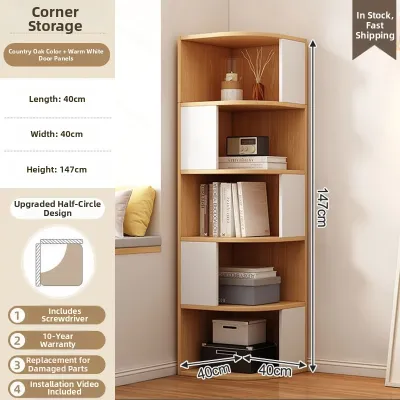
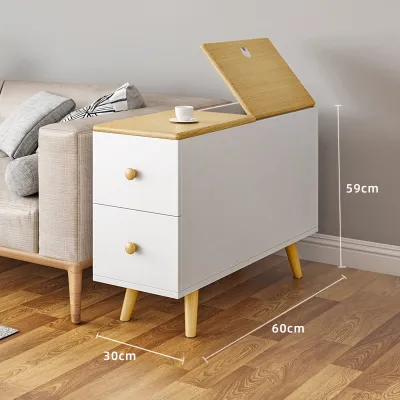
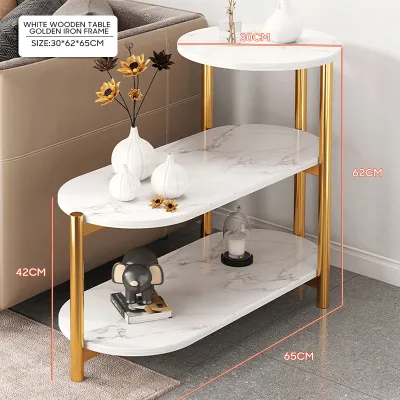
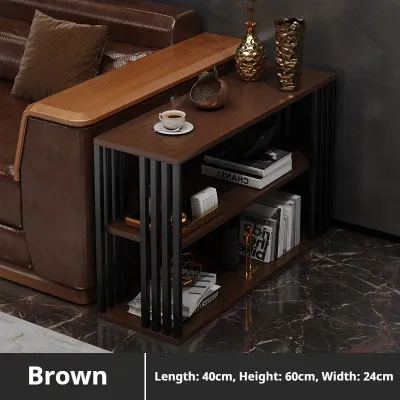
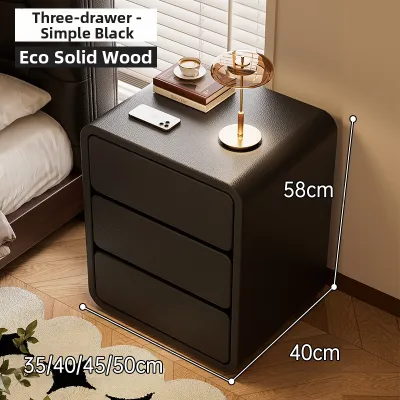
Prices are valid at publication and may change. Please refer to the product page for the latest price.

Dimensions and Proportions
Before browsing online marketplaces or local furniture showrooms, you must measure your living room with precision. Start by measuring the available floor space next to your sofa or armchair, taking note of any nearby wall outlets, baseboards, or light switches.
- Walkway Clearance: Ensure that placing the cabinet will leave a clear walkway of at least 60 to 80 centimeters. This prevents the room from feeling cramped and allows household members to move freely without bumping into furniture corners.
- Sofa Alignment: Measure the height of your sofa's armrest. A standard side cabinet should sit level with or slightly below the armrest for comfortable access. If you are considering a slide-under C-shape cabinet, measure the clearance underneath your sofa base; most slide-under frames require at least 3 to 5 centimeters of open space between the floor and the bottom of the sofa frame.
- Footprint-to-Storage Ratio: Compare the external physical footprint of the cabinet against its actual internal storage capacity. A bulky cabinet with thick decorative side panels may look substantial but offer very little usable drawer or shelf space inside. Look for thin-profile frames that maximize internal volume.
Multifunctional Features
To earn its place in a small living room, a side cabinet should perform at least two distinct roles. Evaluate how different built-in features align with your daily habits.
- Hidden Compartments: Deep storage wells beneath lift-tops or behind cabinet doors are ideal for tucking away visual clutter, such as gaming controllers, board games, or extra throw pillows.
- Slide-Under Bases: These allow the tabletop to extend directly over your lap while you sit on the sofa, instantly transforming your seating area into a casual dining spot or a laptop workstation without taking up permanent floor space in front of the couch.
- Built-In Charging Stations: Some modern side cabinets feature integrated power strips, USB ports, or wireless charging pads. This eliminates the need for messy extension cords trailing across your living room floor.
Material and Durability in Humid Climates
Living conditions in the Philippines feature high relative humidity, intense summer heat, and heavy rainy seasons. These environmental factors can severely impact the lifespan of your furniture if you do not choose materials carefully.
- Moisture Resistance: Low-grade particleboard or untreated medium-density fiberboard (MDF) can absorb moisture from the air, causing the material to swell, warp, or crumble over time. If choosing engineered wood, verify that the manufacturer uses moisture-resistant MDF (often green-core) or high-pressure laminates (HPL).
- Solid Wood and Sealants: Solid woods like mahogany, rubberwood, or acacia are highly durable but must be properly treated. Ensure the piece has a protective polyurethane or lacquer topcoat to seal the wood against humidity and prevent water rings from cold drinks.
- Edge Banding and Hardware: Inspect the edge banding on laminated surfaces; it should be seamlessly applied with hot-melt adhesive to prevent moisture from entering the core. Furthermore, look for rust-resistant hardware, such as powder-coated iron frames or stainless-steel hinges and drawer glides, which resist corrosion in humid coastal or tropical environments.
- Weight Capacity: Always verify the manufacturer's specified weight limits. A multi-functional cabinet that supports a laptop, books, and decorative items needs a sturdy frame. Ensure the top surface can support at least 15 to 20 kilograms, especially if it features an adjustable or cantilevered mechanism.
Visual Weight
In a small room, the visual weight of a piece of furniture is just as important as its physical dimensions. Heavy, solid-to-the-floor wooden cabinets can make a small living room feel dark and enclosed.
To maintain an airy, open feel, look for cabinets with raised legs (at least 10 to 15 centimeters off the ground). This exposes more of the floor, tricking the eye into perceiving the room as larger. Open shelving, glass cabinet door panels, and slender metal frames also help preserve sightlines, allowing light to filter through the space rather than blocking it.
Best Types of Multi-Functional Side Cabinets for Compact Living Rooms
Different small-space challenges require different design solutions. Here is an analysis of the four best types of multi-functional side cabinets, detailing their mechanics, advantages, and limitations.
C-Shape Slide-Under Cabinets with Drawers
C-shape cabinets feature a cantilevered design where the top surface is supported by a single vertical side frame, leaving the bottom open. This unique structure allows the lower base of the table to slide completely under your sofa, bringing the tabletop directly over your lap.
This design is highly beneficial for studio apartments or compact condominiums where there is no room for a dedicated dining table or a home office desk. By sliding the table over the sofa arm, you reclaim valuable floor space when the table is not in use. Models equipped with integrated drawers or side pockets provide a dedicated home for small essentials like remote controls, reading glasses, and tablet devices, keeping your main seating area free of clutter.
When shopping for a C-shape cabinet, stability is the primary factor to verify. Because the top is cantilevered, lower-quality models can wobble when you type or write. Look for options constructed with a welded steel frame rather than bolt-together tubes. Additionally, check the underside clearance of your sofa to guarantee the cabinet’s bottom frame can slide in smoothly without scratching your floor or tearing your sofa’s dust cover.
Nesting Tables with Concealed Storage Compartments
Nesting tables consist of two or three individual tables of graduated sizes that slide completely underneath one another. This allows you to store multiple surfaces within the footprint of a single small table.
For entertaining guests in a small Philippine home, nesting tables are incredibly practical. When you have visitors over for coffee or snacks, you can pull the smaller tables out to distribute around the room, providing everyone with a place to set down their drinks. When the guests leave, the tables slide back together, freeing up your floor space. To maximize utility, look for nesting sets where the smallest table features a lift-lid top or a deep pull-out drawer, allowing you to store items like coasters, board games, or small electronics out of sight.
Before purchasing, inspect the glide mechanisms and locking systems. The tables should slide apart smoothly without sticking or scraping against each other’s finishes. If the nesting units are on small wheels or casters, ensure they have reliable locking brakes to keep the tables stationary when in use. Finally, check the weight limits of the smaller, pull-out sections, as they often have a lower load capacity than the main outer table.
Lift-Top Side Cabinets for Dual-Purpose Use
Lift-top side cabinets feature a top surface mounted on a mechanical hinge system. With a gentle pull, the tabletop lifts upward and outward, moving closer to your seated position to create an ergonomic height for dining or using a laptop.
Beneath the lifting top lies a deep, hidden storage compartment. This concealed well is perfect for storing bulkier items that you want to keep close at hand but out of sight, such as laptop chargers, reference books, or a lightweight throw blanket. Because the top lifts forward, you do not have to clear off your decorative items entirely to access the storage inside, provided they are placed toward the back of the lifting panel.
When evaluating a lift-top cabinet, the quality of the mechanical hinges is paramount. Avoid cheap, thin metal springs that can snap or cause the top to slam down abruptly. Instead, prioritize heavy-duty hydraulic gas struts or spring-assisted mechanisms equipped with safety dampers or built-in stops. These features ensure a smooth, controlled lift and descent, protecting your fingers and preventing your belongings from sliding off during transition.
Tiered Display Cabinets with Lower Enclosed Storage
If your living room has extremely limited floor space, the best strategy is to utilize vertical space. Tiered display cabinets combine open shelving on the upper half with closed cabinet doors or drawers on the lower half.
This layout offers the best of both worlds: the upper open shelves allow you to display decorative items, books, or small indoor plants (such as air-cleaning pothos or snake plants), which adds personality to your home without cluttering your tabletops. Meanwhile, the solid lower cabinet hides unsightly household items like power strips, internet routers, or cleaning supplies. This vertical orientation draws the eye upward, making low condo ceilings feel higher.
Safety and stability are critical when choosing a tall, narrow cabinet. Because these units have a higher center of gravity, they can be prone to tipping if bumped. Always check that the manufacturer includes a wall-anchoring kit, and verify that the base is wide and heavy enough to keep the unit stable. When organizing the cabinet, place your heaviest items—such as thick books or heavy storage boxes—in the bottom compartment to keep the center of gravity as low as possible.
Space-Saving Placement and Styling Tips for Small Living Rooms
Once you have selected the perfect living room side cabinet, strategic placement and styling will help you get the most out of your purchase while keeping your room looking spacious.
- Utilize Dead Zones: Position your side cabinet in underutilized areas of the room. The narrow gap between the side of your sofa and the wall is an excellent spot. Alternatively, place a cabinet in an empty corner next to an armchair. Always double-check that your placement does not block doorways, cabinet doors, or natural light from windows, and maintain a clear walkway width of 60 to 80 centimeters.
- Maintain Visual Lightness: Avoid the temptation to cover every square inch of your cabinet's top surface with decor. In a small room, cluttered surfaces make the entire space feel disorganized. Keep the top surface relatively clear by adhering to the "rule of threes": style the top with one functional item (like a ceramic mug or a book), one organic element (like a small potted succulent), and one vertical element (like a slim lamp) to create visual interest without overcrowding.
- Implement Smart Cord Management: Multi-functional cabinets are often used to charge phones, tablets, or laptops, which can lead to a messy tangle of cords. Look for cabinets with pre-drilled cable routing holes or built-in power strips. If your cabinet does not have these, you can attach adhesive cable clips to the back legs of the cabinet to channel cords neatly down to the nearest wall outlet, keeping them hidden and preventing tripping hazards.
- Integrate Space-Saving Lighting: Instead of using a bulky floor lamp that occupies valuable floor space, pair your side cabinet with a wall-mounted plug-in sconce or a small, rechargeable cordless table lamp. This frees up the entire top surface of your cabinet for daily use while still providing cozy, warm accent lighting for your living room during the evening.
Frequently Asked Questions (FAQ)
What is the ideal height for a living room side cabinet?
The ideal height for a standard living room side cabinet is typically level with or slightly below the armrest of your sofa or armchair. For most standard sofas, this height ranges between 50 and 65 centimeters. Matching this height allows you to easily reach for a drink, a book, or a remote control without straining your shoulder or back.
If you are choosing a C-shape slide-under table or a lift-top cabinet, the height requirements differ. A C-shape table should have a top height that comfortably clears your thighs when you are seated, while a lift-top mechanism should raise the surface to an ergonomic working or dining height of approximately 60 to 70 centimeters from the floor. Always measure your specific seating before purchasing to ensure a comfortable fit.
How do I prevent a tall side cabinet from tipping over?
To prevent a tall, narrow side cabinet from tipping over, you must anchor it securely to the wall. This is especially important in households with pets or young children, or in regions prone to seismic activity. Most reputable manufacturers provide an anti-tip anchor kit, which includes nylon straps or metal brackets, wall plugs, and screws.
Always follow the manufacturer’s installation manual to attach the anchor to a wall stud or solid concrete wall rather than drywall alone. If wall-anchoring is not possible in your rental unit, you can improve stability by placing your heaviest belongings—such as heavy books, files, or storage bins—in the lowest compartments of the cabinet. This keeps the center of gravity low and significantly reduces the risk of accidental tipping.
Can I use a side cabinet with storage as a nightstand in a studio apartment?
Yes, a multi-functional side cabinet with storage is an excellent dual-purpose choice for a studio apartment. In studio layouts where the sleeping area and the living area share the same room, a single well-chosen cabinet can serve as a nightstand by night and a living room side table by day.
To make this setup work seamlessly, look for a cabinet design that features a clean, flat top surface to hold a bedside lamp and a glass of water, combined with enclosed lower storage like drawers or a solid door. This allows you to keep personal bedside items, sleep masks, and charging cables tucked away out of sight, maintaining a tidy, professional living room aesthetic for visitors during the daytime.
Community discussion
Share your experience or ask a question. Comments are reviewed before publication.