
Maximizing space in a compact home often requires utilizing vertical surfaces and tight corners, but rental agreements or solid concrete walls can make drilling a major obstacle. Finding a versatile mini table living room setup that provides functional surface area without causing permanent structural damage is a common challenge for condo dwellers. The most reliable solutions include freestanding C-shaped tables, tension-pole shelving, and specialized adhesive-mounted surfaces. These options bypass the need for power tools, allowing you to establish highly functional zones for remote work, dining, or displaying decor while keeping your security deposit entirely intact.
How to Choose Safe No-Drill Furniture for Your Living Room
Selecting no-drill furniture requires a clear understanding of the physical mechanisms that keep these pieces stable. The four primary non-invasive mounting and support methods used today are industrial adhesive pads, tension poles, magnetic mounts, and freestanding C-shaped frames. Industrial adhesives rely on chemical bonding to smooth surfaces, whereas tension systems use mechanical compression wedged between solid parallel structures like floors and ceilings. Magnetic mounts are highly specialized, requiring an existing steel or magnetic surface, while freestanding C-shaped tables rely on a low-profile base that slides under seating to save floor space without touching the walls.
A common misconception is that high-quality materials, such as solid mahogany, oak, or heavy-duty steel, automatically translate to a high load capacity. In reality, a no-drill furniture piece is only as strong as its mounting interface. A solid wood shelf mounted with weak adhesive tape will fail far sooner than a lightweight plastic shelf secured with high-grade engineering adhesive. Before purchasing, you must verify the manufacturer’s specified load limits for the mounting hardware itself, rather than assuming the structural material guarantees weight tolerance.
Products mentioned in this guide


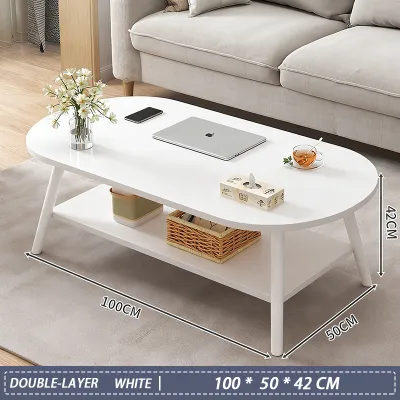

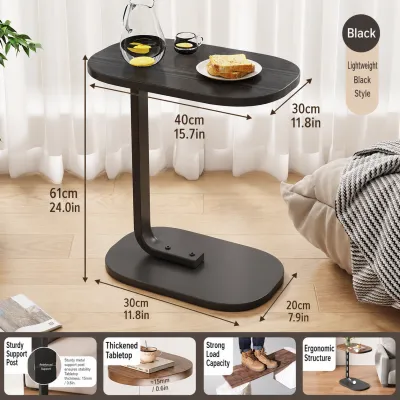
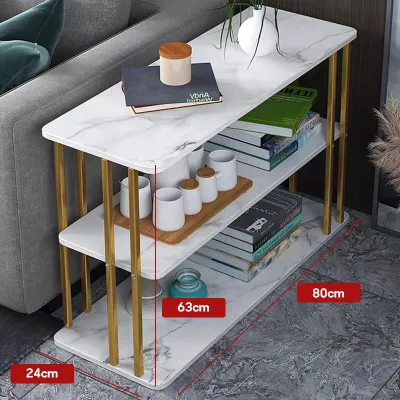
Prices are valid at publication and may change. Please refer to the product page for the latest price.
Wall surface compatibility is another critical factor that dictates whether a no-drill solution will succeed or fail. Adhesive solutions require smooth, non-porous, and structurally sound surfaces, such as glass, polished metal, ceramic tile, or sealed acrylic panels. They should be strictly avoided on textured plaster, unsealed concrete, fresh paint, or delicate wallpaper, as the adhesive will either fail to bond or tear the surface material away under load. If your living room features textured walls, mechanical tension systems or freestanding furniture are much safer alternatives.
Understanding the physics of torque and leverage is vital when evaluating wall-mounted, no-drill shelves or tables. The deeper a shelf or table extends from the wall, the greater the downward rotational force (torque) it exerts on the mounting bracket. A shelf that is 30 centimeters deep will pull on its adhesive bond with significantly more force than a shelf that is only 10 centimeters deep, even if both carry the exact same weight. To counteract this leverage effect, deeper surfaces require either auxiliary floor supports, wider adhesive mounting plates to distribute the stress, or structural tension columns.
Top No-Drill Mini Table Living Room Solutions for Small Spaces
Creating a functional surface area in a tight layout requires choosing furniture that adapts to your daily routine without cluttering high-traffic pathways. A well-chosen mini table living room piece can serve as a temporary workspace, a dining spot, or a resting place for your morning coffee, all while remaining completely non-destructive to your walls.

Adhesive Fold-Down and Wall-Leaning Tables
Adhesive fold-down tables offer an elegant way to introduce a temporary workspace or casual dining surface that completely disappears when not in use. These systems typically feature a hinged tabletop supported by heavy-duty adhesive brackets or a wall-leaning frame that uses gravity to stabilize the structure. They are ideal for quick tasks, such as setting down a laptop, holding a small potted plant, or keeping a beverage nearby while you relax on the sofa. By folding flat against the wall when idle, they preserve precious floor space in narrow living rooms.
Installing these adhesive systems safely requires meticulous wall preparation and strict adherence to curing times. The target wall surface must be thoroughly cleaned, degreased, and allowed to dry completely before the adhesive brackets are applied. Once the adhesive is in place, you must respect the manufacturer’s specified curing window—which typically ranges from 24 to 72 hours—before attaching the table or placing any weight on it. Neglecting this crucial step will result in premature adhesive failure and potential damage to your belongings.
It is important to recognize the physical limitations of adhesive fold-down tables. These surfaces are generally unsuitable for heavy leaning, resting your elbows with full body weight, or any dynamic, sudden movements. Always check the manufacturer’s specifications for maximum downward force and hinge capacity before use. If you plan to use the table for active tasks that involve constant movement, ensure the product is rated for dynamic loads rather than just static weight.
Freestanding C-Tables and Tension Pole Tables
For those who want to avoid wall contact entirely, freestanding C-tables and tension pole tables provide highly stable, zero-damage alternatives. C-tables feature a smart, cantilevered frame with a flat, low-profile base that slides directly under your sofa or armchair. This allows the tabletop to hover directly over your lap or adjacent to the armrest, consuming virtually zero dedicated floor space. Tension pole tables, on the other hand, utilize a vertical metal column wedged securely between the floor and the ceiling, supporting one or more adjustable tray tables along its length.
Stability in these designs depends on specific physical characteristics rather than wall attachments. When choosing a C-table, verify the base weight and frame material; a heavier steel base prevents the table from tipping forward when you place items on the outer edge. For tension pole tables, ensure that your ceiling is structurally solid—such as reinforced concrete or solid wood joists—and capable of withstanding the upward pressure exerted by the internal spring or screw mechanism. Avoid placing tension poles against thin, hollow suspended ceilings or gypsum board panels without proper structural backing, as the pressure can cause cracking or denting.
Before purchasing either option, precise measurements of your living room layout are essential. For a C-table, measure the clearance height between the floor and the underside of your sofa frame to ensure the table’s base can slide underneath smoothly (typically requiring a gap of at least 2 to 5 centimeters). Additionally, measure the height of your sofa’s armrest to ensure the tabletop clears it comfortably. For tension pole systems, measure your exact floor-to-ceiling height and compare it against the manufacturer’s minimum and maximum adjustment limits to guarantee a secure fit.
Best No-Drill Floating Shelves for Living Room Display
Wall shelves are excellent for keeping essential items within arm’s reach while freeing up floor space, but selecting the right no-drill mounting method is critical to preventing sudden falls.
Heavy-Duty Adhesive Floating Shelves
Adhesive floating shelves are highly practical for organizing lightweight living room essentials. They are perfect for holding small decorative items, lightweight picture frames, Wi-Fi routers, smart home hubs, or remote control organizers. By lifting these items off your media console or coffee table, you can instantly reduce visual clutter and create a more organized, open environment.
However, placing heavy, concentrated loads on deep adhesive shelves presents a significant safety risk. Items like large book collections, heavy ceramic vases, or dense electronic equipment exert massive leverage on the adhesive backing, pulling the top of the bracket away from the wall. To mitigate this risk, look for adhesive shelf designs that feature secondary safety tethers, wide mounting brackets that distribute weight over a larger surface area, or built-in level indicators that help ensure even weight distribution across the shelf.
Tension Rod and Corner Shelf Systems
Tension rod shelving units and corner-wedge shelves offer a much higher weight capacity than standard adhesive options by utilizing structural compression. Tension systems use heavy-duty vertical rods wedged between the floor and ceiling, allowing you to mount multiple wide shelves that can hold heavier items like books or potted plants. Corner-wedge shelves utilize the natural structural strength of two intersecting walls, using a compression dial or spring mechanism to lock into the corner without any screws or tape.
Proper installation is key to ensuring these compression systems remain safe and stable. When installing a tension rod system, use a spirit level to verify that the rods are perfectly vertical (plumb) on all sides; an angled rod can easily slip under load. Additionally, check that both the floor and ceiling contact points are equipped with soft, non-marking rubber pads to distribute the pressure evenly and prevent unsightly dents or scratches on your finishes.
Utilizing corner-wedge shelves provides an outstanding aesthetic and functional benefit in compact condos. Corners are frequently wasted spaces in living room layouts, but a series of tiered corner shelves can transform an empty nook into a stylish display hub. Because these systems press outward against two walls simultaneously, they are inherently more stable and less prone to tipping or sliding than single-wall adhesive shelves.
Quick Comparison: Mini Tables vs. Floating Shelves
To help you decide which no-drill solution fits your specific living room layout and wall conditions, refer to the comparison below.
| Solution Type | Best Use Case | Weight Capacity Approach | Wall Risk Level | Ideal Living Room Zone |
|---|---|---|---|---|
| Adhesive Fold-Down Table | Temporary laptop work, casual dining | High-grade adhesive brackets + hinges | Moderate to High (paint peel risk) | Beside sofa, empty accent wall |
| Freestanding C-Table | Active surface for drinks, remotes, phones | Low-profile floor base slide-under | Zero Risk (no wall contact) | Directly over sofa arm or seat |
| Tension Pole Table | Multi-tier tray holding, drinks, plants | Floor-to-ceiling vertical compression | Zero to Low (ceiling pressure) | Adjacent to seating, room corners |
| Adhesive Floating Shelf | Displaying lightweight decor, routers, remotes | Wide-plate adhesive backing | Moderate to High (paint peel risk) | Above TV console, entryway |
| Tension Column Shelves | Storing books, medium plants, heavy decor | Heavy-duty vertical compression | Zero to Low (ceiling pressure) | Unused corners, empty walls |
When choosing between these options, the primary decision factor is whether you need an active or passive surface. Select mini tables for active, temporary tasks that involve human interaction, such as typing, eating, or writing, as these activities require the robust stability of floor-supported furniture. Choose floating shelves for passive, static display and storage where items remain undisturbed for long periods.
If your living room walls are in poor condition—featuring peeling paint, uneven plaster, wallpaper, or high humidity that could compromise adhesive bonds—you should default entirely to freestanding C-tables or tension-based systems. These options completely bypass the risk of wall damage while providing superior weight capacities and structural stability.
Wall Compatibility and Safe Installation Practices
Achieving a secure, long-lasting installation with no-drill furniture requires meticulous preparation and an understanding of the materials involved. To install adhesive-mounted products, begin by thoroughly cleaning the target wall area with isopropyl alcohol to remove all dust, oils, and residues. Allow the surface to dry completely before applying the adhesive. Once applied, press the bracket firmly against the wall for at least 30 seconds to activate the pressure-sensitive bond, and respect the manufacturer’s full curing time—typically 24 to 72 hours—before placing any weight on the surface.
When it is time to move or redecorate, removing adhesive mounts safely requires patience to avoid tearing the wall paint. Use a handheld hairdryer on a medium-heat setting to warm and soften the adhesive backing for several minutes. Once the adhesive becomes pliable, gently slide a piece of dental floss or thin fishing line behind the bracket, using a sawing motion to slice through the foam tape or adhesive pad. Any remaining residue can be rolled off with your fingers or cleaned using a mild adhesive remover.
Always establish clear safety boundaries before beginning any installation. If your living room experiences extreme humidity fluctuations, which are common in tropical climates like the Philippines, adhesive bonds can degrade rapidly over time. If you observe bubbling paint, dampness, or crumbly plaster, stop the installation immediately. In these scenarios, or if the wall material is inherently unstable, consult a professional installer or switch entirely to freestanding or tension-based furniture to ensure safety and prevent property damage. Always check the applied product’s label and the treated item’s manufacturer instructions before use.
Frequently Asked Questions (FAQ)
Can no-drill shelves hold heavy books or electronics?
No-drill shelves are generally not designed to hold heavy books or dense electronics. The physics of torque dictates that deep shelves exert a significant pulling force on wall-mounted adhesives, which can easily cause the shelf to tear away from the wall under heavy, concentrated loads. To prevent damage to your walls and belongings, strictly adhere to the manufacturer’s specified weight limits. If you need to store heavy items like textbook collections, gaming consoles, or large audio speakers, it is highly recommended to use freestanding C-tables, robust tension-pole shelving units, or floor-supported bookcases instead.
Will adhesive furniture damage my condo wall paint when removed?
Adhesive furniture can potentially damage wall paint, particularly on matte, flat, or older painted surfaces where the bond between the paint and the drywall or concrete is weak. While using proper removal techniques like heat from a hairdryer and dental floss minimizes this risk, the final outcome depends heavily on the existing wall condition and paint quality. To protect your security deposit, always read the adhesive manufacturer’s instructions and test the adhesive on a small, hidden area of the wall first if possible. If the paint shows signs of peeling or chalking during the test, avoid adhesive mounts and choose freestanding or tension-based furniture instead.
Community discussion
Share your experience or ask a question. Comments are reviewed before publication.