
Quick Answer: Which Shoe Box Type Works Best?
The ideal shoe box storage for your closet system depends directly on the physical layout of your shelving, cubbies, or hanging rods. If your closet features deep, flat open shelves, stackable clear plastic boxes with magnetic drop-front doors offer the best combination of visibility and accessibility. For built-in cube organizers, rigid fabric bins with front pull handles provide a clean, flush look while protecting the cabinet surface from scratches. If your wardrobe is dominated by hanging rods or narrow vertical gaps, multi-tier hanging fabric organizers or slim under-shelf sliding drawers are the most efficient choices.
The ultimate goal is to maximize your vertical space without exceeding the depth and height clearance of your current setup. In a tropical climate like the Philippines, where high humidity can quickly lead to mold and mildew, you must also prioritize ventilation. Choosing the right box type ensures your footwear remains clean, visible, and protected from environmental damage.
Best Shoe Box Types by Closet Organizer Setup
Closet organizer systems are designed to maximize efficiency, but they only work when paired with compatible storage accessories. Placing the wrong type of shoe box on a shelf or inside a cubby can lead to wasted space, unstable stacks, or damaged cabinetry. By matching the structural design of your shoe boxes to your specific closet configuration, you create a seamless, cohesive system that simplifies your daily routine.
Products mentioned in this guide
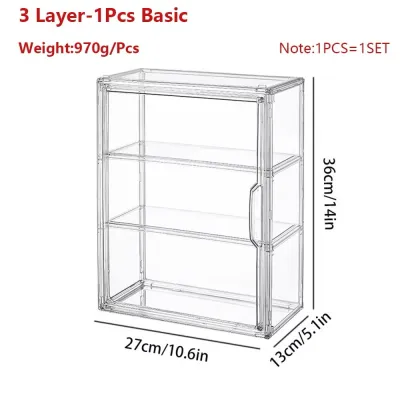
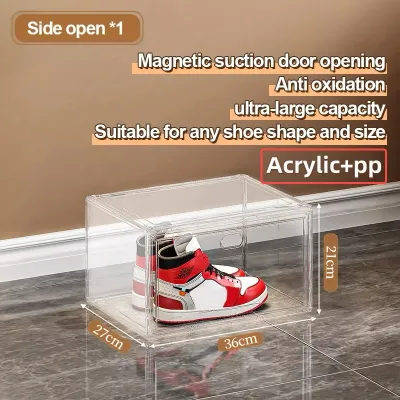
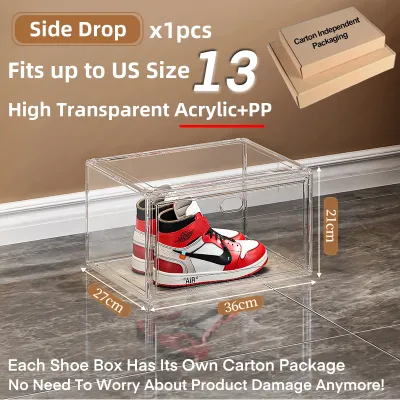
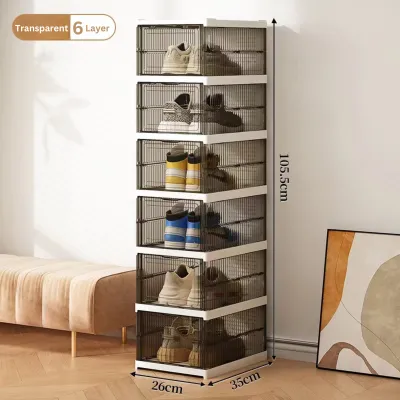
Prices are valid at publication and may change. Please refer to the product page for the latest price.

For Standard Shelving and Deep Wardrobes
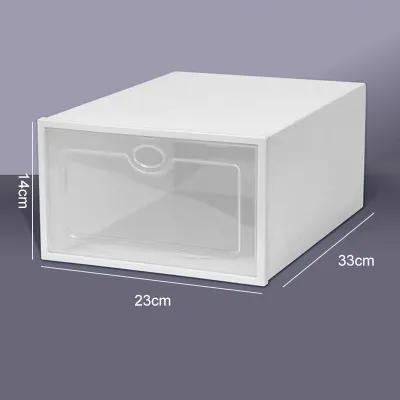
Flat, deep, and adjustable shelves are highly versatile, making them the perfect foundation for heavy-duty, stackable clear plastic shoe boxes. Look for boxes made from rigid polymers like polyethylene terephthalate (PET), acrylic, or high-density polypropylene (PP). PET and acrylic offer crystal-clear visibility similar to glass, while PP is slightly frosted but highly impact-resistant and flexible. Ensure the boxes feature interlocking grooves on the top and bottom lids to lock the units together, preventing the stack from shifting or tipping when you retrieve a pair.
The most critical feature for deep shelving is a drop-front or side-opening door, preferably secured by magnetic closures. Traditional shoe boxes require you to unstack multiple units just to access a pair at the bottom, which quickly leads to clutter and frustration. Drop-front doors allow you to open a single box and slide your shoes out while leaving the rest of the stack completely undisturbed.
Before purchasing, verify the depth of your shelves, which typically ranges from 12 to 16 inches (30 to 40 cm). Standard men’s shoe boxes are often around 14 inches deep, so ensuring your boxes do not overhang is vital, especially if your wardrobe has sliding doors or tight bifold doors that require flush clearance to close properly. If you have extra-deep shelves, you can even place two rows of side-opening boxes back-to-back to maximize every inch of space.
In terms of cost, high-quality stackable plastic boxes in the Philippines typically range from ₱150 to ₱500 per piece depending on the thickness of the acrylic and magnetic door features, while simple foldable PP plastic boxes are more budget-friendly at around ₱50 to ₱100 each.
For Cube Organizers and Built-in Compartments
Cube organizers and built-in square compartments require a different approach to maximize space and preserve your furniture. Rigid fabric bins made from non-woven polyester, canvas, or woven synthetic fibers are the ideal fit for these cubbies. These bins usually feature thick cardboard or plastic base inserts that keep the walls upright and structured, even when filled with heavier shoes.
Fabric bins are highly recommended for wood, laminate, or painted MDF closet systems because their soft exterior surfaces will not scratch or scuff the interior finishes when slid in and out. They are typically sized to fit standard cube dimensions, such as 11×11 inches or 13×13 inches, providing a clean, uniform facade that hides visual clutter.
While fabric bins excel at aesthetics, they lack the immediate visibility of clear plastic. To overcome this, choose bins with clear front window panels, or utilize the front pull handle to attach a small, legible label identifying the shoes inside. This keeps your closet looking immaculate while ensuring you can still find your favorite pairs quickly.
For Hanging Organizers and Tight Vertical Spaces
When floor and shelf space are limited, utilizing your hanging rods or narrow vertical gaps is a smart way to expand your storage capacity. Multi-tier hanging shoe organizers, which suspend from the closet rod using heavy-duty hook-and-loop straps or metal hooks, feature vertical fabric pockets designed to hold individual pairs of shoes.
Because hanging organizers rely entirely on the strength of your closet rod, weight distribution is a critical safety consideration. Avoid overloading these fabric organizers with heavy footwear such as thick leather boots, steel-toed shoes, or heavy platform sneakers, as the cumulative weight can cause the closet rod to sag, bend, or pull away from the wall brackets. Instead, reserve hanging pockets for lightweight footwear like flats, sandals, step-ins, canvas sneakers, or slippers.
For tight vertical gaps directly beneath shelves, consider slim, under-shelf sliding drawers or wire baskets. These units clamp onto the existing shelf above, turning wasted air space into a dedicated slot for low-profile shoes. Always check the manufacturer’s weight limit for both the hanging organizer and your closet rod before loading them to capacity.
How to Measure Your Closet for the Perfect Fit
To avoid the hassle of returning storage boxes that do not fit, taking precise measurements of your closet system is an essential first step. Grab a reliable metal measuring tape and record three primary dimensions for every shelf or compartment: depth, width, and vertical height clearance.
When measuring depth, measure from the back wall or back panel to the front edge of the shelf. If your closet has sliding doors, measure up to the inner track to ensure the shoe boxes will not obstruct the door’s path. For width, measure the clear opening between the side panels or frame, keeping an eye out for protruding door hinges, shelf brackets, or decorative trim that might narrow the entry point.
Vertical clearance is the distance between the top of one shelf and the underside of the shelf above it. If you plan to stack boxes, divide this total height by the height of an individual shoe box to determine how many units you can safely stack. Always leave at least 1 to 2 inches (2.5 to 5 cm) of empty space at the very top of the stack to allow your hand to reach in comfortably and to promote air circulation.
Keep in mind the standard dimensions of footwear packaging as a general reference guide:
- Standard women's shoe boxes: Average around 12 x 7.5 x 4.5 inches (30 x 19 x 11.5 cm).
- Standard men's shoe boxes: Average around 14 x 9 x 5 inches (35.5 x 23 x 12.7 cm).
- High-tops, ankle boots, and heels: Require taller clearance, often needing boxes that are 6 to 8 inches (15 to 20 cm) high.
Always check for physical obstructions that might not be obvious at first glance. For example, a shelf lip that hangs down slightly can block a box from sliding out, even if the interior clearance is sufficient. Measure the actual opening size rather than just the interior space to guarantee a smooth fit. If you have large shoe sizes (such as men’s US size 12 or above), you may need to store the shoes sideways inside the boxes, which increases the required width but reduces the depth needed.
Material Choices for Humid and Tropical Environments
In tropical regions like the Philippines, managing humidity inside an enclosed wardrobe is a constant challenge. High moisture levels, particularly during the rainy season (Habagat), create an environment where mold, mildew, and musty odors can thrive, potentially ruining expensive leather, suede, and canvas shoes.
Original cardboard shoe boxes are highly susceptible to moisture damage. Cardboard acts like a sponge, absorbing ambient humidity from the air, which weakens its structural integrity and causes the boxes to warp and sag under weight. Furthermore, damp cardboard attracts common household pests like silverfish and cockroaches, making it a poor choice for long-term closet storage.
Instead, opt for ventilated hard plastic or breathable fabric options:
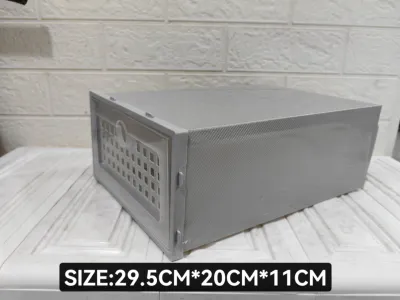
- Ventilated Hard Plastic (PET/PP): These boxes are moisture-resistant, easy to wipe clean, and highly durable. Ensure you choose models that feature built-in ventilation holes, rear mesh vents, or loose-fitting doors that allow continuous airflow.
- Breathable Fabrics (Canvas/Mesh): Non-woven fabrics and natural canvas allow air to circulate naturally around your shoes, preventing moisture from becoming trapped inside.
To keep your stored footwear in pristine condition, implement a proactive maintenance routine. Never store shoes immediately after wearing them; allow them to air out completely in a well-ventilated room for at least 12 to 24 hours to evaporate any sweat or moisture. Place silica gel desiccant packets or small activated charcoal air-purifying bags inside each shoe box to actively absorb excess humidity and neutralize odors. Regularly open your closet doors during dry, sunny days to encourage fresh air circulation throughout the wardrobe system. If you notice any dust or mold starting to form on plastic boxes, wipe them down with a mild vinegar and water solution, then let them dry completely before returning your shoes.
Frequently Asked Questions (FAQ)
Can I use original cardboard shoe boxes inside a closet system?
While using original cardboard boxes is a common habit, it is not recommended for an organized closet system. Cardboard boxes lack uniform sizing, creating an uneven and unstable stack that wastes valuable shelf space. They also hide your shoes from view, forcing you to open multiple lids or write labels on every box. Most importantly, cardboard absorbs moisture easily in humid environments, which can lead to mold growth and attract pests that damage your footwear. Upgrading to uniform, clear plastic or breathable fabric boxes provides better protection, visibility, and a cohesive look.
How do I keep stacked plastic shoe boxes from falling over?
To ensure your stacked plastic shoe boxes remain stable and secure, always purchase boxes designed with interlocking channels, tabs, or grooves on the top and bottom surfaces. These physical connections lock the boxes together to prevent sliding. Additionally, place a non-slip rubber shelf liner beneath the bottom row of boxes to secure the entire stack to the shelf. Always place your heaviest footwear, such as boots, heavy sneakers, or thick leather dress shoes, in the bottom boxes to keep the center of gravity low, reserving the top levels for lightweight flats and sandals.
What is the best way to store tall boots in a standard closet shelf?
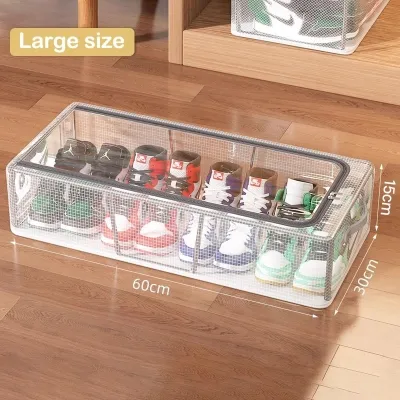
Storing tall boots on standard closet shelves can be challenging due to height limitations. If your closet system has adjustable shelving tracks, the most effective solution is to raise a shelf to create a taller compartment specifically for boots. If your shelves are fixed, store boots upright using plastic boot shapers or inflatable inserts to prevent the shafts from creasing, and place them in open, tall fabric bins. Alternatively, you can store boots horizontally in specialized, extra-long clear plastic boot boxes designed to slide onto wide shelves or fit neatly on the closet floor.
Community discussion
Share your experience or ask a question. Comments are reviewed before publication.