
Integrating a shoe organizer into an existing wardrobe or closet system requires balancing storage capacity, accessibility, and preservation. In the humid tropical climate of the Philippines, where high relative humidity levels can quickly lead to mold and material degradation, selecting the right storage type is more than an aesthetic choice. The ideal solution depends on your wardrobe’s layout—whether you have unused hanging rods, deep open shelves, spacious floor areas, or underutilized door panels. By matching your specific shoe collection, from delicate heels to heavy sneakers, with the correct organizational style, you can maximize your available space while keeping your footwear in pristine condition.
Assess Your Closet Layout and Shoe Storage Needs
Before purchasing any organizer, you must conduct a thorough physical assessment of your closet’s interior dimensions and structural capacity. Start by using a steel tape measure to record the exact width, depth, and height of your target storage zones. For floor storage, measure the clear floor area, paying close attention to door tracks or bottom hinges that might obstruct pull-out bins. For shelving, measure the depth from the back wall to the front edge; standard wardrobe shelves are typically 35 to 60 centimeters deep, which dictates whether shoes can be stored straight or must be angled. If you plan to use hanging rods, measure the available horizontal rod length and the vertical clearance from the rod to the floor or the nearest shelf beneath it. Finally, check the door clearance of hinged doors, ensuring that any added door-mounted organizer will not strike internal shelves when the closet is closed.
Next, categorize your shoe collection by type, size, and weight. Group your footwear into categories such as flat sandals, high heels, athletic sneakers, and heavy boots. Measure the height of your tallest pairs. High-top sneakers and structured heels often require 15 to 20 centimeters of vertical clearance, while ankle boots and tall boots require significantly more. Understanding this distribution prevents the common mistake of buying uniform-sized storage compartments that crush delicate shoe structures or leave excess unused vertical space.
Products mentioned in this guide
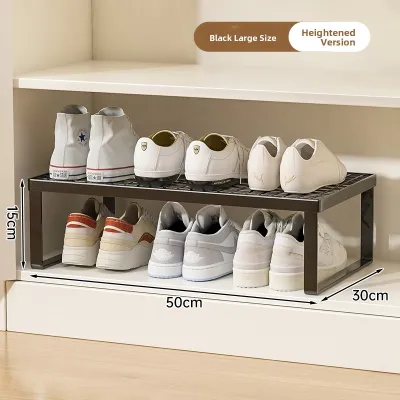
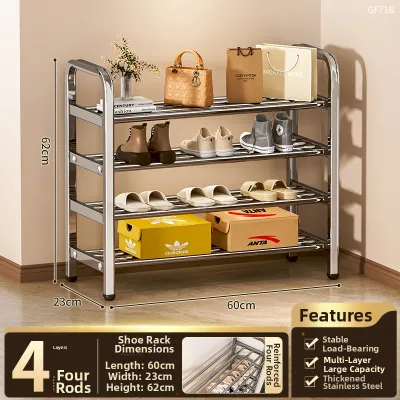
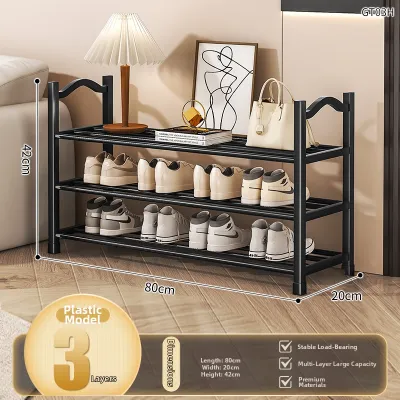
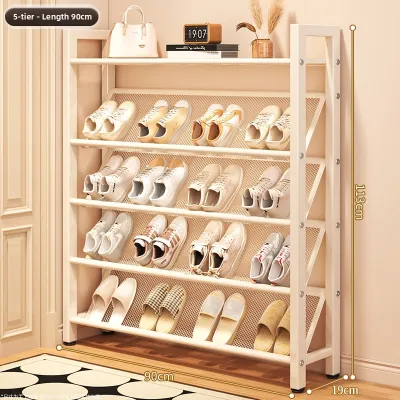
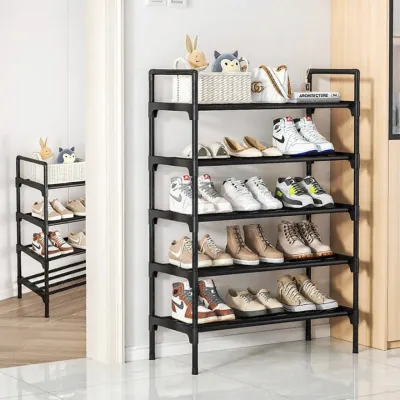
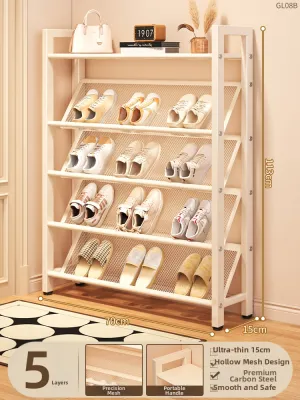
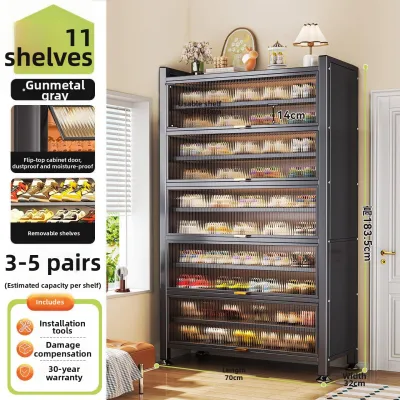
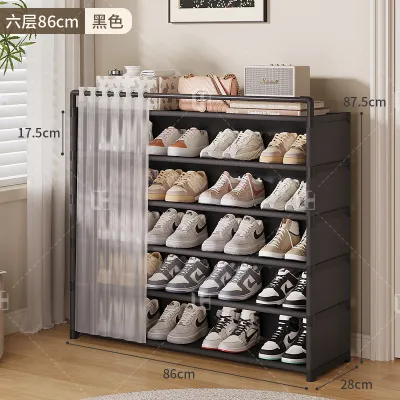
Prices are valid at publication and may change. Please refer to the product page for the latest price.
In the Philippines, environmental factors play a critical role in material preservation. High humidity levels, particularly during the rainy season, create an environment highly conducive to mold, mildew, and the dry rot of polyurethane soles. Your storage system must balance dust protection with adequate air circulation. Fully sealed, non-breathable plastic enclosures can trap residual moisture from sweat or rain, accelerating fungal growth. Conversely, completely open racks expose shoes to dust and airborne grime.
Before loading any organizer with weight, perform a structural integrity check on your wardrobe. Inspect the shelf support pins and the thickness of the panels. Shelves made of 15-millimeter particle board or medium-density fiberboard (MDF) are prone to sagging over time if loaded with multiple pairs of heavy leather shoes or sneakers. Look for reinforced brackets, check if the hanging rod is securely anchored to the side walls or top panel with metal flanges, and ensure there are no signs of bowing or loose joints in the cabinet carcass.
Hanging Shoe Organizers: Maximizing Vertical Rod Space
Hanging shoe organizers are an efficient way to utilize vertical space when you have excess hanging rod length but lack sufficient shelving or floor space. These organizers suspended from the closet rod typically feature a series of vertical fabric or plastic cubbies.

When choosing between materials, compare breathable fabric pockets (such as non-woven polypropylene or canvas) with clear plastic or vinyl options. Breathable fabric is highly advantageous in humid climates because it allows air to circulate freely around the footwear, reducing the risk of moisture accumulation. However, fabric can absorb odors over time and is more difficult to clean if muddy shoes are inserted. Clear plastic or vinyl pockets offer the benefit of instant visibility, allowing you to locate pairs quickly without pulling them out. The trade-off is that vinyl is non-porous and can trap moisture inside the pockets. If you choose plastic, look for models with ventilated mesh backings or open-front designs to ensure air exchange.
Before installing a hanging organizer, you must calculate the load-bearing capacity of your closet rod. A standard 90-centimeter wardrobe rod made of thin-walled steel or wood can safely support a limited amount of weight before bowing. A hanging organizer filled with ten pairs of shoes can easily weigh between 5 and 10 kilograms, depending on the shoe types. Inspect the center support brackets of your rod; if your rod spans more than 1 meter without a center support, avoid hanging heavy organizers in the middle.
The best use cases for hanging organizers include lightweight, low-profile footwear such as flat sandals, slippers, canvas plimsolls, and lightweight running shoes. These items fit easily into standard cubby dimensions without stretching the material or putting excessive strain on the hanging straps.
Conversely, hanging organizers have strict physical limitations. Heavy leather boots, structured high heels, and oversized athletic shoes are poor candidates for this storage style. Heavy items will cause the fabric shelves to sag, which pulls the outer walls inward and distorts the shape of the adjacent pockets. Sharp heels can puncture fabric or vinyl liners, while wide-soled sneakers may simply not fit into the narrow compartments, forcing you to wedge them in and risk damaging the shoe structure.
Stackable Boxes and Racks: Optimizing Shelves and Floor Space
For wardrobes with deep shelves or open floor space, stackable boxes and modular racks offer a highly stable and customizable storage solution. This approach allows you to build a vertical storage wall that matches the exact contours of your closet interior.
When comparing materials, clear acrylic or polystyrene boxes, fabric bins, and wooden racks each present distinct characteristics:
- Clear acrylic boxes provide excellent visibility and a clean, modern aesthetic. They are highly durable and protect shoes from dust, but they require built-in ventilation holes to prevent stale, humid air from being trapped inside.
- Fabric bins offer soft protection and breathability, making them gentle on delicate materials, but they lack structural rigidity and cannot be stacked very high without collapsing.
- Wooden racks offer excellent structural stability and natural beauty, but the wood must be checked for a high-quality, moisture-resistant finish or sealant to prevent the wood itself from absorbing moisture and harboring mold in tropical climates.
The access mechanism of stackable boxes is a critical usability factor. Avoid top-opening lids if you plan to stack boxes more than two units high, as retrieving a pair from the bottom requires unstacking the entire column. Instead, select drop-front doors or drawer-style pull-out boxes. Drop-front mechanisms feature a hinged front panel that swings down or open, allowing you to slide shoes out easily while the box remains stacked. Ensure the hinges and magnetic closures are robust and operate smoothly.
Safety and stability are paramount when stacking organizers. Verify that the boxes feature interlocking channels, tabs, or grooves on the top and bottom surfaces to prevent the columns from shifting or sliding. Limit your stack height to a level that remains stable—typically no more than five to six boxes high—and ensure the stack does not block your wardrobe’s internal lighting or create a tipping hazard. If you are stacking heavy wooden or metal shoe racks, ensure they are placed on a level floor and, if necessary, anchored to the back wall of the closet.
Stackable clear boxes are ideal for protecting premium sneaker collections and delicate dress shoes. They keep dust off the shoes, prevent physical scuffing from adjacent pairs, and allow you to view your entire collection at a glance, all while maintaining a neat, uniform appearance.
Drawer Inserts and Pull-Out Trays: Upgrading Built-in Storage
If your wardrobe is equipped with deep drawers or pull-out utility trays, adding specialized inserts can transform these spaces into organized, scuff-free shoe zones. This method keeps your footwear completely hidden from view while ensuring each pair has a dedicated, secure spot.
You can choose between adjustable dividers and fixed-slot inserts. Adjustable dividers, often made of plastic, acrylic, or bamboo, feature interlocking pieces or spring-loaded mechanisms that allow you to customize the width of each compartment. This flexibility is highly beneficial if your collection includes a mix of slim sandals and bulky sneakers. Fixed-slot inserts, such as molded plastic trays or fabric-covered felt grids, offer a neat, uniform look but restrict you to specific shoe sizes and shapes.
To install drawer inserts successfully, precise measurements are mandatory. Measure the internal drawer depth (front to back), internal width (side to side), and the exact height clearance. The height clearance must account not only for the height of the insert but also for the height of the tallest shoe stored within it. If a shoe collar or heel extends above the drawer’s top edge, it will catch on the cabinet frame when you attempt to close the drawer, potentially crushing the shoe or damaging the drawer slides.
Drawer inserts are exceptionally well-suited for high-value dress shoes, structured heels, and delicate flats. By keeping pairs physically separated, you eliminate the risk of leather-on-leather friction, which can cause permanent scuffing, color transfer, or scratches on patent leather and suede.
To further enhance this setup, install a non-slip liner at the bottom of the drawer before placing the inserts. High-quality EVA or silicone liners provide traction, preventing the inserts—and the shoes inside them—from sliding backward and forward when the drawer is opened or closed. This small addition preserves the alignment of your organization system and prevents shoes from bumping against the compartment walls.
Over-the-Door and Side Mounts: Solutions for Compact Wardrobes
When internal floor and shelf space is entirely occupied, the inner surfaces of wardrobe doors and the blank side panels of your closet system offer valuable alternative storage real estate. Over-the-door organizers and side-mounted racks utilize these vertical planes to keep footwear accessible yet out of the main storage cavity.
Before purchasing an over-the-door organizer, you must measure the thickness of your wardrobe door. Standard interior doors and heavy wardrobe doors typically measure between 35 and 40 millimeters in thickness. Ensure the mounting hooks supplied with the organizer match this dimension; hooks that are too wide will rattle and slide, while hooks that are too narrow will not fit over the door frame. Additionally, check the clearance between the top of the door and the door frame when closed, as well as the hinge clearance. The door must be able to swing open and shut completely without the hooks binding or scraping against the frame.
Compare over-the-door hook systems with tension rods or adhesive side-panel mounts. Over-the-door hooks distribute weight across the top of the door leaf, which is structurally strong but can put strain on the hinges over time. Tension rods are useful inside shallow alcoves but require solid, parallel walls to press against. Adhesive side-panel mounts offer a drill-free installation on the exterior or interior side panels of the wardrobe, but they carry risks. In hot, humid climates, adhesive backings can degrade, leading to the mount peeling off and damaging laminate or painted finishes. For secure side-panel mounting, mechanical fasteners (screws) are preferred, provided the wardrobe panel is thick enough to accept them without splitting.
These space-saving mounts are best used for frequently worn, lightweight footwear. Items like house slippers, flat sandals, flip-flops, and lightweight canvas shoes are perfect because they are easy to slide in and out and place minimal physical stress on the door or side panel.
Be mindful of safety warnings regarding weight limits and door strain. Overloading a wardrobe door with heavy shoes can cause the door hinges to sag, leading to misalignment, difficulty latching, or permanent damage to the cabinet frame. Furthermore, if the door is opened or closed rapidly, loosely secured shoes can fall out, creating a mess or a tripping hazard.
Quick Comparison: Matching Organizer Styles to Closet Layouts
To help you select the ideal shoe organizer for your specific setup, the table below summarizes the best applications, locations, and limitations of each style discussed.
| Organizer Style | Best Closet Area | Ideal Shoe Types | Key Limitations or Checks |
|---|---|---|---|
| Hanging Organizers | Hanging Rod | Flats, sandals, slippers, lightweight sneakers | Check rod weight capacity; avoid heavy boots or structured heels. |
| Stackable Boxes & Racks | Floor, Deep Shelves | Sneakers, dress shoes, heels | Limit stack height to 5-6 tiers; ensure boxes have ventilation holes. |
| Drawer Inserts | Built-in Drawers | Dress shoes, delicate heels, flats | Measure drawer height clearance; use non-slip liners to prevent sliding. |
| Over-the-Door / Side Mounts | Cabinet Doors, Side Panels | Lightweight sandals, slippers, canvas shoes | Verify door thickness and hinge clearance; avoid overloading door hinges. |
Frequently Asked Questions (FAQ)
How do I prevent mold on shoes stored in a closed closet?
To prevent mold growth in the humid Philippine climate, never store shoes when they are damp from sweat or rain; allow them to air-dry completely in a well-ventilated space first. Place moisture-absorbing products, such as silica gel packets or disposable calcium chloride dehumidifier boxes, inside your closet or individual shoe containers. Periodically open your wardrobe doors to let fresh air circulate, and avoid storing footwear in fully sealed, non-breathable plastic bags, which trap moisture and accelerate fungal growth.
Can I store heavy boots in a hanging shoe organizer?
No, hanging shoe organizers are not designed to support the weight or bulk of heavy boots. Storing heavy boots in these fabric or vinyl cubbies can stretch the material, tear the stitching, and cause the organizer to sag, which ruins the shape of adjacent pockets. Furthermore, the combined weight can easily overload your closet rod, causing it to bend, sag, or pull away from its wall mounts. For heavy or structured boots, use dedicated floor racks or heavy-duty shelving.
What is the best way to store tall boots in a standard wardrobe?
To store tall boots without losing their shape, insert plastic boot shapers, inflatable inserts, or even rolled-up magazines into the boot shafts to keep them upright and prevent creasing at the ankles. If your wardrobe has enough vertical clearance, store them upright on the closet floor or a dedicated bottom shelf. Alternatively, if vertical space is limited, you can lay them flat on a shelf with a soft cloth between them to prevent scuffing, or use specialized boot hangers with padded clips to hang them from a low closet rod.
Community discussion
Share your experience or ask a question. Comments are reviewed before publication.