
Selecting the best shoebox for your closet depends on three primary factors: the physical dimensions of your closet shelves, the specific profiles of your footwear, and how often you need to access each pair. For standard-depth shelves housing heels and flats, clear plastic boxes with lift-off lids offer excellent visibility and dust protection. For deep shelves holding heavy sneakers or short boots, stackable drop-front boxes provide convenient front-access without requiring you to unstack the entire column. Meanwhile, lightweight fabric bins are ideal for top shelves, seasonal storage, and casual shoes.
In tropical regions like the Philippines, where high humidity and seasonal heavy rains are common, closet organization is not just about aesthetics—it is a critical preservation strategy for your footwear. Enclosed wooden closets can trap moisture, creating a breeding ground for mold and mildew that can permanently ruin leather, suede, and canvas. Therefore, selecting a shoebox style that integrates seamlessly into your internal closet system while addressing ventilation and physical space constraints is essential for maintaining both your wardrobe and your shoe collection.
When integrating shoeboxes into a closet internal storage system, you must first analyze the physical constraints of the wardrobe itself. Standard built-in closets often feature shelf depths ranging from 30 to 45 centimeters, which can limit the types of boxes you can stack without causing them to overhang. Vertical clearance between shelves determines how many boxes you can safely stack, while the swing of hinged closet doors or the overlap of sliding doors can restrict your ability to open box lids or pull out drawers. Understanding these spatial limitations prevents the frustration of purchasing storage containers that block your closet doors from closing.
Products mentioned in this guide
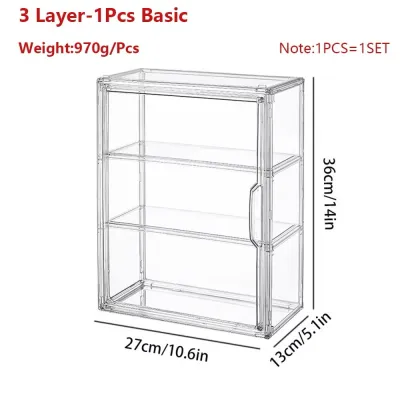
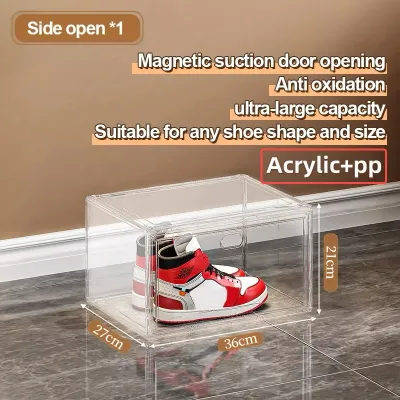
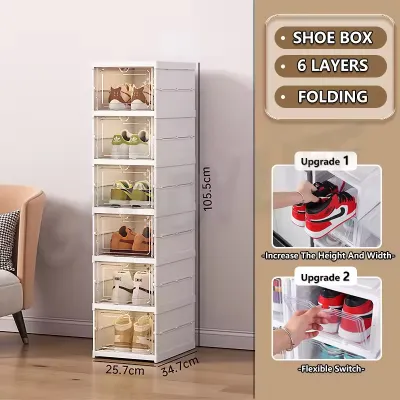
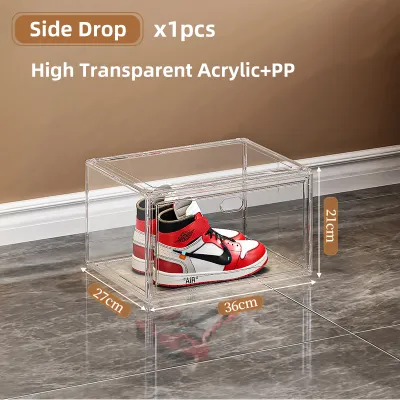
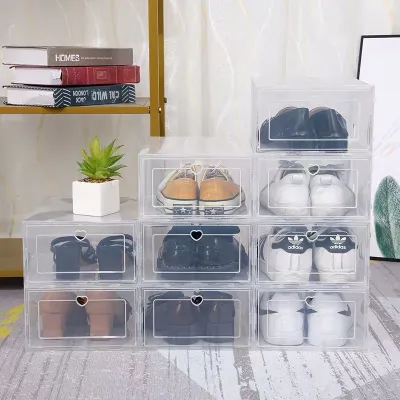
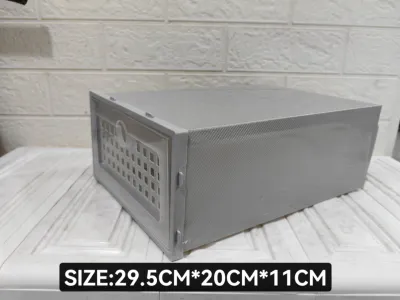
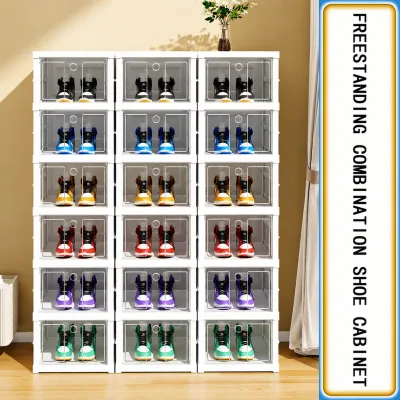
Prices are valid at publication and may change. Please refer to the product page for the latest price.
Your footwear collection is rarely uniform, and different shoe styles require different box dimensions. High heels, ankle boots, and bulky athletic sneakers require significant vertical clearance and width, often needing boxes with an internal height of at least 15 to 20 centimeters. Conversely, flat sandals, slippers, and low-profile canvas shoes can easily fit into standard 10-to-12-centimeter-high boxes, allowing you to maximize vertical space by stacking more units within the same shelf clearance. Categorizing your shoes by their physical profiles before buying ensures you select the correct mix of box sizes.
Accessibility requirements should dictate where and how you place your shoeboxes within your closet layout. Shoes in your active daily rotation need to be easily reachable at eye or waist level, making front-access or open-front designs highly practical. For seasonal footwear, formal dress shoes, or pairs reserved for special occasions, top-shelf or deep-closet storage using secure, dust-proof boxes is more appropriate since you only need to retrieve them occasionally. Aligning box styles with your daily habits keeps your closet functional and easy to maintain.
Material choice directly impacts the longevity of your footwear, especially in enclosed closet spaces. Rigid plastics like polypropylene (PP) or polyethylene terephthalate (PET) offer excellent structural integrity and dust protection but require proper ventilation slots to prevent stagnant air. Flexible canvas or non-woven fabric bins provide natural breathability, though they offer less structural support and require reinforced frames if you plan to stack them. Balancing these material properties against your closet’s microclimate is key to successful long-term shoe preservation.
Clear Plastic Shoeboxes: Best for Visibility and Standard Shelving
Clear plastic shoeboxes with lift-off or hinged lids are highly effective for standard-depth closet shelves where visibility is the main priority. They are particularly well-suited for organizing visually distinct footwear such as colorful high heels, flats, sandals, and curated designer collections. By allowing you to view your shoes from any angle, these boxes turn your storage system into an attractive visual display while keeping your footwear organized.
The primary advantage of clear plastic is immediate visual identification. You can scan your entire wardrobe at a glance without opening a single container, which saves time during busy mornings and prevents you from forgetting about rarely worn pairs. These boxes provide exceptional protection against dust, insects, and ambient closet moisture. Their uniform, modular design creates a clean, cohesive, and highly organized aesthetic that elevates the look of any internal closet system, making even small wardrobes feel more spacious.
However, clear plastic boxes have distinct operational limitations. If you stack them three or four units high, retrieving a pair from the bottom box requires you to unstack the entire column to remove the lid, which can quickly become tedious for daily-wear shoes. Additionally, lower-grade or thin acrylic models can be brittle; they are prone to scratching, cracking, or warping under the weight of heavy shoes or high ambient temperatures. Over time, frequent handling can leave scuffs on highly polished clear surfaces, reducing their aesthetic appeal.
When purchasing clear plastic shoeboxes, look for models made from thick, impact-resistant polystyrene or heavy-duty polypropylene. Check that the lids snap securely into place to keep out dust, but are not so tight that they require excessive force to open. Measure the outer dimensions carefully—especially the depth—to ensure the box sits flush on your standard closet shelves without preventing the wardrobe doors from closing completely. Opt for models with small, integrated ventilation holes to promote minimal airflow while keeping dust out.
Drop-Front Shoeboxes: Best for Deep Shelves and Heavy Sneakers
Drop-front shoeboxes feature a front-opening door, often secured by magnets or snap-locks, making them the premier choice for deep closet shelves and heavy, bulky footwear. They are highly favored by sneaker collectors and those who frequently access their daily-wear shoes. These boxes are designed to function as a modular cabinet system within your existing closet, offering both durability and convenience.

The standout benefit of the drop-front design is unparalleled accessibility. Because the door opens from the front, you can stack these boxes up to ten units high and still retrieve any pair instantly without disturbing the rest of the stack. They typically feature heavy-duty, rigid plastic frames with interlocking lips that slide or snap together, creating an incredibly stable, self-supporting tower that will not wobble or tip over. This structural integrity makes them excellent for maximizing tall, vertical spaces in deep closets.
On the downside, the structural frames of drop-front boxes are thicker and bulkier than simple acrylic boxes, meaning they consume more vertical and horizontal space within your closet. This can reduce the total number of shoes you can fit on a single shelf. Furthermore, many drop-front models feature clear front doors but semi-opaque or textured side panels, which reduces visibility if you are viewing the stack from an angle. They are also generally more expensive than basic clear plastic boxes, representing a higher initial investment.
Prioritize drop-front boxes with magnetic closures, as plastic snap-locks can wear down or break over hundreds of uses. Inspect the interlocking mechanisms to ensure they provide a tight, stable connection between stacked units. Verify the manufacturer’s maximum load capacity per box, especially if you plan to stack them high, and ensure the internal dimensions can comfortably accommodate high-top sneakers or wider shoe profiles. Look for reinforced door hinges, as these are the most common points of mechanical failure.
Stackable Fabric Bins: Best for High Shelves and Lightweight Shoes
Soft-sided fabric or canvas bins are excellent for utilizing the often-unreachable top shelves of a closet. They are best suited for storing lightweight, flexible footwear such as indoor slippers, canvas sneakers, casual flats, and children’s shoes, as well as seasonal footwear that you do not need on a daily basis. Their soft construction makes them a gentle, user-friendly addition to any closet organization system.
Fabric bins are incredibly lightweight, making them safe and easy to pull down from high shelves without the risk of injury or dropping a heavy plastic container. The soft exterior material ensures they will not scratch or scuff the delicate wood finishes or painted surfaces of your custom closet shelving. Additionally, fabric is naturally breathable, allowing air to circulate freely around your shoes and reducing the buildup of stale odors and trapped moisture, which is particularly beneficial in humid environments.
The primary drawback of fabric bins is their lack of rigid structural support. If you overload them with heavy leather boots or bulky athletic shoes, the sides can sag, causing the stack to lean or collapse. They are also less effective at keeping out fine dust and moisture compared to sealed plastic boxes, and cleaning them usually requires hand-washing or spot-cleaning rather than a quick wipe-down. Over time, fabric can absorb environmental odors if stored in a poorly ventilated room.
When shopping for fabric shoeboxes, look for models that feature reinforced medium-density fiberboard (MDF) or thick plastic inserts in the base and sides to help them maintain their shape under load. Ensure they have sturdy, double-stitched fabric handles on the front to facilitate safe pulling from high shelves. A clear plastic front window is highly recommended so you can still identify the contents without needing to pull the bin down and open the lid. Select fabrics with washable inner liners to make cleaning dirty shoe soles easier.
Quick Comparison: Matching Shoebox Styles to Your Closet
To help you design the most efficient internal closet storage system, the table below compares the physical properties, ideal use cases, and performance characteristics of the three primary shoebox styles.
| Shoebox Style | Best For (Shoe Type) | Ideal Shelf Depth | Accessibility | Weight Capacity | Dust Protection |
|---|---|---|---|---|---|
| Clear Plastic | Heels, flats, sandals, formal wear | 30 to 35 cm (Standard) | Moderate (Requires unstacking) | Moderate | Excellent (Sealed lid) |
| Drop-Front | Bulky sneakers, short boots, daily wear | 40 cm or deeper (Deep) | High (Front-opening door) | High (Interlocking frame) | Good (Front door seal) |
| Fabric Bins | Slippers, canvas shoes, kids' footwear | Any depth (Top shelves) | Moderate (Pull-down style) | Low (Flexible structure) | Moderate (Breathable fabric) |
A highly functional closet storage system rarely relies on just one type of shoebox. Instead, consider a mix-and-match approach to optimize your space: place sturdy, drop-front plastic boxes at eye and waist level for your most frequently worn sneakers and boots; stack clear plastic boxes on standard mid-level shelves for your dress shoes and heels; and reserve lightweight fabric bins for the very top shelves to hold seasonal footwear or soft slippers. This tiered arrangement maximizes accessibility while keeping your closet looking balanced and organized.
Measuring Your Closet and Shoes Before Buying
Before purchasing any shoeboxes, you must take precise measurements of your closet’s interior dimensions. Use a steel measuring tape to record the exact depth of your shelves; this is critical because a box that hangs over the edge even by a couple of centimeters can prevent sliding or hinged closet doors from closing. Measure the vertical clearance between each shelf to calculate exactly how many boxes of a specific height can fit in a single stack, and remember to account for any protruding hinges, door tracks, or hanging clothes that might obstruct the boxes.
Do not assume your shoes will fit into standard-sized boxes. Measure the actual physical dimensions of the largest, tallest, and widest pairs in your collection, such as a size 11 high-top sneaker or a pair of 10-centimeter stiletto heels. Compare these measurements against the internal dimensions specified by the shoebox manufacturer, rather than the external dimensions, to ensure your shoes will not be squished, bent, or forced in at awkward angles that could damage their shape over time.
Stacking multiple pairs of heavy shoes—particularly bulky leather boots or thick-soled sneakers—inside rigid plastic boxes can add up to a significant amount of weight. Check the structural weight capacity of your closet shelves before building high stacks. Standard particle board or MDF shelves can bow or warp over time under heavy, concentrated loads, while wire shelving or poorly anchored adjustable shelf pegs may fail entirely under the stress.
If you notice any visible sagging, bowing, or cracking in your closet shelves, or if your closet system relies on tension-mounted vertical poles that are not securely anchored to the wall studs, stop immediately. Do not stack heavy plastic shoeboxes on these systems. Consult a professional carpenter or closet installer to reinforce your shelving with center supports, heavy-duty brackets, or wall anchors before proceeding with your storage setup. Ensuring structural safety prevents costly damage to both your closet and your footwear.
Frequently Asked Questions (FAQ)
Can I use original cardboard shoeboxes for long-term closet storage?
While original cardboard shoeboxes are convenient and free, they are highly unsuitable for long-term shoe preservation inside an enclosed closet. Standard retail cardboard is made from acidic wood pulp that degrades over time, releasing gases that can cause white midsoles to yellow and leather to dry out or crack. Furthermore, cardboard is highly porous, meaning it readily absorbs atmospheric moisture and provides an ideal nesting material and food source for common household pests like silverfish, cockroaches, and termites. If you must use cardboard, ensure it is specifically rated as acid-free archival quality; otherwise, transition your valued footwear to rigid plastic or breathable fabric storage solutions to ensure their long-term protection.
How do I prevent mold on shoes stored in plastic boxes in humid climates?
In the tropical, high-humidity climate of the Philippines, storing shoes in plastic containers requires careful moisture management to prevent mold and mildew outbreaks. Never place shoes inside a plastic box immediately after wearing them; allow them to air out completely in a well-ventilated space for at least 24 hours to ensure all sweat and ambient moisture have evaporated. Before sealing the box, place a high-quality silica gel desiccant pack or a small moisture-absorbing sachet inside to capture any trapped humidity, and remember to replace or reactivate these packs every few months. Additionally, avoid using completely airtight, hermetically sealed plastic containers unless you are consistently monitoring the internal humidity, as even a tiny amount of trapped moisture can rapidly turn a sealed box into a breeding ground for destructive mold spores.
Community discussion
Share your experience or ask a question. Comments are reviewed before publication.