
Selecting the best single double deck frame for a small condo bedroom in the Philippines requires a careful balance of vertical space optimization, structural safety, and physical compatibility with tight room dimensions. In urban centers where condominium units often feature compact bedrooms, maximizing floor space is essential for maintaining a comfortable and organized home. A double deck bed, or bunk bed, is an excellent solution for accommodating siblings, roommates, or guests without crowding the room. However, finding the right frame involves more than just picking a design; it requires precise measurements of your ceiling height, a clear understanding of delivery logistics, and a thorough verification of the frame’s structural integrity.
By focusing on practical dimensions, configuration options, and safety standards, you can find a frame that fits seamlessly into your condo lifestyle. This guide provides the essential steps and checks to help you navigate the selection process, ensuring your chosen double deck frame is both a functional space-saver and a safe, durable investment for your household.
Key Dimensions and Space Requirements for Condo Bedrooms
Before browsing designs or purchasing a frame, you must measure your condo bedroom to ensure physical compatibility. The most critical dimension to consider is your ceiling height. Standard residential condominiums in the Philippines typically feature ceiling heights ranging from 2.4 to 2.7 meters. To ensure the sleeper on the top bunk can sit up comfortably without bumping their head, you need to maintain adequate headroom clearance. As a general rule, aim for at least 75 to 90 centimeters of open space between the top of the upper mattress and the ceiling. When calculating this, remember to factor in both the height of the bed frame and the thickness of the mattress you plan to use.
Products mentioned in this guide

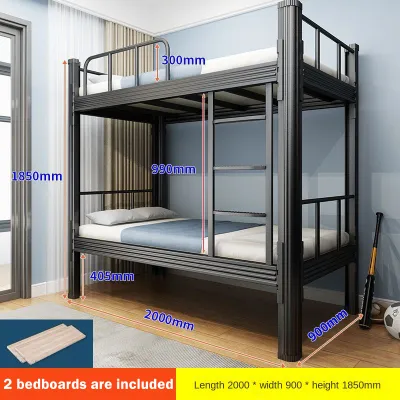

![[Manila 24-hour Boat] Iron Bed Up and Down Staff Dormitory Student High and Low Bed 180 * 200 * 90/120CM Dormitory Apartment 90CM Iron Bed Up and Down Double Iron Frame Bed](https://img.lazcdn.com/g/p/d01a5b9ff7546a0690487f60f7d22389.jpg_400x400q80.jpg_.webp)
Prices are valid at publication and may change. Please refer to the product page for the latest price.
In addition to vertical clearance, you must evaluate the floor footprint of the frame and the surrounding walking space. A standard single double deck frame accommodates a single mattress on top and either a single or double mattress on the bottom. While the mattress dimensions are standard, the actual frame will be slightly larger. You must account for the ladder, especially if it is an angled design that extends outward from the frame. Ensure there is at least 60 centimeters of clear walking space around the bed to allow for easy movement, bed-making, and the opening of wardrobe doors or drawers. If the room has a ceiling fan or light fixtures, verify that the top bunk is positioned safely away from their rotation path.
Finally, do not overlook the logistics of delivery and access. Many condo dwellers face the frustration of purchasing furniture only to find it cannot be transported to their unit. Measure the height, width, and diagonal clearance of your building’s service elevator, as well as the width of the hallways and the entry doorway of your unit. If your condo building only has stairwell access for large items, measure the tight turns and landings. Opting for a flat-packed frame that can be assembled inside the bedroom is usually the most practical choice for navigating these tight spaces.
Choosing the Right Bunk Configuration for Small Spaces
Selecting the right configuration depends on who will be using the bed and how you want to utilize the remaining space in the room. The most common choice is between a single-over-single and a single-over-double setup. A single-over-single frame keeps the footprint to a strict minimum, making it ideal for very narrow rooms or shared kids’ bedrooms. On the other hand, a single-over-double frame (often featuring a single bed on top and a double or full-sized bed on the bottom) offers more versatility. This configuration is highly practical for small families living in a studio or one-bedroom condo, as it allows parents to sleep comfortably on the bottom deck while a child occupies the top.

For exceptionally tight spaces, multi-functional frames that incorporate built-in storage or study areas are highly beneficial. Look for double deck frames designed with under-bed storage drawers, built-in shelving along the guardrails, or integrated wardrobes. Some modern designs even feature a lofted top bunk with a built-in desk or futon underneath, allowing you to consolidate multiple furniture pieces into a single footprint. If you frequently host guests, a frame that accommodates a pull-out trundle bed underneath the bottom bunk can provide an extra sleeping surface that slides completely out of sight when not in use.
If your condo has lower ceilings, a low-profile bunk bed design is often the best choice. These frames position the bottom bunk very close to the floor, which lowers the overall height of the entire structure. This design redistributes the vertical space, providing more headroom for the top sleeper while keeping the entire unit from visually overwhelming a small room. Low-profile frames are also easier and safer for younger children to access, making them a popular choice for family condos.
Structural Stability and Safety Verification
Safety is the most important factor when choosing a double deck frame, especially since the structure must support multiple sleepers vertically. Begin by verifying the manufacturer’s specified weight capacity for both the top and bottom bunks. Keep in mind that the weight limit must cover not only the sleeper but also the weight of the mattress and bedding. Avoid making assumptions about weight limits based on the material alone; instead, look for certified weight ratings provided in the product documentation.
Guardrails are another critical safety feature for the top bunk. To prevent accidental falls, the guardrail must be continuous on all sides, with the exception of a small opening for the ladder. The top of the guardrail must stand at least 12.7 centimeters (5 inches) above the top surface of the mattress. Additionally, inspect the spacing between the guardrail slats and the frame. These gaps should be narrow enough to prevent a child’s head or limbs from becoming trapped, adhering to standard safety guidelines of less than 9 centimeters between slats.
Finally, closely examine the joint connections and overall structural integrity of the frame. In the humid tropical climate of the Philippines, materials can behave differently over time. If choosing a wooden frame, ensure it has a moisture-resistant finish to prevent warping, and look for sturdy mortise-and-tenon joints or heavy-duty metal-to-metal connectors rather than simple wood screws. For metal frames, check for rust-resistant powder coating and secure, locking bolt connections that prevent the frame from swaying. A high-quality frame should feel completely rigid when shaken. For added peace of mind, especially in earthquake-prone areas, choose a frame that includes wall-anchoring brackets so you can secure the top of the bed directly to a concrete wall.
Pre-Purchase Checklist and Assembly Considerations
Before finalizing your purchase, run through a quick checklist to ensure a smooth delivery and setup process. First, match your mattress selection to the frame’s safety requirements. Because the top bunk’s safety depends on the height of the guardrail, you must use a relatively thin mattress on the upper deck—typically between 10 to 15 centimeters (4 to 6 inches) thick. Buying a plush, thick mattress for the top bunk can compromise the guardrail’s effectiveness and increase the risk of falls. The bottom bunk can usually accommodate a thicker, more supportive mattress, but you should still verify that it does not restrict the headroom of the lower sleeper.
Next, consider the assembly process. Double deck frames are heavy, complex structures that require precise assembly to remain safe and stable. Review the assembly instructions beforehand to see what tools are required. While many frames come with basic tools like Allen keys, having a power drill and a level can make the process much faster and more secure. If you are not confident in your DIY skills, it is highly recommended to pay for professional assembly services, which are widely offered by local furniture retailers in the Philippines. Professional installers can ensure that all bolts are tightened to the correct torque and that the frame is perfectly level and stable.
Lastly, review the warranty terms and return policies. Because a double deck frame is a significant investment and a large item to transport, you want to be protected against manufacturing defects or missing parts. Look for retailers that offer a clear warranty on the structural frame and joints. Be sure to understand the return policy, including who covers the shipping costs if the frame arrives damaged or does not fit your space. Keeping these practical considerations in mind will help you make a confident, hassle-free purchase that enhances your condo’s comfort and functionality.
Frequently Asked Questions (FAQ)
What is the safest mattress thickness for the top bunk?
To maintain proper safety, the mattress on the top bunk should be thin enough to leave at least 12.7 centimeters (5 inches) of guardrail clearance measuring from the top of the mattress to the very top of the guardrail. For most standard double deck frames, this means choosing a mattress with a thickness of 10 to 15 centimeters (4 to 6 inches). Avoid using thick pocket-spring or pillow-top mattresses on the top deck, as they can elevate the sleeping surface too close to the top of the guardrail, increasing the risk of accidental falls during sleep.
How do I protect the flooring under a heavy bunk bed?
Because double deck frames carry the weight of two sleepers and a heavy structure, they can exert significant pressure on your condo’s flooring, potentially causing scratches or indentations on vinyl, laminate, or wood tiles. To protect your floors, place heavy-duty felt pads or rubber caster cups under each leg of the frame to distribute the weight more evenly. Additionally, when assembling or moving the bed, always lift the frame completely rather than dragging it across the floor. Periodically check the pads for wear and tear, and clean underneath the bed regularly to prevent abrasive dust and debris from accumulating under the legs.

Community discussion
Share your experience or ask a question. Comments are reviewed before publication.