
Finding the perfect bedside companion when floor space is at a premium requires balancing physical dimensions with modern utility. In compact bedrooms, apartments, and condominiums across the Philippines, traditional bulky nightstands often block wardrobe doors, obstruct walkways, or force you to position your bed at awkward angles. A slim side table with an integrated charging station solves two of the most frustrating small-space challenges at once: it squeezes into tight gaps as narrow as 20 centimeters while consolidating messy power strips and charging adapters into a single, organized hub.
By choosing a narrow-footprint table with built-in power, you eliminate the need for bulky extension cords trailing across the floor, which can be both an eyesore and a tripping hazard. Instead of dedicating precious tabletop surface area to massive multi-port USB adapters, these specialized tables build the technology directly into the frame or rear panel. This design choice leaves the top surface entirely free for your bedtime essentials, such as a reading lamp, a glass of water, or a book, creating a clean and relaxing sleeping environment.
Key Features to Evaluate in Compact Charging Side Tables
Selecting the right slim side table is not just about finding a piece of furniture that looks good; it requires a careful look at technical specifications, physical stability, and material durability. Because these tables are narrow and top-heavy by nature, and because they house live electrical components, evaluating their features before purchasing prevents common headaches down the road.
Products mentioned in this guide
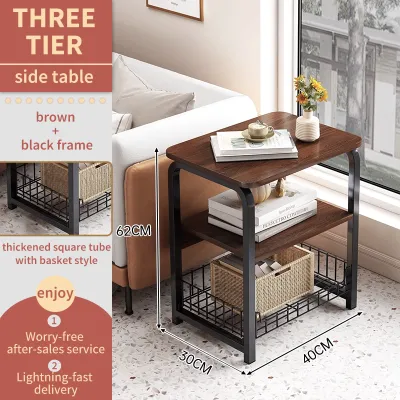
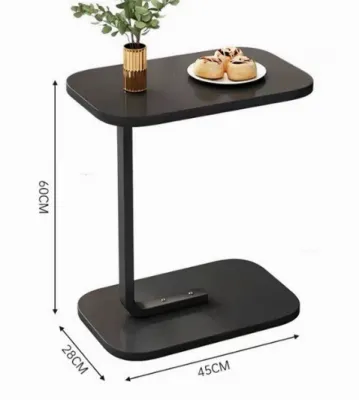
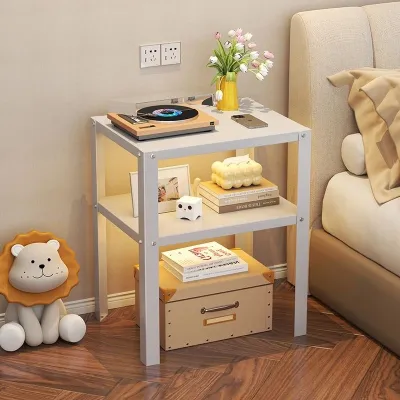
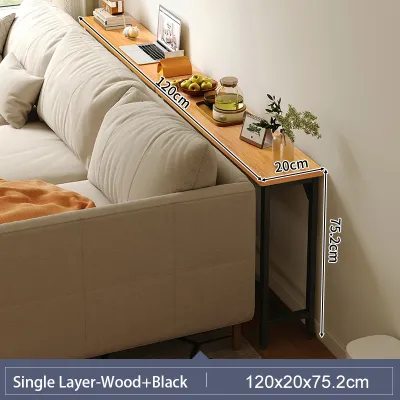
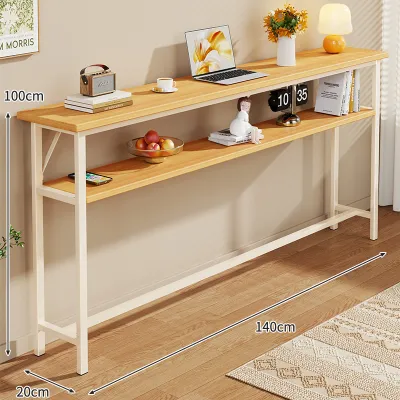
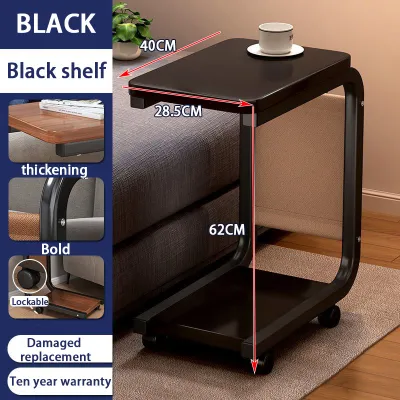

Prices are valid at publication and may change. Please refer to the product page for the latest price.
Measuring Dimensions and Bedside Clearance
Before browsing online marketplaces or visiting local furniture showrooms, you must measure the exact gap between your mattress and the nearest wall, wardrobe, or door frame. Be sure to account for the overhang of your mattress, duvet, and pillows, as these can easily drape over the edge and block access to a very narrow table. A true slim side table typically measures between 20 and 30 centimeters in width; anything wider may begin to infringe on your bedroom’s walking paths.
While width is the most critical dimension for tight spaces, depth and height are equally important for usability. A table that is too deep will stick out past your bed frame, creating a sharp corner to bump into in the dark, while a table that is too short or too tall will make reaching for your phone uncomfortable. Ideally, the height of the tabletop should sit level with, or slightly below, the top of your mattress, which is usually between 50 and 65 centimeters from the floor.
Understanding Charging Port Configurations
Not all built-in charging stations are created equal, and understanding the differences between the available ports will prevent slow charging speeds. Standard USB-A ports are common and work well for older accessories, smartwatches, or e-readers, but they often deliver lower wattage (typically 5V/1A or 5V/2.1A), which can make charging a modern smartphone a slow process. If you want to charge newer smartphones or tablets quickly, look for charging hubs that include at least one USB-C port supporting Power Delivery (PD) or Quick Charge (QC) standards.
In addition to USB ports, having integrated AC outlets is highly beneficial for plugging in bedside lamps, humidifiers, or laptops. In the Philippines, the standard household electrical system operates at 220V and 60Hz, utilizing Type A (two flat parallel pins) or Type B (two flat pins with a grounding pin) plugs. Ensure that the built-in power strip on your chosen nightstand matches these local plug standards directly; avoiding the use of bulky universal adapters is essential, as they stick out from the tabletop and ruin the clean, low-profile aesthetic.
Balancing Storage and Visual Weight
When dealing with a small bedroom, the visual weight of your furniture affects how large the room feels. Solid, blocky furniture that sits flat on the floor can make a cramped room feel claustrophobic, whereas pieces with open legs or tiered shelves allow light and air to pass through, creating an illusion of spaciousness. However, open shelving means your personal items are fully visible, which can contribute to a cluttered look if not kept organized.
If you prefer to keep personal items, medications, or cables completely hidden, a model with a single, deep drawer at the top and an open shelf below offers the best of both worlds. The drawer provides private storage, while the open lower shelf maintains a lighter visual profile. If you only need a place to rest your phone and a lamp, a purely tiered, open-frame design maximizes visual space and often provides easier access to lower shelves from various angles.
Choosing Materials for Humid Climates
Because the climate in the Philippines is tropical and highly humid, especially during the wet season, the materials used in your furniture require close inspection. Cheap, untreated particleboard or low-grade medium-density fiberboard (MDF) easily absorbs moisture from the air, which leads to swelling, warping, and peeling veneers over time. This risk is even higher for charging furniture, as moisture absorption near electrical components can pose safety hazards.
To ensure your slim side table lasts, look for models constructed with high-pressure laminate (HPL) finishes, melamine-faced engineered wood, or rust-resistant powder-coated steel frames. Ensure that all edges are sealed with thick PVC edge banding to prevent humidity from penetrating the inner core of the wood panels. If you prefer the look of solid wood, opt for dense, locally resilient hardwoods like acacia or mahogany, and verify that the wood has been thoroughly kiln-dried and sealed with a moisture-resistant protective topcoat.
Top Slim Nightstand Designs for Small Bedrooms
To help you find the perfect fit for your specific bedroom layout, we have categorized the most effective slim side table designs into three distinct archetypes. Each style addresses a different storage need and spatial constraint, allowing you to choose the design that matches your daily routine.

The Classic Slim Drawer Nightstand
The classic slim drawer nightstand is the ideal choice for those who appreciate traditional bedroom styling but have very little space to spare. These units typically feature a narrow silhouette—often measuring exactly 25 to 30 centimeters wide—and combine a small top drawer with one or two open lower shelves. This configuration allows you to keep personal items tucked away out of sight while providing a stable, structured home for your bedside essentials.
When evaluating these models, pay close attention to the placement of the charging hub. Many classic designs recess the power strip into a flip-top compartment at the back of the tabletop or mount it flush along the back edge. While a recessed compartment keeps plugs completely hidden, it does reduce the usable flat surface area on top of the table. Alternatively, models with the charging port mounted on the side panel keep the entire top surface free for your items, though the plugged-in cables will be visible from the side.
One common limitation of this design is reduced drawer depth. Because the cabinet itself is narrow, the drawer glides and the drawer box are small, meaning they are best suited for flat items like reading glasses, journals, or charging cables rather than bulky items. Ensure the unit features smooth, ball-bearing drawer slides to prevent the narrow drawer from sticking or pulling the entire lightweight table forward when opened.
The Open-Shelf Minimalist Side Table
For bedrooms where space is so tight that any solid piece of furniture feels overwhelming, the open-shelf minimalist side table is an excellent solution. These tables typically feature a slender metal frame—often made of powder-coated iron or steel—paired with two or three thin wooden or laminate shelves. Measuring as narrow as 20 centimeters, their open, skeleton-like structure allows the wall and baseboards behind them to remain visible, keeping the room feeling open and airy.
In these minimalist designs, the integrated power strip is often mounted directly underneath the top shelf or integrated into the middle tier. This clever placement keeps the top surface completely clean and protects the electrical outlets from accidental liquid spills, such as a knocked-over glass of water. It also makes routing your device cables incredibly easy, as you can run them directly from the middle shelf to your phone without dangling cords over the outer edges.
The primary trade-off with an open-shelf design is the lack of concealed storage. Every item you place on the shelves is on display, which requires a commitment to neatness to prevent the bedside area from looking messy. Additionally, open shelves accumulate dust more quickly than closed drawers, meaning you will need to wipe down the shelves and your stored devices more frequently to keep them clean.
The C-Table or Over-Bed Charging Stand
When your bedroom layout is so constrained that there is absolutely zero clearance between the side of your mattress and the wall, a C-table or over-bed charging stand is the ultimate space-saving alternative. These tables feature a unique, cantilevered frame shaped like the letter “C,” allowing the flat, low-profile base to slide directly underneath your bed frame or sofa. The vertical support post rises up along the side of the mattress, and the tabletop hovers directly over your bed.
This design completely eliminates the need for dedicated floor space next to the bed, making it perfect for tiny studio apartments or shared dorm rooms. The charging hub on a C-table is typically built into the side of the tabletop frame or integrated into the vertical support pillar. This keeps the power source incredibly close to your sleeping area, allowing you to charge your phone or use a laptop in bed without stretching cords to their limits.
Before purchasing a C-table, you must perform a critical pre-purchase check: measure the clearance underneath your bed frame. Most C-table bases require a clearance of at least 2.5 to 4 centimeters to slide under smoothly. If your bed frame sits completely flush with the floor, or if it has low-clearing side rails, the base will not fit underneath, and the table will not be able to sit flush against the side of your mattress.
Safety, Setup, and Maintenance for Charging Furniture
Because a charging nightstand combines wooden or metal furniture with live electrical currents, proper installation, safety precautions, and regular maintenance are essential to protect your home and extend the lifespan of your devices.
- Cable Management: To maintain a clean look and prevent tripping hazards, route the main power cord of the nightstand carefully. Use adhesive cable clips or hook-and-loop straps to secure the cord along the back of the table's legs, keeping it hidden from view. Avoid running the main power cord underneath your bed frame or heavy rugs, as friction and compression can damage the protective insulation over time, creating a silent fire hazard.
- Power Load and Heat Dissipation: Built-in charging ports are designed specifically for low-draw personal electronics, such as smartphones, tablets, smartwatches, and e-readers. Never plug high-wattage appliances—such as hair dryers, curling irons, flat irons, or portable space heaters—into the nightstand's built-in outlets, as this can easily overload the internal circuitry and cause a short circuit. Additionally, never cover the active charging module or your charging devices with pillows, heavy blankets, or plush toys, as devices generate heat while charging and require open air for proper heat dissipation.
- Stability and Tipping Hazards: Slim, tall furniture naturally has a higher center of gravity, making it easier to tip over if bumped or pulled. To maximize stability, always place heavier items, such as books or heavy storage decorative boxes, on the bottom shelf of the table to lower its center of gravity. If your nightstand is exceptionally narrow (under 20 centimeters) or if you have active pets or small children in your household, utilize the anti-tip wall anchoring hardware often provided by manufacturers to secure the frame firmly to the wall.
- Safe Cleaning Procedures: When cleaning furniture with integrated electronics, safety must come first. Always unplug the nightstand's main power cord from the wall outlet before starting. Use a dry or very slightly damp microfiber cloth to wipe down the wood and metal surfaces, and never spray liquid glass cleaners, water, or aerosol furniture polishes directly onto or near the electronic charging module. If any liquid accidentally spills into the charging ports, disconnect the power immediately and allow the unit to dry completely for at least 24 to 48 hours before plugging it back into the wall.
Frequently Asked Questions (FAQ)
Can I use a slim side table with USB ports for fast charging?
Whether you can fast-charge your devices depends entirely on the wattage output of the nightstand’s built-in USB module, not just the cable you use. Many standard built-in USB ports are rated for 5V/1A or 5V/2.1A (providing 5 to 10.5 watts of power), which will only charge your devices at standard, slower speeds. For true fast charging, look for a slim side table that explicitly lists USB-C Power Delivery (PD) or Quick Charge (QC) specifications with an output of 18W, 20W, or higher. If your chosen table only has low-wattage USB ports, you can still achieve fast charging by plugging your device’s original fast-charging wall adapter directly into one of the built-in AC outlets on the table.
Are built-in charging ports safe to use overnight?
Yes, built-in charging ports are safe for overnight use, provided the furniture’s electronic module is certified by recognized safety standards (such as CE, FCC, or RoHS) and the wiring remains undamaged. High-quality, modern charging modules feature integrated smart chips that automatically detect your device’s battery capacity, slowing down and eventually stopping the electrical current once the device reaches 100% charge to prevent overheating. To ensure maximum safety, always use high-quality, undamaged charging cables, avoid using cheap unbranded replacement cords, and make sure your phone is placed on a flat, hard surface of the nightstand rather than tucked under your pillow or bedsheets while charging.
What should I do if the charging ports stop working?
If the charging ports on your slim side table stop functioning, begin with simple troubleshooting steps to isolate the issue. First, unplug the nightstand’s main power cord from the wall outlet and plug a different household device, like a lamp, directly into that same wall outlet to ensure the outlet has power. Next, test a different charging cable and a different smartphone on the nightstand’s ports to rule out a faulty cable or device. If the entire power strip on the table is dead, check if the strip has a built-in circuit breaker button that needs to be reset, or check your home’s main electrical panel for a tripped breaker. If the internal wiring or the sealed USB module itself is damaged, do not attempt to open the plastic electronic housing yourself, as this poses a severe shock hazard and voids any warranty; instead, contact the furniture manufacturer for a replacement part or consult a qualified professional electrician.
Community discussion
Share your experience or ask a question. Comments are reviewed before publication.