
Finding the perfect sofa bed for a 20 square meter (sqm) condo living room in the Philippines requires balancing multi-functional utility with strict spatial limits. In a compact high-rise unit, every centimeter of floor area dictates whether your home feels like a curated sanctuary or an overcrowded storage space. Selecting a sofa bed that fits your layout involves understanding how the unit folds, unfolds, and interacts with surrounding furniture, entryways, and daily foot traffic.
To make a 20 sqm living area highly functional, the maximum recommended sofa bed size is a compact two-seater (twin-size) with a folded width of 120 to 150 centimeters. While a larger three-seater (queen-size) with a folded width of 160 to 190 centimeters can physically fit, it is the absolute limit for this footprint. Choosing a larger model requires highly strategic, lightweight, and mobile secondary furniture to prevent the room from becoming completely impassable when the bed is fully deployed.
Space Allocation: Planning Your 20 Sqm Living Room Layout
When planning a 20 sqm condo layout, you must first calculate the net usable floor area rather than relying on the gross floor area stated in your condominium lease or title. High-rise concrete structures in the Philippines frequently feature thick structural pillars, recessed wall columns, and sliding balcony doors that slice into your actual living space. Additionally, the swing radius of entry doors, bathroom doors, and kitchen cabinets can easily reduce your usable footprint by another one to two square meters.
Products mentioned in this guide
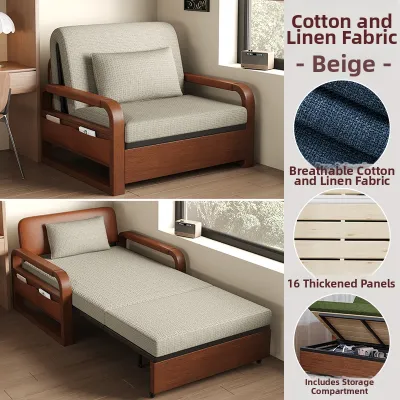
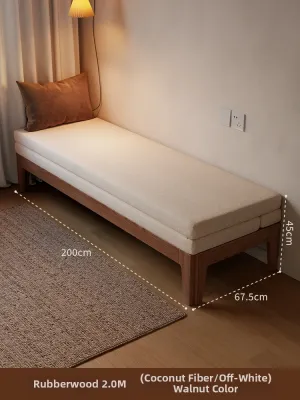

![[Vacuumed Comfy Rest Sofa Bed] Joyce & Diana Vacuumed Comfy Rest Sofa Bed 6inches/8inches with FREEBIE](https://img.lazcdn.com/g/p/9739273a130e5d2281c72c84ea958f26.png_400x400q80.png_.webp)
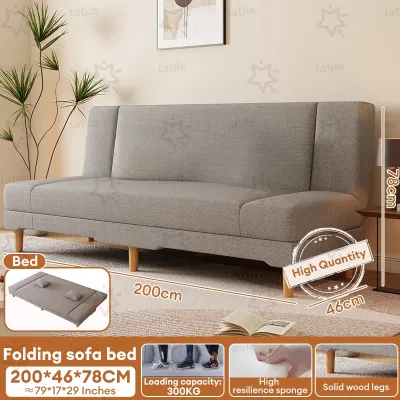
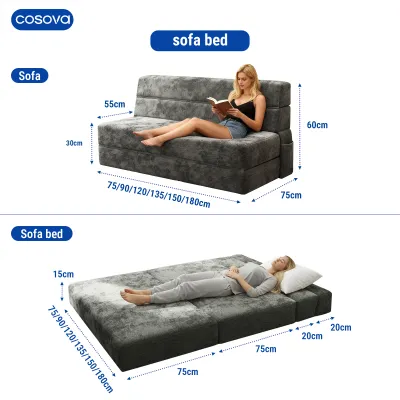
Prices are valid at publication and may change. Please refer to the product page for the latest price.
To maintain a balanced and breathable environment, apply a strict footprint ratio to your main seating zone. The sofa bed and its immediate surrounding furniture—such as side tables or a coffee table—should occupy no more than 30% to 35% of the active living room floor area. The remaining 65% to 70% must be preserved as open space for primary walking paths, ensuring that residents and guests can move freely without squeezing past furniture.
Standard clearance rules are essential to keep your small living room highly functional during daily use. Keep a minimum distance of 45 centimeters between the front edge of the sofa and your coffee table, which provides enough legroom to sit comfortably while keeping drinks within arm’s reach. For main walkways, especially the path leading to the kitchen, bathroom, or balcony, maintain a clear width of at least 75 to 90 centimeters to ensure comfortable, unobstructed passage.
Recommended Sofa Bed Dimensions for Small Condos
Before browsing online marketplaces or visiting local furniture showrooms, you must distinguish between a sofa bed’s overall exterior dimensions and its internal mattress dimensions. The exterior footprint includes the thickness of the armrests, the depth of the backrest, and the structural frame. The internal dimensions represent the actual sleeping surface available to you or your guests. In a small condo, choosing a model where these two sets of measurements are as close as possible is key to saving space.

To optimize a 20 sqm layout, look for low-profile armrests and shallower seat depths. Selecting track arms or completely armless designs can easily save 20 to 30 centimeters of horizontal wall space compared to bulky, rolled-arm traditional sofas. Similarly, a sofa bed with a folded depth of 80 to 90 centimeters keeps the unit flush against the wall, leaving more room in the center of the living area than deep-seated lounge models.
Two-Seater and Twin-Size Options
Compact two-seater sofa beds, which typically unfold into a twin-size sleeping surface, are the most practical choice for 20 sqm condo living rooms. These models generally feature a folded width of 120 to 150 centimeters, a folded depth of 85 to 95 centimeters, and an overall backrest height of 75 to 85 centimeters. When fully extended into a bed, the mechanism stretches out to a total length of 190 to 210 centimeters from the back wall, offering a sleeping width of approximately 90 to 110 centimeters.
These compact options are ideal for single professionals, students, or couples who prioritize daily floor space over a massive sleeping area. A twin-size sofa bed provides comfortable seating for two adults during the day and serves as an excellent guest bed or primary sleeper at night without dominating the room. It leaves ample space in the rest of the living area for a small dining set, a dedicated work-from-home desk, or additional storage cabinets.
When planning for a two-seater pull-out, ensure you have at least 120 centimeters of completely unobstructed clearance directly in front of the sofa. This space is necessary to deploy the mattress mechanism smoothly without hitting other furniture. Because the extended bed has a narrower footprint, you can often leave small side tables or accent chairs in their permanent positions even when the bed is fully open.
Three-Seater and Full/Queen-Size Options
If you frequently host couples or prefer a larger sleeping surface, a three-seater sofa bed that converts into a full or queen-size mattress is the maximum limit for a 20 sqm room. These larger units feature a folded width of 165 to 200 centimeters, a folded depth of 90 to 100 centimeters, and a height of 80 to 90 centimeters. Once unfolded, the bed extends 200 to 220 centimeters from the wall, providing a spacious sleeping width of 135 to 150 centimeters.
Choosing a queen-size sofa bed involves a significant spatial trade-off in a compact condo. When fully extended, a three-seater mechanism occupies nearly 4.4 square meters of floor space on its own. In a 20 sqm living room, this massive footprint can easily block access to adjacent zones, such as the kitchen counter, the bathroom door, or the balcony. It forces a temporary layout change every time you transition the room from day to night mode.
To make a queen-size sofa bed work successfully in this layout, you must establish specific room conditions. All secondary furniture in the room must be lightweight, multi-functional, and easily movable. You cannot use heavy solid-wood coffee tables or stationary armchairs. Instead, pair the sofa bed with mobile pieces that can be quickly rolled or carried to the entryway or kitchen corner when the bed is deployed for the night.
Essential Clearances and Delivery Measurements
One of the most common mistakes condo owners make is purchasing a sofa bed that fits the living room layout but cannot physically reach the unit. Before finalizing your purchase, you must carefully measure the entire delivery path. High-rise condo buildings in the Philippines often feature tight service elevators, narrow stairwells, and sharp hallway corners.
To ensure a smooth delivery, measure the following dimensions and compare them against the boxed or fully assembled dimensions of your chosen sofa bed:
- Elevator Dimensions: Measure the elevator door width, interior cabin height, and diagonal depth.
- Stairwell Clearance: Note the height of the ceiling at the lowest point of the stairwell and the turning radius of the landings.
- Unit Entryway: Measure the clear width of your unit’s front door frame and any interior hallway turns leading to the living room.
Once the sofa bed is inside your unit, operational clearance determines how comfortable it is to use. You need space not just for the extended mattress, but also for yourself while operating the mechanism. Leave at least 60 centimeters of open space at the foot of the extended bed so you can stand comfortably while pulling out the frame, tucking in bedsheets, and making the bed. Additionally, maintain at least 45 centimeters of clearance on at least one side of the bed to allow for easy middle-of-the-night trips to the bathroom without climbing over the sleeper.
Wall clearance is another critical factor that is easily overlooked. Many popular click-clack and pull-out sofa bed mechanisms require the sofa frame to sit 10 to 20 centimeters away from the wall to allow the backrest to tilt backward during conversion. Always account for protruding skirting boards (baseboards), wall outlets, and window sills. If your condo has low-mounted window sills, ensure the backrest of the sofa bed does not block them or rub against the glass, which can lead to upholstery wear or condensation damage in humid tropical climates.
Layout Strategies to Maximize Floor Space
To maintain an open, airy, and breathable feel in a 20 sqm condo living room, you must use smart furniture design and placement strategies. One of the most effective visual tricks is to choose a sofa bed with raised, exposed legs rather than a solid plinth base that sits flat on the floor. Elevating the sofa frame 12 to 15 centimeters off the ground allows light to pass underneath, creating the optical illusion of a larger room while facilitating better air circulation to combat tropical humidity.
Pairing your sofa bed with the right coffee table is crucial for maintaining daily flexibility. Avoid heavy, static centerpieces. Instead, opt for nesting coffee tables that can be stacked together when more floor space is needed, or a lightweight lift-top table that doubles as a dining surface and a work desk. Alternatively, choose a coffee table equipped with lockable casters, allowing you to effortlessly roll it out of the way when transitioning the sofa bed into sleeping mode.
Utilizing vertical space is a powerful way to keep the floor area surrounding your sofa bed completely clear. Instead of using bulky floor lamps or wide end tables, install wall-mounted swing-arm sconces for reading light. Mount floating shelves high on the wall above the sofa bed to store books, decorative items, and daily essentials. Just ensure these shelves are mounted high enough—typically at least 60 centimeters above the top of the backrest—to prevent anyone from bumping their head when sitting upright.
Common Sizing and Measurement Mistakes to Avoid
A frequent error among condo buyers is measuring only the folded footprint of the sofa bed while completely ignoring the extra space required when the bed is fully open. When a pull-out mechanism is deployed, the mattress, overhanging duvets, and thick pillows can add an extra 10 to 15 centimeters to both the width and the length of the unit. Failing to account for this extra bulk can result in a bed that presses tightly against opposite walls, blocking ventilation and making it impossible to walk around.
Another common oversight is forgetting to check the swing radius of nearby doors and the placement of fixed fixtures. A fully extended queen-size sofa bed can easily block wardrobe doors, bathroom doors, or balcony entryways from opening. Additionally, verify the position of ceiling fans and wall art before purchasing. You do not want the head of your bed positioned directly under a low-hanging ceiling fan, nor do you want a heavy, low-mounted picture frame hanging right where a sleeper might accidentally bump it.
Finally, avoid selecting a sofa bed with an excessively deep seat for daily use. While a seat depth of 65 centimeters or more might feel comfortable for lounging, it makes upright sitting difficult for shorter individuals, often requiring multiple throw pillows for back support. In a 20 sqm condo where the sofa bed serves as your primary daily seating for dining, working, and socializing, a standard seat depth of 50 to 55 centimeters ensures the room functions as a comfortable living space during the day, rather than feeling like a bedroom ahead of its time.

Community discussion
Share your experience or ask a question. Comments are reviewed before publication.