
Selecting the ideal Soga sofa for a family of three to five people requires a thoughtful balance of seating capacity, spatial layout, and material resilience. While specific model names in retail inventories may vary over time, the most effective solutions for a household of this size center on three primary configurations: a generous standard three-seater with deep cushions, a space-maximizing L-shaped sectional, or a highly adaptable modular system. By focusing on these core layouts and verifying critical build specifications—such as high-density foam cores, reinforced frames, and breathable fabrics—you can secure a centerpiece that provides long-term comfort for the entire household without overwhelming your living room.
What to Look for in a Soga Sofa for a 3 to 5-Person Family
When choosing a family sofa, seating capacity is the most immediate consideration. For a household of three to five members, a standard two-seater is simply inadequate, leaving family members cramped or forced to use auxiliary chairs. A spacious three-seater or an L-shaped sectional serves as the practical baseline, ensuring that everyone has a dedicated spot to relax. Ideally, each seated individual requires approximately 60 to 70 centimeters of seat width to feel comfortable without feeling crowded. If your household frequently gathers at the same time, prioritizing layouts that offer expansive horizontal space or extended lounging sections is essential.
Balancing this need for capacity with the physical dimensions of your living room is a common challenge, especially in the Philippines. Urban residences, such as townhouses in Metro Manila or modern high-rise condominiums, often feature compact or open-plan living zones. A sofa that is too large can disrupt the traffic flow, block access to balconies, and restrict natural ventilation, which is vital for keeping indoor spaces cool. Conversely, a sofa that is too small may look lost in a spacious, open-concept suburban home. The goal is to select a layout that maximizes seating density while preserving open pathways and maintaining visual harmony within the room.
Products mentioned in this guide
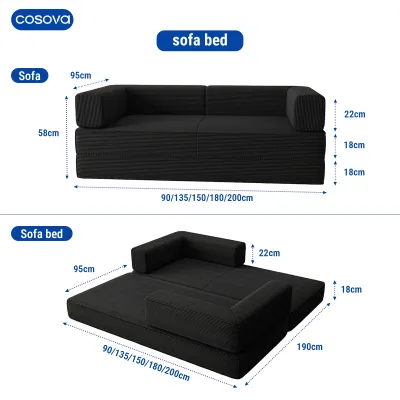
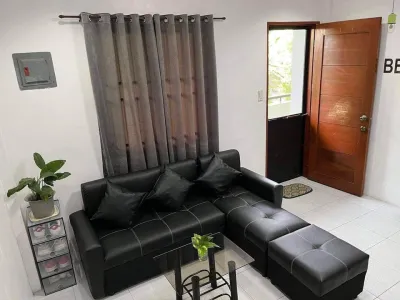
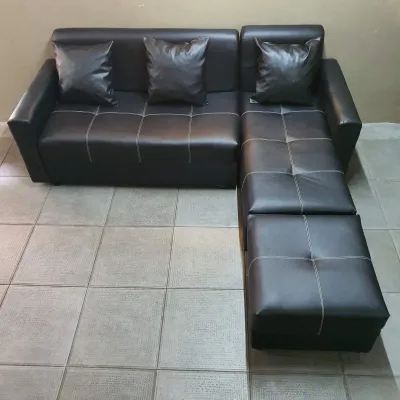
Prices are valid at publication and may change. Please refer to the product page for the latest price.
Understanding your family’s daily usage patterns will further refine your selection. Consider how the sofa is utilized throughout the week: is it primarily a spot for quick rests, a dedicated hub for evening television viewing, a play area for children, or a space for hosting relatives? Families with young children or pets require durable, easy-to-clean fabrics and rounded, padded edges for safety. If the sofa is the primary location for family movie nights, deeper seat depths (60 centimeters or more) and plush, supportive backrests become a priority. For households that frequently host overnight guests, a configuration that can easily transition into a temporary sleeping surface offers excellent versatility.
Best Soga Sofa Layouts for Medium to Large Households
To accommodate three to five people comfortably, you must look beyond aesthetic appeal and evaluate the physical structure of the sofa. Soga’s product offerings generally fall into three main structural configurations, each presenting unique advantages depending on your room layout and lifestyle. When exploring authorized showrooms or digital catalogs, look for these specific layouts to identify the exact model lines currently available in the market.

Standard 3-Seater Sofas
The classic standard three-seater sofa remains one of the most popular choices for families due to its space efficiency and timeless design. This configuration is particularly well-suited for rectangular living rooms or narrower spaces where a corner sectional would block walkways. Because it sits flush against a single wall, a three-seater leaves ample floor space open for coffee tables, media consoles, or children’s play areas, making it an excellent option for maximizing floor space in smaller homes.
While designed to seat three people, many high-quality three-seaters feature generous cushion widths and deep seating profiles that can comfortably accommodate four or five family members during casual gatherings. To achieve this level of flexibility, focus on models with slim, streamlined armrests. Thick, padded armrests can consume up to 30 centimeters of the sofa’s total width without adding any usable seating space. By choosing a model with narrow arms, you maximize the actual seating area, allowing family members to sit side-by-side without feeling restricted.
Before finalizing your purchase, perform a critical verification check on the product specifications. Measure the ‘inner seat width’—the distance between the inside of the left armrest and the inside of the right armrest—rather than relying solely on the overall external width. For a family of three to five, the inner seat width should ideally measure at least 180 to 200 centimeters. Additionally, ensure the seat depth is at least 55 to 60 centimeters, providing sufficient thigh support for taller family members while allowing children to lounge comfortably.
L-Shaped Sectional Sofas
For families who prioritize shared lounging and interactive living, an L-shaped sectional sofa is often the optimal configuration. This layout naturally accommodates four to five people by utilizing the corner of the room, creating an inviting, semi-enclosed seating area. Unlike a long, straight three-seater, the perpendicular angles of an L-shaped sofa allow family members to face one another naturally, facilitating better conversation and making joint activities, such as board games or movie nights, far more engaging.
The defining feature of an L-shaped sectional is the extended chaise lounger, which offers a dedicated space for one person to stretch out completely while leaving the remaining seats free for others. This is highly beneficial in a household of three to five, where different family members may want to use the sofa in different ways simultaneously. One parent can recline with a book on the chaise, while two children sit upright playing a game on the main section, all without encroaching on each other’s personal space.
When selecting an L-shaped model, verifying the orientation is a critical step. Some sectionals are designed with a fixed chaise on either the left-hand side (LHF) or the right-hand side (RHF) when facing the sofa. Others offer a reversible chaise, which utilizes a movable ottoman and a reversible cushion, allowing you to switch the layout as needed. Carefully evaluate your living room’s architectural features—such as the position of main doorways, large windows, electrical outlets, and air conditioning units—to ensure the chaise does not block natural light or foot traffic.
Modular and Recliner Options
If your family’s needs are constantly evolving, modular sofas offer unparalleled flexibility. A modular system consists of individual seating units—such as armless chairs, corner pieces, and freestanding ottomans—that can be arranged in various configurations. For a family of three to five, you can start with a standard three-seater setup and gradually add individual modules as your budget allows or as your family grows. This adaptability is incredibly useful if you relocate frequently, as the modular pieces can be rearranged to fit the unique layout of any new living room.
Recliner options represent another premium choice for households seeking individualized comfort. A reclining sofa allows multiple family members to adjust their personal seating angle, extending the footrest and tilting the backrest to their preferred position. This level of customization is ideal for relieving physical fatigue after a long day. However, reclining mechanisms require careful spatial planning. You must ensure there is sufficient clearance behind the sofa—often between 10 to 30 centimeters—to allow the backrest to tilt fully without scraping against the wall, as well as clear space in front for the footrests to extend safely.
When navigating Soga’s catalog, ask the showroom staff or customer service representatives specifically about their modular collections and heavy-duty recliner mechanisms. Inquire about the weight capacity of the reclining joints and the durability of the manual or electric motors. Because a family sofa experiences frequent, repetitive use by multiple individuals, investing in robust, high-quality hardware is essential to ensure the moving parts operate smoothly and safely for years to come.
Comfort and Durability Features to Check Before Buying
A family sofa is a major investment that must withstand years of daily use, jumping children, accidental spills, and the challenges of a tropical climate. Evaluating the materials and construction quality before making a purchase is vital to ensure long-term satisfaction.
- Upholstery Selection: The choice of upholstery fabric directly impacts both the comfort and the lifespan of your sofa, particularly in the humid climate of the Philippines. While genuine leather offers a premium look, it can feel sticky and uncomfortable against the skin in hot, non-air-conditioned rooms, and low-grade synthetic leathers are prone to cracking and peeling under high humidity. For a family-friendly option, look for breathable, tightly woven synthetic fabrics, such as high-grade polyester or nylon blends. These materials resist wear, do not trap heat, and are often treated with stain-resistant coatings that prevent liquid spills from soaking immediately into the cushions. Always check the manufacturer's care label on the underside of the cushion for specific cleaning codes (such as 'W' for water-based cleaners or 'S' for solvent-based cleaners) to ensure you maintain the fabric correctly.
- Cushioning and Support: The internal support system and cushion filling determine how well the sofa maintains its shape and comfort over time. Cheap, low-density foam cushions will quickly sag and lose their support under the weight of a multi-person household, leading to uncomfortable seating and an unsightly appearance. Look for Soga models that feature high-density polyurethane foam cores (with a density rating of 30 kg/m³ or higher) wrapped in soft polyester batting or down feathers for a balance of firmness and surface plushness. Additionally, verify if the sofa utilizes pocket spring cores or high-tensile sinuous S-springs beneath the cushions. Pocket springs operate independently, reducing motion transfer when one family member sits down or moves, while providing robust, mattress-like support that prevents premature sagging.
- Frame and Weight Capacity: The frame is the structural foundation of the sofa and must be strong enough to support the combined weight of three to five active individuals. Avoid frames made from cheap particleboard or thin plywood, which can warp, crack, or snap under sudden impacts. Instead, look for frames constructed from kiln-dried hardwood, such as birch, eucalyptus, or reinforced metal frames. The kiln-drying process removes moisture from the wood, preventing it from warping, shrinking, or developing rot in highly humid environments. Always check the product specification tag or consult the manufacturer to verify the maximum weight capacity of the entire sofa assembly, ensuring it comfortably exceeds the combined weight of your family members.
Space Planning and Delivery Measurements
To ensure your chosen Soga sofa integrates seamlessly into your home, you must conduct precise spatial planning before finalizing your purchase. This prevents the common frustration of buying a piece that is either too large for the room or impossible to bring inside.
Begin by measuring the length, width, and height of the designated area in your living room. When positioning the sofa, maintain a minimum of 60 to 90 centimeters of open clearance around all sides that experience foot traffic. This clearance is essential for ensuring family members can move around the room naturally without squeezing past the furniture. If you are placing the sofa in front of a window, ensure the backrest height does not completely block natural light or interfere with window treatments. For open-concept spaces, use the back of the sofa as a natural divider to define the living area from the dining zone, keeping the pathways clear.
Next, conduct a thorough delivery access check. Measure every doorway, hallway, stairwell, and elevator door that the sofa must pass through from the delivery truck to your living room. Pay close attention to low ceilings, tight turns in stairwells, and the diagonal width of door frames. Many modern sofas, including Soga models, are delivered with the legs detached, which can reduce the required clearance height, but the main frame still presents a solid, bulky shape. If you reside in a condominium or a gated subdivision, check with your building administration or homeowners’ association regarding delivery hours, elevator weight limits, and any specific moving-in guidelines to avoid unexpected delays or fines.
A highly effective, low-risk method for visualizing the sofa’s footprint is to map out its exact dimensions on your living room floor. Use painter’s tape, masking tape, or laid-out newspapers to outline the length and depth of the sofa, including the extension of an L-shaped chaise or the path of a reclining footrest. Leave this mock-up on the floor for a day or two as your family goes about their daily routine. This physical visualization allows you to see how the sofa affects the flow of the room, whether it blocks any cabinet doors or electrical outlets, and if it leaves sufficient space for other essential furniture pieces.
Frequently Asked Questions (FAQ)
Does Soga offer custom upholstery for family-friendly fabrics?
Soga’s custom upholstery options depend heavily on the specific product line, current manufacturing schedules, and regional retail inventories. While some of their premium collections allow customers to select from a curated range of performance fabrics, colors, or finishes, other standard models are sold strictly in pre-determined configurations to keep delivery times short. To explore custom options, contact an authorized Soga showroom or check their official website directly. Keep in mind that custom orders typically require additional lead times and may involve custom manufacturing fees.
How do I maintain a fabric sofa in a humid climate?
Maintaining a fabric sofa in a humid tropical climate requires consistent, proactive care to prevent the growth of mold, mildew, and the accumulation of dust mites. Vacuum the entire sofa weekly using a soft brush attachment, paying close attention to the crevices beneath the cushions where dust, hair, and crumbs collect. Ensure your living room remains well-ventilated by opening windows on dry days, utilizing ceiling fans, or running a dehumidifier during the rainy season to keep indoor humidity levels below 60 percent. Always refer to the manufacturer’s care label before applying any liquid spot-cleaners or protective fabric sprays. If the fabric composition is unknown or the care label is missing, avoid using wet cleaning methods and consult a certified professional upholstery cleaning service to prevent permanent water staining or fabric shrinkage.
Community discussion
Share your experience or ask a question. Comments are reviewed before publication.