
Maximizing space in a compact condominium bedroom requires furniture that serves multiple purposes. A single bedframe wood design with built-in storage is one of the most efficient ways to reclaim valuable floor space. By consolidating your sleeping area and storage systems into a single footprint, you can eliminate the need for bulky freestanding wardrobes or chest of drawers. The best wooden storage bedframe for your condo depends on your room’s physical layout, the clearance available around the bed, and the specific items you need to store. Selecting the right frame involves evaluating drawer systems, hydraulic lift mechanisms, and integrated headboards against the realities of tropical climates and high-rise living.
Assessing Your Small Condo Bedroom Space and Storage Needs
Before browsing online marketplaces or visiting local furniture showrooms, you must establish the exact physical boundaries of your bedroom. Condo units in urban centers often feature tight, non-standard layouts where every centimeter counts. Begin by measuring the total floor footprint of the room using a steel tape measure. Do not rely solely on the floor plan provided by your developer, as actual finished walls can vary slightly due to plastering and baseboard installations. Mark out the proposed location of the single bedframe, keeping in mind that a standard single mattress typically measures 36 inches by 75 inches (approximately 91 cm by 190 cm), but the wooden frame itself will have larger outer dimensions.
You must account for walking paths and clearance zones around the bed. A functional bedroom requires at least 60 centimeters of open space on any side of the bed that you intend to walk past. If your chosen wooden bedframe features pull-out drawers, you must add the full depth of the extended drawer plus an additional 30 centimeters of kneeling space to your clearance calculations. For swing-door wardrobes, adjacent desks, or bedroom entry doors, map out their full swing arcs to ensure they do not collide with the bedframe.
Products mentioned in this guide

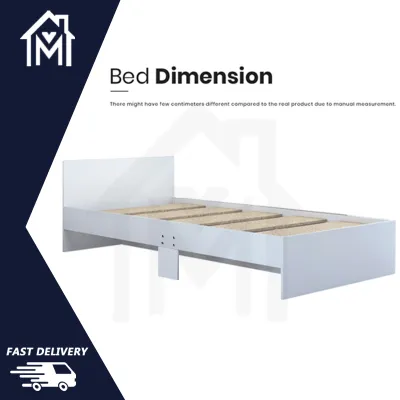
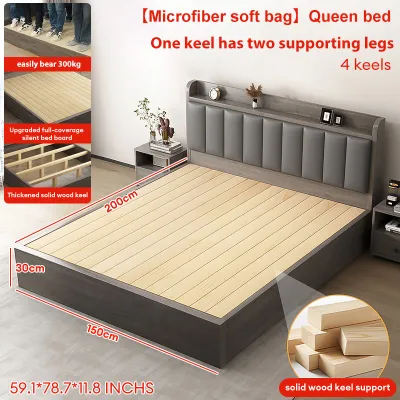
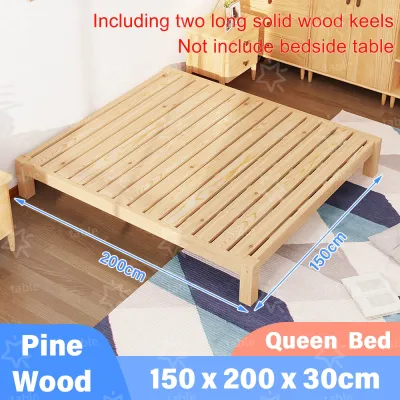
Prices are valid at publication and may change. Please refer to the product page for the latest price.
Next, categorize the items you plan to store to determine the necessary storage volume and access frequency. If you need to store daily-use items like folded clothes, work uniforms, or activewear, you will require easily accessible compartments. Conversely, seasonal items, extra bed linens, bulky luggage, or holiday decorations can be placed in deeper, less accessible zones.
Finally, consult your condominium’s administration office regarding structural limits and moving guidelines. Some high-rise developments have strict regulations regarding the maximum weight capacity of residential floors. While a single wooden bedframe is unlikely to exceed these limits on its own, a solid hardwood frame packed with heavy books or dense storage items can become exceptionally heavy. Additionally, verify the building’s move-in policies, elevator dimensions, and gate pass requirements to avoid delivery-day complications.
Comparing Storage Mechanisms in Wooden Single Bedframes
Wooden single bedframes utilize different mechanical designs to access the space beneath the mattress. Choosing the right mechanism is a balance between daily accessibility, total storage volume, and the physical layout of your room. In a small condo, a poorly chosen storage mechanism can render your under-bed space completely unusable if it is blocked by walls, columns, or other furniture.

The three primary configurations are drawer-based systems, hydraulic lift-up bases, and headboard-integrated shelving. Drawer systems offer excellent organization for smaller, daily-use items but require significant lateral clearance to open. Hydraulic lift-up systems utilize the entire footprint of the bed for deep, undivided storage, making them ideal for bulky items, though they require vertical clearance and physical effort to operate. Headboard integrations utilize vertical wall space, reducing the need for bedside tables, but they extend the overall length of the bedframe.
When evaluating these options, consider where the bed will be positioned. If the bed must be pushed flush against a corner or a window wall, drawer access on that side becomes impossible. In such tight configurations, a hydraulic lift-up system or a single-sided drawer frame is far more practical.
Drawer-Based Storage Systems
Drawer-based wooden single bedframes are highly practical for organizing clothing, documents, and daily accessories. However, their utility depends entirely on the clearance available on the sides or foot of the bed. Before purchasing, measure the distance from the bedframe to the nearest wall or piece of furniture. Standard under-bed drawers typically slide out by 40 to 50 centimeters. If your room does not have at least 70 to 80 centimeters of clear space next to the drawer face, you will struggle to pull the drawer out fully or bend down to retrieve your items.
The weight capacity and depth of the drawers are critical factors. Drawers built into engineered wood frames often use thin plywood or fiberboard bottoms that can sag over time if loaded with heavy items like books or winter coats. Look for drawers with reinforced wooden bottoms and sturdy support slats.
Examine the sliding rail mechanism closely. High-quality wooden bedframes feature metal ball-bearing drawer slides that ensure smooth operation even when the drawer is fully loaded. Budget options may use simple plastic rollers or even lack rails entirely, relying on small wheels that roll directly on your bedroom floor. If your condo has delicate flooring like laminate or solid wood, wheels rolling directly on the floor can cause scratches and track dust into the drawer. Additionally, check if the drawer fronts feature dust-proofing seals or overlapping lips to prevent dust bunnies from settling on your clean clothes.
Hydraulic Lift-Up Storage Systems
Hydraulic lift-up bedframes, also known as gas-lift beds, are the ultimate space-savers for ultra-compact condo bedrooms where lateral clearance is non-existent. These systems use gas struts to lift the entire mattress platform, revealing a massive, undivided storage compartment underneath. This allows you to utilize 100 percent of the bed’s footprint for storing large, bulky items like suitcases, storage boxes, and spare pillows.
Before choosing a hydraulic system, you must verify your bedroom’s vertical clearance. Ensure that when the bed is fully lifted, the mattress and frame will not strike overhead light fixtures, ceiling fans, or low-hanging decorative beams. The lifting angle of most gas-lift beds ranges from 30 to 45 degrees, which can easily interfere with low ceilings or wall-mounted shelving.
Consider the physical effort required to operate the lift. The gas struts are rated in Newtons (N) to match specific mattress weights. If the struts are too weak for your mattress, lifting the bed will require significant physical strain, and the platform may not stay open safely. If the struts are too strong, closing the bed can be difficult. Always check the manufacturer’s recommended mattress weight range.
Safety is paramount with hydraulic systems. Ensure the bedframe includes a reliable safety lock or mechanical stop bar that prevents the heavy wooden platform from accidentally slamming down while you are reaching inside the storage compartment. Inspect the hinge mounting points; because of the high pressure exerted by gas struts, these brackets must be securely bolted into solid wood or heavy-duty metal plates rather than soft engineered wood, which can strip over time.
Headboard and Shelving Integrations
If your condo bedroom lacks space for a traditional nightstand or a separate bookshelf, a wooden single bedframe with an integrated storage headboard is an excellent alternative. These frames utilize the vertical space directly above your pillows to provide shelving, cubbies, or even hidden compartments.
However, you must carefully measure the extra length this feature adds to the bed’s footprint. A standard single bed is about 190 centimeters long, but a storage headboard can add an extra 15 to 30 centimeters to the total length. In a narrow condo room, this extra length can block the entry door, prevent wardrobe doors from opening, or restrict the walking path at the foot of the bed.
Evaluate the structural stability of the headboard. Because it holds items directly above your head, the shelving must be robust and securely anchored to the main bedframe or the wall. Check the weight capacity of the shelves, especially if you plan to store heavy books or ceramic decor.
Modern integrated headboards often feature built-in cable management channels, cutouts for power strips, or integrated LED reading lights. If you choose a frame with these features, ensure the wiring paths are clean, protected from moisture, and positioned near your condo’s wall outlets to avoid running hazardous extension cords across the floor.
Key Material and Build Quality Checks for Wooden Frames
The durability, safety, and moisture resistance of your storage bedframe depend heavily on the materials used and the quality of its construction. In tropical climates like the Philippines, high humidity levels and seasonal temperature shifts can cause wood to warp, swell, or attract pests if the material is not properly treated and constructed.
When comparing wood types, understand the differences between solid wood, engineered wood, and plywood. Solid hardwoods like mahogany, teak, or acacia offer exceptional strength, natural pest resistance, and longevity, but they are heavy and generally more expensive. Engineered woods, such as Medium-Density Fiberboard (MDF) or particleboard, are common in budget-friendly flat-pack furniture. However, standard MDF is highly susceptible to moisture absorption; in humid environments, untreated engineered wood can swell, lose its structural integrity, and harbor mold. If you opt for engineered wood, ensure it is rated for high moisture resistance (such as green-core MDF) or completely sealed with a high-quality laminate or veneer. Plywood is a strong, stable alternative that resists warping better than solid wood in humid conditions while offering superior screw-holding strength compared to MDF.
Do not rely solely on the marketing name of the wood; instead, inspect the joint construction. High-quality wooden furniture utilizes traditional joinery like mortise-and-tenon joints, dowels, or heavy-duty metal-on-metal locking brackets. Avoid frames that rely entirely on simple wood screws driven directly into particleboard, as these joints will quickly loosen, squeak, and fail under the daily stress of supporting a mattress and active storage use.
Finally, examine the surface finish and edge treatment. Run your hand along the edges and inside the storage compartments to check for smooth finishes. Rough, unpolished wood can snag delicate fabrics, tear bedsheets, and cause splinters. In humid regions, every exposed wooden surface—including the underside of the slats and the interior of the drawers—should be sealed with a protective lacquer, polyurethane, or laminate edge banding to block moisture ingress and prevent mold growth.
Creating Your Shortlist: What to Verify Before Buying
Once you have identified the type of wooden storage bedframe that fits your layout, you must perform a final round of practical checks before making a purchase. These verifications will prevent costly return fees, assembly headaches, and delivery-day disasters.
First, double-check the finished external dimensions of the bedframe against your room measurements. Do not forget to account for baseboards, wall skirting, and electrical outlets. A bedframe that is exactly the width of your wall niche may not fit if the baseboards reduce the actual floor-level width by a few centimeters.
Second, verify the delivery logistics with both the furniture retailer and your condo administration. Measure the height, width, and depth of your building’s service elevator, as well as the clearance of tight stairwell turns and corridor corners. Many solid wood or pre-assembled storage bedframes are delivered in large, heavy boxes that may not fit into standard passenger lifts. Confirm if the delivery service includes carrying the items up stairs and if there are additional fees associated with high-floor deliveries.
Third, clarify the assembly requirements and warranty terms. Storage bedframes, especially hydraulic and multi-drawer systems, are complex to assemble and require precise alignment to function smoothly. If you are not experienced with flat-pack assembly, it is highly recommended to pay for professional installation services. Review the warranty coverage carefully, paying close attention to the moving parts. While the wooden frame may have a long warranty, the hydraulic gas struts, drawer runners, and metal hinges often have shorter, separate warranty periods. Ensure you understand the retailer’s return policy in case the frame arrives damaged or does not fit your space.
Frequently Asked Questions (FAQ)
How do I prevent mold inside an under-bed storage compartment?
To prevent mold inside an enclosed wooden under-bed storage compartment, you must manage air circulation and moisture levels. Never store damp clothing, wet towels, or unwashed linens inside the compartment, as trapped moisture will quickly trigger mold growth in the dark, warm space. Periodically open the drawers or lift the hydraulic base on dry, sunny days to allow fresh air to circulate through the frame. If your condo experiences high humidity, place moisture-absorbing silica gel packets, hanging dehumidifier bags, or reusable charcoal canisters inside the storage areas. Additionally, ensure the bedframe is positioned slightly away from concrete walls, which can transfer external moisture and condensation directly to the wooden frame.
Can I add storage drawers to an existing wooden single bedframe?
Adding built-in storage drawers to an existing wooden single bedframe is generally not recommended due to structural risks. Standard bedframes are engineered to distribute weight through specific load-bearing points, such as the legs and center support rails. Modifying these components to accommodate drawers can compromise the frame’s stability, lead to sagging, or void your warranty. If your current frame has sufficient under-bed clearance, a safer and more practical alternative is to use freestanding, wheeled storage bins or low-profile plastic containers. These slide easily under the existing frame without putting any structural stress on the wooden rails or legs.

Community discussion
Share your experience or ask a question. Comments are reviewed before publication.