
Urban condo living in the Philippines offers unmatched convenience, but it often comes with a significant trade-off: limited square footage. In a typical studio or one-bedroom unit, maximizing every square inch of floor space is essential for maintaining a clean, organized, and stress-free home. One of the most underutilized areas in any condo bedroom is the void beneath the bed frame. By choosing the right under-bed storage option, commonly referred to as a bed box, you can turn this dusty clearance space into a highly functional organizational zone.
To make the most of this hidden storage, you must select containers that match both your bed frame’s physical dimensions and the unique environmental conditions of the Philippine climate. High humidity, dust from open windows, and limited room layout clearances all play a role in determining which storage solution will perform best over time. This guide will walk you through the essential measurements, material evaluations, and top product categories to help you optimize your condo’s vertical and horizontal space.
How to Measure and Assess Your Condo's Under-Bed Space
Before browsing local online marketplaces or visiting home furnishing showrooms, you must take precise measurements of your under-bed area. Buying containers based on visual estimation often leads to frustration when the boxes turn out to be too tall to slide under the frame or too long to clear adjacent bedroom furniture.
Products mentioned in this guide
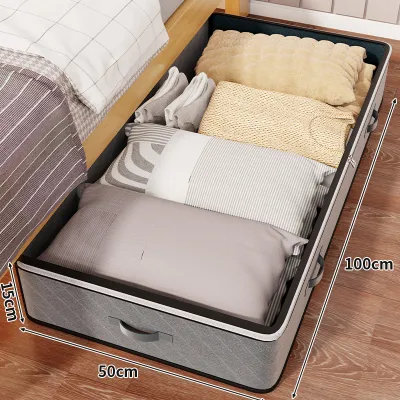
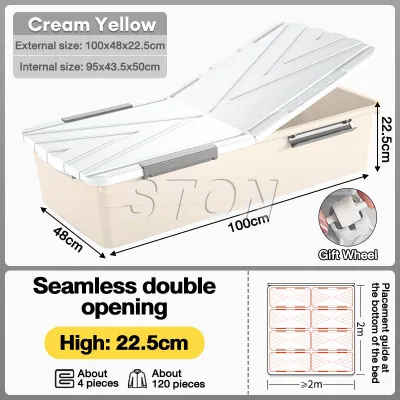
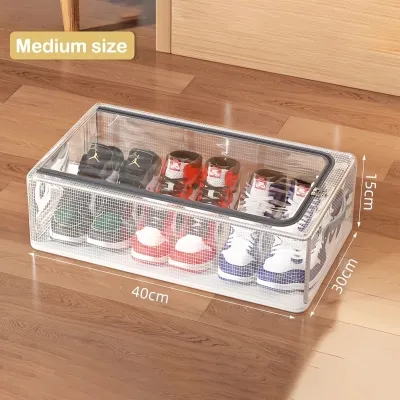
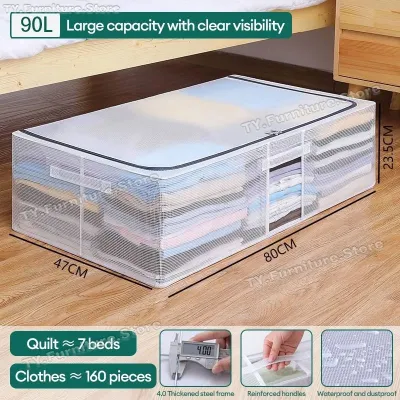
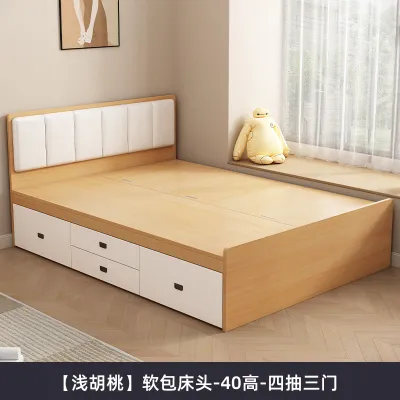
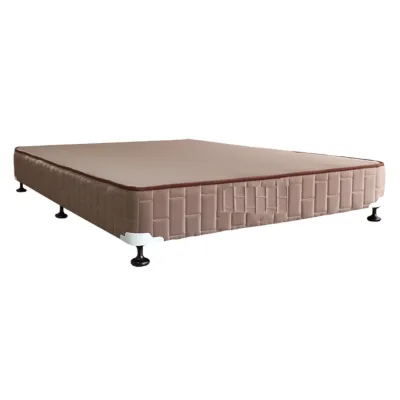
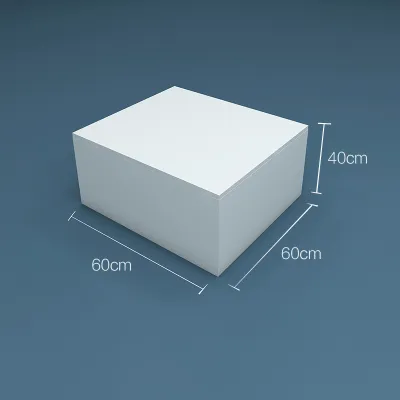
Prices are valid at publication and may change. Please refer to the product page for the latest price.
First, measure the vertical clearance height. This is the distance from the floor to the lowest hanging point of your bed frame, which is often the side rail, a support slat, or a center beam rather than the top of the frame itself. Take this measurement at multiple points around the bed, as floors in high-rise condos can sometimes have minor leveling variations.
Next, assess the horizontal width and depth of the usable space. Do not assume the entire footprint under your mattress is open; you must account for the bed frame’s legs, center support bars, and any protruding hardware like brackets, bolts, or corner braces. These structural components divide the under-bed area into distinct compartments, meaning you may need multiple smaller boxes rather than one large container.
In compact condo bedrooms, the logistics of moving and accessing the storage are just as critical as the dimensions of the bed itself. Measure the distance from the edge of your bed frame to the nearest wall, wardrobe, or bedside table to ensure you have enough clearance to pull the storage boxes out completely. If your bedroom walkway is narrow, look for modular boxes that can be accessed from the side or containers with split-lid designs that do not require being fully pulled out to open.
Finally, examine your bedroom flooring material. Condos in the Philippines commonly feature polished ceramic tiles, vinyl planks, or engineered wood. If you plan to use rolling containers, hard plastic casters can easily scratch or dent engineered wood and laminate surfaces over time. For these delicate floors, look for containers with soft polyurethane wheels, or plan to apply adhesive felt pads to the bottom of stationary boxes to prevent scuffing when sliding them across the floor.
Top Under-Bed Storage Box Categories: Finding the Right Bed Box for Your Condo
Selecting the ideal under-bed container requires balancing your specific storage needs with the physical constraints of your bedroom. The ideal storage box must offer adequate dust protection, ease of access, and space efficiency while remaining resilient against the local tropical climate.

Below are the primary categories of under-bed containers available in the Philippine market, along with representative product types, typical dimensions, and their respective advantages and limitations.
Best Hard Plastic Bins for Humidity and Dust Protection
For general storage in the Philippines, rigid plastic containers offer the most reliable protection against environmental elements. These bins are typically made from durable polypropylene, which acts as a complete barrier against ambient moisture, dust, and common household pests like silverfish or ants.
- Representative Product Type 1: Heavy-Duty Clear Polypropylene Bed Box with Gasket Seal
- Typical Dimensions: 80 cm (Length) x 40 cm (Width) x 16 cm (Height)
- Material: Clear polypropylene plastic with silicone gasket lining
- Typical Price Range: ₱550 to ₱950
- Pros: Excellent protection against high humidity; clear walls allow you to identify contents instantly; gasket seals keep out fine dust and pests.
- Cons: Rigid structure cannot flex to fit tight spaces; thick plastic walls slightly reduce the internal storage capacity.
- Representative Product Type 2: Slim Rolling Plastic Storage Bin with Split Lid
- Typical Dimensions: 75 cm (Length) x 38 cm (Width) x 15 cm (Height)
- Material: Standard molded plastic with built-in unidirectional wheels
- Typical Price Range: ₱400 to ₱750
- Pros: Split lid allows access to contents by pulling the box only halfway out; wheels make moving heavy items effortless.
- Cons: Built-in plastic wheels can scuff soft engineered wood floors; lacks an airtight gasket seal.
These rigid plastic options are highly recommended for storing moisture-sensitive items such as electronics, important documents, leather shoes, or photo albums that could easily be damaged by damp tropical air.
Best Fabric Organizers for Seasonal Clothing and Linens
Fabric organizers are lightweight, highly flexible, and can be collapsed completely flat when not in use, making them excellent for space-constrained condos. They are designed to hold compressible items that do not require a rigid protective shell.
- Representative Product Type 1: Collapsible Non-Woven Fabric Clothes Organizer
- Typical Dimensions: 75 cm (Length) x 45 cm (Width) x 15 cm (Height)
- Material: Three-layer non-woven fabric with a clear PVC top window
- Typical Price Range: ₱200 to ₱400
- Pros: Highly breathable material prevents musty odors; flexible sides can squeeze into slightly tight clearances; very lightweight.
- Cons: Fabric does not provide a vapor barrier against humidity; prone to sagging if overloaded with heavy items.
- Representative Product Type 2: Reinforced Canvas Bed Box with Rigid Inserts
- Typical Dimensions: 70 cm (Length) x 40 cm (Width) x 15 cm (Height)
- Material: Heavy-duty cotton canvas with internal cardboard or plastic support panels
- Typical Price Range: ₱350 to ₱600
- Pros: Maintains its shape well while remaining lightweight; aesthetic fabric finish looks neat if partially visible under the bed.
- Cons: Internal support panels cannot be washed easily; canvas can absorb ambient moisture if placed in poorly ventilated rooms.
These fabric containers are best suited for guest bedding, extra pillows, bedsheets, and seasonal clothing. Because fabric is permeable, always ensure your items are completely dry before packing them, and consider adding silica gel packets to absorb any trapped moisture.
Best Rolling Drawers for Heavy Items and Easy Access
If you need to access your under-bed storage daily or plan to store heavy household goods, rolling drawers provide the structural integrity and ease of movement required for frequent use.
- Representative Product Type 1: Under-Bed Wooden Roller Drawer
- Typical Dimensions: 90 cm (Length) x 50 cm (Width) x 18 cm (Height)
- Material: Engineered wood or solid pine with heavy-duty metal casters
- Typical Price Range: ₱1,500 to ₱2,800
- Pros: High weight capacity; looks like a natural extension of your bed frame; durable construction built for daily pulling.
- Cons: Expensive; heavy to lift; requires a high vertical clearance under the bed frame.
- Representative Product Type 2: Wire Mesh Rolling Bed Box with Fabric Liner
- Typical Dimensions: 80 cm (Length) x 45 cm (Width) x 16 cm (Height)
- Material: Powder-coated iron wire frame with removable polyester liner
- Typical Price Range: ₱1,000 to ₱1,800
- Pros: Excellent air circulation prevents mustiness; sturdy metal frame does not warp; liner can be removed and machine washed.
- Cons: Open wire design allows dust to settle if used without the liner; wheels add to the overall height clearance requirement.
These rolling drawers are ideal for storing heavy books, fitness equipment, tools, or bulk pantry supplies. When choosing this category, verify that the wheels are of high quality and that your flooring can support the concentrated weight without denting.
Best Low-Profile Boxes for Platform Beds
Modern condo platform beds often feature very low clearance heights, sometimes leaving less than 15 centimeters of space between the frame and the floor. Low-profile boxes are specifically engineered to maximize these shallow gaps.
- Representative Product Type 1: Ultra-Slim Low-Profile Plastic Bed Box
- Typical Dimensions: 80 cm (Length) x 45 cm (Width) x 10 cm (Height)
- Material: Low-density polyethylene
- Typical Price Range: ₱350 to ₱650
- Pros: Fits under almost any low-clearance platform bed; wide footprint maximizes available horizontal space.
- Cons: Shallow depth limits storage to flat items; can be difficult to reach items at the very back without pulling the entire box out.
- Representative Product Type 2: Collapsible Low-Profile Fabric Box with Dividers
- Typical Dimensions: 75 cm (Length) x 40 cm (Width) x 10 cm (Height)
- Material: Oxford fabric with adjustable internal hook-and-loop dividers
- Typical Price Range: ₱250 to ₱500
- Pros: Internal dividers prevent flat items from sliding around; fabric handles on multiple sides make retrieval easy.
- Cons: Soft structure can compress further under pressure, potentially pinching items inside.
These ultra-slim options are perfect for storing flat items such as sandals, flip-flops, wrapping paper, magazines, or slim laptop sleeves. To keep these shallow spaces organized, use small internal pouches or dividers so that items do not shift when the container is moved.
Material Comparison: What Works Best in the Philippines?
Evaluating the materials of your under-bed containers is essential for long-term durability, especially when dealing with the high humidity and temperature fluctuations characteristic of the Philippine climate. Hard plastics, fabrics, and engineered woods each perform differently under these environmental pressures.
Hard plastics, such as polypropylene, are highly recommended for tropical environments. They are completely impervious to water and ambient humidity, meaning they will not warp, rot, or support mold growth. Plastic is also highly resistant to pests. However, plastic lacks breathability; if you seal damp items inside a plastic bin, the trapped moisture can cause mildew. Always verify that your items are fully dry before sealing them in a plastic container.
Fabric options, including canvas and non-woven polyester, offer excellent breathability, which helps prevent musty, stale odors from developing in stored textiles. They are also gentle on delicate flooring materials. The primary drawback is that fabric does not act as a vapor barrier. In highly humid rooms, fabric can absorb moisture from the air, which may eventually lead to mold growth on both the container and the clothes inside. If you choose fabric, it is wise to use supplemental moisture absorbers and avoid placing the boxes directly against cold exterior walls.
Engineered wood or Medium-Density Fiberboard (MDF) options provide an attractive, built-in furniture look that coordinates well with bedroom decor. While sturdy, engineered wood is highly sensitive to moisture. In poorly ventilated rooms or during the heavy rains of the wet season, MDF can absorb ambient humidity, leading to swelling, warping, or joint degradation. If you opt for wood, check the manufacturer’s care instructions and ensure the wood is treated with a moisture-resistant sealant or laminate finish.
| Material Type | Moisture Resistance | Structural Longevity | Pest Protection | Floor Friendliness | Best Suited For |
|---|---|---|---|---|---|
| Polypropylene Plastic | Excellent (Waterproof) | High (Rigid & Durable) | High (Pest-proof) | Moderate (Requires smooth base/casters) | Electronics, documents, leather, shoes |
| Non-Woven Fabric | Low (Absorbs moisture) | Moderate (Can sag) | Low (Permeable) | High (Soft & Scratch-free) | Bedding, linens, seasonal clothing |
| Engineered Wood (MDF) | Low to Moderate | High (Sturdy) | Moderate | Moderate (Requires felt pads) | Heavy books, tools, daily-use items |
| Powder-Coated Metal | High (Rust-resistant) | High (Deformation-resistant) | Low (Open structure) | Moderate (Requires soft wheels) | Heavy gear, pantry supplies, shoes |
Regardless of the material you choose, always check the manufacturer’s product specifications and care labels rather than assuming a material is naturally waterproof or heavy-duty. Regular inspections will ensure your containers continue to protect your belongings effectively.
Organization and Maintenance Tips for Hidden Storage
To keep your under-bed storage functional, hygienic, and easy to use over time, establish a practical organization and maintenance routine. Because this area is close to the floor, it is naturally prone to gathering dust, hair, and lint.
When storing textiles like extra bedding, blankets, or off-season clothing, use vacuum storage bags inside your fabric organizers. Vacuum sealing serves two purposes: it dramatically compresses bulky items to double your storage capacity, and it provides an airtight, waterproof barrier that protects your fabrics from ambient humidity, dust mites, and odors.
Labeling is another simple but highly effective practice. Attach clear, bold labels to the outward-facing ends of your storage boxes. This allows you to identify the contents of each container at a glance without having to pull the boxes out, open the lids, and disturb your neat packing.
Establish a quarterly maintenance routine to keep the space clean. Every few months, pull all the containers out from under the bed. Use a vacuum cleaner or a dry microfiber dust mop to clear away the dust bunnies that accumulate in the under-bed void. While the boxes are out, wipe down the exterior of plastic bins with a damp cloth and a mild disinfectant, allowing them to dry completely before sliding them back. Check fabric containers for any signs of dampness, mold, or pests.
Finally, practice smart weight distribution. Always place heavier items, such as books or winter coats, at the bottom of the container or closer to the side with the handle. This prevents the box from warping, tipping, or dragging unevenly across your floor when you pull it out, protecting both the container and your bedroom flooring from unnecessary wear and tear.
Frequently Asked Questions (FAQ)
Can I use under-bed storage boxes on a bed with a center support leg?
Yes, you can easily use under-bed storage on frames with center support legs, but it requires careful spatial planning. Measure the exact clearance on either side of the center leg rather than treating the under-bed area as a single open space. Instead of purchasing one long, continuous bed box, opt for two or more smaller, identical containers that can slide neatly on either side of the support leg. This configuration maintains the structural balance of your bed while ensuring each storage box remains lightweight and easy to pull out.
How do I prevent mold in fabric under-bed organizers?
To prevent mold in fabric organizers within the humid Philippine climate, you must ensure that every item is completely dry before packing. Even a small amount of residual moisture can trigger mold growth in a sealed, dark space. Place disposable moisture-absorbing canisters or reusable silica gel packets inside each fabric organizer to capture ambient humidity. Additionally, avoid pushing fabric boxes flush against exterior-facing condo walls, as temperature differences can cause localized condensation on the floor.
Are rolling under-bed boxes safe for engineered wood flooring?
Hard plastic or metal wheels on rolling boxes can easily scratch, scuff, or dent engineered wood and laminate flooring, particularly when the containers are loaded with heavy items. To protect your floors, look for storage boxes equipped with soft polyurethane or rubberized wheels that glide smoothly without scratching. If you have already purchased boxes with hard plastic wheels, you can remove the casters and apply heavy-duty adhesive felt pads to the bottom of the box, allowing it to slide safely across the floor.
Community discussion
Share your experience or ask a question. Comments are reviewed before publication.