
Quick Answer: Best Wood Strategies for Tropical Climates
Selecting the right material for a wooden closet in the Philippines requires balancing durability against high relative humidity and active pest populations. High-density, kiln-dried hardwoods like mahogany and teak offer excellent structural strength and natural resistance to decay. For a more budget-friendly yet highly stable alternative, moisture-resistant engineered woods, such as marine plywood and moisture-resistant (MR) medium-density fiberboard (MDF), serve as excellent modern substitutes.
However, the wood species or material type alone does not guarantee a trouble-free wardrobe. True protection against warping, mold, and termites depends heavily on manufacturing quality, proper kiln-drying, flawless edge banding, and protective surface finishes. When choosing your wardrobe, you must verify these structural specifications alongside your budget to ensure your storage system survives the tropical climate over the long term.
Understanding the Climate Challenge: Humidity and Pests
The Philippine climate presents a double threat to wooden furniture: persistent high humidity and aggressive wood-boring pests. Throughout the year, relative humidity levels regularly exceed 80 percent, particularly during the wet monsoon season. Wood is a hygroscopic material, meaning it naturally absorbs and releases moisture to match its surrounding environment. In poorly ventilated bedrooms, this constant moisture absorption causes untreated wood fibers to swell, leading to misaligned doors, stuck drawers, and structural warping.
Products mentioned in this guide
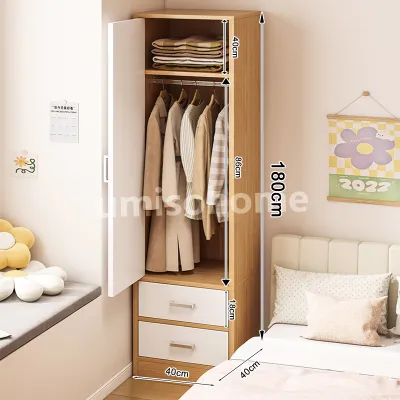
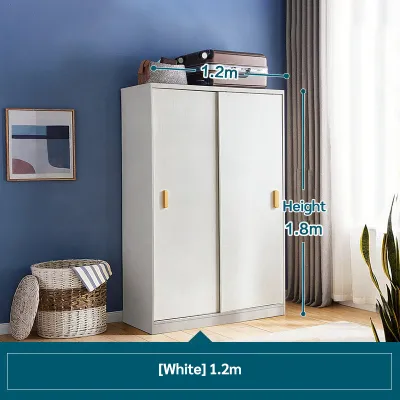
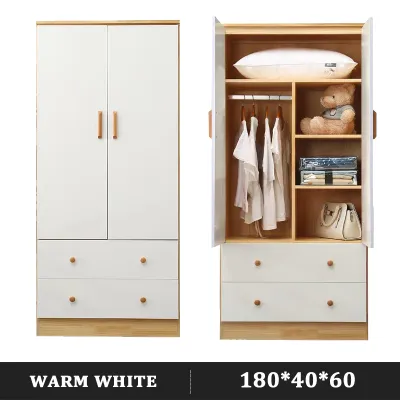
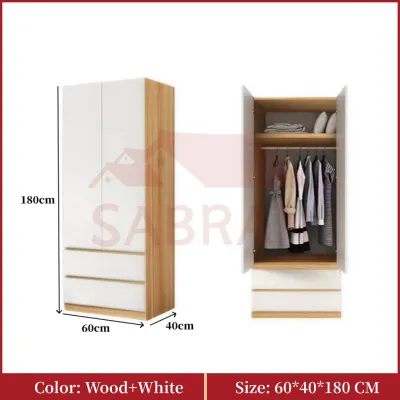
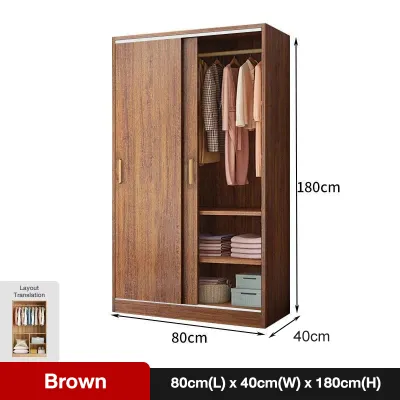
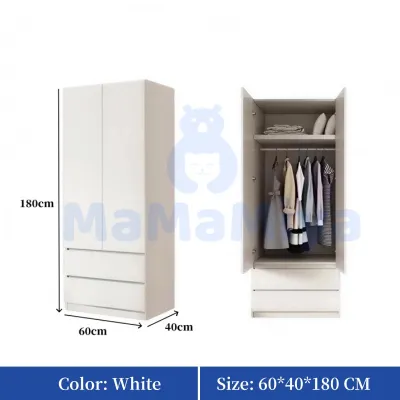
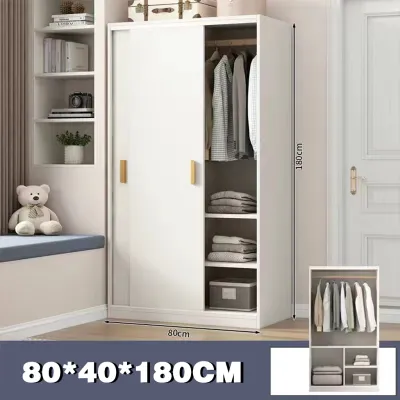
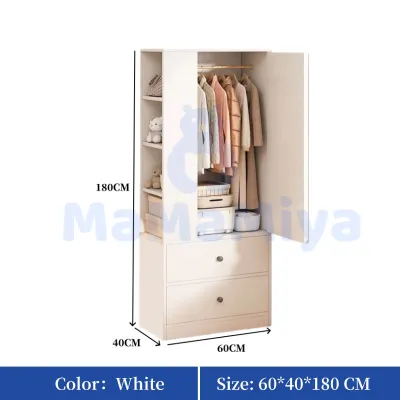
Prices are valid at publication and may change. Please refer to the product page for the latest price.

In many Philippine homes, concrete hollow block (CHB) walls tend to retain moisture, creating localized damp zones. When a wooden closet is pushed flush against these walls, the lack of airflow quickly leads to mold and mildew growth. This mold not only damages the wood itself but also ruins stored clothing with musty odors and permanent stains.
Beyond moisture, warm and damp environments accelerate the activity of subterranean and drywood termites, locally known as anay. These pests can silently hollow out a closet’s structural frame from the inside out, often leaving only a thin outer veneer intact. To prevent premature failure, any wooden closet destined for a local home must be built from materials that either naturally repel these threats or are engineered and sealed to block them entirely.
Comparing Wood Categories for Wardrobes
When shopping for a wooden closet, you will generally choose between solid hardwoods and engineered wood products. Each category offers distinct physical properties, maintenance needs, and performance characteristics under tropical conditions.
Solid Hardwoods (e.g., Narra, Mahogany, Teak)
Solid hardwoods are highly prized for their natural grain patterns, exceptional weight capacity, and long-term durability. Dense species like mahogany, teak, and locally sourced narra possess tight cellular structures that naturally resist rapid moisture absorption. Teak, in particular, contains natural oils that repel water and deter common wood-boring insects.
Before purchasing a solid wood closet, you must verify that the lumber underwent proper kiln-drying. Raw wood must be dried to a target moisture content of 10 to 12 percent to stabilize the material before construction. If the wood is air-dried or poorly seasoned, it will inevitably warp, shrink, or crack as it adjusts to your home’s microclimate.
Furthermore, ensure the wood has been treated with professional anti-termite solutions during the manufacturing process. Because solid wood naturally expands and contracts with seasonal humidity shifts, inspect the construction joints. Well-crafted wardrobes utilize joinery techniques, such as tongue-and-groove or floating panel designs, that allow the wood to move slightly without splitting the frame or forcing the doors out of alignment.
Engineered Woods (Marine Plywood, Moisture-Resistant MDF)
Engineered wood products provide a highly stable, flat, and cost-effective alternative to solid timber. Marine plywood is a premier choice for humid regions because it is constructed with waterproof Type I or WBP (Water and Boil Proof) adhesives. These specialized glues prevent the individual wood veneers from delaminating or pulling apart when exposed to high ambient moisture.
Another modern option is Moisture-Resistant (MR) MDF, which is often tinted green to distinguish it from standard fiberboard. MR MDF incorporates moisture-repellent resins throughout its core, making it far less prone to swelling than standard options. When evaluating engineered wood closets, always ask the manufacturer for the specific moisture-resistance rating of the boards used.
The most critical vulnerability of any engineered wood closet lies in its exposed edges. If moisture penetrates the raw inner core, the fibers will swell, bubble, and degrade permanently. Therefore, flawless edge banding is a non-negotiable requirement. Ensure that all exposed edges are sealed with high-quality PVC or ABS edge banding applied with hot-melt industrial adhesives, leaving no gaps for humid air to enter.
Critical Finishes and Construction Details to Verify
A closet’s survival in a tropical environment depends heavily on its external protective barrier and assembly quality. Raw wood should never be left exposed to the elements. High-quality surface finishes, such as polyurethane coatings, acid-catalyzed lacquers, or high-pressure laminates (HPL), act as a vital physical shield against moisture penetration. When inspecting a wardrobe, verify that these protective coatings are applied uniformly to all surfaces, including the often-overlooked back panels, underside of shelves, and interior drawer boxes.
The hardware components of your closet are equally vulnerable to the local climate. High humidity levels rapidly corrode standard steel hinges, screws, and drawer slides, leading to sagging doors and jammed tracks. Always verify that the closet utilizes rust-resistant hardware, such as 304-grade stainless steel hinges or powder-coated steel runner systems. Soft-close hinges with hydraulic dampeners should have sealed casings to prevent moisture from degrading the internal mechanisms.
Proper ventilation is another essential design detail that prevents mold growth. A well-designed wardrobe should feature small ventilation grilles, louvered door panels, or a deliberate air gap behind the unit. When installing the closet, ensure there is a 2 to 5 centimeter gap between the back panel and the concrete wall. This gap allows ambient air to circulate freely, preventing moisture from transferring directly from the wall to the wood.
Aligning Your Budget with Material Longevity
Your choice of wardrobe material will ultimately involve a trade-off between immediate upfront costs and long-term durability. Solid hardwood closets represent a premium investment, with prices often starting around ₱50,000 and reaching well over ₱150,000 for custom, large-scale installations. While the initial cost is high, a properly treated and maintained solid wood wardrobe can last for decades, resisting wear and retaining its structural integrity.
Engineered wood alternatives, such as marine plywood or MR MDF finished with high-pressure laminates, offer a practical middle ground. These units typically range from ₱15,000 to ₱45,000, making them highly accessible for modern households. They provide excellent dimensional stability and resistance to warping at a fraction of the cost, though their lifespan is heavily tied to the quality of their edge banding and hardware.
To optimize your budget, consider a hybrid material strategy. You can specify highly durable marine plywood or MR MDF for the internal carcass, shelving, and back panels where structural stability is paramount. Then, invest your remaining budget in high-quality solid wood or premium laminate doors for the visible exterior. This approach delivers the aesthetic appeal of solid wood while leveraging the cost savings and warping resistance of engineered materials.
Before finalizing your purchase, always measure your available space carefully. Consider the delivery path, including doorway clearances, narrow hallways, and lift access, as heavy solid wood or fully assembled engineered wardrobes can be exceptionally difficult to maneuver into high-rise condominiums or tight second-floor bedrooms. Additionally, verify the load capacity of the shelving and ensure the unit includes a secure anchoring method to prevent tip-over accidents on uneven floors.
Low-Risk Maintenance to Protect Your Closet
Even the best-built wooden closet requires active maintenance to withstand the relentless Philippine humidity. To control internal moisture levels, place commercial moisture-absorbing canisters or reusable silica gel packs on your shelves and inside drawers. Monitor these absorbers regularly, replacing or drying them out as soon as they saturate with water.
Maintain consistent air circulation in your bedroom. On dry, sunny days, leave your closet doors open for a few hours to allow trapped, humid air to escape. Never store damp or freshly washed clothes directly inside the wardrobe, as this introduces concentrated moisture into the enclosed space. If water spills inside, wipe it up immediately with a dry microfiber cloth to prevent localized swelling.
Perform routine visual inspections of your wardrobe at least once every quarter. Check the back panels, bottom corners, and behind drawers for any signs of white mold spots, musty smells, or termite mud tubes. If you notice early signs of mold, wipe the affected area with a mild, diluted vinegar solution and dry it thoroughly. If you discover structural damage or suspect termite activity, do not disturb the area; immediately contact a licensed pest control professional to assess and treat the infestation.
Frequently Asked Questions (FAQ)
Is standard MDF safe to use for a closet in a humid province?
Standard, non-moisture-resistant MDF is highly susceptible to swelling, warping, and mold growth when exposed to high humidity. In provincial areas where humidity levels fluctuate dramatically, standard MDF will quickly absorb ambient moisture, causing the fibers to expand and delaminate. If you choose fiberboard, you must verify that the material is specifically rated as Moisture-Resistant (MR) MDF. Additionally, ensure that every edge of the board is completely sealed with professional-grade edge banding to prevent moist air from reaching the inner core.
How can I spot early signs of termite activity in my wardrobe?
Early signs of termite activity include the appearance of thin, earthy mud tubes running along baseboards, wall joints, or the back panels of your closet. You may also notice tiny, wood-colored pellets resembling sand or sawdust, which are drywood termite droppings known as frass. If you tap the wooden panels and they produce a hollow, papery sound, the interior may already be compromised. Finding discarded insect wings near the base of your wardrobe is another clear indicator of a nearby swarm. If you observe any of these signs, avoid spraying household insecticides directly on the area, as this can cause the colony to scatter; instead, consult a professional pest control service.
Community discussion
Share your experience or ask a question. Comments are reviewed before publication.