
Selecting the right wooden sofa set for a 20 square meter condo living room requires balancing seating capacity with physical clearance. For a space of this size, a compact straight two-seater or a small three-seater wooden sofa with an overall length of 150 to 180 centimeters works best. If your condo has a square layout, a small L-shaped wooden sofa can also work well by utilizing an empty corner. The key is to choose a frame with a slim profile, raised legs, and open structures that preserve visual flow and prevent the room from feeling cramped.
Measure Your Space and Clearances
Before browsing online marketplaces or visiting local furniture showrooms, you must accurately measure your living room’s physical footprint. A 20 square meter living room in a typical modern condo is rarely a perfect, isolated rectangle; it often shares space with an entryway, a dining area, or an open-plan kitchen. Start by sketching the room’s layout and marking the locations of fixed elements such as structural columns, electrical outlets, air conditioning units, and light switches. Subtract these areas from your total floor space to find the true usable area for your seating arrangement.
Establishing clear walkway clearances is essential for maintaining a comfortable traffic flow. For standard walkways between the wooden sofa and other furniture pieces, aim for a clearance of at least 60 to 75 centimeters. If the pathway leads directly to high-traffic zones like the kitchen, bathroom, or balcony, increase this clearance to 90 centimeters to prevent residents from bumping into the wooden frame. You can use painter’s tape to outline the proposed sofa dimensions on your floor, which helps you physically experience the remaining walkway space before making a purchase.
Products mentioned in this guide
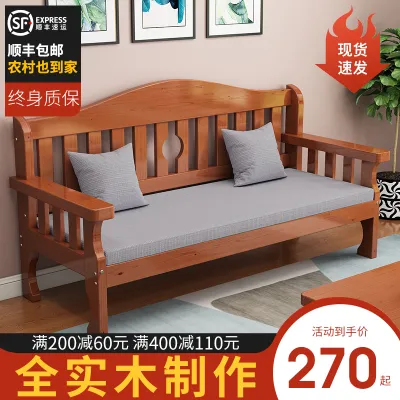
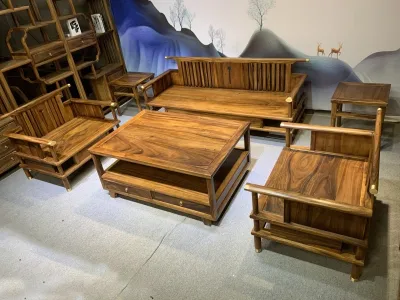

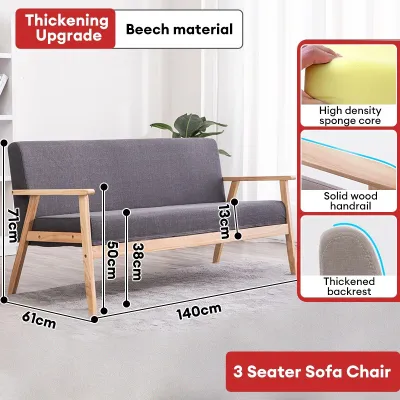
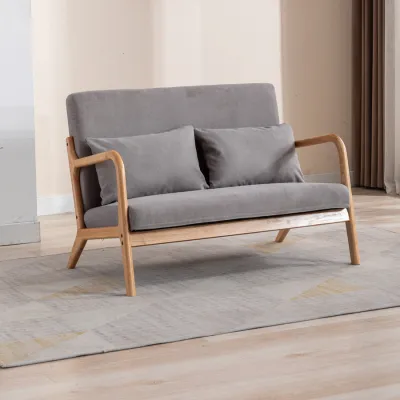
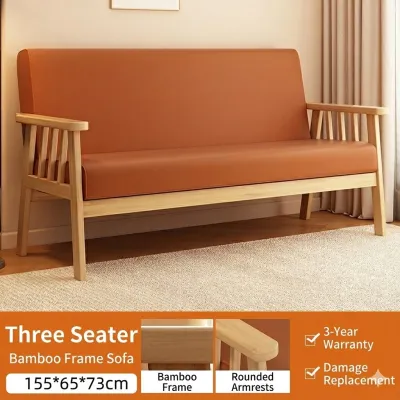
Prices are valid at publication and may change. Please refer to the product page for the latest price.
Do not overlook the logistics of getting the wooden sofa into your unit. Many condo residents purchase beautiful furniture only to find it cannot clear the building’s physical entry points. Check the finished dimensions of the sofa against your condo’s service elevator height, width, and depth. Additionally, measure the clearance of tight stairwell turns, hallway corridors, and your unit’s main door frame. If your building has tight access points, look for wooden sofas that are delivered flat-packed or feature detachable arms and legs, allowing for easier assembly inside the room.
Straight vs. L-Shaped Wooden Sofas for Small Layouts
Choosing between a straight and an L-shaped wooden sofa depends heavily on your room’s specific layout and how you plan to use the space daily. A straight wooden sofa is highly versatile and remains the standard choice for narrow or rectangular condo living rooms. Placing a straight two-seater or three-seater against a single long wall keeps the center of the room open, allowing for a smoother flow of traffic. This configuration also makes it easier to position a low-profile coffee table and a television console directly opposite the seating area without creating awkward angles.

An L-shaped wooden sectional can be highly effective if your living room has a square layout or if you want to create distinct zones in an open-plan condo. By placing the chaise portion of the sofa against a corner, you utilize space that might otherwise go to waste. An L-shaped frame can also act as a natural room divider, separating the living area from the dining table or entryway without the need for physical walls. However, you must verify that the extended chaise does not block natural light from windows or obstruct the pathway to your balcony.
For maximum flexibility, consider modular wooden frames that allow you to reconfigure your seating as your living needs change. Modular sets often consist of individual wooden chairs or corner units that can be clamped together or separated. This design allows you to transition from a unified L-shape to a straight sofa paired with a separate accent chair. When evaluating modular options, inspect the stability of the connection brackets and ensure the wooden joints are secured with high-quality hardware to prevent the individual sections from shifting during use.
Ideal Dimensions and Proportions for a 20 Sqm Room
To maintain visual balance in a compact living room, the dimensions of your wooden sofa must be proportional to the wall it sits against. As a general guideline, the total length of the sofa should not exceed two-thirds of the length of the main wall. For example, if your primary living room wall is 3 meters long, your wooden sofa should ideally be no longer than 2 meters. This leaves sufficient breathing room on either side for side tables, floor lamps, or simply empty space that prevents the room from feeling overcrowded.
Seat depth is another critical dimension that impacts both comfort and floor space. Standard residential sofas often feature a deep seat depth of 90 to 100 centimeters, which can quickly overwhelm a 20 square meter room. For compact condo living, look for a shallow seat depth of 80 to 85 centimeters. This shallower profile still provides comfortable, upright seating while saving valuable centimeters of central floor space. If you prefer a deeper lounge feel, you can compensate for a shallower seat by using plush, supportive back cushions rather than a deeper wooden frame.
The height of the backrest and the width of the armrests also dictate how bulky the sofa appears. High-back wooden sofas can block sightlines and make low-ceilinged condo units feel smaller and darker. Opting for a mid-back design keeps the visual plane open and airy. Furthermore, pay close attention to the armrest width on the wooden frame. Wide, chunky wooden armrests add unnecessary length to the sofa without providing any additional seating space. Choosing slim, tapered, or open-slat armrests under 10 centimeters wide maximizes the actual seating area while keeping the overall footprint compact.
Visual Weight and Wood Design Considerations
The visual weight of a furniture piece refers to how heavy or dominant it appears in a room, regardless of its actual physical dimensions. When selecting a wooden sofa for a small condo, choosing lighter wood tones such as natural oak, ash, or light rubberwood can help the furniture blend smoothly with light-colored walls. These lighter finishes reflect natural light, making the entire living room feel brighter and more spacious. If you prefer darker wood finishes like walnut or mahogany, ensure the frame design is exceptionally slender to offset the dark color’s tendency to draw the eye downward.
Specific design features can significantly reduce the visual weight of a wooden sofa frame. Look for models with high, tapered legs that lift the base of the sofa at least 15 to 20 centimeters off the floor. Being able to see the floor underneath the furniture tricks the brain into perceiving more open space. Additionally, open under-frames and slatted wooden backrests allow light and air to pass through the piece, preventing it from acting as a solid visual barrier in the middle of your home.
To ensure comfort without adding bulk, balance the solid wooden structure with streamlined cushions and upholstery. Avoid thick, overstuffed cushions that spill over the edges of the wooden frame. Instead, look for medium-density foam cushions with clean, tailored edges and neutral-colored fabrics such as beige, cream, or light gray. These soft, muted tones complement the natural warmth of the wood while keeping the overall aesthetic clean, modern, and uncluttered.
Common Sizing Mistakes to Avoid
One of the most frequent mistakes condo owners make is selecting a wooden sofa without considering the scale of adjacent furniture. A beautiful sofa can quickly make a room feel dysfunctional if it leaves no room for a coffee table or a TV stand. Always calculate the clearance needed for these pieces; a coffee table should sit approximately 30 to 45 centimeters away from the sofa edge to allow comfortable legroom while remaining within easy reach. If space is exceptionally tight, consider replacing a traditional coffee table with nesting side tables that can be tucked away when not in use.
Another common error is blocking the swing radius of doors and windows. In tropical climates like the Philippines, maintaining proper airflow is essential for comfort and humidity control. Placing a bulky wooden sofa too close to a balcony door or a low-hanging window can restrict your ability to open them fully, leading to a stuffy living environment. Always measure the swing path of all doors, including cabinet doors on nearby entertainment units, to ensure they can open completely without striking the wooden frame of your sofa.
Finally, resist the temptation to prioritize maximum seating capacity over daily movement. While it is natural to want enough seating for occasional guests, overcrowding your 20 square meter living room with a massive sectional or a full multi-piece sofa set will make daily life frustrating. A cramped layout makes routine tasks like vacuuming, sweeping, and walking through the room difficult. Focus instead on a comfortable, high-quality two-seater or three-seater wooden sofa, and use light, easily movable stools or floor cushions to accommodate guests when needed.
Frequently Asked Questions (FAQ)
Can a standard 3-seater wooden sofa fit in a 20 sqm living room?
Yes, a standard 3-seater wooden sofa can fit in a 20 square meter living room, provided its total length does not exceed 180 centimeters. To ensure a good fit, choose a model with slim armrests and raised legs to minimize its physical and visual footprint. You must also verify that the target wall has enough unbroken length to accommodate the sofa while leaving at least 30 centimeters of clearance on either side.
How much space should I leave between the wooden sofa and the TV stand?
You should aim to leave a minimum distance of 120 to 150 centimeters between your wooden sofa and the TV stand. This distance provides comfortable viewing angles for most compact television screens and leaves enough room for a small coffee table while maintaining a clear central pathway for walking.
Are wooden sofas with built-in storage practical for small condos?
Wooden sofas with built-in storage can be highly practical for maximizing utility in a small condo, but they come with design trade-offs. These models typically feature solid plinth bases that sit flat on the floor, which increases the sofa’s visual weight and can make the room feel smaller. Before purchasing, check the lifting mechanism or drawer clearance to ensure you have enough physical space to access the storage compartments easily.

Community discussion
Share your experience or ask a question. Comments are reviewed before publication.