
Buying a bunk bed for your children is an excellent way to maximize floor space in shared bedrooms. However, transitioning to a multi-level sleeping arrangement introduces unique safety considerations that require careful evaluation before you make a purchase. Ensuring your children’s safety goes beyond choosing an attractive design; it requires a systematic inspection of structural elements, climbing mechanisms, and spatial compatibility within your home.
To make an informed and safe investment, you must verify critical safety features, including guardrail heights, ladder stability, mattress dimensions, and weight capacities. In tropical environments like the Philippines, where high humidity can affect wood expansion, metal corrosion, and joint integrity over time, these checks are vital. By focusing on observable safety standards and structural indicators, you can select a bunk bed that provides a secure, comfortable, and worry-free sleeping environment.
Guardrails and Structural Stability Checks
The guardrails on a bunk bed serve as the primary defense against accidental falls, making them one of the most critical safety features to inspect. The top of the guardrail must extend significantly above the surface of the mattress to prevent a sleeping child from rolling over the edge. Check the manufacturer’s specifications to ensure that the guardrail height remains effective even after your chosen mattress is placed on the bed.
Products mentioned in this guide
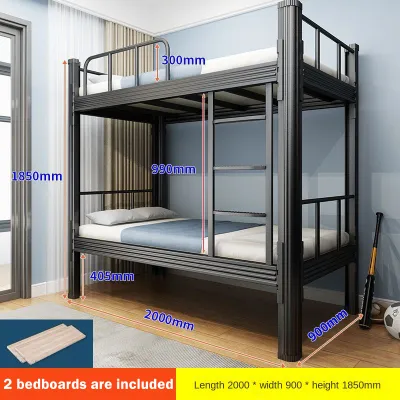
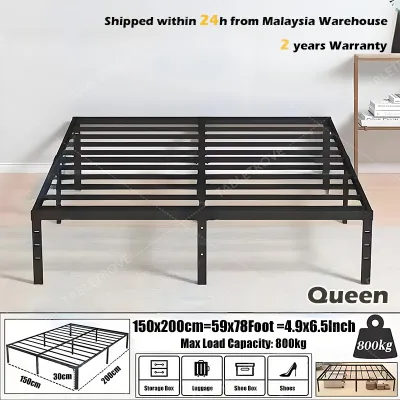
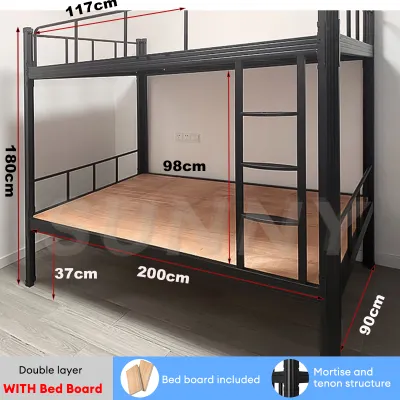
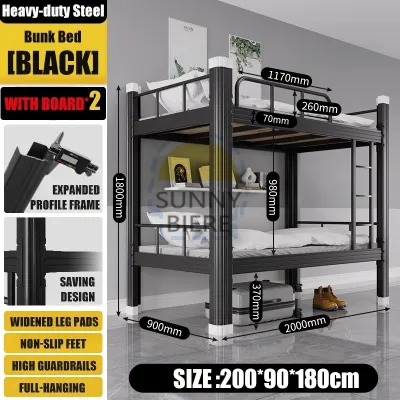
![[Manila 24-hour Boat]Black Loft Bed Elevated Bed 180*200*90/120/150CM Modern Simple and Thickened Iron Art Elevated Bed Apartment Bed Loft Bed For Small Room Student Dormitory Bed Single Size Iron Art Bed Adjustable Staircase Alternating Left And Right](https://img.lazcdn.com/g/p/61a97ae76a0c00cd13c04edac78cc9a4.jpg_400x400q80.jpg_.webp)
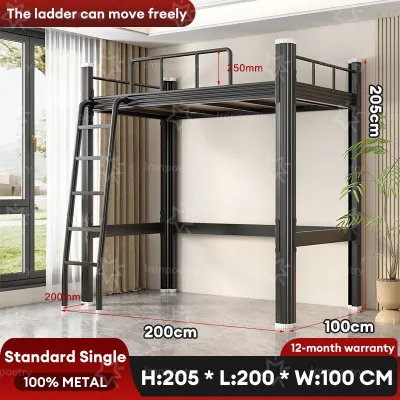
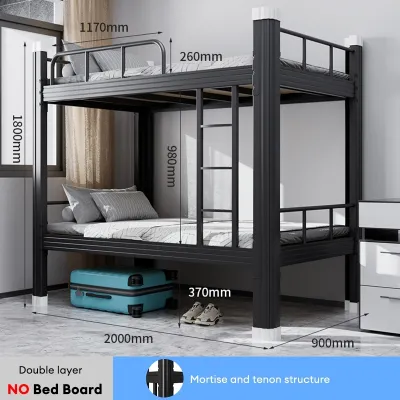
Prices are valid at publication and may change. Please refer to the product page for the latest price.
Equally important is the spacing between the guardrail slats and the bed frame. Gaps that are too wide can pose an entrapment hazard, where a child’s head, limbs, or torso could become wedged. Inspect the distance between individual slats, as well as the space between the bottom rail and the mattress support platform. These openings should be narrow enough to prevent a child from slipping through. Ensure guardrails are installed on all sides of the upper bunk, even if the bed is positioned directly against a wall.
Structural stability is another non-negotiable factor that directly impacts safety. Perform a physical wobble test by applying firm pressure to the corner posts. A high-quality bunk bed should feel solid and rigid, with no noticeable swaying, creaking, or shifting. Examine the joints where the guardrails, posts, and side rails connect, looking for heavy-duty fastening hardware like steel bolts and dowels rather than simple wood screws.
In humid tropical climates, wood can naturally expand and contract, which may gradually loosen joints over time. If you opt for a wooden frame, check that the timber is properly treated and finished to resist moisture absorption, and inspect the joints for any signs of splitting. For metal frames, ensure the welds are smooth and verify that the metal has a rust-resistant coating to prevent structural weakening from humidity. All guardrails must be securely bolted to the frame so they cannot be easily detached or loosened by active children.
Ladder and Staircase Access Safety
Accessing the top bunk safely requires a reliable climbing mechanism that matches your child’s physical abilities and the layout of the bedroom. Bunk beds typically feature straight ladders, angled ladders, or built-in staircases, each presenting distinct safety and space trade-offs. Straight ladders are highly space-efficient because they flush against the bed frame, making them ideal for smaller rooms, but they require more physical coordination to climb vertically.

Angled ladders offer a gentler slope, making climbing up and down much easier and more intuitive for younger children. However, they extend outward into the room, requiring additional floor space that must be kept clear of toys and furniture to prevent tripping hazards. Built-in staircases are generally the easiest and safest option, often featuring wide steps and integrated handrails. While staircases provide excellent stability, they significantly increase the overall footprint of the bed, which may not fit comfortably in compact bedrooms.
Regardless of the style you choose, pay close attention to the design of the steps or rungs. The treads should be wide and deep enough to support a child’s foot fully, reducing the risk of slipping. Avoid thin, round metal rungs, which can be painful to climb and slippery for bare feet, especially in warm, humid weather. Look for ladders with textured surfaces or grooved steps to enhance traction.
Finally, verify how the ladder or staircase attaches to the bed frame. It must be firmly anchored with heavy-duty brackets, hooks, or bolts that prevent it from shifting, sliding, or detaching while a child is climbing. Ensure that the climbing path is clear of any structural obstacles and that the top of the ladder provides secure handholds for a smooth transition onto the upper mattress platform.
Mattress Fit and Entrapment Hazard Prevention
A safe bunk bed setup requires a precise match between the bed frame and the mattress. Using an incorrectly sized mattress can create dangerous gaps or render safety features like guardrails completely useless. Before purchasing a mattress, consult the bunk bed manufacturer’s guidelines for the recommended mattress dimensions and the maximum allowable thickness for the top bunk.
If the top bunk mattress is too thick, it reduces the effective height of the guardrails, making it easier for a child to roll over the top. The mattress must be thin enough to leave a substantial safety barrier between the top of the mattress and the top of the guardrail. Always measure the mattress thickness from the support slats to the top sleeping surface, including any mattress toppers, to ensure it complies with the manufacturer’s safety limits.
In addition to thickness, the length and width of the mattress must fit snugly within the bed frame. Gaps between the mattress edges and the bed frame are major entrapment hazards. If a gap is wide enough for a child’s limb or head to slip into, it poses a serious risk of injury. When the mattress is centered on the frame, there should be virtually no space along the sides or ends.
Avoid trying to fix an ill-fitting mattress with makeshift spacers, extra pillows, or foam padding. These temporary solutions can easily shift or compress, creating new hazards. If you are reusing an existing mattress, measure it carefully against the bunk bed’s interior frame dimensions before assembly. Investing in a mattress specifically designed for bunk beds is often the safest way to ensure a perfect, gap-free fit.
Age Guidelines, Weight Limits, and Usage Rules
Matching a bunk bed’s design limits to your children’s physical development is essential for preventing accidents. Manufacturers establish clear age recommendations and weight limits that must be strictly followed. As a general safety standard, the top bunk is not suitable for children under six years of age. Younger children often lack the coordination, balance, and spatial awareness required to navigate the ladder safely or avoid rolling out of bed at night.
Before buying, check the weight capacity for both the top and bottom bunks, which should be clearly stated in the product specifications. Keep in mind that weight limits must account for both static weight (the child resting) and dynamic weight (the force exerted when climbing, shifting, or sitting down). As children grow rapidly, select a bed with a generous weight capacity that can safely accommodate their changing physical profiles over several years.
Establishing and enforcing clear household rules is just as important as checking physical safety features. Teach your children that the bunk bed is strictly for sleeping and quiet activities, not a playground. Prohibit jumping on both the top and bottom bunks, as sudden impacts can stress the support slats and compromise the structural integrity of the frame.
Additionally, enforce a strict rule against hanging any items from the bed frame, ladder, or guardrails. Items such as belts, bags, jump ropes, or cords can easily become strangulation hazards. Keep the area around the bed clear of clutter, and ensure that children understand how to use the ladder safely, climbing face-forward while holding onto the rails with both hands.
Assembly, Room Placement, and Ongoing Maintenance
The safety of a bunk bed depends heavily on how it is assembled, where it is positioned in the room, and how well it is maintained over time. When assembling the bed, follow the manufacturer’s instructions precisely, without skipping any steps or substituting hardware. Use only the specific bolts, screws, and brackets provided in the package. If any parts are missing or damaged, contact the manufacturer for official replacements rather than using generic hardware.
Room placement requires careful spatial planning to avoid overhead hazards. Position the bunk bed well away from ceiling fans, light fixtures, and air conditioning units. In the Philippines, ceiling fans are common fixtures for cooling; ensure there is ample clearance between the fan blades and the top bunk to prevent severe head injuries. Additionally, keep the bed away from windows, window blind cords, and electrical outlets to eliminate fall and strangulation risks.
Ongoing maintenance is crucial for preserving structural integrity, especially in humid environments where wood can warp and metal fasteners can loosen. Schedule routine inspections every few months to check the tightness of all bolts and joints. Physically shake the frame to identify any new wobbles or squeaks that indicate loose connections.
During these checks, run your hands along the frame to inspect for splinters, cracks, or sharp edges that could injure a child. If you have a wooden bed, check for signs of wood rot or insect damage, which can compromise the load-bearing capacity. For metal beds, look for any paint chipping or rust formation, and address it promptly according to the manufacturer’s care instructions to keep the bed safe and stable.
Frequently Asked Questions (FAQ)
Can I use a regular mattress on a bunk bed?
Yes, but you must ensure it matches the exact dimensions of the bunk bed frame and complies with the manufacturer’s maximum thickness limit. Standard mattresses are often too thick for top bunks, which reduces the effective height of the guardrails and increases the risk of falls. Always measure the mattress thickness to ensure a safe barrier remains.
At what age is it safe for a child to sleep on the top bunk?
The top bunk is generally recommended only for children aged six and older. Children under this age typically do not have the physical coordination, balance, or developmental readiness to climb the ladder safely or avoid rolling out of the bed during sleep.
How often should I check the bunk bed hardware?
You should inspect and tighten the bunk bed hardware every three to six months. Regular use, combined with environmental factors like humidity, can cause bolts and joints to loosen over time. Promptly tighten any loose fasteners and check for structural wear, splinters, or rust to maintain stability.

Community discussion
Share your experience or ask a question. Comments are reviewed before publication.