
When space is at a premium, selecting the right bedroom furniture requires a careful balance of aesthetics, functionality, and precise spatial planning. A sliding door wardrobe, commonly referred to as a sliding cabinet, is one of the most efficient storage solutions for a compact room. Unlike traditional wardrobes with hinged doors that swing outward and demand clear floor space, a sliding cabinet operates entirely within its own footprint. This design allows you to position other furniture, such as a bed or a nightstand, much closer to the wardrobe without restricting access to your clothes.
However, finding the perfect sliding wardrobe involves more than simply picking a design that matches your decor. In compact living spaces, every centimeter counts, and minor miscalculations can lead to doors that stick, blocked walkways, or a bulky unit that overwhelms the room. To make an informed purchase, you must evaluate specific measurements, understand internal depth configurations, and choose hardware that can withstand daily wear and local environmental factors.
Measure Your Bedroom and Delivery Route Before Buying
Before browsing online marketplaces or visiting local furniture showrooms, you must gather highly accurate measurements of your bedroom. Do not rely on visual estimation or standard room dimensions. Use a steel measuring tape to record the width, height, and depth of the designated wall space. Because walls and floors are rarely perfectly straight, take measurements at three different points: near the floor, in the middle, and close to the ceiling. Use the smallest of these three figures as your guide to ensure the wardrobe will fit without scraping your walls or ceiling.
Products mentioned in this guide
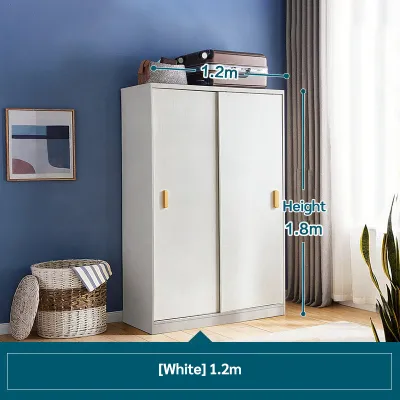
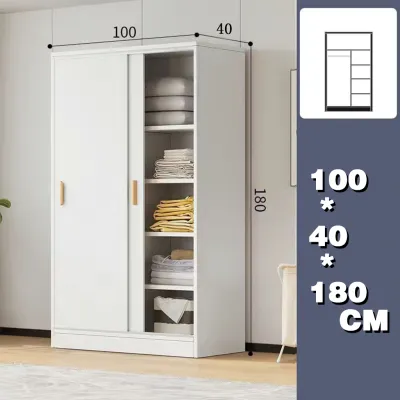
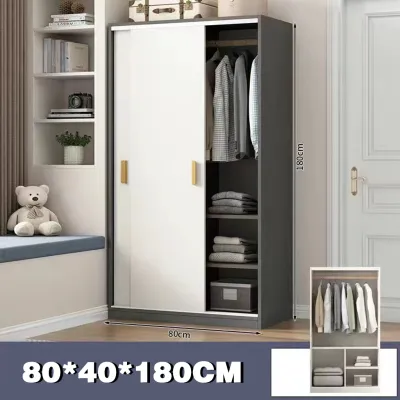
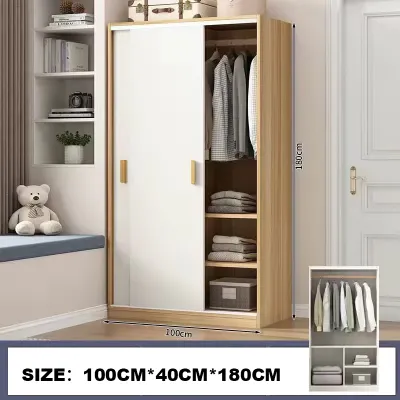
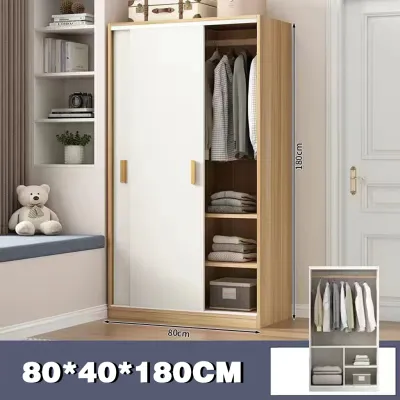
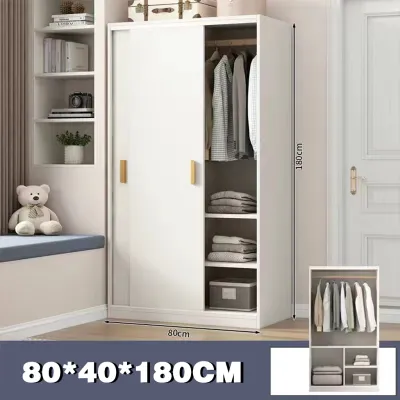
Prices are valid at publication and may change. Please refer to the product page for the latest price.
While measuring the primary wall space, take careful note of any permanent room fixtures. Pay close attention to the positions of skirting boards, electrical outlets, light switches, window frames, and wall-mounted air conditioning units. In many tropical homes, split-type air conditioners are mounted high on the wall; you must ensure the top of the wardrobe does not block the unit’s airflow or prevent future maintenance access. Additionally, account for the thickness of baseboards, which can prevent a flat-backed wardrobe from sitting flush against the wall unless the unit features a rear cutout.
Equally important is measuring the delivery route from the entrance of your home to the bedroom. Many homeowners purchase flat-pack or pre-assembled wardrobes only to find that the long side panels or heavy glass doors cannot clear tight turns. Measure the width and height of all doorways, hallway corners, stairwells, and elevator cabins. If you live in a multi-story condominium or townhouse, a narrow stairwell or small service lift can restrict the size of the packages you can bring upstairs. Verifying these clearances beforehand prevents costly return delivery fees and logistical headaches.
Finally, assess the levelness of your bedroom floor. Sliding door mechanisms rely heavily on gravity and alignment. Even a slight slope in a concrete or tiled floor can cause the doors to slide open on their own or bind in their tracks. Use a spirit level to check the floor along the line where the wardrobe will stand. If you detect an uneven surface, you will need to look for wardrobes with adjustable leveling feet or plan to use sturdy shim spacers during installation to keep the frame perfectly upright.
Plan the Footprint and Walking Clearances
When integrating a sliding cabinet into a small bedroom, you must distinguish between the unit’s external footprint and its internal storage capacity. The most common oversight is failing to account for the depth of the sliding door tracks. The track mechanism typically requires an additional 5 to 10 centimeters of depth, which is deducted from the usable internal space. For example, if a wardrobe has an external depth of 60 centimeters, the actual internal hanging depth may only be 50 to 52 centimeters. Always check the manufacturer’s detailed specifications to ensure the internal depth can comfortably accommodate standard clothes hangers without your garments rubbing against the sliding doors.

The total width of the wardrobe dictates how many door panels the unit will have, which directly affects how you access your belongings. A standard two-door sliding wardrobe only allows you to view and access 50 percent of the interior at any given time, as one door must always slide behind the other. A three-door configuration offers access to roughly one-third of the interior per opening. Consider your daily routine and how you organize your clothes; if you share the wardrobe, a two-door system means only one person can easily access their side of the closet at a time.
Clearance planning is vital for maintaining a comfortable flow of movement around the bed. Although sliding doors do not swing out into the room, you still need sufficient physical space to stand, bend down, and reach into the deepest corners of the cabinet. As a general rule, maintain a minimum walking clearance of 60 to 70 centimeters between the face of the wardrobe and the edge of your bed or adjacent furniture. This clearance ensures that you can comfortably pull out internal drawers, reach low-level shelves, and walk past the wardrobe even when a door is open.
Height planning is another critical factor for both aesthetics and assembly. Floor-to-ceiling built-in units maximize vertical storage but require precise custom installation. For freestanding sliding wardrobes, leave a gap of at least 10 to 15 centimeters between the top of the cabinet and the ceiling. This gap is necessary for air circulation, preventing mold growth in humid environments, and providing enough clearance to tilt the wardrobe upright if it is assembled flat on the bedroom floor.
Choose a Sliding Cabinet with Features That Maximize Small-Space Functionality
To get the most value out of a wardrobe in a compact room, you must look beyond the exterior panels. The internal configuration and the quality of the hardware determine how effectively the wardrobe organizes your belongings and how long the unit will last under daily use.
Internal Layout and Storage Systems
An efficient internal layout allows you to store more items in a smaller footprint by utilizing vertical space effectively. Look for a sliding cabinet that offers a balanced mix of hanging rails, adjustable shelves, and drawers.
- Hanging Rails: Double hanging rails—where one rail is mounted high and another is positioned midway down—are ideal for short items like shirts, blouses, folded trousers, and skirts. Reserve single, full-height hanging sections only for long dresses or coats to avoid wasting valuable vertical space.
- Adjustable Shelving: Shelves that can be moved up or down allow you to adapt the storage layout as your wardrobe changes. Thick, sturdy shelves are essential for holding heavier folded items like denim or storage boxes without bowing over time.
- Built-In Drawers and Pull-Out Organizers: Internal drawers are excellent for storing smaller items like undergarments, socks, and accessories. Ensure that any internal drawers are positioned away from the overlapping zones of the sliding doors; otherwise, the drawers will hit the door frame when you try to pull them out.
- Top-Tier Storage: Use the highest shelves for seasonal clothing, extra bedding, or travel bags that you do not need to access daily.
Door Mechanisms, Tracks, and Visual Effects
Because sliding doors are used multiple times a day, the quality of the rolling mechanism is paramount. Low-quality tracks and rollers can quickly become misaligned, leading to noisy operation or doors that derail.
- Track Quality and Materials: Look for bottom-running tracks made of durable aluminum rather than thin plastic. Aluminum tracks resist warping and corrosion, which is particularly important in hot, humid tropical climates where moisture can degrade inferior materials. Ensure the system includes anti-jump clips to keep the rollers securely inside the tracks.
- Soft-Close Dampers: High-quality sliding wardrobes feature soft-close dampers that catch the doors as they slide shut, gently pulling them into place. This prevents the doors from slamming against the side panels, reducing noise in a quiet bedroom and protecting the wardrobe frame from structural wear.
- Visual Expansion Techniques: In a small bedroom, the exterior finish of the wardrobe has a major impact on the perception of space. Mirrored sliding doors are highly effective because they reflect natural light, making the room feel twice its actual size while eliminating the need for a separate full-length floor mirror. If you prefer non-mirrored options, choose light-colored finishes such as soft whites, creams, or light oak wood grains to keep the room feeling bright and open. Always check the manufacturer's care instructions regarding the backing of mirrored panels to ensure they are moisture-resistant.
- Low-Profile Handles: To maintain clean lines and prevent accidents in narrow walkways, choose wardrobes with recessed handles, flush pulls, or integrated edge-pull profiles. Standard protruding handles can easily snag on loose clothing, bedsheets, or your shoulders as you move around the bed.
Avoid Common Sizing and Placement Mistakes
Many common wardrobe buying mistakes stem from relying on assumptions rather than verifying technical specifications. By identifying these pitfalls early, you can save time and avoid purchasing a unit that does not function properly in your space.
One frequent error is ignoring the thickness of the sliding track. Many buyers purchase a wardrobe with an advertised depth of 60 centimeters, assuming they will have 60 centimeters of space to hang clothes. If the track system occupies 8 centimeters of that depth, the actual hanging space is reduced to 52 centimeters. When hangers are placed inside, wide garments like jackets or structured shirts will protrude past the frame, causing the sliding doors to rub against the sleeves. This friction can damage your clothing and cause the doors to jump off their tracks. Always verify the actual internal hanging depth before buying.
Another mistake is blocking essential room fixtures. Placing a tall wardrobe directly next to a window can block natural light and prevent you from opening the window fully. Similarly, placing the cabinet over electrical outlets or light switches renders them inaccessible. If you must place the wardrobe near a split-type air conditioner, ensure there is ample clearance to prevent cold air from blowing directly onto the wooden panels, which can cause localized condensation and mold growth over time.
Overlooking baseboards is another common installation pitfall. If your bedroom has thick skirting boards along the floor, a standard flat-backed wardrobe cannot be pushed completely flush against the wall. This leaves a small, unsightly gap at the back that collects dust and prevents you from securing the wardrobe flat against the wall studs. To avoid this, look for wardrobes with a recessed back or a baseboard cutout, or be prepared to remove a section of your skirting board during installation.
Finally, never assume that standard sizes are universal. A product labeled as a “compact sliding cabinet” or “small-bedroom wardrobe” might still be too large or heavy for your specific room layout. Always base your purchasing decision on the exact millimeter or centimeter measurements of the fully assembled product, taking into account any extra clearance required for assembly and daily use.
Verify Installation Conditions and Stability
Once you have selected a sliding wardrobe that fits your measurements and functional needs, you must plan for a safe and stable installation. Because sliding wardrobes are tall and carry a significant amount of weight, proper assembly and securing are critical to prevent structural failure or tipping hazards.
Start by ensuring your floor is prepared for the weight of the wardrobe. If you are installing the unit on tiled or wooden floors, check that the surface is clean and level. For wardrobes that do not include built-in leveling feet, you may need to use thin, high-density plastic shims under the base to compensate for minor floor slopes. A level base is non-negotiable; if the frame tilts even slightly, the sliding doors will not align properly, leaving gaps at the sides or sliding open spontaneously.
Safety is a primary concern for tall furniture, especially in households with children, pets, or in regions prone to seismic activity. Most manufacturers explicitly require tall wardrobes to be anchored directly to the wall. Before installation, check the construction of your bedroom wall. Concrete or brick walls require masonry wall plugs and heavy-duty screws, while drywall installations require locating the wooden or metal studs to secure the anchoring brackets safely. Never rely solely on drywall anchors for a heavy wardrobe, as they can pull out under the weight of loaded shelves.
Lastly, plan your assembly space carefully. Most flat-pack sliding wardrobes must be assembled flat on the floor before being raised into an upright position. This process requires a clear floor area that is larger than the height and width of the wardrobe itself. If your bedroom is too small to accommodate this assembly process, you must check if the wardrobe can be assembled vertically from the ground up, or if you need to assemble the main frame in a larger living area and carefully transport it into the bedroom. Review the manufacturer’s assembly instructions thoroughly before unboxing the panels.
Frequently Asked Questions (FAQ)
Do sliding door wardrobes need more depth than hinged doors?
Yes, sliding door wardrobes generally require more overall external depth than hinged wardrobes. While the internal hanging space required for clothes hangers is identical (typically around 50 to 55 centimeters), a sliding wardrobe must accommodate the physical tracks that allow the doors to bypass one another. These tracks usually add an extra 5 to 10 centimeters to the exterior depth of the cabinet. Always check the manufacturer’s technical specifications to ensure the total external depth, including the tracks, fits comfortably within your room’s layout.
Can I install a sliding wardrobe directly on a carpet?
It is generally not recommended to install a heavy sliding wardrobe directly on top of a thick carpet without precautions. Over time, the heavy weight of the wardrobe and its contents will compress the carpet fibers unevenly, which can cause the wardrobe frame to tilt. Even a minor tilt can misalign the tracks, causing the sliding doors to stick, rub, or derail. If you must place the wardrobe on a carpeted floor, check the manufacturer’s guidelines; they may recommend placing a solid, level wooden plinth or base board beneath the wardrobe to distribute the weight evenly and maintain track alignment.
Community discussion
Share your experience or ask a question. Comments are reviewed before publication.