
Finding the right bed with a compartment is one of the most effective ways to maximize a small bedroom in the Philippines. In compact condominium units and urban homes, floor space is at a premium, making dual-purpose furniture an absolute necessity. A storage bed frame allows you to reclaim the often-wasted area directly beneath your mattress, transforming it into a highly functional closet, drawer chest, or linen press.
However, selecting the ideal model requires looking beyond aesthetics. You must evaluate how the bed fits into your physical layout, how the storage compartments open within tight quarters, and how the materials withstand local environmental factors like high humidity. By focusing on precise measurements, structural integrity, and practical access mechanisms, you can find a storage bed that enhances your room’s organization without making the space feel cramped.
Measure Your Space and Define Storage Needs
Before browsing online marketplaces or visiting local furniture showrooms, you must establish the physical boundaries of your bedroom. A storage bed is naturally bulkier than a basic metal frame, meaning a few centimeters can make the difference between a comfortable walkway and a completely blocked doorway. Start by mapping out the exact footprint of the bed frame, keeping in mind that the outer dimensions of a storage bed are often larger than the standard mattress size due to padded upholstery, built-in headboards, or thick wooden panels.
Products mentioned in this guide

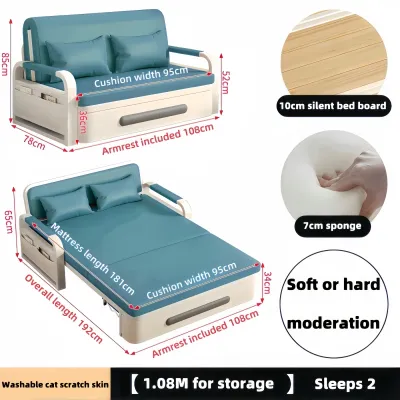
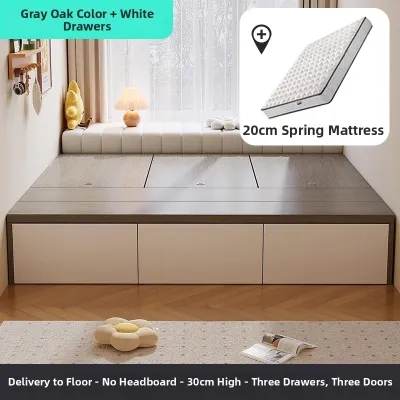
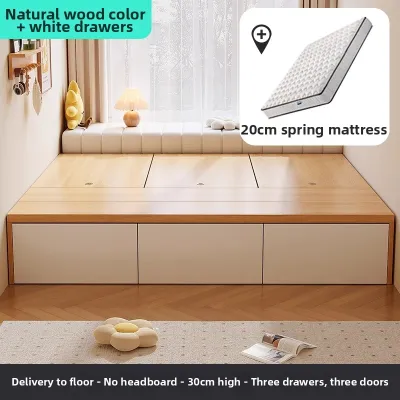
Prices are valid at publication and may change. Please refer to the product page for the latest price.
To maintain a comfortable flow in a small bedroom, aim to leave a clearance of at least 60 to 70 centimeters around all accessible sides of the bed. This space is crucial for walking, changing bedsheets, and opening nearby wardrobe doors or desk drawers. If your room layout forces one side of the bed against a wall, you must plan your storage access accordingly, ensuring that any drawers or lift mechanisms remain fully operational from the open side.
Beyond the static footprint, you must calculate the dynamic clearance required to operate the storage compartments. For drawer-based storage beds, measure the distance from the bed frame to the nearest wall or piece of furniture. Drawers typically require an additional 50 to 80 centimeters of clear floor space to pull out completely. If you lack this clearance, a hydraulic lift bed—which opens vertically—is a much more practical choice, though it requires checking the vertical clearance to avoid hitting low-hanging ceiling fans, light fixtures, or wall-mounted air conditioning units.
Finally, categorize the specific items you plan to store to determine the best compartment style. If you need to store bulky, infrequently used items like travel suitcases, extra pillows, or heavy blankets, a deep, undivided hydraulic compartment is ideal. Conversely, if you plan to store daily clothing, bedsheets, or small personal accessories, shallow drawers or divided compartments will help you keep these items organized and easily accessible without having to lift the entire mattress every day.
Compare Storage Mechanisms for Small Layouts
Storage beds generally fall into two primary categories based on how you access the under-bed compartment: hydraulic lift systems and pull-out drawers. Each mechanism offers distinct advantages depending on your room’s layout, your physical strength, and how often you need to retrieve your stored belongings. Understanding these differences allows you to choose a system that integrates seamlessly into your daily routine.

Hydraulic lift beds, also known as gas-lift or ottoman beds, utilize pressurized gas springs to assist in lifting the mattress platform. This mechanism exposes the entire footprint beneath the bed, providing massive, undivided storage space. Because the platform lifts upward rather than outward, hydraulic beds are exceptionally well-suited for narrow bedrooms where side clearance is virtually non-existent. You can place bedside tables right next to the frame without blocking access to your stored items.
Drawer-based storage beds feature pull-out compartments built into the sides or the foot of the bed frame. This design is highly convenient for organizing smaller, everyday items because you can access individual drawers quickly without disturbing anyone sleeping on the bed. However, drawers require completely clear floor space to slide open. If you have bedside tables, they may block the drawers closest to the headboard, rendering a portion of your storage unusable unless you opt for specialized “short-run” drawers or floating nightstands.
When evaluating either mechanism, safety and ease of use must be your top priorities. For hydraulic frames, always check the manufacturer’s specifications for the gas spring weight rating, which is typically measured in Newtons. The gas springs must be strong enough to support the combined weight of your mattress and bedding, allowing you to lift the platform with minimal effort. Additionally, look for models equipped with mechanical safety locks or physical stop-bars that prevent the platform from accidentally closing while you are organizing items inside the compartment.
For drawer systems, inspect the quality of the drawer runners and tracks. High-quality ball-bearing slides ensure that the drawers glide smoothly even when fully loaded with heavy items. In tropical climates, drawers that slide directly on the floor using small wheels can sometimes scratch delicate flooring or get stuck on area rugs, making raised, track-mounted drawers a more reliable option for long-term durability.
Verify Material Labels and Structural Stability
A storage bed frame is subjected to constant physical stress from lifting, pulling, and supporting both a heavy mattress and your body weight. Therefore, you must look past attractive marketing descriptions and carefully verify the actual materials and construction methods used. In the Philippines, where high relative humidity and seasonal temperature shifts are common, material selection directly impacts the lifespan of your furniture.
When reading product labels, pay close attention to the type of wood or composite material used in the frame. Solid wood and high-grade marine plywood offer excellent structural stability and natural resistance to moisture, making them highly durable choices. If the bed is constructed from engineered wood, such as medium-density fiberboard (MDF) or particle board, verify that it features a high-quality melamine or laminate finish. Unsealed engineered wood can easily absorb moisture from the air, leading to swelling, warping, and structural weakening over time.
Next, inspect the internal connection structures that hold the frame together. A reliable storage bed should feature reinforced metal corner brackets, heavy-duty steel center support beams, and a robust slat system. Avoid frames that rely solely on simple wood screws or plastic brackets at critical load-bearing joints, as these can loosen and cause the bed to squeak or wobble after a few months of use. If you are choosing a hydraulic model, the lifting mechanism should be securely bolted to a steel sub-frame rather than directly into soft engineered wood.
Pay close attention to the quality of the edge banding and joint reinforcements. Edge banding refers to the thin strip of material used to seal the exposed edges of engineered wood panels. In humid environments, poorly applied edge banding can peel away, allowing moisture to penetrate the core of the panel. Ensure all edges are perfectly sealed and smooth to the touch, and check that joints are reinforced with dowels or metal-on-metal connectors to guarantee long-term stability.
Plan for Delivery, Assembly, and Condo Logistics
One of the most common mistakes when buying a storage bed is failing to plan for the delivery and assembly process. Because storage beds contain extra panels, drawers, or heavy steel lifting frames, they are significantly heavier and bulkier than standard bed frames. This makes navigating tight spaces during delivery a major challenge, especially in high-rise condominium buildings.
Before finalizing your purchase, obtain the packaged dimensions of the bed frame from the retailer. Use a tape measure to trace the delivery path from the building’s unloading bay to your bedroom. Measure the height, width, and depth of elevator cabins, the clearance of tight stairwell turns, and the width of all door frames along the way. If the packaged boxes are too long or heavy to fit into the elevator, you may face unexpected delivery surcharges or be forced to return the item.
Once the packages arrive in your room, you must ensure there is sufficient space for assembly. Storage beds often require a flat, open floor area that is at least twice the size of the bed itself to lay out the pieces and install the lifting mechanisms or drawer tracks. Additionally, check your bedroom’s ceiling height; hydraulic beds require ample vertical clearance during assembly to install the gas springs and safely test the lifting angle of the mattress platform.
Finally, consult your condominium administration regarding their specific move-in and furniture delivery policies. Many developments require residents to submit a formal gate pass or work permit several days in advance, and they may restrict heavy deliveries to specific hours on weekdays. You should also verify if there are any floor loading limits or drilling restrictions in your building, particularly if your chosen bed frame requires anchoring to the wall or floor for added stability.
Build Your Shortlist: A Step-by-Step Selection Filter
With so many storage bed options available on e-commerce platforms and in physical showrooms, using a structured selection filter will help you narrow down your choices to the most practical and durable models. By applying strict criteria at each stage of your search, you can avoid impulse buys and ensure your investment stands the test of time.
First, filter your candidates strictly by dimensions and clearance requirements. Measure your bedroom space, note the maximum allowable footprint, and immediately eliminate any model that does not leave at least 60 centimeters of walkway clearance or lacks the space required to open its drawers or lift its platform. This initial step prevents you from falling in love with a design that is physically incompatible with your room layout.
Second, compare the warranty terms offered by different manufacturers. Because storage beds rely on moving parts, a standard frame-only warranty is not sufficient. Look for warranties that explicitly cover the hydraulic gas springs, drawer runners, and metal hinges for at least one to two years. A manufacturer that stands behind their moving components is a strong indicator of overall product quality and reliability.
Third, review the return policies and assembly service inclusions to calculate the true total cost in ₱. Some retailers offer free delivery and professional assembly, while others charge extra fees that can significantly increase your overall expenses. Given the complexity of installing hydraulic lifts and aligning drawer tracks, paying for professional assembly is highly recommended to ensure the bed is put together safely and functions correctly.
Frequently Asked Questions (FAQ)
Do hydraulic beds with compartments require regular maintenance?
Yes, hydraulic beds require periodic visual inspections and basic care to ensure the lifting mechanism remains safe and functional. Every few months, check the metal hinges and gas springs for any signs of rust, loose bolts, or fluid leaks, which can indicate that the seal on the piston has failed. Listen carefully for any unusual grinding or squeaking noises when lifting or lowering the platform; if you notice resistance or noise, avoid forcing the mechanism and contact the manufacturer or a qualified technician for assistance.
Can I use my existing mattress on a new storage bed frame?
You can generally use your existing mattress, but you must first verify that its weight and thickness are compatible with the storage bed’s specifications. Hydraulic lift beds are calibrated for specific mattress weight ranges; if your mattress is too light, the platform may spring up too quickly or refuse to stay closed, while an excessively heavy mattress can strain the gas springs and make lifting difficult. Additionally, measure your mattress thickness to ensure it does not block the headboard design or exceed the maximum height recommended for the lifting mechanism’s safety clearance.

Community discussion
Share your experience or ask a question. Comments are reviewed before publication.