
Finding the right balance between storage capacity and floor space is a common challenge in compact homes. A buffet cabinet with drawers offers an excellent solution for a small kitchen, providing dedicated zones for utensils, dinnerware, and pantry items. By choosing a unit that maximizes vertical space and utilizes pull-out drawers rather than wide-swinging doors, you can significantly increase your storage without making the room feel cramped.
When selecting a cabinet for a tight layout, the primary rule is to balance the unit’s physical depth against your kitchen’s remaining walkway clearance. Standard swing doors require significant forward clearance to open fully, which can easily block narrow pathways. In contrast, drawers pull straight out, allowing you to view and access items at the very back without needing extra side clearance or bending down to peer into dark shelves.
Before you begin browsing online marketplaces or local furniture showrooms, it is essential to establish a clear measurement plan. Knowing your exact spatial limits, checking the durability of materials against tropical humidity, and planning a safe installation layout will ensure your new furniture piece is both highly functional and durable.
Products mentioned in this guide
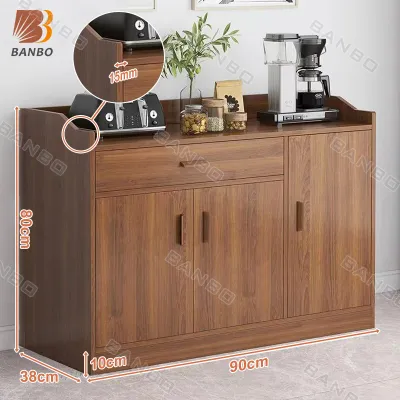
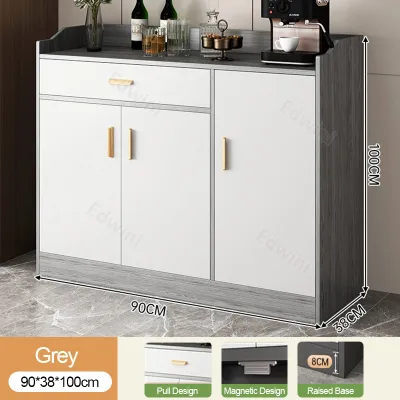
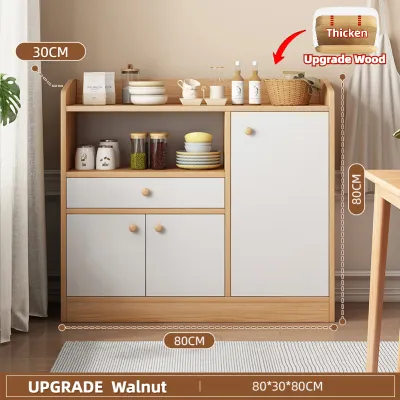
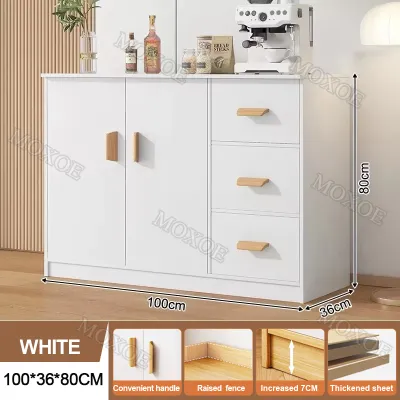
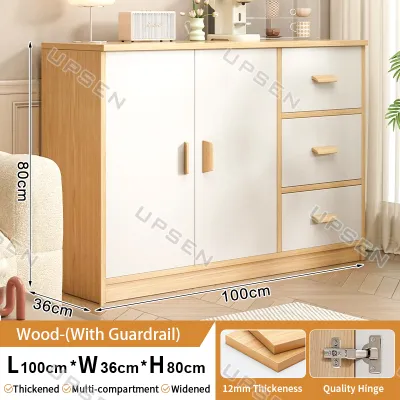
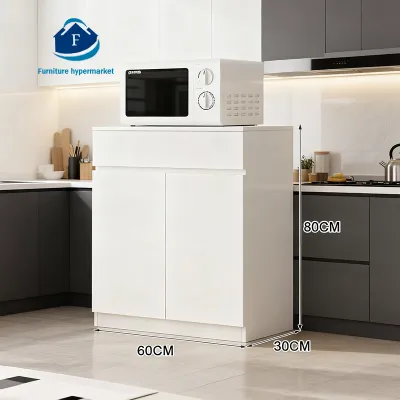
Prices are valid at publication and may change. Please refer to the product page for the latest price.
Measuring Your Kitchen Space and Clearances
To find a cabinet that fits seamlessly into your layout, start by measuring the exact floor footprint where the unit will stand. Use a steel measuring tape to record the available width and depth along your designated wall. Be sure to measure at the floor level, the midpoint of the wall, and the top height to account for any uneven plaster or bowing in the walls.
Remember to account for protruding baseboards, electrical outlets, light switches, and floor drains. In many homes, wet kitchens or utility areas feature floor drains or ventilation grates that must remain completely unobstructed. If your cabinet sits flush against the wall, ensure it does not block access to these critical maintenance points or cover up outlets needed for small kitchen appliances.
Walkway clearance is the most critical factor in maintaining a comfortable and safe kitchen workflow. As a general rule, aim to maintain a clear walkway of at least 90 centimeters in front of the cabinet. This space allows one person to pass by easily even when another family member is standing at the counter or preparing food.
Next, calculate the total depth of the cabinet with its drawers fully extended. If a cabinet has a base depth of 40 centimeters and the drawers extend another 30 centimeters, you need at least 70 centimeters of clear space in front of the unit just to open it. Ensure this extension path does not collide with kitchen islands, dining tables, refrigerator doors, or oven handles.
Do not forget to verify the delivery path before finalizing your purchase. Measure the width and height of your main entryway, hallway corners, stairwells, and elevator doors. Ensuring the fully assembled cabinet or its flat-pack packaging can physically pass through these tight spots prevents delivery day headaches.
Finally, look upward to check for vertical limitations along the wall. Measure the height of window sills, low-hanging pendant lights, wall-mounted fans, or range hoods. If you plan to place items on top of the buffet cabinet, ensure there is adequate clearance from any overhead fixtures or light sources to prevent accidental damage.
Evaluating Drawer Configurations for Maximum Utility
The internal layout of your kitchen cabinets and drawer systems directly dictates how much gear you can store. A smart configuration features a tiered setup with shallow drawers on top and deeper drawers near the bottom. This arrangement allows you to organize items by size, weight, and frequency of use.

Shallow top drawers are ideal for organizing everyday cutlery, placemats, coasters, and small cooking utensils. Keeping these high-use items at waist height ensures they are always within easy reach during meal preparation. It also prevents smaller items from getting lost at the bottom of larger storage compartments.
Deep bottom drawers are excellent for heavier, bulkier items such as rice cookers, pots, pans, or stacks of serving platters. Storing these items lower down keeps them secure and prevents the cabinet from becoming top-heavy. It also eliminates the need to stack and unstack heavy items on high shelves, reducing the risk of drops and breakage.
Look for cabinets that accommodate internal organizers and dividers. Adjustable inserts, modular trays, or peg systems allow you to customize the drawer interior to prevent plates and bowls from sliding around when the drawer is opened. This customization keeps your dinnerware organized and minimizes noise and chipping.
Examine the manufacturer’s specifications for the drawer slide mechanisms. Look for terms like “full-extension slides” on the product label, which allow the drawer to pull out completely so you can access the very back without struggle. Soft-close mechanisms are also highly beneficial, as they prevent drawers from slamming shut and protect delicate glassware from rattling.
Check the rated weight capacity of the slides to ensure they can handle your intended storage load. High-quality metal runners or ball-bearing slides are essential for supporting the weight of heavy ceramic dinnerware or small kitchen appliances. Avoid plastic runners, which can warp or crack over time under heavy loads.
Checking Materials and Finishes for Kitchen Environments
Kitchens experience high ambient humidity, elevated temperatures from cooking, and occasional moisture exposure. Therefore, verifying the cabinet’s materials and finishes is crucial for long-term durability. A beautiful cabinet will quickly degrade if its surfaces cannot withstand daily kitchen conditions.
Instead of assuming a material is naturally waterproof, check the manufacturer’s specifications for protective surface treatments. Look for sealed edges, water-resistant laminates, or polyurethane coatings that shield the underlying wood or composite material from swelling. When evaluating engineered wood options like MDF or particleboard, check if all edges are fully banded to prevent moisture penetration.
Pay close attention to the hardware durability. Ensure that drawer pulls, hinges, and metal slides are treated with rust-resistant coatings or made of stainless steel. In humid tropical climates, low-grade metal hardware can quickly rust, leading to squeaking, sticking, or complete failure of the drawer mechanisms.
Review the care label or product manual for cleaning requirements. A practical kitchen cabinet should have a finish that can handle routine wiping with mild kitchen degreasers without peeling, bubbling, or discoloring over time. Avoid raw, unsealed wood surfaces in areas close to food preparation, as they can absorb oils, moisture, and food stains, making them difficult to sanitize.
If you are planning your budget in ₱, remember to factor in the cost of high-quality finishes and hardware. Investing slightly more upfront in a cabinet with moisture-resistant coatings and durable metal slides will save you money on repairs or replacements in the long run.
Safe Placement and Installation Checks
Safety is paramount when introducing freestanding furniture with moving parts into a busy, compact kitchen. Fully loaded drawers can shift the cabinet’s center of gravity forward when pulled out, creating a potential tipping hazard. This risk is especially high if multiple drawers are opened at the same time.
Always check the manufacturer’s assembly manual for anti-tip requirements. If the cabinet is tall or features multiple heavy drawers, plan to anchor it securely to the wall. Use the provided brackets and appropriate wall anchors for your specific wall type, whether it is concrete, hollow block, or drywall.
Practice smart weight distribution when loading your new cabinet. Place your heaviest items—such as cast-iron pans, stone mortar and pestles, or heavy glass bowls—in the bottom drawers to keep the unit stable. Reserve the upper drawers and shelves for lighter items like linens, plastic containers, and spices.
Maintain safe distances and heat buffers between your cabinet and major kitchen appliances. Avoid placing the wooden or laminate cabinet directly adjacent to stoves, ovens, or dishwashers where steam and high heat can warp the frame or degrade the adhesive on the edges. A safe buffer zone helps preserve the cabinet’s structural integrity.
Ensure there is a small gap of at least a few millimeters between the cabinet and adjacent walls to allow air circulation. In humid environments, stagnant air behind large furniture pieces can lead to mold and mildew growth, which can damage both your walls and the cabinet backing.
Frequently Asked Questions (FAQ)
Can I use a buffet cabinet as a kitchen island in a small space?
Yes, you can repurpose a buffet cabinet as a freestanding kitchen island, provided you maintain adequate clearance on all sides. Ensure there is at least 90 to 100 centimeters of open space around the unit so you can walk past and open drawers comfortably. This layout works best in open-plan kitchens where the cabinet can serve as a divider between the cooking and dining areas.
Check the stability of the cabinet before using it for food preparation. If you plan to move it, look for models that support locking casters or heavy-duty anti-slip pads to prevent the unit from sliding while you chop or mix. Keep in mind that standard buffet cabinets are not designed to house plumbing or built-in appliances, so avoid modifying them in ways that compromise their structural integrity.
How do I prevent drawer cabinets from blocking kitchen traffic?
To keep your kitchen workflow smooth, position the buffet cabinet in underutilized areas such as dead corners, alcoves, or parallel to your main cooking triangle. This keeps the central pathways clear for cooking and cleaning. Placing the cabinet near the dining table can also create a convenient serving station while keeping storage out of the primary prep zone.
If your forward clearance is extremely tight, look for cabinets that feature sliding doors for the lower compartments or shallow-depth drawers that require less outward swing space. Keeping the top surface of the cabinet organized and free of unnecessary clutter also helps prevent the room from feeling visually cramped, maintaining an open and airy feel in a compact kitchen.
Community discussion
Share your experience or ask a question. Comments are reviewed before publication.