
Finding the perfect bedside companion for a compact bedroom requires balancing storage capacity, floor space, and modern connectivity. In many homes across the Philippines, bedrooms often feature tight layouts where every square centimeter of floor space is highly valuable. A bed cabinet with drawers and built-in charging ports offers an elegant, multi-functional solution by combining essential storage with a dedicated power hub, eliminating the clutter of tangled extension cords on the floor. However, selecting the right unit involves more than just picking an attractive design. You must carefully evaluate the physical dimensions, drawer mechanics, electrical safety features, and material durability to ensure the cabinet serves your needs without crowding your room.
To make an informed decision, it is essential to look beyond marketing photos and analyze how a cabinet will function in your specific living environment. High humidity levels, typical of tropical climates, can affect wood stability and drawer movement, while the placement of your wall outlets dictates how safely you can utilize integrated charging ports. By focusing on practical measurements, hardware quality, and electrical specifications, you can find a compact bedside cabinet that maximizes your bedroom’s utility while keeping your daily essentials organized and your devices fully powered.
Defining Your Space and Storage Needs
Before browsing online marketplaces, you must establish the exact physical boundaries of your bedside area. Start by clearing the space next to your bed and using a reliable metal measuring tape to determine the maximum width, depth, and height your room can accommodate. Measure the distance from the edge of your mattress to the nearest wall, wardrobe door, or doorway, keeping in mind that you need enough clearance to walk comfortably and open doors fully. In compact bedrooms, even a few millimeters of overhang can block a walkway or prevent a closet door from swinging open, so precise measurements are non-negotiable.
Products mentioned in this guide
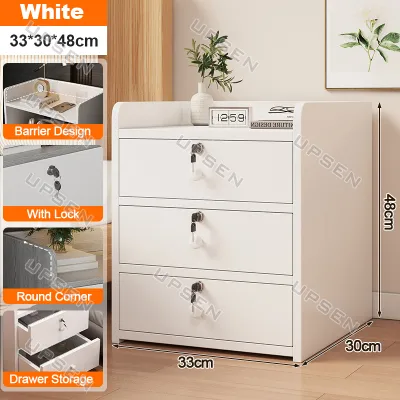
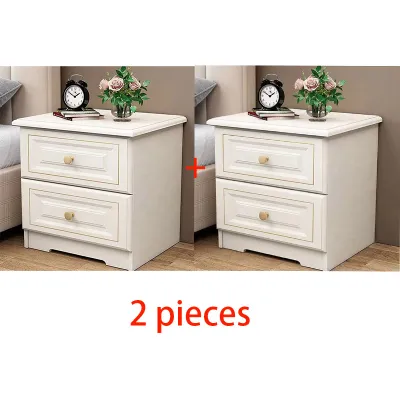


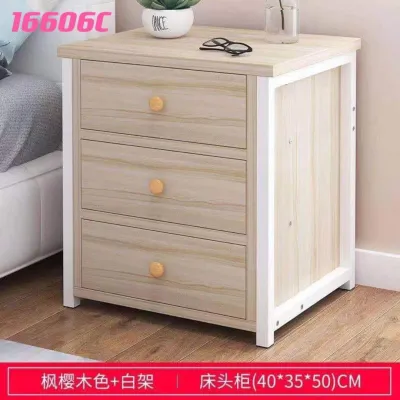

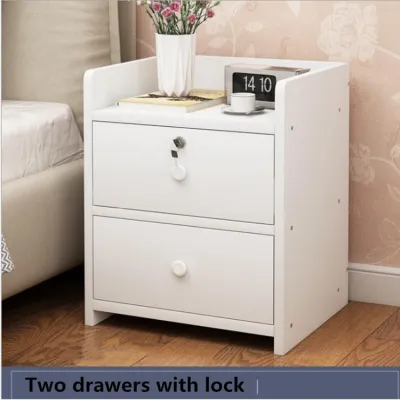
Prices are valid at publication and may change. Please refer to the product page for the latest price.
Once you have your maximum footprint, analyze your specific storage habits to determine the ideal drawer volume. Categorize the items you plan to keep within arm’s reach into daily essentials and bulkier, less-frequently used goods. Small, lightweight items such as reading glasses, medications, charging cables, and sleep masks are best suited for shallow drawers where they can be organized neatly without getting lost. Conversely, if you prefer to store physical books, tablets, or larger personal items bedside, you will require at least one deep drawer with sufficient internal height. Matching your storage needs to the drawer layout prevents you from buying a cabinet that quickly becomes cluttered or leaves you with unused, awkward empty space.
The visual weight of the furniture also plays a significant role in how spacious your bedroom feels. A heavy, solid-front cabinet that sits flat on the floor can make a small room feel cramped and dark. To maintain an airy, open atmosphere, consider cabinets with elevated legs or a floating, wall-mounted design. Elevated legs allow light to pass underneath the unit, creating the illusion of more floor space while making it much easier to sweep or dust underneath. Choosing lighter wood finishes, neutral tones, or clean, minimalist lines can also help the cabinet blend seamlessly into your existing decor rather than dominating the room visually.
Evaluating Drawer Configurations for Compact Rooms
The internal layout of your bedside cabinet directly dictates how efficiently you can organize your belongings. A single, deep drawer might seem spacious, but it often turns into a chaotic storage bin where smaller items disappear under larger ones. For most small bedrooms, a configuration featuring two or three shallow drawers, or a combination of one shallow drawer and an open cubby, offers far better organization. This setup allows you to dedicate the top drawer to immediate essentials like your phone and glasses, while keeping lower compartments reserved for items you do not need to access multiple times a day.

In the humid tropical climate of the Philippines, the choice of drawer hardware is critical for long-term durability. Solid wood drawers without metal runners are highly susceptible to swelling and warping when moisture levels rise, leading to sticky, hard-to-open drawers that can damage the cabinet frame over time. Look for cabinets equipped with smooth metal roller glides or ball-bearing slides. These mechanisms ensure the drawers slide open effortlessly regardless of seasonal humidity changes. Additionally, check the manufacturer’s specifications for drawer weight limits to ensure the tracks can support your items without bending or slipping out of alignment.
Another often-overlooked detail in tight spaces is the design of the drawer handles. Protruding metal knobs or long pull handles can easily snag on bedsheets, blankets, or your clothing as you move around the bed. In a narrow walkway, bumping into a sharp handle can also be painful. To prevent these issues, prioritize cabinets that feature recessed pulls, integrated beveled edges along the top of the drawer fronts, or push-to-open magnetic latches. These handle-free designs keep the front surface of the cabinet completely flush, maximizing your walking clearance and contributing to a clean, modern aesthetic.
Understanding Built-In Charging Ports and Power Safety
An integrated charging station is incredibly convenient, but because it combines wooden furniture with electrical currents, safety must be your top priority. Begin by verifying the types of ports built into the cabinet and checking their power output ratings. Many budget-friendly options only feature standard USB-A ports with low wattage, which may charge modern smartphones and tablets very slowly. If you use fast-charging devices or power-hungry electronics like laptops, look for cabinets that include high-output USB-C ports or integrated AC power outlets. This ensures your devices charge efficiently overnight without requiring additional bulky adapters.
The physical connection between the cabinet and your home’s electrical system requires careful planning. Inspect the product specifications for the length of the main power cord and the type of plug provided. In many homes, wall outlets may be spaced far apart or positioned in awkward locations behind the bed. You must ensure the cabinet’s power cord can comfortably reach the nearest wall outlet without being stretched tight or requiring the use of extension cords and multi-plug adapters. Running extension cords under rugs or behind heavy furniture is a serious fire hazard and should be avoided at all costs.
Proper heat dissipation is another crucial safety factor to consider. Charging adapters and wireless charging pads naturally generate heat during operation. Review the manufacturer’s instructions to see if the charging compartment or power strip area is designed with ventilation slots or open back panels to allow warm air to escape. Avoid placing heavy blankets, pillows, or paper documents directly over the charging ports while they are in use. Furthermore, understand the total wattage limit of the built-in power strip; it is designed strictly for low-draw personal electronics like phones, smartwatches, and e-readers, and should never be used to power high-wattage appliances like hair dryers, hair straighteners, or portable room heaters.
Checking Dimensions, Clearances, and Assembly Requirements
To ensure your new bedside cabinet is comfortable to use daily, you must cross-reference its height with the top of your mattress. Ideally, the top surface of the cabinet should sit level with or slightly below your mattress height, usually within a range of five to ten centimeters. If the cabinet is significantly taller than your bed, reaching for your phone or a glass of water in the dark becomes awkward and increases the risk of knocking items over. Conversely, a cabinet that is too low forces you to bend down uncomfortably from a lying position, which can strain your back and shoulders over time.
You must also account for architectural obstacles that might prevent the cabinet from sitting flush against your wall. Most homes feature baseboards or skirting boards along the bottom of the walls, which can create a gap of one to two centimeters between the back of the cabinet and the wall surface. If your bed frame has protruding legs or an overhanging headboard, this will push the cabinet even further away from the wall. Measure these small projections carefully and compare them to the cabinet’s design; some units feature a recessed back or a cut-out base specifically designed to clear standard baseboards, allowing the tabletop to sit flush against the wall.
Finally, consider the assembly requirements and the physical space needed to put the furniture together. Many compact cabinets purchased online are delivered as flat-packs to save on shipping costs. Review the assembly instructions, the list of included hardware, and the tools required before making your purchase. Assembling flat-pack furniture in a small, crowded bedroom can be incredibly challenging and frustrating. Ensure you have a clear, clean floor space nearby to lay out the parts safely, or look for sellers that offer pre-assembled units or professional home installation services to save time and avoid assembly errors.
Creating a Condition-Based Shortlist for Online Browsing
Shopping for furniture on e-commerce platforms requires a disciplined, systematic approach to avoid buying a product that does not fit your space or meet your quality expectations. Start by using the platform’s search filters to narrow down your options by precise dimensions, specifically targeting the maximum width and depth you measured earlier. Use search terms that specify your desired features, such as “bedside table with drawers and USB” or “compact charging nightstand,” to filter out basic models that lack integrated power options.
Once you have a list of potential candidates, ignore the polished marketing images and focus entirely on the customer review section. Look for detailed reviews from verified buyers who have used the product for several months. Pay attention to feedback regarding the long-term durability of the drawer slides, whether the charging ports continue to function reliably over time, and if the wood composite material holds up well against humidity. Reviews that include real-life photos and videos are particularly valuable, as they provide a more accurate representation of the product’s actual color, finish quality, and scale relative to standard household items.
Before finalizing your purchase, carefully verify the seller’s return policy and warranty coverage. Because these cabinets contain integrated electrical components, they are subject to different wear-and-tear risks than standard wooden furniture. Check if the seller offers a dedicated warranty for the charging module and power cord, and understand the process for obtaining a replacement if the electronics fail. A reputable seller should provide clear instructions on how to contact customer support and offer a straightforward return window if the cabinet arrives with missing parts, shipping damage, or manufacturing defects.
Frequently Asked Questions (FAQ)
Can I replace the built-in charging module if it stops working?
Most integrated charging modules in bedside cabinets are custom-fitted to the furniture’s frame and are not designed for easy user replacement. Attempting to unscrew, splice, or replace the internal wiring yourself can be highly dangerous and will almost certainly void any manufacturer warranty. If the charging ports stop working, first check the manufacturer’s warranty terms to see if the electrical components are covered for repair or replacement by an authorized service center. If the warranty has expired but the wooden cabinet itself remains structurally sound and attractive, the safest and most practical solution is to unplug the built-in module permanently and use a separate, certified external multi-port charger placed on the tabletop.
How do I clean and maintain a bed cabinet near electronic ports?
Cleaning a bedside cabinet with integrated electronics requires strict adherence to safety protocols to prevent electrical shock and moisture damage. Always unplug the cabinet’s main power cord from the wall outlet before you begin cleaning the surface or wiping down the drawer interiors. Never spray liquid cleaners, water, or aerosol polishes directly onto or near the charging ports, outlets, or power switch. Instead, use a dry or very slightly damp microfiber cloth to wipe away dust and fingerprints from the wooden or laminate surfaces. To keep the charging ports functioning efficiently, periodically use a dry, soft-bristled brush or a can of compressed air to gently blow out any accumulated dust or lint from the USB and AC openings.
What should I do if the drawer rubs against the bed frame?
If a drawer rubs against your bed frame or feels difficult to open, do not force it, as this can permanently damage the drawer tracks or scratch your furniture. First, check if the cabinet is sitting on an uneven floor surface, which can cause the frame to tilt slightly and throw the drawer alignment off. Use a bubble level to check the top surface, and adjust any built-in leveling feet or place thin, non-slip felt pads under the legs to level the unit. If the floor is level, try repositioning the cabinet a few centimeters away from the bed frame to ensure there is adequate clearance. If the drawer tracks themselves appear misaligned or bent straight out of the box, contact the manufacturer or seller immediately for assistance rather than attempting to bend the metal hardware yourself.

Community discussion
Share your experience or ask a question. Comments are reviewed before publication.