
Choosing the right drop leaf table for a compact apartment in the Philippines requires balancing the folding mechanism with your specific floor plan, verifying structural stability, and ensuring materials can withstand local humidity. A well-chosen table serves as a console, a work-from-home desk, and a dining surface without permanently consuming precious floor space. By focusing on precise spatial planning and hardware quality, you can find a versatile piece that adapts to your daily routine.
In urban centers where studio and one-bedroom condominiums often feature highly constrained layouts, furniture must perform double duty. A drop leaf table offers the unique ability to expand or contract on demand, making it an ideal solution for maximizing utility. However, selecting the wrong configuration or failing to account for delivery access can lead to frustration. Understanding how these tables function in tight spaces is the first step toward making a practical purchase.
Identifying the Right Drop Leaf Configuration for Your Layout
When selecting a drop leaf table, the first decision involves choosing between a single-leaf and a double-leaf design. A single-leaf table features a single folding section attached to a fixed main top. This configuration is highly efficient when placed flush against a wall, a kitchen island, or a window. You can keep the leaf folded down during the day to preserve walkway space, then raise it when you need an extended surface for dining or working. It minimizes the table’s footprint while keeping the main section fully functional at all times.
Products mentioned in this guide
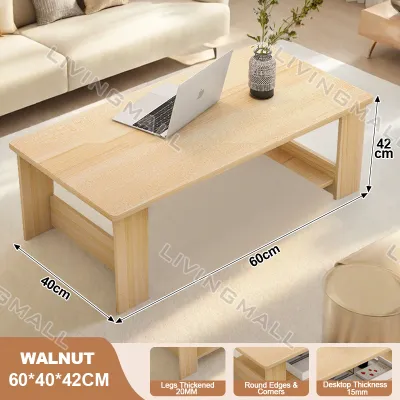
Prices are valid at publication and may change. Please refer to the product page for the latest price.
In contrast, a double-leaf table has folding sections on both sides of a central fixed frame. This design offers greater flexibility for open-plan layouts or homes where the table sits in the center of the room. You can choose to extend only one leaf for solo use or both leaves to accommodate guests. When fully collapsed, many double-leaf tables shrink to a very narrow profile, allowing them to be tucked away against a wall as a console table when not in use.
The mechanism that supports the folding leaves also dictates how much space the table requires when extended. Standard drop leaf tables use simple pull-out wooden slides or metal brackets to support the leaves. Gate leg tables feature legs that swing out like a gate to support the extended surface, offering excellent stability but sometimes restricting legroom for seated guests. Butterfly leaf tables store the folding sections internally, providing a seamless look when closed but requiring a more complex internal mechanism that can add weight to the piece.
For highly constrained spaces, you must decide whether you need a table with a fully collapsed console profile or one with a partially extended surface. A console-style table folds down to a depth of 30 centimeters or less, making it perfect for narrow entryways or behind a sofa. A partially extended design maintains a wider fixed center section, ensuring you always have a usable two-person dining spot or desk even when both leaves are folded down.
Measuring Your Space and Delivery Access Before Ordering
Before browsing online marketplaces, you must take precise measurements of your designated dining or working area. Do not rely solely on the listed dimensions of the table; you must also calculate the clearance required for chairs and daily foot traffic. As a general rule, aim for at least 60 to 90 centimeters of open space behind chairs to allow people to sit down, pull out their seats, and walk past comfortably without bumping into walls or other furniture.

To visualize how the table will fit into your daily life, use masking tape or newspapers to outline both the fully extended and fully collapsed footprints on your floor. Leave the templates in place for a day or two to observe how they affect your movement through the apartment. Pay close attention to how the extended leaves might block access to nearby cabinets, the refrigerator, bathroom doors, or the pathway to your balcony.
Verify the collapsed depth of the table to ensure it can be stored safely without creating a tripping hazard. In tight hallways or entryways, even a few centimeters of protrusion can make a space feel cramped and restrict the movement of large items. If you plan to store the table in a closet or utility room when not in use, measure the storage space’s doorway and interior depth to confirm a hassle-free fit.
Finally, do not overlook the delivery route to your apartment unit. Many pre-assembled or heavy flat-pack tables end up stuck in corridors or require expensive manual hauling fees because buyers forgot to measure building access points. Measure the height and width of your building’s elevator doors, the clearance of tight stairwell turns, and the exact dimensions of your unit’s front door frame. If your building has strict delivery guidelines or small elevator cabins, choosing a flat-pack table that can be assembled inside your unit is often the safest option.
Checking Stability, Materials, and Folding Hardware
Evaluating the structural integrity of a folding table is crucial, as the moving parts are subject to continuous wear and tear. Begin by inspecting the hinge types and locking mechanisms. Look for heavy-duty steel hinges that are recessed into the wood, as these provide a smoother surface and reduce the risk of snagging clothing. Secure locking pins, spring-loaded brackets, or robust wooden support rails are essential for preventing the leaves from sagging or collapsing under pressure.
Stability is a common concern with drop leaf tables, especially when fully extended. Check the leg support structure to see how the weight is distributed. Tables with wide-set legs or gate-leg supports generally offer better wobble prevention than those with a single central pedestal. When examining product descriptions or physical floor models, gently press down on the extended edges to check for flexing or movement at the joints.
In the humid tropical climate of the Philippines, material selection directly impacts the longevity of your furniture. Engineered wood, such as medium-density fiberboard (MDF) or particleboard, is common in budget-friendly options but must feature high-quality, sealed edge-banding. Unsealed edges allow ambient moisture or accidental spills to penetrate the wood, causing it to swell, warp, or peel over time. Solid wood, high-pressure laminates (HPL), and powder-coated metal frames offer superior resistance to moisture and daily wear, provided they are properly finished and maintained.
Rather than assuming a table is strong based on material names alone, always check the manufacturer’s explicit weight capacity specifications. These ratings, typically expressed in kilograms, indicate the maximum load the table can safely support. Be sure to verify whether the weight limit applies to the entire extended surface or if it is restricted to the fixed center section, as the folding leaves naturally have lower load-bearing capacities.
Prioritizing Multi-Functional Features for Maximum Utility
To get the most value out of a drop leaf table in a small apartment, look for designs that offer built-in storage features. Some tables include central drawers, lower shelves, or hidden compartments built into the frame. These storage zones are incredibly useful for stowing away dining essentials like placemats and cutlery, or work items like laptops, notebooks, and chargers. Keeping these items close at hand but out of sight helps maintain a clutter-free environment.
Mobility is another highly beneficial feature for flexible apartment living. Tables equipped with integrated locking wheels or casters can be easily rolled from the kitchen to the living room, or even out to a covered balcony for an outdoor meal. This allows you to reposition the table effortlessly depending on your needs throughout the day. Ensure the casters are made of non-marking materials like polyurethane to protect your flooring, and verify that the locking mechanisms are strong enough to keep the table completely stationary when in use.
Consider convertible designs that can transition between different heights. Some advanced drop leaf tables feature adjustable frames that allow them to function as a low coffee table (around 45 centimeters high) during the day, and then raise to a standard dining or desk height (around 75 centimeters high) for meals or work. This eliminates the need for separate coffee and dining tables, freeing up a significant amount of floor space in studio apartments.
When evaluating these multi-functional features, balance them against the overall weight and complexity of the table. While storage drawers and height-adjustable mechanisms add utility, they also make the table heavier and more difficult to move. Choose the features that align closest with your primary daily activities, whether that is working from home, hosting small dinners, or maintaining a minimalist living area.
Building and Verifying Your Shortlist on E-commerce Platforms
When shopping on online marketplaces, navigating listings requires a systematic approach to avoid purchasing low-quality or poorly sized furniture. Start by filtering out vague marketing terms like “space-saving” or “compact.” Instead, use precise dimensions in your search queries, such as “80cm folding table” or “double drop leaf console,” to find products that match your pre-measured spatial constraints.
Do not rely solely on polished promotional images, which are often digitally altered or staged in oversized rooms to make the furniture appear larger than it is. Go straight to the customer review section and look for photos uploaded by real buyers. These images provide a realistic view of the table’s scale, color, and finish in typical apartment lighting. They also allow you to inspect how the table looks when fully collapsed and whether the folding joints align properly in real-world conditions.
Cross-reference the listed dimensions with the customer photos and feedback. Look for comments regarding the ease of assembly, the clarity of the instruction manual, and whether all necessary hardware was included in the package. If many reviews mention missing parts, misaligned screw holes, or a complicated assembly process, you may want to look for alternative listings or consider hiring a professional assembly service.
Finally, carefully verify the seller’s return policies, shipping fees, and warranty terms before proceeding to checkout. Because furniture is heavy and bulky, return shipping costs can be substantial if you receive a damaged or incorrect item. Look for sellers that offer local warranties or clear return guarantees for manufacturing defects. Understanding these terms beforehand protects your investment and ensures a smoother shopping experience.
Frequently Asked Questions (FAQ)
Can a drop leaf table support heavy appliances or daily dining?
Yes, a drop leaf table can support daily dining and light appliances, but you must verify the manufacturer’s explicit weight capacity label before placing heavy items on it. The load-bearing capacity depends heavily on the table’s leg placement, hinge quality, and center of gravity. Center-supported tables with gate legs or solid wooden support rails generally handle heavier loads better than cantilevered designs that rely solely on small metal brackets. Avoid placing heavy appliances like microwave ovens or water dispensers directly on the folding leaves, as this can strain the hinges and cause the surface to sag over time.
How do I protect the folding joints from wear in humid climates?
To protect the folding joints from wear in humid tropical climates, perform routine visual inspections of all hinges, screws, and moving metal parts. Look for early signs of rust, stiffness, or misalignment that could affect the folding mechanism. Wipe down the hardware regularly with a dry microfiber cloth to remove ambient moisture and dust. Consult the manufacturer’s care instructions for recommended lubricants or rust-prevention sprays suitable for your specific table hardware, and apply them sparingly to keep the joints moving smoothly. Keeping your apartment well-ventilated also helps minimize moisture buildup on metal components.
Community discussion
Share your experience or ask a question. Comments are reviewed before publication.