
Maximizing a 20 square meter condo living room requires furniture that serves multiple purposes without overwhelming the limited floor area. In such a compact layout, every square centimeter counts, making the choice of seating highly consequential. A sofa bed with pull out bed offers a practical solution, providing comfortable seating for daily activities while easily transforming into a sleeping surface for guests or nightly use. However, selecting the right model involves more than just finding an attractive design; it requires a careful analysis of dimensions, mechanisms, and spatial flow to ensure your living room remains functional and comfortable.
Mapping Usable Space and Traffic Flow in a 20 Sqm Room
A 20 square meter condo unit, typical of modern high-rise developments, presents unique layout challenges. In these compact spaces, the living room often shares a single open area with the dining zone, entryway, and kitchenette. Before introducing any large furniture, you must define the actual usable floor area. This means measuring the space after accounting for fixed architectural elements such as columns, built-in wardrobes, and kitchen counters. Additionally, sliding glass doors leading to balconies must remain completely unobstructed to preserve natural light and ventilation, which keep a small room feeling open.
Traffic flow is equally critical. A successful layout maintains clear, unobstructed pathways even when the bed is fully extended. Ideally, you should preserve a walking path of at least 60 to 70 centimeters around the perimeter of the extended bed. This ensures residents can easily move from the entryway to the bathroom or kitchen without climbing over the furniture. If your layout is tight, placing the sofa against the longest uninterrupted wall typically provides the most straightforward deployment path.
Products mentioned in this guide
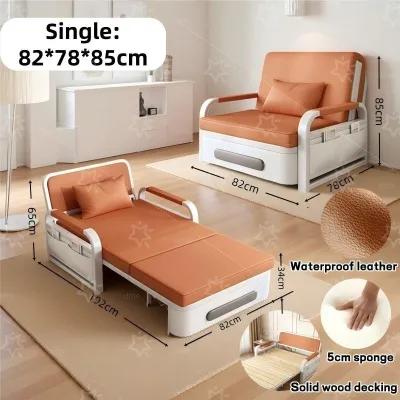
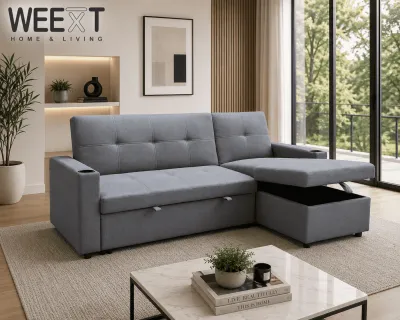
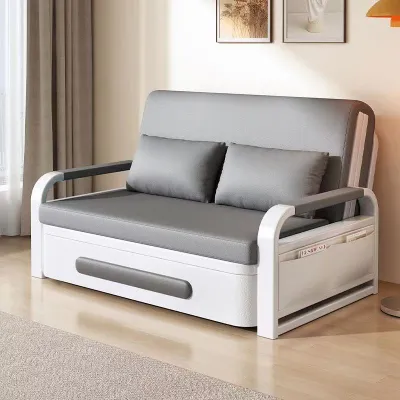
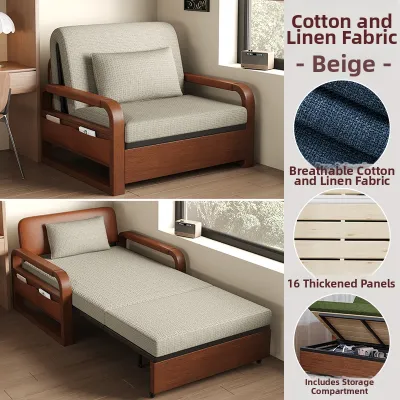
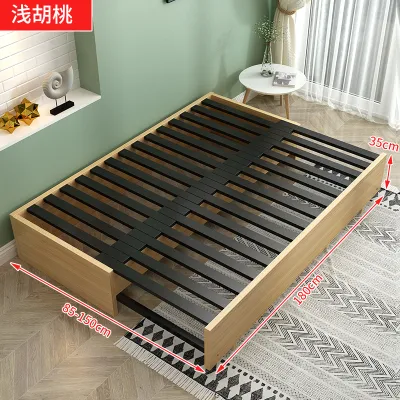
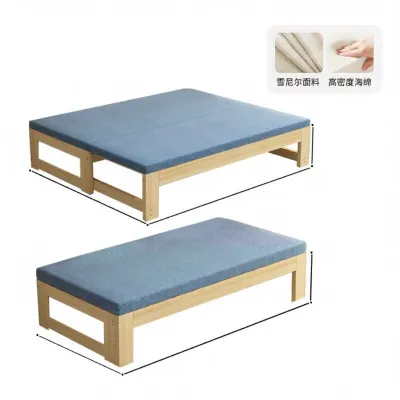
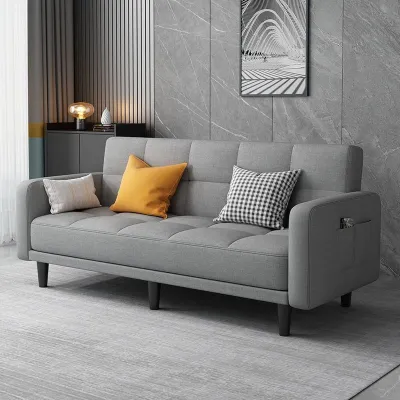
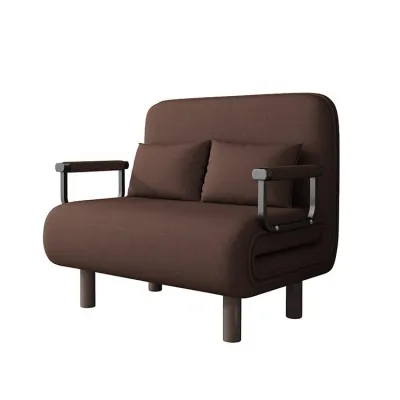
Prices are valid at publication and may change. Please refer to the product page for the latest price.
To complement a multi-functional sofa, choose secondary furniture that is lightweight and easy to reposition. Nesting coffee tables are excellent because they can be stacked together when the bed is in use or scattered around the room as side tables when entertaining. Wall-mounted TV consoles and floating shelves also help by keeping the floor area clear, which visually expands the room. Avoiding heavy, solid wood coffee tables prevents the space from feeling cluttered.
Finally, consider the visual weight of the sofa bed. Heavy, overstuffed sofas with wide rolled arms can visually dominate a small room, making it feel cramped. Instead, look for designs with slim, low-profile track arms or even armless configurations. Models with raised legs that expose a portion of the floor underneath allow light to pass through, creating an illusion of spaciousness. By choosing a design that feels visually light, you can maintain an airy, comfortable atmosphere in your condo.
Essential Measurements and Clearances for a Sofa Bed with Pull Out Bed
Accurate measurements are the foundation of a successful furniture purchase, especially when dealing with dual-purpose designs. A standard two-seater sofa suitable for small spaces typically ranges from 140 to 170 centimeters in width, with a closed depth of 85 to 95 centimeters. However, when the pull-out mechanism is fully deployed, the total depth can extend to 200 or 220 centimeters from the back wall. You must consult the manufacturer’s detailed specification sheet to verify these exact dimensions, as even a discrepancy of five centimeters can prevent a door from opening or block a vital pathway.

To determine if a specific model will fit, mark out the fully extended dimensions on your living room floor using painter’s tape. This physical outline allows you to visualize how much space the bed will occupy and check if it interferes with other furniture. Ensure there is sufficient clearance between the foot of the extended bed and the opposite wall or TV stand. A minimum clearance of 50 centimeters is recommended to allow a person to walk past without turning sideways. If the tape outline reveals that the bed blocks access to closets, you may need to consider a smaller sofa width.
Beyond the living room layout, you must plan the delivery route from the building’s entrance to your unit. Many condo residents experience the frustration of purchasing a sofa only to find it cannot fit inside the building’s service elevator or clear tight corners in the hallway. Measure the height, width, and diagonal clearance of the elevator doors and interior cab. Additionally, measure the width and height of your unit’s main entrance door, as well as any narrow corridors inside the apartment. If your building only has stairwell access, measure the turn radius at each landing to ensure the delivery team can safely maneuver the packaged furniture.
Weight distribution is another vital factor that is often overlooked. A sofa bed containing a metal pull-out frame and a mattress is significantly heavier than a standard couch, often weighing upwards of 80 to 100 kilograms. This concentrated weight can cause permanent indentations or scratches on condo flooring, particularly laminate, vinyl, or engineered wood. To prevent damage, choose a model with wide, flat wooden or heavy-duty plastic legs rather than thin metal pegs. Applying high-density felt pads to the bottom of the legs helps distribute the weight and allows you to slide the sofa slightly during cleaning without scratching the floor.
Choosing the Right Pull-Out Mechanism for Compact Layouts
The type of pull-out mechanism you choose directly impacts how easily you can transition the room from a living area to a bedroom, as well as the overall comfort of both configurations. The three most common designs are trundle-style pull-outs, traditional fold-out metal frames, and click-clack or fold-down models. Each mechanism has distinct spatial requirements and trade-offs that you must evaluate based on your daily routine and layout constraints.
Trundle-style pull-outs are highly favored for compact condo living rooms. In this design, a secondary sleeping platform is housed in a drawer underneath the main seat cushions. To deploy the bed, you simply pull the drawer out; on some models, the lower platform can be raised to the same height as the main seat to create a large, flat sleeping surface. This mechanism is incredibly efficient because it does not require you to remove the back or seat cushions, saving time and eliminating the need to find a temporary storage spot for bulky cushions in an already tight room.
Traditional fold-out mechanisms feature a metal frame and a thin mattress folded inside the body of the sofa. While these provide a sleeping experience that closely resembles a standard bed, they tend to have a deeper closed footprint, which can encroach on your living room space. Additionally, unfolding these models requires removing all seat cushions, which can be cumbersome if used frequently. Click-clack designs, on the other hand, operate by folding the backrest flat. While simple and space-saving, they often lack a traditional mattress structure and may have a seam down the center, which can compromise sleeping comfort over long periods.
When evaluating these options, consider the trade-off between mattress thickness and the sofa’s folded bulk. A thicker, more supportive mattress requires a larger cavity within the sofa frame, resulting in a deeper, bulkier couch when closed. If space is your primary constraint, a thinner mattress paired with a high-quality, removable mattress topper may be the best compromise. Furthermore, look for models that feature integrated storage compartments, such as a chaise lounge that lifts to reveal a storage bin. This built-in storage is invaluable for keeping extra pillows, sheets, and blankets organized without taking up precious closet space in your condo.
When budget planning, durable options generally fall into clear price bands in the local market. Basic trundle models often start under ₱15,000, while mid-range options with robust steel frames and high-density foam mattresses typically range from ₱15,000 to ₱35,000. Premium models featuring advanced mechanisms and integrated storage can exceed ₱35,000.
Checking Frame Stability, Upholstery Care, and Mattress Comfort
To ensure your investment lasts, you must look past aesthetic appeal and verify the structural quality of the sofa bed. Frame stability is paramount because the sofa must support the dynamic weight of people sitting, moving, and sleeping. Avoid relying on generic material descriptions; instead, look for frames constructed from kiln-dried hardwood or reinforced steel. Check the manufacturer’s specifications for details on joint construction, prioritizing frames that use double-dowelled joints, corner blocks, and heavy-duty metal brackets rather than simple glue and staples.
Upholstery selection requires careful thought, particularly in tropical climates where high humidity and warmth are constant factors. Heavy, tightly woven fabrics like velvet or thick faux leather can trap body heat and sweat, leading to discomfort and potential moisture retention. Instead, opt for breathable, durable fabrics such as linen-polyester blends or heavy canvas. It is essential to check the manufacturer’s care labels for specific cleaning instructions. Look for fabrics treated with stain-resistant coatings, or choose models with fully removable and washable slipcovers, which simplify maintenance and help prevent the buildup of musty odors over time.
Mattress comfort and support should be evaluated based on density rather than thickness alone. A thin, high-density polyurethane foam or pocket-spring mattress will provide far better support and longevity than a thicker, low-density foam mattress that quickly sags under weight. Check the product specifications for the foam density rating, aiming for at least 30 kg/m³ to ensure the mattress retains its shape. Additionally, verify the manufacturer’s stated weight capacity for both the seating and sleeping configurations to confirm the unit can safely support your household and guests.
Common Sizing and Placement Mistakes to Avoid
When arranging furniture in a 20 square meter condo, even minor placement errors can make the space feel cramped or difficult to navigate. One of the most common mistakes is ignoring the fully extended footprint of the pull-out bed during the planning phase. Placing the sofa in a position where the extended mattress blocks the path to the balcony door, bathroom, or main entrance can create a safety hazard, especially during an emergency when quick egress is necessary.
Another frequent error is selecting a sofa bed with an excessive seating depth. While a deep, plush couch might seem ideal for lounging, a closed depth of over 100 centimeters will severely restrict your remaining floor space, forcing you to place your TV console or coffee table uncomfortably close. This can result in poor seating posture, as your knees may not bend comfortably over the edge of the seat, and it leaves very little room for leg clearance when sitting.
Failing to account for the physical space required to walk around the bed when it is pulled out is another common oversight. If the extended bed sits flush against a side wall or a heavy coffee table, the person sleeping on the inside will be trapped, forcing them to awkwardly climb over their sleeping partner to get out of bed. Always ensure there is a clear margin of space on at least one side of the bed, in addition to the foot of the bed, to allow for comfortable movement.
Lastly, be mindful of nearby utilities and appliances. Avoid placing the sofa bed directly underneath or in front of a window-type air conditioning unit, as cold drafts can make sleeping uncomfortable, and potential condensation leaks could damage the upholstery. Ensure the metal frame of the pull-out mechanism does not pinch or rub against electrical cords, wall outlets, or internet cables, which can pose a fire hazard or damage your electronics over time.
Frequently Asked Questions (FAQ)
Can a pull-out sofa bed be used as a primary bed in a studio condo?
While a pull-out sofa bed is an excellent space-saving solution, most standard models are designed for occasional guest use rather than daily sleeping. The thin mattresses and mechanical joints can wear out prematurely under continuous daily use, leading to sagging and reduced spinal support. If you plan to use it as your primary bed, prioritize models with high-density foam or pocket-spring mattresses, rotate the mattress regularly to ensure even wear, and keep the room well-ventilated to prevent moisture buildup. Always review the manufacturer’s warranty terms, as daily residential sleeping may void coverage on certain models.
How do I protect condo flooring from a heavy pull-out sofa bed?
To protect your condo’s flooring from the heavy weight and movement of a pull-out sofa bed, apply heavy-duty felt pads to all stationary wooden or plastic legs. If the pull-out mechanism utilizes wheels or casters, ensure they are made of soft polyurethane or rubber, which are less likely to scratch laminate, vinyl, or tile floors than hard plastic rollers. Placing a durable, low-pile area rug under the sofa provides an extra layer of protection and anchors the furniture in place. Regularly vacuum the area around and underneath the sofa to remove dirt and grit, which can get caught under the wheels and scratch the floor during operation.
Community discussion
Share your experience or ask a question. Comments are reviewed before publication.