
Preparing your child’s study corner for the upcoming school year in the Philippines involves more than just picking out notebooks and a sturdy desk. The chair your child sits in plays a fundamental role in their physical development, comfort, and ability to focus during homework sessions. A spinning chair, or swivel chair, is a popular addition to a modern study space because it offers mobility and easy access to learning materials. However, choosing the wrong model can lead to poor posture, constant distractions, or even safety hazards like tipping.
To find the ideal seating solution, parents must look beyond bright colors or playful designs. A proper study chair must support a growing body, fit the physical dimensions of your home, and handle the local tropical climate. By evaluating key structural features, measuring your space accurately, and selecting breathable materials, you can provide a comfortable and productive learning environment that lasts throughout the school year.
Essential Safety and Ergonomic Features in Kids' Spinning Chairs
When evaluating a spinning chair for a child, safety and ergonomic support must take priority over aesthetics. Children are naturally active, and a chair designed for study must be stable enough to withstand sudden movements, leaning, and spinning. The foundation of this stability lies in the chair’s base. Always look for a wide, five-star base—featuring five distinct legs with casters—rather than a three- or four-star design. A five-star base distributes weight evenly and significantly reduces the risk of the chair tipping over when a child leans forward to grab a pencil or stretches backward.
Products mentioned in this guide
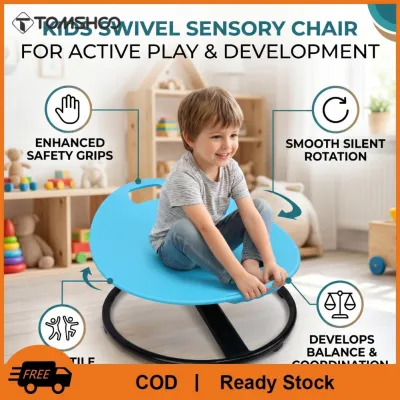
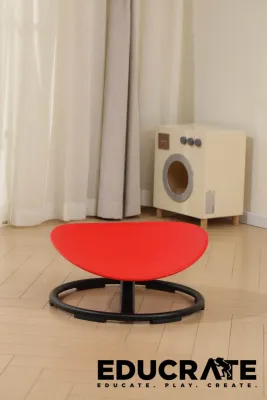
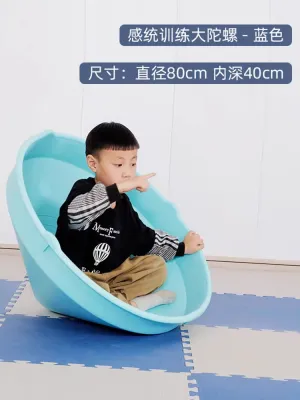
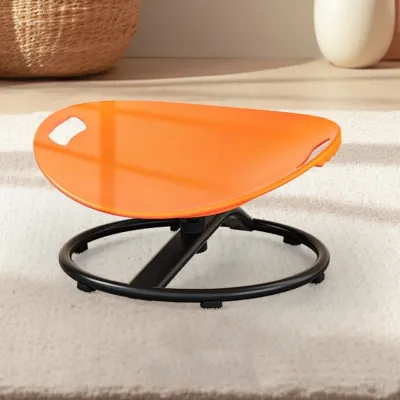
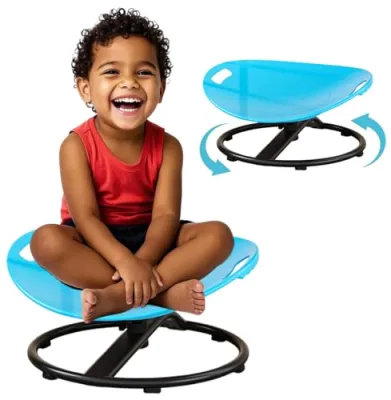
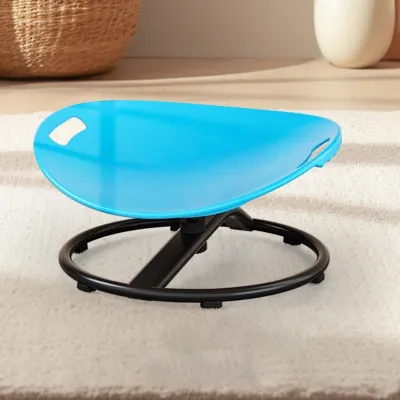
Prices are valid at publication and may change. Please refer to the product page for the latest price.
Ergonomic support is equally critical for a child’s developing spine. Unlike adult chairs, which are often too deep or too tall, a child’s study chair must feature a contoured backrest that specifically targets the lumbar region. This curve encourages natural spinal alignment and prevents slouching. The seat height must be easily adjustable via a pneumatic gas lift, allowing the chair to grow alongside your child. Look for models that offer adjustable seat depth as well, ensuring that the back of your child’s knees does not press against the edge of the seat cushion, which can restrict blood circulation.
While the ability to spin is convenient, excessive or uncontrolled spinning can quickly turn study time into playtime. To maintain focus, look for chairs equipped with swivel lock mechanisms or tension controls. A swivel lock allows you to temporarily disable the spinning function during focused reading or writing tasks. Additionally, some advanced models feature weight-activated caster brakes. These casters lock automatically when a child sits down, preventing the chair from rolling away unexpectedly while they are trying to concentrate, and unlock only when they stand up.
Sizing the Chair to Your Child and Study Desk
An ergonomic chair is only effective if it is properly sized to both the child and the desk they use. To establish a healthy sitting posture, experts recommend following the 90-90-90 rule. When seated, your child’s hips, knees, and ankles should all rest at a comfortable 90-degree angle. Most importantly, their feet must rest flat on a solid surface. If the chair is adjusted to match the desk height but the child’s feet dangle, you must use a chair with a built-in footrest ring or place a stable footrest block on the floor to prevent leg fatigue and lower back strain.

Before making a purchase, take precise measurements of your existing study desk. Pay close attention to the clearance between the underside of the desk drawer or tabletop and the top of the chair’s armrests. If the armrests are too high or cannot be adjusted downward, the chair will not slide fully under the desk when not in use. This can block walkways in smaller bedrooms and force your child to sit too far from their work surface, causing them to lean forward and strain their neck and shoulders.
Furthermore, compare the chair’s minimum and maximum height settings against the height of the desk. For younger children, a standard adult-sized desk is often too high. If the chair cannot be raised high enough to allow their elbows to rest comfortably on the desktop at a 90-degree angle, they will have to raise their shoulders constantly, leading to muscle tension. Ensuring the chair’s height range matches your desk’s dimensions is a crucial step in preventing long-term physical discomfort.
Evaluating Upholstery and Frame Materials for Daily Use
In the warm and humid climate of the Philippines, the materials used in your child’s chair directly affect their daily comfort. Heavy padded vinyl or cheap synthetic leather can quickly become sticky, hot, and uncomfortable, leading to restlessness during study sessions. For optimal airflow, consider a chair with a mesh backrest. Mesh allows heat to dissipate quickly, keeping your child cool even during afternoon study hours. For the seat cushion, look for high-density molded foam covered in a breathable, tightly woven fabric that retains its shape over time.
Because study spaces are also places for art projects, snacks, and occasional spills, ease of cleaning is a major practical consideration. Before buying, check the manufacturer’s product labels for stain-resistant treatments or wipeable surfaces. Some kids’ study chairs come with removable, machine-washable seat covers, which are highly practical for maintaining hygiene. Avoid delicate fabrics that trap dust and are difficult to spot-clean without leaving water rings or damaging the fibers.
Finally, do not assume a frame is durable simply because it is made of metal or heavy plastic. Instead, verify the structural integrity by checking the manufacturer’s stated weight capacity and warranty terms on the product tag. A durable chair should feature reinforced joints, a heavy-duty nylon or steel base, and smooth-rolling casters. Checking these specifications directly on the product packaging or official documentation ensures the chair can safely support your child’s weight and withstand daily movement over several school years.
Pre-Use Safety Checks and Setup Guidelines
Once you have selected and purchased a spinning chair, proper assembly and regular maintenance are essential to ensure safety and longevity. If the chair requires home assembly, follow the manufacturer’s instruction manual step-by-step, ensuring every bolt and screw is aligned correctly before tightening. After the first week of use, perform a quick check to re-tighten any hardware that may have loosened as the parts settled under your child’s weight.
Your home’s flooring should also influence how you set up the chair. On smooth surfaces like ceramic tiles or polished hardwood, standard nylon casters can roll too quickly, creating a slipping hazard when your child sits down or stands up. To prevent uncontrolled rolling and protect your floors from scratches, consider placing a low-pile carpet or a dedicated polyurethane chair mat under the study desk. This adds necessary traction and defines the boundaries of the study zone.
To keep the chair in optimal working condition, establish a simple routine inspection every few months. Check the gas lift cylinder for any signs of oil leakage or a loss of pressure, which can cause the seat to sink slowly during use. Inspect the casters for tangled hair, dust, or debris that might prevent them from rolling smoothly. If you notice any unusual squeaks or wobbles, tighten the connection points immediately and consult the manufacturer’s guide for approved lubrication or replacement parts.
Comparing Swivel Chair Types for Study Corners
Different study habits and room layouts require different styles of spinning chairs. Understanding the distinct types available can help you choose the one that best fits your child’s personality and space constraints.
- Standard Rolling Swivel Chairs: These are the most common models, featuring a five-star wheeled base and full height adjustment. They offer excellent mobility, making them ideal for larger study areas where a child needs to move between a computer screen, a writing desk, and nearby bookshelves. They are highly adjustable but require a disciplined student who will not use the wheels as a toy.
- Fixed-Base Swivel Stools: These chairs offer the 360-degree spinning function but sit on a stationary, flat base instead of wheels. They are excellent for compact study corners where space is limited and rolling is unnecessary. Because they do not move across the floor, they eliminate rolling hazards entirely, making them a safer choice for younger children or highly active learners.
- Active Sitting or Wobble Stools: Designed with a slightly rounded base, these stools allow for controlled rocking, tilting, and spinning. They are specifically engineered for restless learners who benefit from continuous, subtle physical movement. This active movement can help channel excess energy and improve concentration, though they offer less back support for prolonged, passive reading sessions.
Frequently Asked Questions (FAQ)
Does a spinning chair distract children from studying?
A spinning chair can be a distraction if it is treated as a toy, especially by younger children. However, controlled movement can actually help some children focus by releasing physical energy. To minimize distractions, choose a chair with a manual swivel lock or weight-activated caster brakes that restrict movement while the child is seated. Establishing clear rules about when it is appropriate to spin and when it is time to focus also helps build good study habits.
How do I verify the safety of the chair's gas lift cylinder?
To ensure the gas lift cylinder is safe, look for official safety certification stamps directly on the metal cylinder or in the product manual. Look for certifications such as BIFMA (Bifma International) or SGS, which indicate the component has undergone rigorous pressure and durability testing. Additionally, check the class rating of the cylinder; Class 3 or Class 4 gas lifts are industry standards for safety, wall thickness, and weight capacity, offering reliable performance for home use.

Community discussion
Share your experience or ask a question. Comments are reviewed before publication.