
Finding a single piece of furniture that comfortably seats a large household of three to five members while seamlessly transforming into a supportive sleeping surface is a common challenge in many homes. In active households, the living room serves as a multi-functional hub where family members gather to watch television, study, work, and rest. Standard sofas often fall short of accommodating everyone at once, while traditional spare beds consume valuable floor space that could otherwise be used for daily activities. An expandable sofa bed offers a practical compromise, but selecting the right model requires careful planning to ensure it meets both seating and sleeping needs without overcrowding the room.
To make a successful investment, you must look beyond aesthetic appeal and focus on three core evaluation pillars: precise spatial sizing, mechanism reliability, and long-term structural durability. Because this furniture piece will experience heavy daily use, understanding how to verify manufacturer specifications and structural details is essential. This guide provides a comprehensive framework to help you measure your space, evaluate conversion mechanisms, inspect materials for tropical climates, and plan a seamless delivery and installation process.
Key Sizing and Space Requirements for Large Families
Before browsing online marketplaces or visiting local showrooms, you must establish the exact physical boundaries of your living space. An expandable sofa bed requires two distinct sets of measurements: the closed footprint for daily seating and the fully extended footprint for sleeping. Map out your room using painter’s tape or newspapers to visualize how much floor area the furniture will occupy in both states. Ensure there is a clear walking path of at least 60 to 75 centimeters around the sofa when it is fully expanded so family members can navigate the room safely at night.
Products mentioned in this guide
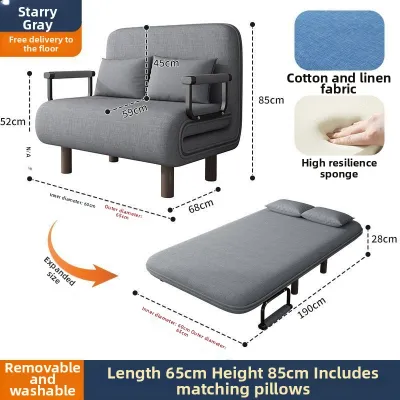
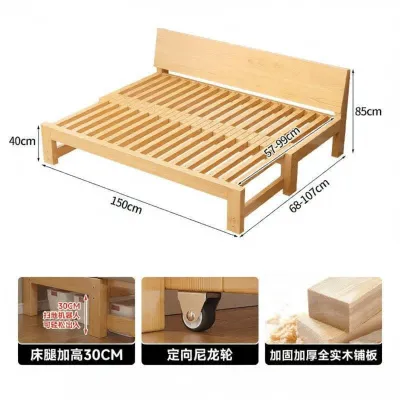
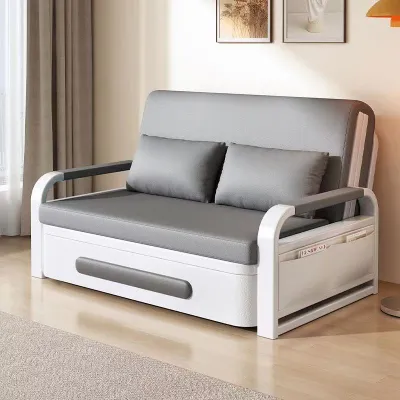
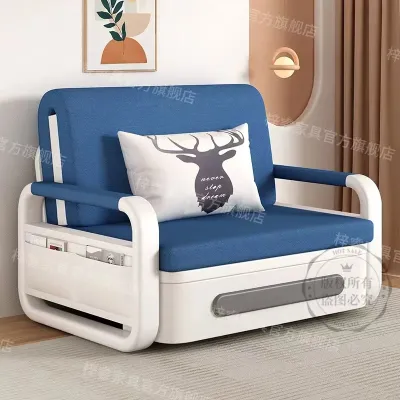

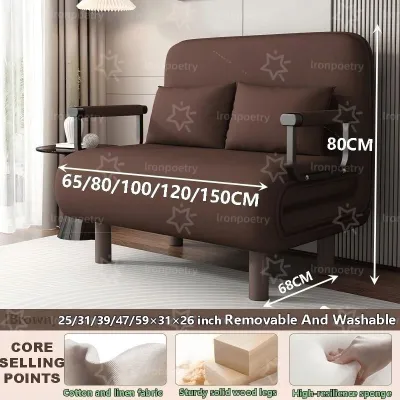
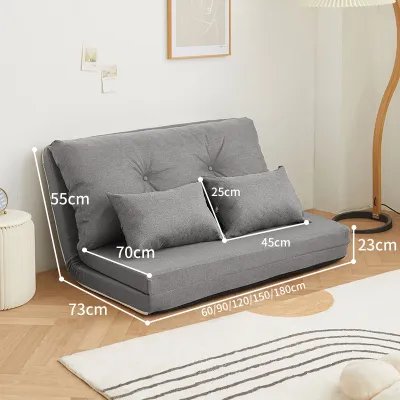
Prices are valid at publication and may change. Please refer to the product page for the latest price.
When evaluating seating capacity for three to five people, pay close attention to the overall width of the sofa frame. A standard three-seater typically requires a minimum seating width of 180 centimeters, while a four-to-five-seater or a modular sectional can easily exceed 240 centimeters. However, the outer armrests and frame design can add significant bulk to these dimensions without increasing the actual seating area. Compare the total outer width against the interior seating width to determine if the sofa will fit comfortably between existing walls or doorways.
The depth of the sofa in its closed position also plays a critical role in the room’s visual weight and physical flow. Deep-seated models provide excellent lounging comfort but can make a narrow living room feel cramped, especially when paired with a coffee table that must be moved every time the bed is deployed. If you select a pull-out or modular design, verify how the extension affects the front clearance. Some designs slide forward, requiring you to clear the space directly in front of the sofa, while others fold backward, meaning the sofa cannot sit flush against the wall.
Finally, you must verify the expanded sleeping dimensions against the height and comfort requirements of the intended users. Do not rely solely on generic terms like “double” or “queen,” as sofa bed dimensions often deviate from standard mattress sizes. Check the manufacturer’s spec sheet for the exact length and width of the sleeping surface. For adults or growing teenagers, a sleeping length of at least 190 centimeters is necessary to prevent feet from hanging over the edge, while a width of 150 centimeters or more is ideal for accommodating two sleepers comfortably.
Evaluating Expansion Mechanisms for Daily Use
The mechanism that facilitates the transformation from sofa to bed is the mechanical heart of the furniture and dictates how easily your family can use it daily. Common expansion styles include pull-out trundles, fold-out frames, and modular sliding tracks, each offering distinct operational characteristics. Pull-out trundles typically feature a drawer-like undercarriage that rolls forward on casters, with a secondary cushion that rises to meet the main seat level. This style is highly space-efficient because it extends directly forward, but it requires a smooth, hard floor surface to operate without snagging.

Fold-out frames, often referred to as click-clack or classic bi-fold mechanisms, operate by lowering the backrest flat to align with the seat cushion. While these mechanisms are generally simple and have fewer moving parts to maintain, they often require you to pull the entire sofa away from the wall before converting it. If your living room layout places the sofa flush against a wall, a “zero-clearance” wall-hugger mechanism is a necessary specification to verify. This design slides the seat forward as the backrest descends, eliminating the need to physically shift a heavy frame every evening.
Operating the mechanism should not require excessive physical exertion or pose safety risks to family members. When testing a sofa bed or reviewing user manuals, assess whether a single person can smoothly complete the conversion process in a few simple steps. Look for counterbalanced spring systems or gas-assisted struts that reduce the lifting force required. Additionally, inspect the frame for potential pinching hazards, sharp metal edges, or exposed hinges that could catch fingers or damage bedding during transition.
Because a large family will subject the sofa bed to frequent transitions, you must review the manufacturer’s guidelines regarding weight capacities and mechanical warranties. Moving parts are subject to friction and wear, making robust locking safety features essential to prevent the bed from collapsing or shifting during use. Look for explicit load-bearing labels that specify the maximum weight limit for both the seated and sleeping configurations. A reliable manufacturer will typically offer a dedicated warranty on the metal mechanism itself, separate from the fabric and foam coverage, which serves as a key indicator of mechanical durability.
Durability and Material Checks for Heavy Household Traffic
A sofa bed in a busy household must withstand constant sitting, jumping, lounging, and sleeping, making structural integrity a top priority. When inspecting the frame construction, look for solid hardwood frames, such as kiln-dried local hardwoods or reinforced steel structures, rather than cheap particleboard or medium-density fiberboard (MDF). Kiln drying removes moisture from the wood, preventing it from warping or cracking in the high humidity of the Philippine climate. Verify that the joints are secured with heavy-duty screws, dowels, and corner blocks rather than simple staples or glue.
Upholstery selection is equally critical when dealing with heavy daily traffic, children, and pets. In tropical environments, high humidity and ambient heat can cause synthetic fabrics to feel sticky or trap body heat, while delicate natural fibers may absorb moisture and develop mold. Look for performance fabrics that carry explicit abrasion resistance ratings, often measured in double rubs (with 15,000 to 30,000 double rubs indicating heavy-duty residential use). Fabrics treated with stain-release finishes or water-resistant barriers are highly recommended, as they allow spills to be wiped away before soaking into the cushions.
Always check the manufacturer’s care label for specific cleaning instructions to ensure the fabric can be maintained without specialized, expensive treatments. Removable, machine-washable cushion covers offer a significant advantage for families, allowing you to wash away sweat, dust, and spills easily. If the covers are fixed, verify if the fabric is compatible with standard water-based upholstery cleaners or if it requires dry cleaning. Avoid delicate materials like untreated suede or thin bonded leathers, which tend to peel and crack rapidly under humid conditions and friction.
The internal support system and cushion foam density directly determine how well the sofa bed retains its shape and comfort over time. Low-density foam cushions will quickly sag under the weight of a large family, leading to uncomfortable pressure points when sitting or sleeping. Look for high-resiliency (HR) polyurethane foam with a density rating of at least 30 kilograms per cubic meter (kg/m³), or pocketed coil spring systems wrapped in dense foam layers. These configurations distribute body weight evenly, prevent bottoming out, and ensure the cushions bounce back to their original shape after hours of continuous use.
Building Your Comparison Matrix and Shortlist
To make an objective purchasing decision, compile your findings into a structured comparison matrix that evaluates potential models against your family’s specific needs. Start by listing your primary decision variables across the top of your matrix: the expanded sleeping dimensions, the type of conversion mechanism, and the fabric maintenance requirements. By aligning these specifications side-by-side, you can quickly eliminate models that fail to meet your baseline requirements, such as those that are too wide for your living room or too difficult for a single family member to operate.
Next, identify secondary features that add practical value to a busy household and can help break a tie between two similar models. For instance, integrated storage compartments built into the chaise lounge or under the trundle provide an excellent place to store pillows, blankets, and bed sheets, keeping the living room tidy during the day. Adjustable headrests can enhance ergonomic support for taller family members during movie nights, while modular configurations allow you to rearrange the seating layout if you move to a new home or decide to reconfigure your living space.
Finally, establish a realistic budget range in Philippine Pesos (₱) and weigh it against the long-term value of premium durability features. While budget-friendly models may seem appealing initially, they often utilize lower-density foam and lighter metal mechanisms that may require replacement after only a year or two of heavy family use. Investing a bit more in a model with a kiln-dried hardwood frame, high-resiliency foam, and a robust mechanical warranty often yields a lower total cost of ownership over time. Use your comparison matrix to create a condition-based shortlist, prioritizing structural integrity and ease of use over superficial design trends.
Delivery, Assembly, and Room Access Planning
Even the most durable and comfortable expandable sofa bed is of no use if it cannot physically enter your home. Before finalizing your purchase, you must cross-reference the product’s packaged shipping dimensions with the narrowest points of your home’s entry path. Measure the width and height of all doorways, hallways, stairwells, and elevator cabins that the delivery team must navigate. Pay close attention to tight corners or low ceilings in stairwells, as long sofa frames often cannot make sharp turns without getting wedged.
Inquire with the retailer about the exact assembly conditions and whether the sofa bed is delivered fully assembled, partially flat-packed, or in modular sections. Modular designs are highly advantageous for homes with restricted access, as they can be carried in separate, manageable boxes and assembled directly in the living room. Verify if specialized tools are required for assembly or if the manufacturer mandates professional installation to keep the structural and mechanical warranties valid. Attempting to assemble a complex mechanical frame without proper tools can lead to misalignment, squeaking, and premature wear.
Once the sofa bed is inside the room, plan its placement carefully to ensure long-term stability and protect your flooring. Heavy modular pieces can scratch hardwood or vinyl floors when dragged or shifted during conversion; consider placing felt pads or rubber grippers under the legs to prevent movement and surface damage. Ensure the sofa is positioned on a level surface so the expansion tracks remain aligned and do not experience uneven stress. If the model features a tall backrest or a heavy fold-out mechanism, verify that it is structurally stable and does not present a tipping risk when fully extended, especially in active households with young children.
Frequently Asked Questions (FAQ)
Is a pull-out mechanism better than a fold-out frame for daily sleeping?
A pull-out mechanism is generally better suited for daily sleeping because it typically accommodates a thicker, more supportive mattress or cushion layer than a standard fold-out frame. Fold-out frames, such as click-clack designs, often use the same cushions for both sitting and sleeping, which can lead to uneven wear and noticeable ridges along the fold lines over time. However, pull-out mechanisms require a larger front clearance and a smooth, unobstructed floor surface to roll out the trundle, whereas fold-out frames extend outward from the back or seat and may require less forward space.
How can I prevent the expansion tracks from sticking over time?
To prevent expansion tracks from sticking, establish a routine cleaning schedule to remove dust, lint, pet hair, and household debris that naturally accumulate in the metal channels. Vacuum the tracks thoroughly using a crevice tool attachment at least once a month, and wipe them down with a dry microfiber cloth to remove any built-up grime. Always consult the manufacturer’s instruction manual before applying any lubricants; some mechanisms require dry silicone sprays, while others can be damaged by heavy oils or WD-40, which attract more dust and cause the tracks to clog. Never force a stuck mechanism, as this can bend the metal frame and permanently misalign the tracks.
Community discussion
Share your experience or ask a question. Comments are reviewed before publication.