
To accommodate a large Filipino family of three to five members, choosing a sofa bed requires looking beyond standard living room setups. The ideal choice must serve as a supportive, high-traffic daytime seat and transition smoothly into a spacious, comfortable sleeping surface at night. Because tropical humidity and frequent family gatherings place extra physical demands on living room furniture, you must systematically verify dimensions, frame construction, and fabric specifications before making a purchase. By focusing on practical spatial measurements, mechanism durability, and a structured verification process, you can select a configuration that maximizes both comfort and utility in your home.
Space and Sizing Checks for 3-5 Seater Configurations
When selecting a large sofa bed, the most common pitfall is failing to account for the dual footprint of the furniture. A three-seater sofa bed might fit perfectly against your living room wall during the day, but once unfolded, it can easily overwhelm the room, blocking vital walkways and access to other areas. To prevent this, you must measure your space using a two-phase approach that accounts for both the closed and fully extended configurations.
Begin by mapping out the closed dimensions of the sofa bed on your living room floor. You can use painter’s tape or old newspapers to lay out the exact width and depth of the unit. This visual aid helps you assess how much floor space remains for daily activities, such as walking from the kitchen to the hallway or accessing balcony doors. For a comfortable living room flow, aim to maintain at least 60 to 75 centimeters of open walking space around the perimeter of the sofa.
Products mentioned in this guide
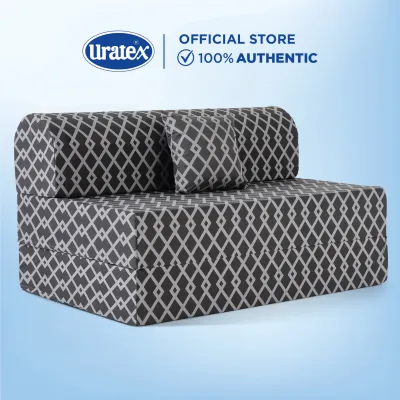
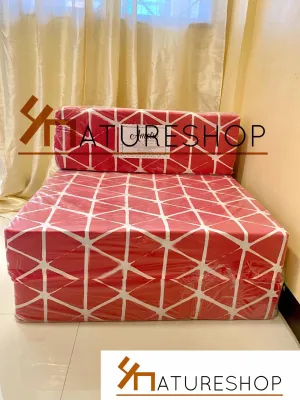

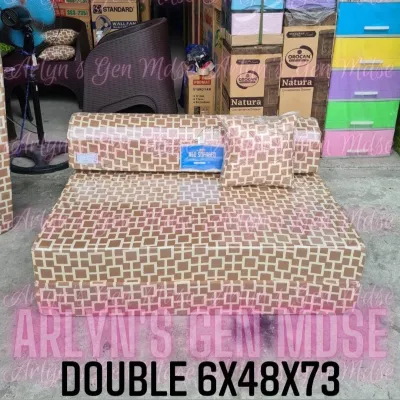
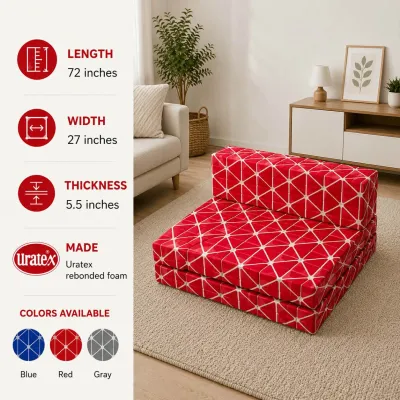

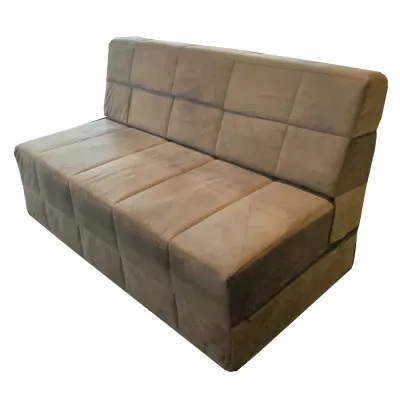

Prices are valid at publication and may change. Please refer to the product page for the latest price.
Next, simulate the fully extended sleeping configuration. Extend your floor markers to match the manufacturer’s specified unfolded length, which often reaches up to 200 centimeters or more from the back wall. This step is crucial because you must ensure the bed does not collide with your television console, coffee table, or side tables. If you have a central coffee table, verify that it is lightweight enough to be easily moved aside every evening when converting the sofa into a bed.
Do not forget to calculate the extra space required for bedding, pillows, and blankets. When a sofa bed is unfolded, pillows often extend slightly beyond the head or foot of the mattress, requiring a few extra centimeters of clearance from the wall or adjacent furniture. Additionally, consider the vertical clearance if your living room features low-hanging light fixtures, ceiling fans, or wall-mounted shelving that could interfere with a person sitting up in bed.
Finally, plan the delivery route from the street to your living room. Large multi-seater sofa beds are bulky and heavy, making delivery a common logistical bottleneck in Philippine residential areas. Measure the width and height of your front gate, main entrance door, and any narrow hallways or stairwells. If you live in a high-rise condominium, obtain the exact interior dimensions of the service elevator, including the door opening width and diagonal height, to confirm the packaged unit can be transported safely without damaging the walls or the furniture itself.
Comparing Sofa Bed Mechanisms for Family Use
The mechanism used to convert a sofa into a bed determines not only how easy the unit is to operate daily but also how well it will hold up over years of constant use. For a large family, the mechanism must be simple enough for teenagers or older family members to operate safely without risking pinched fingers or strained backs. Understanding the structural differences between common conversion types allows you to choose the best fit for your household’s physical capabilities.

The first common type is the fold-out foam configuration, which is highly popular in tropical climates due to its simplicity. These models consist of high-density foam blocks zippered together, which unfold directly onto the floor to create a mattress. Because they lack complex metal frames, moving joints, or mechanical parts, there is virtually nothing to break, rust, or squeak over time. This makes them exceptionally durable and safe for households with active children. However, because the sleeping surface sits directly on the floor, getting in and out of bed may be challenging for older family members or those with joint pain.
The second option is the pull-out trundle or drawer mechanism. This design features a hidden frame nestled beneath the main seat cushions that rolls forward on wheels or tracks, allowing a secondary mattress layer to rise and align with the seat. This configuration provides an elevated sleeping surface that mimics a traditional bed, making it highly comfortable and easy to access. However, the moving metal tracks, wheels, and hinges require regular inspection and maintenance. In humid tropical environments, unlubricated metal parts can rust or become stiff, making the conversion process physically demanding over time.
The third mechanism is the click-clack or fold-down backrest system. In this design, the backrest of the sofa releases and flattens backward to align horizontally with the seat cushion. This mechanism is incredibly fast to operate and offers a clean, modern aesthetic. However, because the backrest folds backward, you must position the sofa several centimeters away from the wall to allow clearance for the mechanism to operate, or be prepared to slide the entire sofa forward every time you convert it.
Regardless of the mechanism, pay close attention to the seating ergonomics for daily lounging. A sofa bed meant for three to five people must offer adequate seat depth—ideally between 50 and 60 centimeters—and a supportive backrest height to ensure comfortable seating during long family movie nights. Check the manufacturer’s specifications for cushion firmness; a medium-firm to firm high-density foam base is generally recommended for large families, as it provides the necessary structural support to prevent the cushions from sagging under the weight of multiple users.
Building Your Uratex Shortlist: Verification Checklist
To build a reliable shortlist of Uratex sofa beds, you must move past marketing descriptions and systematically verify the technical specifications of each model. Uratex offers a wide range of foam products and upholstered furniture, meaning you must carefully cross-reference official catalogs and authorized retail specifications to find a model that meets the heavy-duty demands of a large household.
Start your verification process by checking the official seating capacity and dimensions. Look for models explicitly designated as 3-seaters, L-shaped sectionals, or modular configurations. A true 3-seater should offer a minimum seating width of 180 centimeters, excluding the armrests, to ensure three adults can sit side-by-side without feeling cramped. If your family has four or five members, look into modular foam configurations that allow you to rearrange individual seating blocks to fit your room’s layout.
Next, verify the structural integrity of the frame and support system. For models that feature an internal frame, check the manufacturer’s specifications for the frame material. Solid wood frames, such as kiln-dried hardwood, offer superior resistance to warping and joint loosening compared to cheaper engineered woods. If you are looking at a foam-only fold-out model, verify the density of the foam core. High-density polyurethane foam is essential for high-traffic family use, as it retains its shape and supportive properties far longer than low-density alternatives.
Upholstery selection is another critical factor for busy households. In tropical climates, high humidity and sweat can degrade fabrics quickly, while children and guests increase the likelihood of accidental spills. Check the product tags or official specifications for the fabric composition and cleaning codes. Look for tightly woven synthetic fibers, such as heavy-duty polyester, which offer excellent durability, stain resistance, and breathability. Avoid thin, delicate fabrics or low-grade synthetic leathers that can crack, peel, or feel uncomfortably hot and sticky in warm weather.
Finally, confirm the logistical details directly with official Uratex showrooms or authorized dealers. Ask about current stock availability, estimated delivery lead times for your specific region, and the exact terms of the manufacturer’s warranty. Uratex typically offers warranties on their high-density foam cores against abnormal sagging, but the duration and coverage can vary significantly between different product lines. Having these details confirmed in writing ensures you are protected against premature manufacturing defects.
Delivery Access and Long-Term Care
Once you have selected and purchased your sofa bed, proper preparation for delivery day and a consistent maintenance routine are essential to protect your investment. Because a large multi-seater sofa bed represents a significant financial and spatial commitment, taking proactive steps during installation and daily use will extend its lifespan and maintain its comfort for years to come.
On delivery day, clear a wide path from your home’s entrance to the living room, removing any wall decorations, picture frames, or light fixtures that could be accidentally bumped. If your delivery involves carrying the unit up stairwells or through tight doorways, communicate these details to the delivery team in advance. Protect your flooring—especially delicate tiles, polished concrete, or wooden laminates—by laying down thick cardboard sheets or protective blankets along the delivery path. Once the unit is in place, inspect it thoroughly for any transit damage before signing the delivery receipt, and ensure the delivery team disposes of all bulky packaging materials safely.
Long-term care in a tropical climate requires a focus on moisture control and cleanliness. High humidity levels can trap moisture within the foam layers of your sofa bed, creating an environment where musty odors, dust mites, and mold can develop. To prevent this, keep your living room well-ventilated by opening windows on dry days or using a dehumidifier or air conditioner during the rainy season. Avoid placing the sofa bed in direct sunlight, as prolonged exposure to ultraviolet rays can fade the upholstery fabric and accelerate the breakdown of the underlying foam.
Establish a weekly cleaning routine to keep the fabric looking and smelling fresh. Use a vacuum cleaner with an upholstery brush attachment to thoroughly clean the seams, crevices, and the area beneath the cushions where dust, pet hair, and food crumbs tend to accumulate. For accidental spills, refer to the manufacturer’s care label immediately. Most modern upholstery fabrics can be spot-cleaned using a damp microfiber cloth and a mild, diluted detergent, but you must always test any cleaning solution on a small, hidden area of the fabric first to ensure it does not cause discoloration.
For sofa beds that feature mechanical joints, metal hinges, or pull-out tracks, perform a structural inspection every six months. Check for any loose screws, bolts, or misaligned brackets, and tighten them using the appropriate tools. If the mechanism begins to squeak or feel stiff, apply a small amount of silicone-based lubricant to the moving joints, taking care to protect the surrounding fabric from oil stains. By combining gentle daily use with regular structural checks, your sofa bed will remain a reliable, comfortable hub for your family’s daily lounging and nighttime rest.
Frequently Asked Questions (FAQ)
What sleeping capacity should I expect from a standard 3-seater sofa bed?
A standard three-seater sofa bed typically converts into a double or full-size sleeping surface, which is generally designed to accommodate up to two adults comfortably. However, because individual product dimensions can vary significantly between different collections, you should never assume a standard size. Always check the exact unfolded mattress width and length on the manufacturer’s specification sheet or product tag before purchasing. If you plan to use the bed regularly for multiple family members, verifying these precise measurements ensures everyone has adequate sleeping space without feeling restricted.
How do I measure my space for an L-shaped or modular sofa bed?
To measure for an L-shaped or modular sofa bed, you must account for the unique asymmetrical footprint of the chaise lounge or individual modular blocks. Begin by measuring the total length of the wall where the longest side of the sofa will rest, ensuring it does not block doorways or electrical outlets. Next, measure the depth of the chaise extension or the space required when modular pieces are rearranged into their sleeping configuration. Ensure there is a clear swing radius for any moving parts, and maintain a clearance of at least 60 centimeters from walls, curtains, television consoles, and other furniture to allow for easy movement around the room.
Community discussion
Share your experience or ask a question. Comments are reviewed before publication.